
On November 3, a business delegation from Hiroshima Prefecture, Japan, visited Trong Duc Cocoa Co., Ltd. in Phu Hoa commune, Dong Nai City, to explore the company’s process for turning cocoa husks into biochar. The initiative is part of a circular agriculture model designed to reduce emissions and protect the environment.
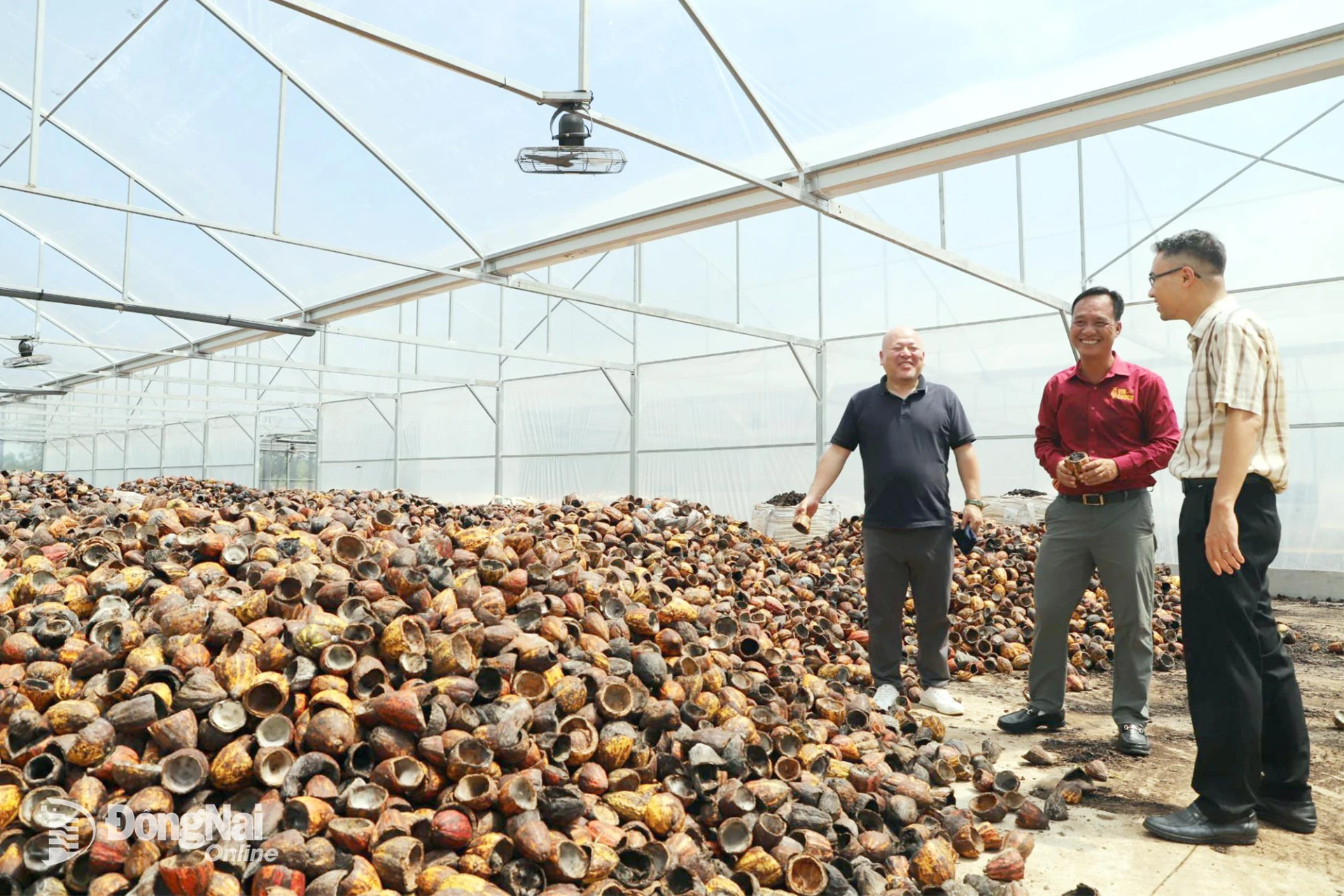 |
| The delegation visits an area where cocoa husks are dried before being used as feedstock for biochar production. Photo: B. Nguyen |
The delegation examined the biochar production process and learned about the results of using cocoa-husk biochar in seedling production and the cultivation of cocoa trees.
Trong Duc Cocoa Co., Ltd. is one of the pioneers in developing specialised cocoa-growing areas in Dong Nai. The company has established a nationwide raw material area covering more than 1,300 hectares, including nearly 820 hectares in Dong Nai. It has signed agreements with farmers to purchase their cocoa at favourable prices and invested in facilities to produce a range of value-added products, including chocolate, cocoa powder, cakes and confectionery. Its products have gained a foothold in both domestic and export markets. The company also generates substantial volumes of agricultural by-products during processing, including around 6,000 tonnes of cocoa husks each year.
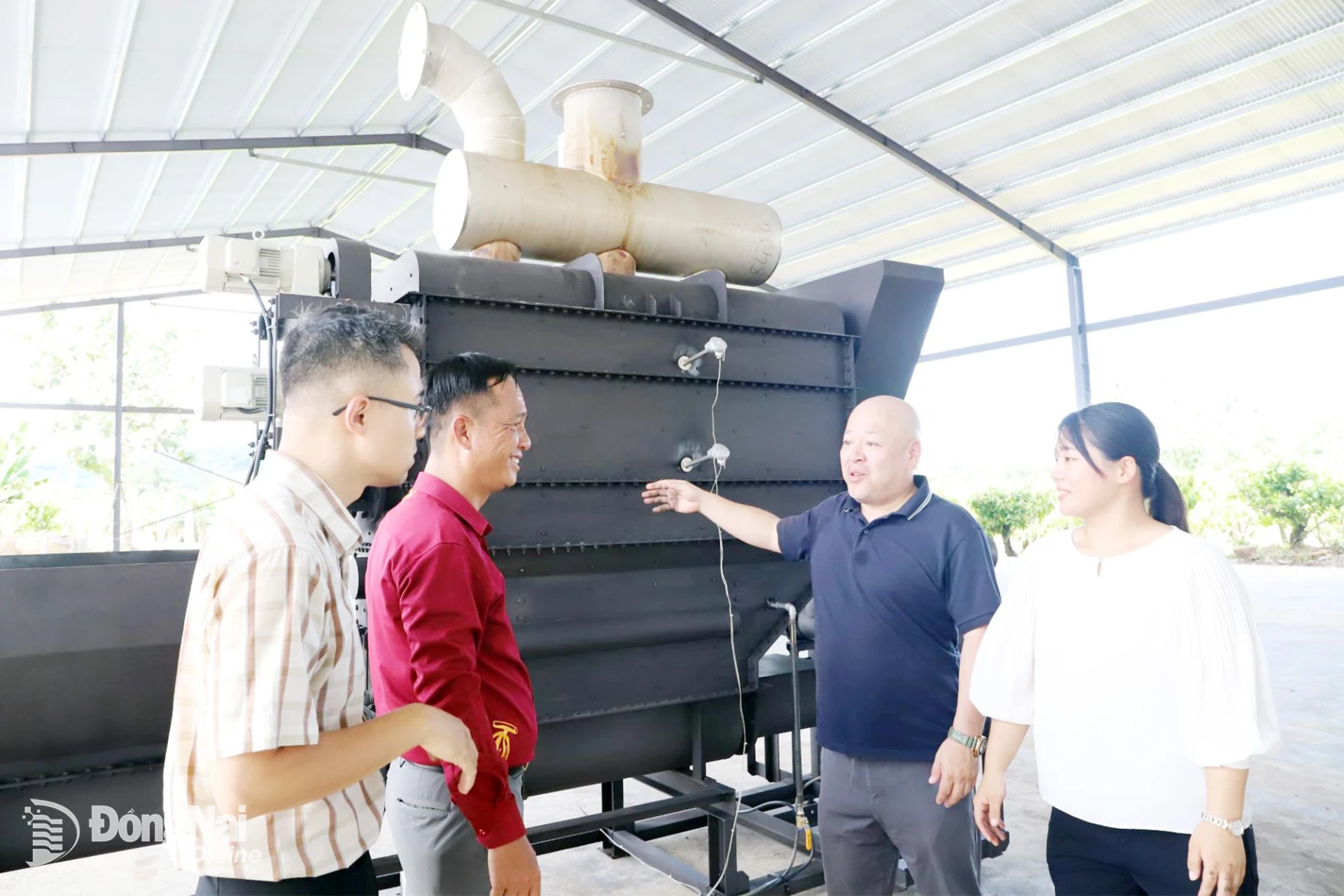 |
| The delegation visits machinery used to produce biochar from cocoa husks and other agricultural by-products. Photo: B. Nguyen |
For more than a year, Trong Duc Cocoa Co., Ltd. and Tromso Joint Stock Company (JSC) headquartered in Hiroshima Prefecture, Japan, have been cooperating on a project to turn cocoa husks into biochar for agricultural use and develop carbon credits. Tromso JSC will invest in machinery and technology to produce biochar from cocoa husks. In the initial phase, the project is expected to process around 6,000 tonnes of cocoa husks a year. For the first two years, the biochar produced will be supplied free of charge to cocoa farmers participating in Trong Duc Cocoa’s production chain. The project will also use other agricultural by-products generated in large quantities in Dong Nai, including durian peels and coffee husks, to produce biochar.
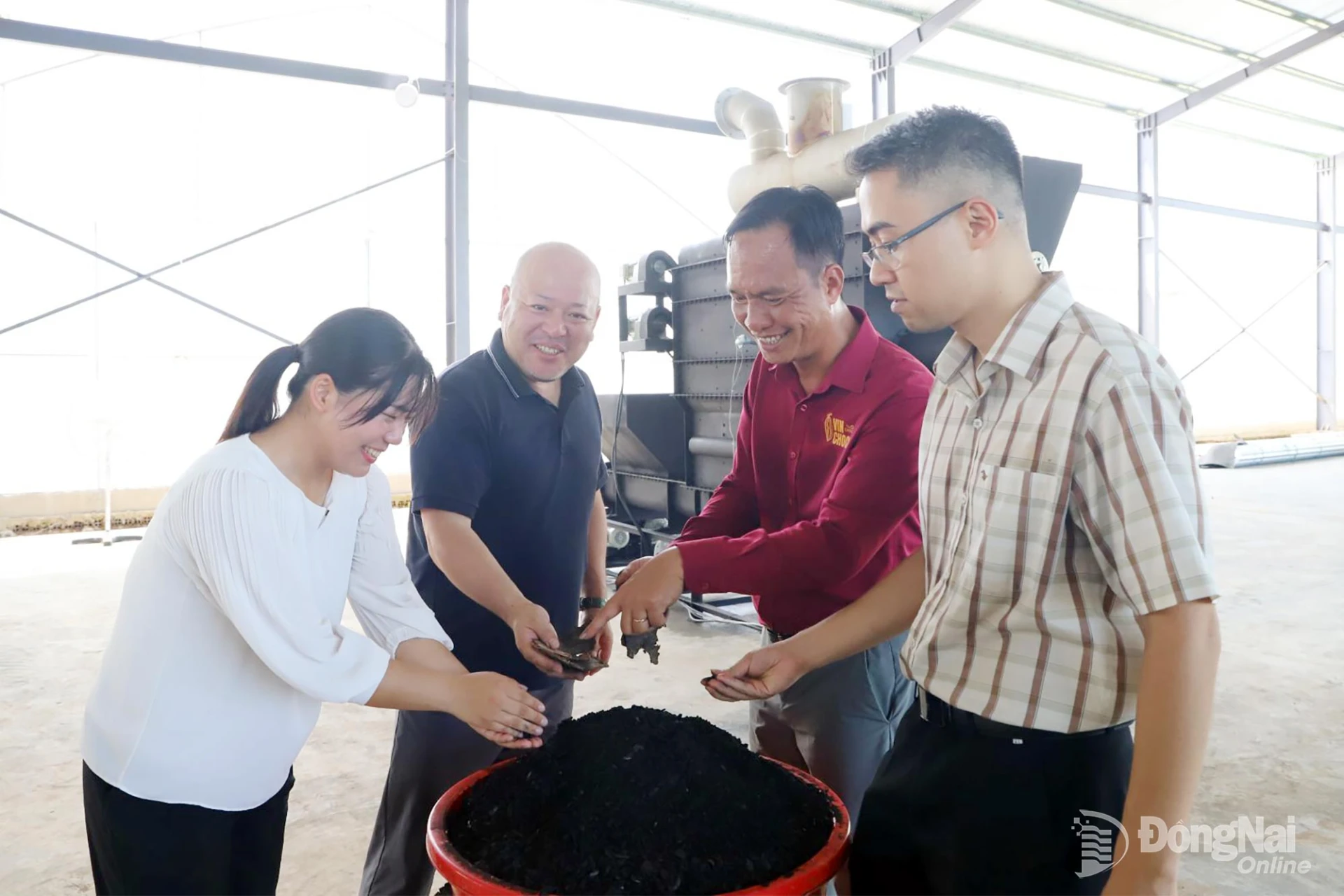 |
| Biochar made from cocoa husks. Photo: B. Nguyen |
The project is testing cocoa-husk biochar as a soil amendment in cocoa seedling production and tree care. Initial results show that biochar helps improve nutrient uptake and soil structure, promoting better growth in cocoa plants and potentially resulting in higher yields.
The partnership is expected to benefit both companies and thousands of farmers in Trong Duc Cocoa’s production chain, who will be able to use biochar to improve cultivation practices and boost productivity.
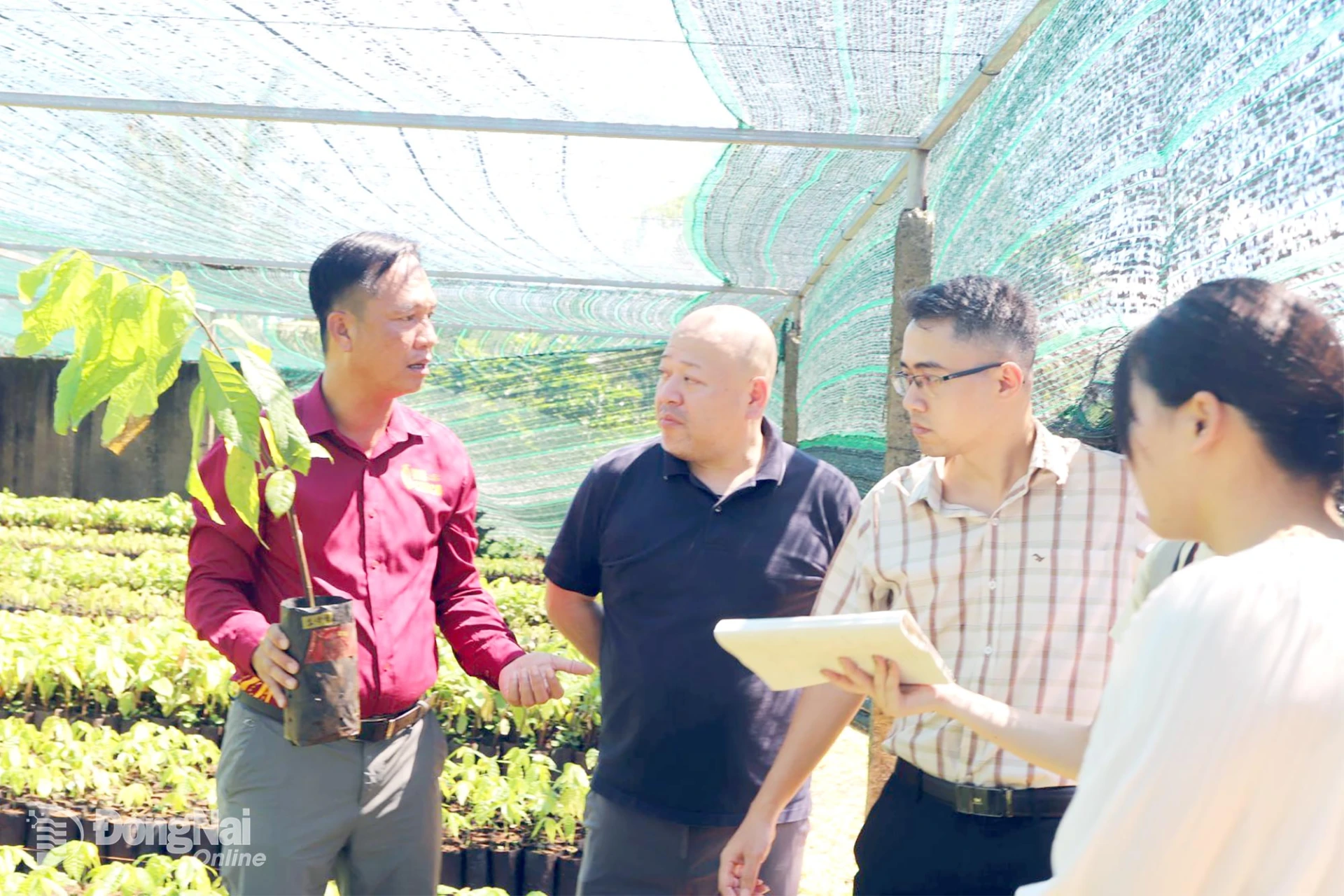 |
| Dang Tuong Khanh, Chairman of the Members’ Council of Trong Duc Cocoa Co., Ltd., explains the benefits of biochar for cocoa seedlings. Photo: B. Nguyen |
The project aims to establish a circular agriculture model with no greenhouse gas emissions, increase farmers’ incomes and build sustainable production chains from cultivation to processing and export.
The visit took place as part of a conference on cooperation between Dong Nai City and Hiroshima Prefecture in high-tech agriculture, agricultural by-product and waste treatment and recycling, environmental monitoring, bio-based agricultural inputs and sustainable development.
By B.N – Translated by M.Nguyet, Thu Ha
Thông tin bạn đọc
Đóng Lưu thông tin