
Improving the quality of shift meals not only helps employees maintain their health and replenish their energy but also reflects enterprises' commitment to employee welfare.
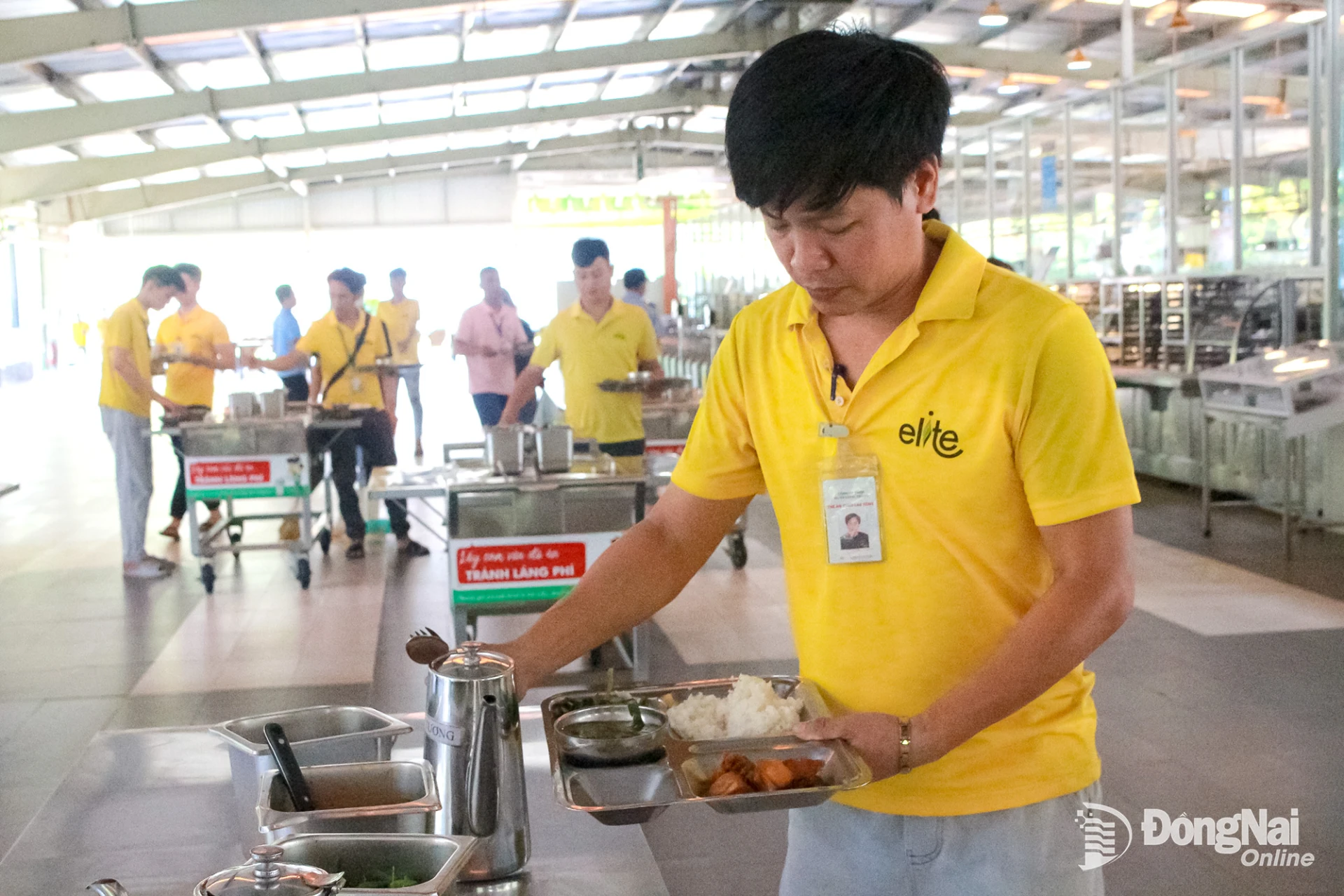 |
| Workers at Elite Long Thanh Co., Ltd. in Long Thanh Ward have their mid-shift meal. |
From increasing the value of meals and diversifying menus to strengthening food safety inspections, many enterprises across Dong Nai are making efforts to improve the quality of shift meals. These measures help protect employees' health and promote harmonious, stable, and progressive labor relations.
Focusing on nutrition and improving meal quality
Elite Long Thanh Co., Ltd. in Long Thanh Ward currently employs nearly 4,000 employees. Over the years, the company has continuously improved the quality of shift meals, diversified its menus, upgraded its cafeteria facilities, and provided comfortable spaces for workers to rest after their shifts. Each shift meal is currently valued at 28,000 VND per serving. This is one of the company's practical policies aimed at improving employees' living conditions amid rising living costs.
According to Nguyen Quoc Hung, Chairman of the Grassroots Trade Union of Elite Long Thanh Co., Ltd., the company operates a staff canteen that complies with food safety standards. Both the medical department and the grassroots trade union closely monitor food sampling procedures. The company also places particular emphasis on improving its menus and selecting dishes that are beneficial to employees' health. Each day, employees can register for meals according to their needs, choosing from three options: vegetarian meals, small portions, and large portions.
To ensure the quality of shift meals, the Standing Board of the Dong Nai Labor Federation regularly directs trade unions at all levels to coordinate with employers in organizing meals for employees, with particular emphasis on meal quality. These efforts help strengthen the role of trade unions in caring for the material and spiritual well-being of union members and employees.
Increasing the value of shift meals contributes to improving employees' living conditions and demonstrates enterprises' care and support for their workers. Le Thi Hanh, a worker at Elite Long Thanh Co., Ltd., said, “Nutritious, high-quality meals help workers replenish their energy, reduce fatigue, maintain good health, and improve productivity. Improved meals lift workers' spirits and give them peace of mind at work, encouraging them to strive for higher productivity and better product quality.”
At many enterprises, the value of shift meals has increased to between 25,000 VND and 30,000 VND per serving, excluding labor, electricity, and water costs. Enterprises also invest in cafeteria facilities, hire chefs from external catering services, and cover kitchen staff wages.
At Thien Long Long Thanh Manufacturing and Trading Co., Ltd. in An Phuoc Commune, the cafeteria is spacious, well-ventilated, and hygienic. During mid-shift meal breaks, workers line up neatly and cheerfully collect meal trays prepared by the kitchen staff. To improve meal quality, the grassroots trade union works with the company to monitor every stage, from receiving ingredients and preparing food to serving meals. It also listens to employees' feedback to make timely adjustments to the menu. The company focuses on three key factors – nutritional value, taste, and the dining environment – to ensure the quality of meals.
Le Van Viet, an employee at Thien Long Long Thanh Manufacturing and Trading Co., Ltd., said workers on production lines often stood at machines and worked in shifts, making meals important for replenishing energy, maintaining health and ensuring work efficiency. He added that, alongside salaries, bonuses and other benefits, workers were paying increasing attention to the quality of their shift meals.
Strengthening responsibility for worker care
According to the Dong Nai Labor Federation, nearly 1,700 enterprises citywide currently provide mid-shift meal support for employees. These enterprises adopt various arrangements, including operating on-site canteens, contracting catering services, providing cash meal allowances, and subsidizing part of the meal costs. During the first nine months of 2026, 11 enterprises adjusted the value of shift meals to meet or exceed the levels recommended by the Vietnam General Confederation of Labor.
Grassroots trade unions actively survey workers' needs, collect their opinions, and negotiate with employers on meal values, support arrangements for overtime work, and meal service conditions. Regular supervision covers all stages, from verifying the origin of food ingredients and monitoring preparation procedures to assessing the actual quality of meals served. Making menus publicly available, gathering employees' feedback and promptly addressing shortcomings help improve meal service quality and build trust among employees.
In addition to maintaining the quality of daily meals, many enterprises coordinate with their grassroots trade unions to organize the "Trade Union Meal" program, helping to improve the nutritional value of meals and foster a sense of closeness and solidarity. Notably, Vietnam Caesar Sanitary Wares JSC in Nhon Trach Ward organized its 2026 Trade Union Meal in a cordial atmosphere, attracting nearly 1,000 employees. The highlight was a special meal valued at 90,000 VND per serving, substantially higher than the value of regular daily meals. The event also gave company leaders and trade union representatives an opportunity to meet employees in person and listen to their thoughts and concerns.
Nguyen Thi Thuy, Chairwoman of the Grassroots Trade Union of Vietnam Caesar Sanitary Wares JSC, said, "For workers, receiving nutritionally adequate shift meals from the company not only helps protect their health but also reduces their daily living expenses. Therefore, in addition to increasing the value of meals, the company focused on controlling the quality of incoming ingredients and food preparation processes, ensuring food safety, and adjusting menus to suit employees' tastes."
Shift meals constitute a practical welfare policy directly linked to employees' daily lives. Amid rising market prices, enterprises need to pay greater attention to improving meal quality. When every meal meets nutritional and food safety requirements, workers can maintain better health, feel secure in their jobs, and remain committed to their employers. This also provides an important foundation for retaining employees, building harmonious labor relations, and contributing to enterprises' production and business development.
By Nguyen Hoa – Translated by Minh Hong, Minho




Thông tin bạn đọc
Đóng Lưu thông tin