
The sound of combine harvesters and trucks hauling rice, mingled with the cheerful voices and laughter of Choro farmers, filled the golden rice fields in Bao Vinh ward in the early days of September, bringing a festive atmosphere to the harvest season.
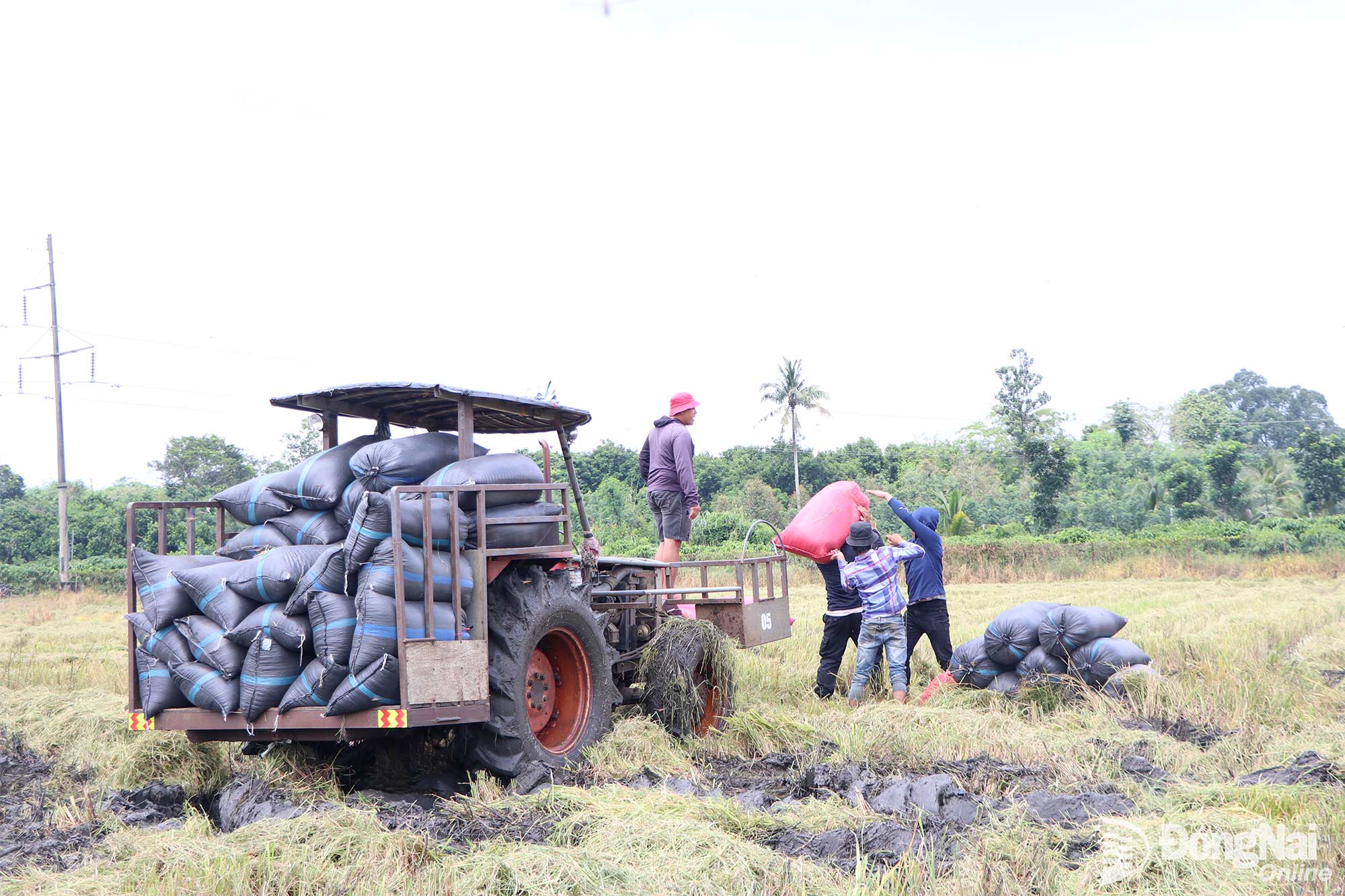 |
| Workers load harvested rice onto trucks for delivery to buyers. |
After days of tending their crops, Choro farmers brought in their first rice harvest from fields cultivated with organic-oriented farming practices. Along with the joy of a bumper harvest, they gained greater confidence in a new approach to farming on their ancestral land.
A bountiful harvest
From early morning on September 7, dozens of hectares of rice fields in Bao Vinh ward came alive with activity. Combine harvesters moved across the fields one after another, while trucks loaded with rice came and went continuously. Along the field edges, hired workers busily carried and bagged the harvested rice. Against the golden backdrop of ripening rice, calls between workers, the hum of machinery and cheerful conversation created a lively atmosphere in the fields.
Standing beside his field of more than 6 hectares of golden rice ready for harvest, 70-year-old Mai Van Luong, a respected elder in the Choro community, could not hide his joy. For Luong, this year's harvest brought not only the satisfaction of a good yield but also the joy of seeing his family's first crop grown using organic-oriented farming practices.
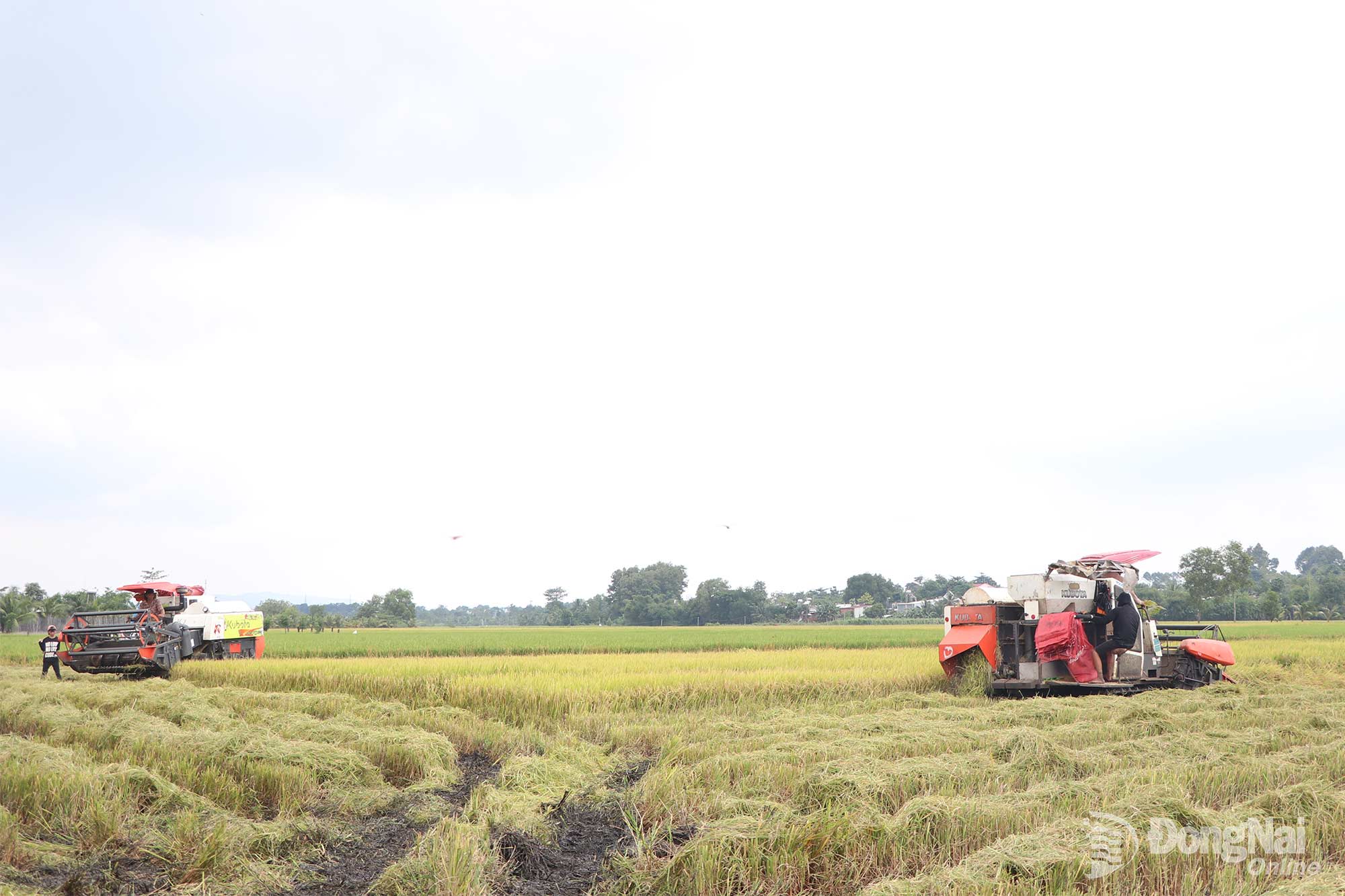 |
| Mai Van Luong uses a combine harvester to harvest his rice field. Photo: To Tam |
“This year, I began shifting toward organic-oriented farming to protect our health and the environment. I have also encouraged my children and other farmers in the quarter to adopt these practices,” Luong said.
According to Luong, this year's rice yield is estimated at 6-7 tonnes per hectare. Before the harvest, he signed a contract with a buyer at VND6,000 per kilogram, a price higher than the prevailing market rate and one that will give his family additional income after production costs.
What makes Luong even happier is that the first crop has turned out better than he initially expected. Switching from traditional farming methods to organic-oriented production cannot be done overnight. Farmers have to change their use of fertilizers and pesticides, as well as the way they tend and monitor their fields.
“Organic rice farming requires more time and closer care. I have to go to the field every day to check the crop so that I can detect signs of disease early and take timely action. This first year has been a process of learning while doing and gaining experience. With technical support from experts, we have basically achieved the expected yield,” Luong said.
Luong believes that if yields, quality and market access remain stable in the coming crops, his family and many other households in the quarter will become more confident about changing their farming practices. Beyond rice, he hopes clean and safe production methods can gradually be applied to other crops as well.
“The rice fields of Mai Van Luong and several other Choro households in the area have shown encouraging initial results. Well-filled, firm grains and yields of around 6-7 tonnes per hectare are positive results for the first crop cultivated using organic-oriented farming practices,” said Tran Van Viet, Chairman of the Bao Vinh ward Farmers’ Association.
Tho Di, an accomplished farmer and agricultural producer and trader in Bao Vinh ward, is also among the local farmers with a large rice-growing area. With around 30 hectares under rice, Di is gradually shifting toward organic-oriented production. This year’s crop has met quality expectations, promising a good source of income.
The decision by a farmer with a large production area to change farming practices reflects growing interest in organic-oriented rice production among local residents. It also creates favorable conditions for the locality to develop clean and safe rice-growing areas through stronger linkages among farmers, businesses and technical support providers.
For Choro farmers, this first harvest is not merely a season of golden rice but also a harvest of confidence. The initial results are paving the way for a new production approach to take shape in fields that have long been associated with traditional farming practices.
Gradually building clean production areas
According to Tran Van Viet, Chairman of the Bao Vinh ward Farmers’ Association, efforts to encourage farmers to shift toward organic-oriented production
stem from the need to increase the value of agricultural products, protect the health of farmers and consumers, and reduce environmental impacts.
Accordingly, in rice and other crop production models oriented toward organic farming, the locality encourages farmers to reduce their use of inorganic fertilizers and chemical pesticides while prioritizing organic fertilizers and biological products.
However, the transition has also faced considerable challenges. Traditional farming practices have become deeply ingrained in people’s lives over the years, while the use of inorganic fertilizers and pesticides remains widespread. Therefore, the ward Farmers’ Association works with local authorities and relevant agencies to raise awareness and encourage residents to gradually change their farming practices. The locality also coordinates with technical agencies and businesses to provide training in science and technology and give farmers hands-on access to high-tech, clean, safe and organic-oriented farming models.
The process requires even greater patience in Choro communities. According to Viet, some residents have limited exposure to and understanding of new farming methods. Therefore, instead of relying solely on awareness campaigns, association officials and technical experts have to work directly with farmers in the fields and provide hands-on guidance so that they can see the benefits for themselves.
As part of these efforts, the ward Farmers’ Association has worked with Que Lam Group to encourage members to adopt an organic-oriented rice production model. Starting with households willing to try the approach, the locality hopes to gradually expand the model.
Le Van Ai, who oversees organic agriculture development for Que Lam Group in Dong Nai City and Ho Chi Minh City, said the group had faced considerable challenges when first introducing the model in Bao Vinh Ward, as most farmers in the area were Choro people with limited knowledge of organic agriculture.
Initially, many farmers were concerned that yields would fall and their incomes would not be guaranteed. However, with support from local authorities and the ward Farmers’ Association, they agreed to try the model for the first crop.
Based on his observations, Le Van Ai said the summer-autumn crop had produced positive results and exceeded expectations, giving farmers greater confidence in continuing with the model. He noted that organic-oriented rice production can be more demanding in the initial stages because farmers must follow more procedures and spend more time caring for and monitoring their fields. In return, however, the approach offers greater protection for farmers’ health by reducing their exposure to chemical pesticides, while soil quality and the environment can also improve over time.
More importantly, if the production process is maintained consistently, the quality and value of the rice grains could increase, laying the foundation for safe commercial production areas with stable market linkages.
For Choro communities, the initial success of the rice crop serves as a tangible example encouraging farmers to embrace change. When rice production delivers not only good yields but also benefits for health, the environment and market access, confidence in the new farming approach is more likely to grow and spread.
By T.Tam – Translated by M.Nguyet, Thu Ha


Thông tin bạn đọc
Đóng Lưu thông tin