
The Dong Nai River flows gently through generations, bearing witness to a city that is both ancient and serene while also brimming with youthful vitality.
The central wards of Dong Nai City embody a rich historical legacy while embracing a modern and dynamic beauty. Looking toward the future, a young city on ancient land will not only preserve its identity but also rise in harmony with the rhythm of a new era.
Ancient imprints
Dong Nai is an ancient land with a history spanning thousands of years if the traces of ancient human settlements are taken into account. It is not only a modern industrial hub in the Southeast region but also a land rich in cultural identity, history, and traditions.
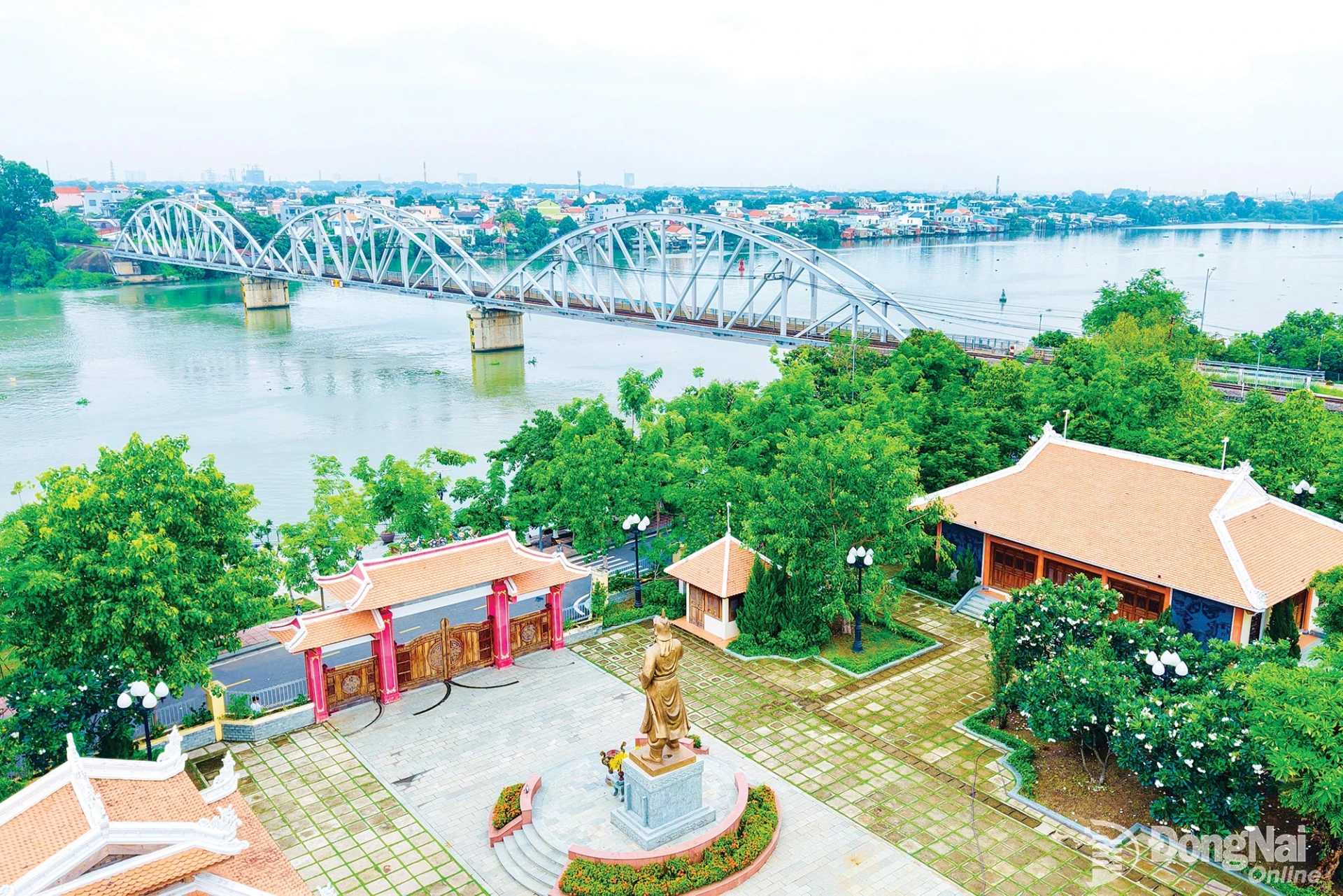 |
| Marquis Nguyen Huu Canh Temple, located on the bank of the Dong Nai River, and Ghenh Bridge leave distinctive imprints on Dong Nai City. Photo: Cong Nghia |
Dong Nai is considered an ancient land because of its long history, with traces of human habitation dating back to prehistoric times. During the Champa period and later, as the Nguyen Lords expanded their territory southward, bustling craft villages and markets took shape in the region. The Hang Gon Megalithic Tomb is an archaeological site known far beyond the Southern region. The former Bien Hoa city area was an important administrative and commercial center dating back to the Nguyen Dynasty. The name "Dong Nai" once referred to a vast region of the South, dating back to when the area came under the Nguyen Lords nearly 330 years ago, while place names such as Tran Bien and Pho Islet have appeared in historical records for hundreds of years.
Dong Nai is home to many historical and cultural relics, including the Tran Bien Temple of Literature, the Bien Hoa Ancient Citadel, the Ngu Hanh Nuong Nuong Temple, Buu Phong Pagoda, Binh Hoa Communal House, Soc Lon Pagoda, the Hang Gon Megalithic Tomb, Marquis Nguyen Huu Canh Temple, the Nhon Trach tunnels, and the famous traditional Bien Hoa pottery craft villages.
Dong Nai is a land rich in revolutionary traditions and the "cradle" of many resistance movements, embodying the indomitable spirit of the saying, "War Zone D remains, Saigon is lost." It was also the "heart" of the resistance war against U.S. imperialism for national salvation in the South, housing the Command Headquarters for the Liberation Army of South Vietnam at Ta Thiet Military Base, which marks significant historical decisions and embodies the resilient spirit and wisdom of Vietnam.
Ancient imprints are inextricably linked to the Dong Nai region through its structures and cultural life. The city’s ancient element refers to century-old pagodas, heroic revolutionary relics, and traditional craft villages that continue to preserve the marks of the skilled hands of the forefathers. It also refers to lush fruit orchards and tamarind-shaded streets that have witnessed the many ups and downs of the nation. Tradition here is the source that nurtures identity.
Preserving identity for a modern, dynamic city
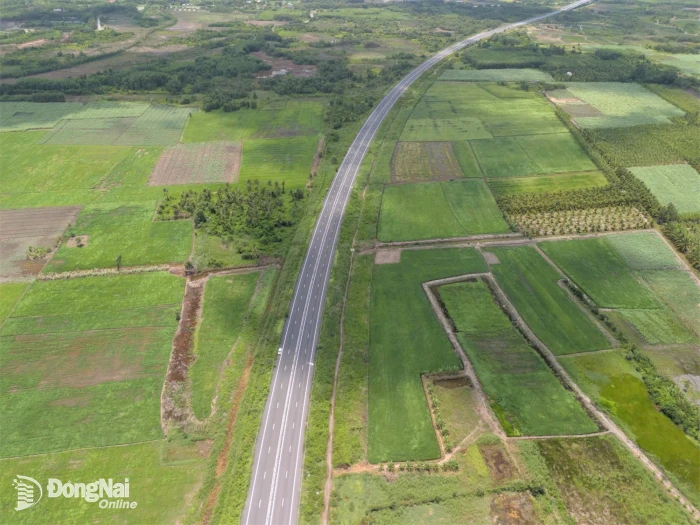
Yet Dong Nai is also a very young city. Its youthful vitality can be seen in modern industrial zones, newly emerging urban areas, and a dynamic and creative young generation with tech start-ups and green ideas. The city is young in its spirit of innovation and its aspiration to reach further. Long Thanh International Airport, several expressways, Ho Chi Minh City’s Ring Road 3, and Ho Chi Minh City’s Ring Road 4, which will connect Dong Nai with neighboring provinces and cities, are nearing completion, together painting a bright picture of the future. Dong Nai is not only one of the economic locomotives of the South but also a destination for investment capital, eco-tourism, and culture.
 |
|
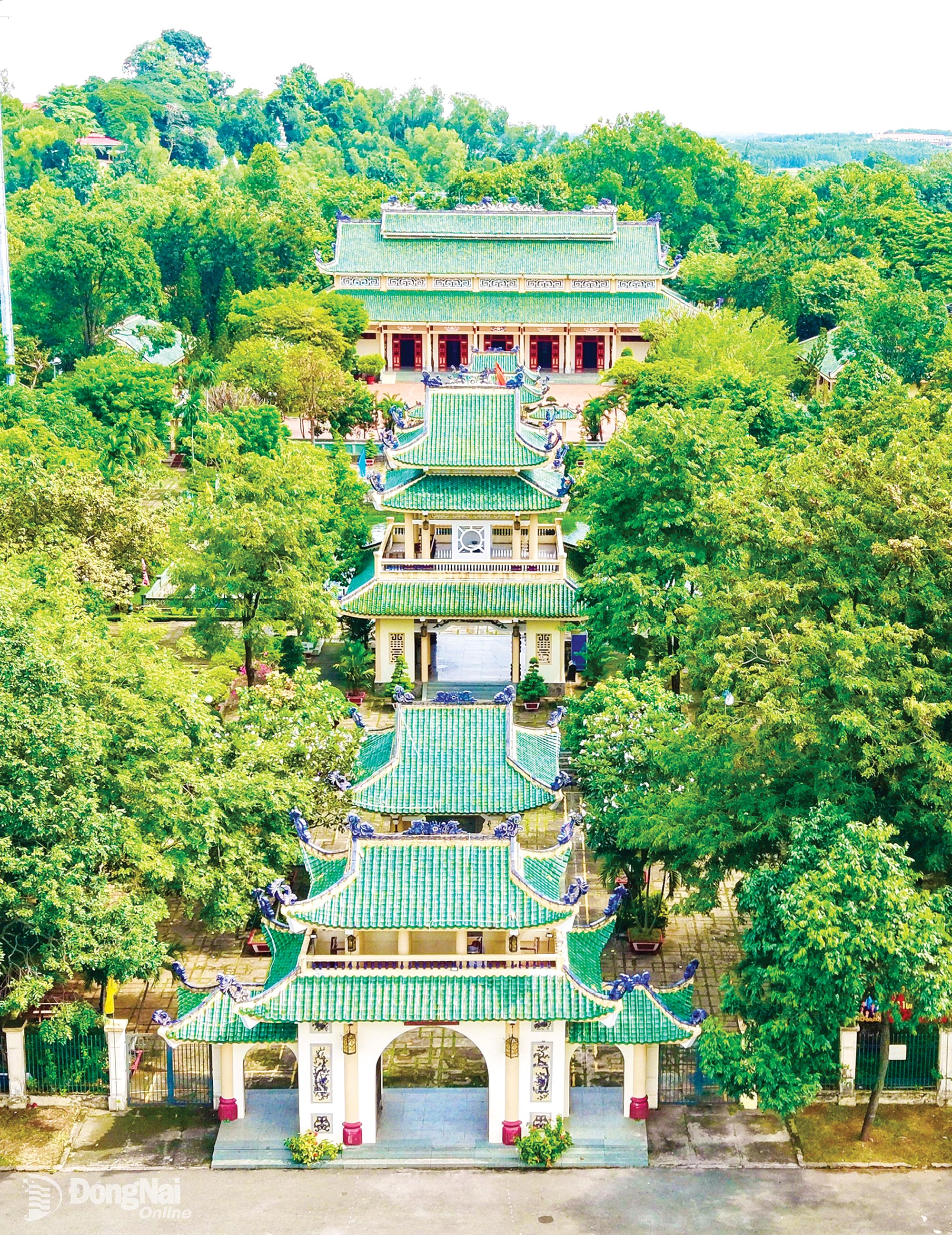
The Tran Bien Temple of Literature is located in Tran Bien Ward, the central urban area of Dong Nai City. Photo: Cong Nghia |
The future of the city will lie in the harmony between the old and the new, without sacrificing identity in pursuit of modernity. It will be a greener Dong Nai, with high-tech industrial parks, rivers that are no longer polluted, and modern residential areas that continue to retain their gardens and shade trees. Dong Nai will be a smart city where technology serves humanity. It will be a place where education not only imparts knowledge but also cultivates love for the homeland and awareness of heritage preservation.
The people of Dong Nai take pride in their indomitable spirit in national defense, their hospitality, and their sense of community solidarity. That identity is the "red thread" running through everything, helping the city preserve itself amid the flow of modernity.
Then, in the not-too-distant future, visitors will come to Dong Nai not only to admire its relics but also to experience a vibrant city: strolling along the river at dawn to watch the sunrise, visiting pottery craft villages in the afternoon, and wandering through streets under shimmering lights at night. Those with more time can lose themselves in eco-urban areas, enjoy the primeval forest at Cat Tien National Park, learn about the Thac Mo hydropower plant, or immerse themselves in the riverine atmosphere of the Tri An Reservoir area. The young generation of Dong Nai will write the next chapter of that story, as they carry in their veins the heroic blood of their forefathers while also being filled with ambitions for global integration and development.
Such a future requires the concerted efforts of the entire political system, the people, and businesses. The government needs to plan sustainably, businesses must invest responsibly, and citizens should raise their awareness of protecting the environment and heritage. Everyone, wherever they may be, can contribute out of their love for this land, especially to deepen the harmony between the ancient land and the new city. Let its ancient character add more layers to the land, while its youthful vitality provides the city even greater depth.
By Nguyen Minh Hai – Translated by Minh Hong, Thu Ha


Thông tin bạn đọc
Đóng Lưu thông tin