
Resolution No. 16-NQ/TW, issued by the Politburo on July 21, 2026, on the construction and development of Dong Nai City through 2035, with a vision to 2065 (hereinafter referred to as Resolution No. 16), has opened up major opportunities for the city’s development.
The resolution states that building and developing
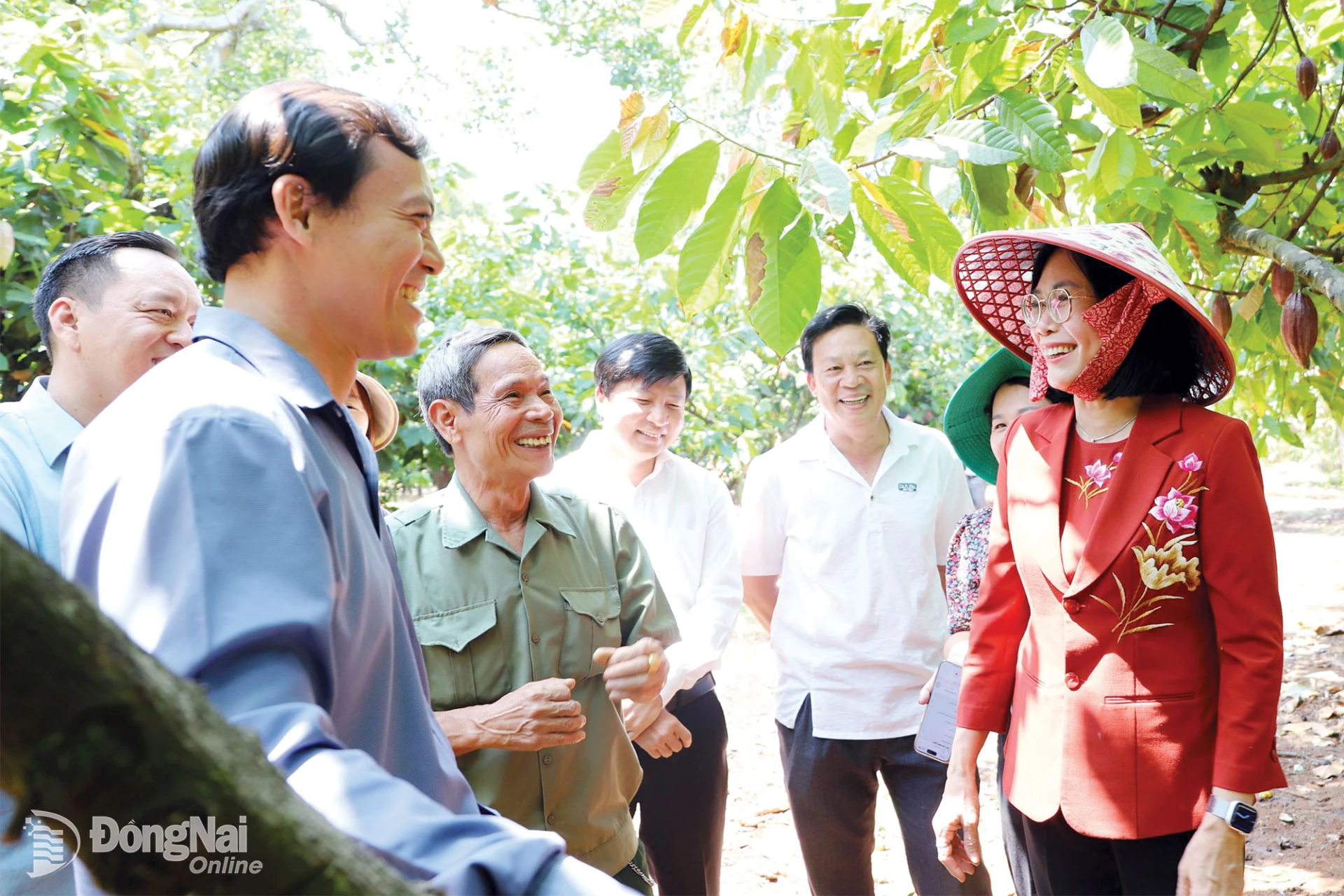 |
| Member of the City Party Committee, Vice Chairwoman of the City People’s Committee Nguyen Thi Hoang visits a successful intercropping model combining cocoa and cashew trees at the farm of Nguyen Khac Thuoc (third from left) in Bu Dang Commune. Photo: Binh Nguyen |
Population aging- opportunities and challenges
Population aging is creating new demands for socio-economic development. If older people are viewed solely as beneficiaries of social welfare, the pressure on the social security system will be substantial. Conversely, mobilizing their roles, experience and capabilities can help ease that pressure proactively and sustainably.
Many countries have shifted their perception of population aging from a challenge to an opportunity. The concept of the “silver economy” is emerging as a new and sustainable growth driver that is less dependent on external factors. This economy develops in response to population aging and encompasses both the economic activities of older people and the provision of products and services tailored to their needs, including healthcare, rehabilitation, assistive devices, social insurance, entertainment and leisure.
In
In the political and social spheres, older people continue to play an active role in their communities. Reports from 73 commune- and ward-level Associations of the Elderly show that more than 7,100 older people participate in Party and local government work, mass organizations, educational promotion, people’s inspection boards and community mediation teams. Notably, many older people with professional qualifications, extensive experience and strong reputations continue to conduct scientific research, provide consultancy and teaching, contribute ideas to policymaking, engage in social criticism and pass on their knowledge and experience to younger generations.
Policies and mechanisms are expected to promote the role of older people
For older people to become an important resource to contribute to realizing sustainable development goals, a supportive environment and favorable conditions must be created to enable them to fully utilize their potential, experience, roles and knowledge. This would help meet their needs and aspirations to work, contribute to society and share in the benefits of local development. At the same time, older people should be encouraged to participate in employment, production, business, scientific research, social activities, traditional education, cultural life and environmental protection.
Party committees and authorities at all levels should strengthen their leadership and direction to ensure the effective implementation of the National Strategy on Older People through 2035, with a vision to 2045; the Prime Minister’s decision approving the project to expand the model of intergenerational self-help clubs through 2035; and the project promoting older people’s participation in digital and green transformation, entrepreneurship and job creation. The city should also introduce policies to encourage businesses and investors to develop services for older people.
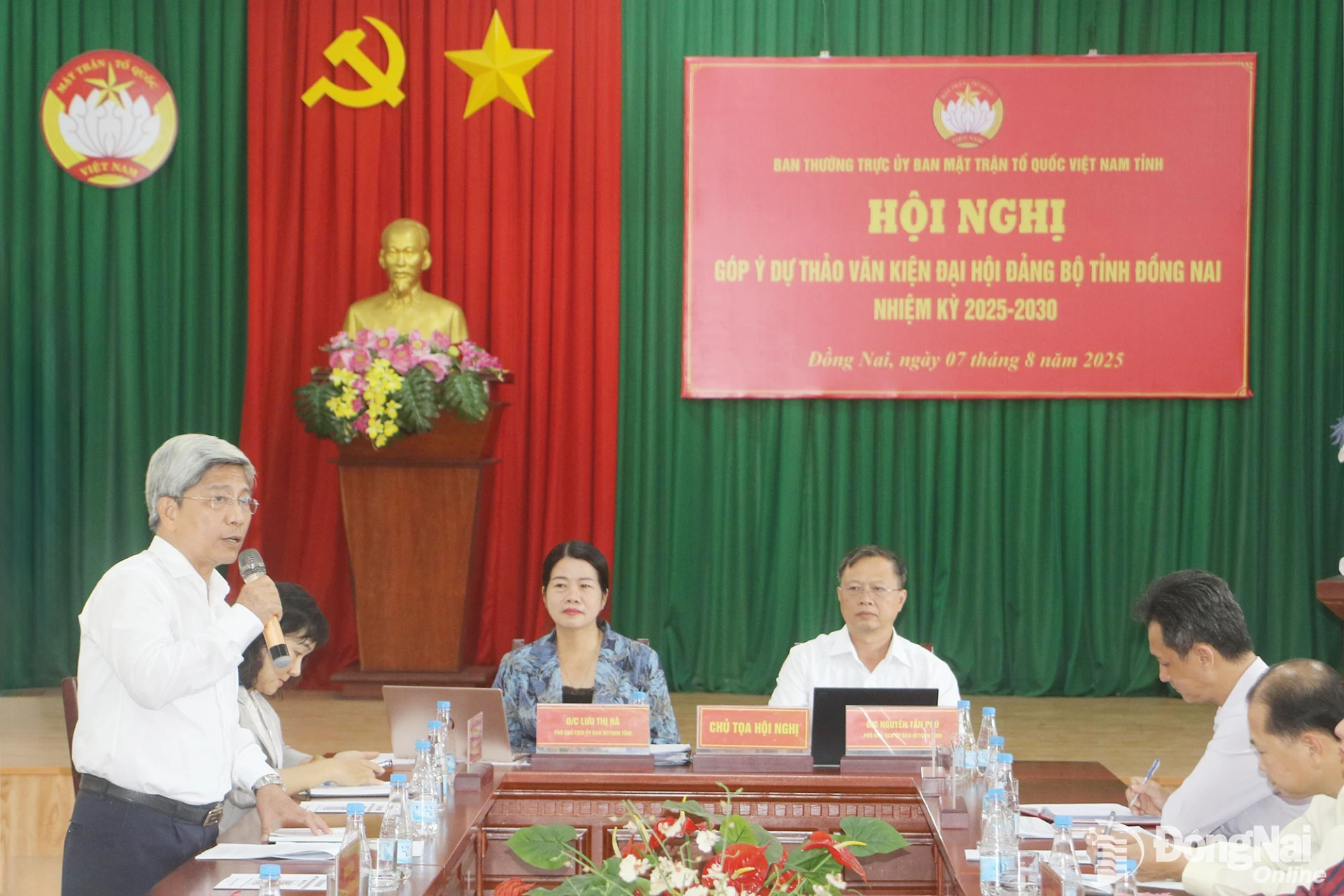 |
| Nguyen Van Long, Chairman of the Dong Nai Provincial Association of the Elderly (now the city-level association) and Member of the Advisory Council of the Dong Nai Vietnam Fatherland Front Committee, contributes comments at a conference on the draft documents for the 2025–2030 term of the Dong Nai Provincial (now City) Party Congress. The conference was organized by the Standing Board of the provincial (now municipal) Vietnam Fatherland Front Committee in August 2025. |
Efforts to promote the role of older people should also be tailored to their age, health, abilities and aspirations. For those aged 60–69, most of whom retain good health and working capacity, priority should be given to creating opportunities for continued participation in socio-economic activities and community contributions. For those aged 70–79, a balanced approach should be adopted between care and and promoting their capabilities, while encouraging their participation in activities suited to their circumstances. For people aged 80 and above, priority should be given to healthcare and their material and spiritual well-being, while respecting and promoting their roles and standing within their families and communities.
Older people take the initiative to affirm their value
Harnessing the role of older people in the new era requires each of them to proactively change, adapt and affirm their value. Age does not mean having to stop moving forward. As long as their health permits, older people should confidently and actively participate in activities suited to their abilities and aspirations, including digital transformation, green transition, entrepreneurship and job creation.
A happy city is not simply one where older people live longer and healthier lives, but one where they feel valued, respected and able to continue making contributions.
By Nguyen Cong Soi
(
- Translated by Mai Nga, Thu Ha
Thông tin bạn đọc
Đóng Lưu thông tin