
The city’s policy of investing in schools in border communes has been implemented across eight localities, initially producing positive results and creating fresh momentum for improving the quality of teaching and learning.
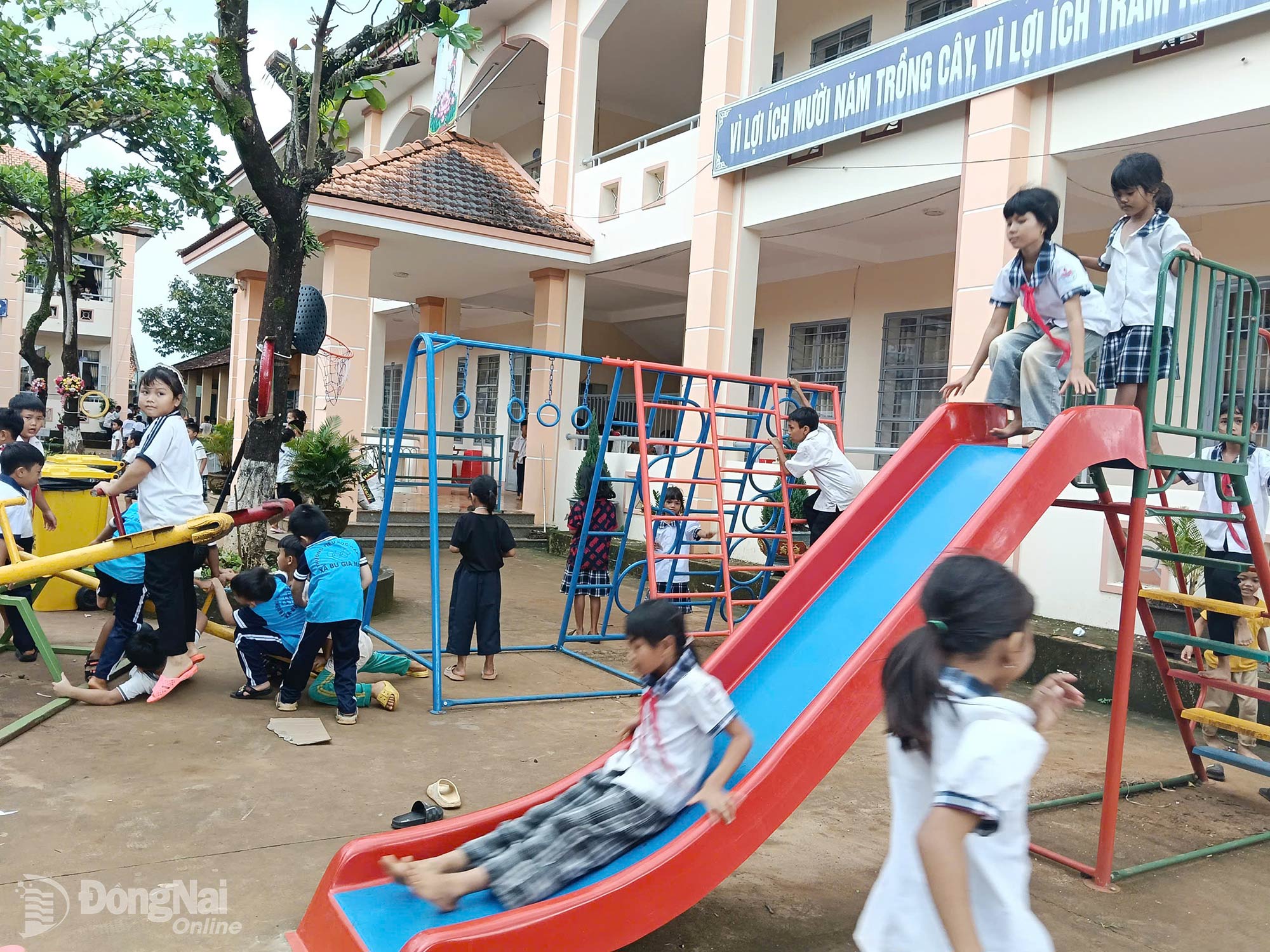 |
| Students at Bu Gia Map Primary School in Bu Gia Map commune during recess. Photo: H.Y |
Do Dang Bao Linh, Deputy Director of the Department of Education and Training (DoET), said: “The implementation of the project to invest in and comprehensively improve the quality of teaching and learning in eight border communes through 2030, with a vision to 2045, is giving schools in border areas a new look and creating a more vibrant learning environment, while also giving parents greater peace of mind and confidence.”
Turning Party policies into reality
The 2026-2027 school year came to teachers and students of Loc Thanh Primary and Secondary School in Loc Thanh commune in a very different way, thanks to the city’s priority allocation of substantial funding to renovate and repair classrooms and other school facilities. Notably, the project to build day-boarding facilities, a kitchen, a dining hall and other auxiliary facilities at Branch 1 was completed and inaugurated in time for the opening of the new school year.
From the very first official day of classes, all students were served free midday meals at school by teachers, border guards and Youth Union members, with funding from the state budget. After lunch, the students stayed at school for their midday break before returning to class in the afternoon.
Nguyen Thi Hue, Vice Principal in charge of Branch 2 of Loc Thanh Primary and Secondary School, said: “On the very first official day of the new school year, the branch began providing midday meals and accommodation for 890 primary and secondary students. Most students enrolled in the day-boarding program because their parents are busy working and cannot take them home and bring them back to school at midday.”
Speaking about the day-boarding services, Hue said the work was demanding because all teachers had to stay at school to serve the students. However, the teachers were happy to see the students receive meals with a full range of dishes, including savory dishes, stir-fried vegetables, soup, fruit and yogurt.
The support does not stop there. Although the policy of providing free textbooks to students is not expected to be implemented until the 2028-2029 school year, Loc Thanh commune has already introduced the program this school year by mobilizing funding from social organizations and other community sources.
Comprehensive support from the city budget, together with the efforts of the Loc Thanh Party Committee and local authorities, has has brought joy to students while easing the burden on their parents, particularly those from ethnic minority communities, which account for a relatively large proportion of the commune’s population. The measures are also helping reduce the risk of ethnic minority students dropping out of school.
Dieu Thi Tram, a member of the Choro ethnic group from Hung Thuy Hamlet in Loc Thanh commune, has two children studying at Branch 2 of Loc Thanh Primary and Secondary School. Expressing her happiness, she said: “In previous years, when the new school year began, we had to buy the textbooks ourselves and take our children to and from school in the morning, at noon and in the afternoon. This year, both of my children go to school, so life is easier for us as parents. We do not have to pay tuition fees, make as many trips to take them to and from school, or pay for their meals, while they can still have lunch at school. When my children come home in the afternoon, they tell me that the food at school tastes better than the food at home. I am very happy.”
Creating new milestones
More than a year after the implementation of Politburo Conclusion No. 81-TB/TW, dated July 18, 2025, on the policy of investing in schools in border communes, educational facilities across the city have undergone significant changes under the strong leadership and direction of the City Party Committee (CPC)’s standing members.
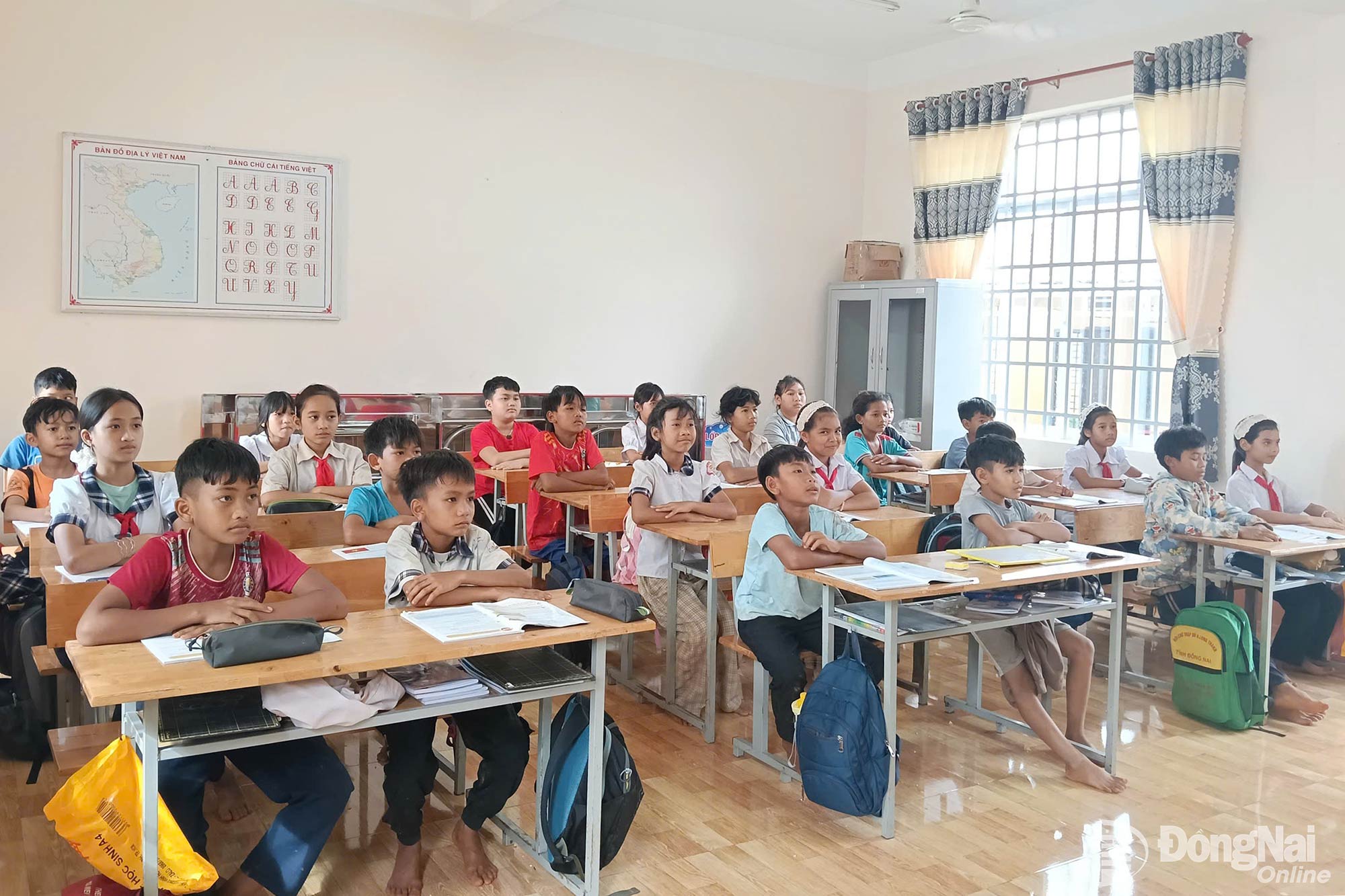 |
| Students at Bu Gia Map Primary School in Bu Gia Map commune during a lesson. Photo: H.Y |
The City People’s Committee approved the project on investing in and comprehensively improving the quality of teaching and learning in eight border communes through 2030, with a vision to 2045, and moved quickly to translate the policy into concrete action. The project has a total budget of nearly VND1.2 trillion from the city budget to invest in 53 educational institutions.
The project focuses on four key objectives: making investment and comprehensively improving the quality of teaching and learning at all levels and expanding vocational training; investing in day-boarding schools, with priority given to multi-level day-boarding schools; upgrading school facilities in border communes to meet Level 2 standards; and planning to expand school sites to at least 5-10 hectares each to allow for the construction of at least one multi-level boarding school in each locality.
Based on the project’s clearly defined objectives, the DoET, relevant departments and sectors, and local authorities have taken concrete steps to implement the project in line with actual needs, helping ensure that public funds are used efficiently.
Hoang Manh Thuong, Party Secretary and Chairman of the People’s Council of Loc Tan commune, said education in the city’s border communes, including Loc Tan, had never changed so rapidly. Immediately after the Politburo issued its policy and the City People’s Committee approved the project, the commune reviewed and invested in renovating and repairing facilities at its preschools, primary schools and secondary schools.
In particular, within a short period, the commune introduced day- boarding facilities, including kitchens, dining halls and sleeping areas, enabling nearly 2,500 students at two primary and secondary schools in the commune to receive meals and stay at school during the midday break from the beginning of the new school year. All costs are covered by the state budget, at a rate of VND450,000 and 8kg of rice per student per month.
Meanwhile, according to the Tan Tien commune People’s Committee, all primary and secondary schools in the commune now provide midday meals and accommodation for students. Students attend school for two sessions per day and are served lunch at school using state budget funding, with no financial contribution required from parents.
To implement the day-boarding program, the commune has urgently directed investment in industrial-scale kitchens, organized health check-ups and provided training in food preparation procedures to ensure food safety and hygiene. In particular, construction of Anh Duong Kindergarten in Tan Loc Hamlet began last July, with a total investment cost of VND38 billion. Scheduled for completion in 2027, the school will provide a modern learning environment for children in the commune.
In 2026, the border communes were allocated 25 school construction projects. To date, construction has begun on 11 projects, while 14 others are in the investment preparation stage. The DoET and relevant departments and sectors have closely directed and supervised implementation to ensure that the projects remain on schedule.
Alongside investment in expanding and building new schools, local authorities have also focused on providing teaching equipment, educational materials and information technology equipment to support digital transformation in schools. Notably, from the beginning of the 2026-2027 school year, 32 schools across the eight border communes have provided lunch for students.
The preparations were completed within a very short period. With training and support from the departments of Education and Training, Health, and Finance, the school midday meal program has been implemented in a coordinated manner.
Le Truong Son, Vice Chairman of the City People’s Committee, said the strong leadership and direction of the CPC’s standing members, together with the City People’s Committee’s effective administration, had brought significant improvements to education facilities in the border communes. Students in these communes are benefiting from the Party and State’s special attention to education and training. These policies provide a foundation for education in border areas to make further breakthroughs, and improve the quality of human resources, contributing to firmly protecting the country’s border regions.
By C.Nghia – Translated by M.Nguyet, Thu Ha
Thông tin bạn đọc
Đóng Lưu thông tin