
Dong Nai is one of the three localities with the largest student populations in the country. Despite substantial state budget investment in education and training, public funding alone has yet to fully address the shortage of schools and classrooms.
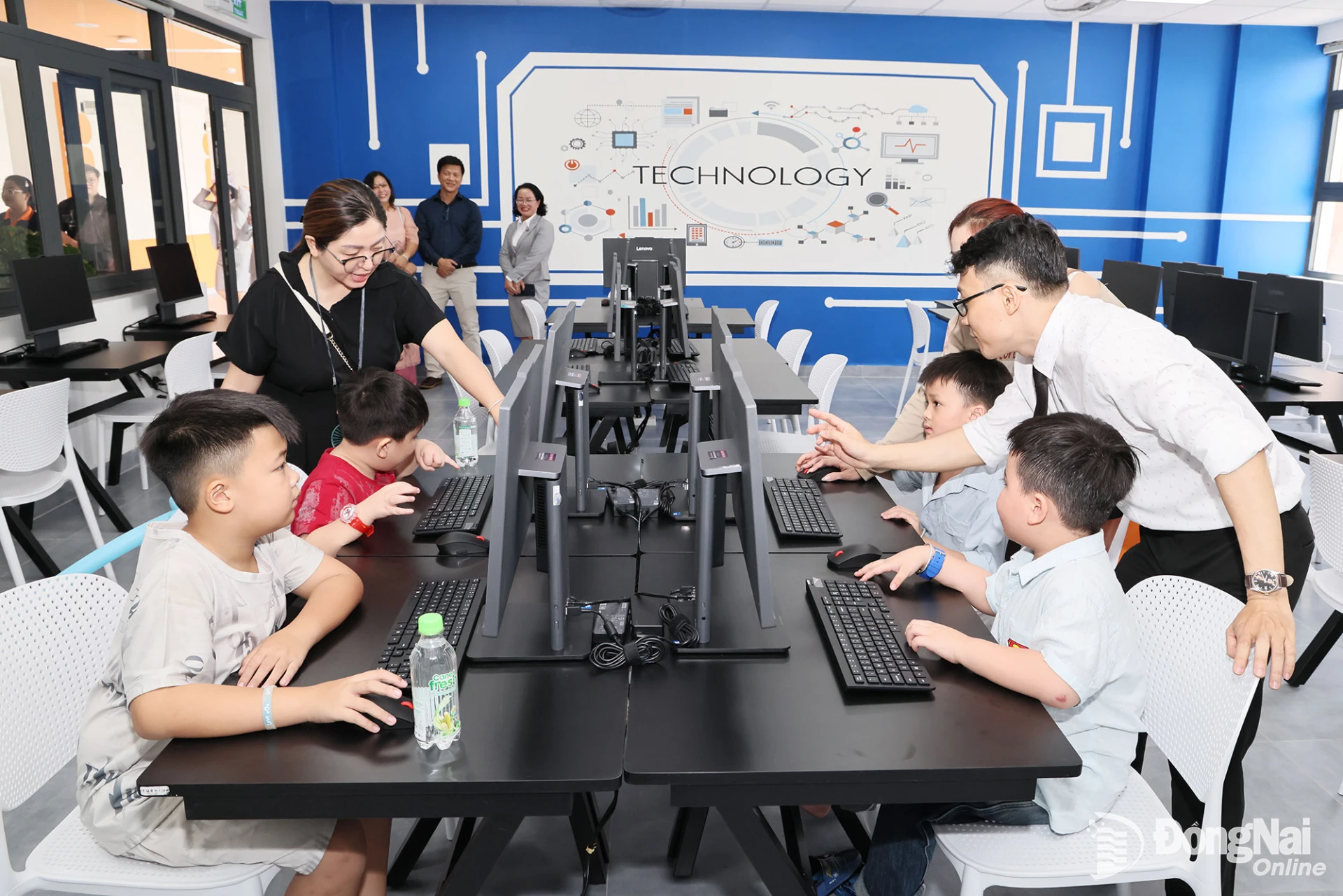 |
| Students at Bien Hoa Primary School in Bien Hoa Ward study in a modern learning environment. |
Deputy Director of the Department of Education and Training (DoET) Do Dang Bao Linh said: “Along with continuing to propose increased state budget investment in education, the city's education sector will continue to step up efforts to mobilize resources from the private sector and society. The goal is not only to ease pressure on schools and classrooms but also to build a diverse, high-quality education ecosystem that meets advanced international standards.”
Easing pressure on the state budget
Trang Dai Ward currently has a population of more than 160,000, making it one of the city's most populous wards. It has also long struggled with overcrowded schools and classrooms. The City People's Committee and the DoET have facilitated the establishment of Bien Hoa Primary-Secondary-High School by a private investor, helping ease pressure on schools in the ward. Notably, from the 2026-2027 academic year, the school has begun admitting Grade 10 students, while the ward still has no public upper secondary school, bringing relief to many parents.
Dao Thi Bich Hanh, a resident of Quarter 5 in Trang Dai Ward, said: “The biggest concern for parents is whether their children will have an opportunity to continue their education in Grade 10 after completing Grade 9, as Trang Dai Ward does not yet have an upper secondary school. That is why I was very pleased when Bien Hoa Primary-Secondary-High School began enrolling Grade 10 students. Although private schools are more costly, they make up for this with well-equipped facilities and comprehensive educational services.”
Meanwhile, Dinh Ngoc Tu, Chairman of the Board of Directors of Dinh Thuan Joint Stock Company (JSC), which currently operates two preschools, three multi-level schools offering upper secondary education and one vocational secondary school, said that more than 20 years ago, workers came to Dong Nai to build their lives and start families at a time when public schools were in short supply, particularly in meeting the annual demand for Grade 10 places. The company, therefore, gradually invested in private schools and has since provided education to tens of thousands of students in the city, with relatively good educational outcomes. Notably, for many consecutive years, the company's multi-level schools have achieved a 100% upper secondary graduation rate, a level that even many public schools cannot necessarily attain.
Dinh Ngoc Tu said that private schools across Dong Nai, including those operated by Dinh Thuan JSC, have helped address many challenges facing the city. The student population continues to grow, while public investment has struggled to keep pace with demand, land resources are becoming increasingly limited, and public schools also face staffing constraints. In addition, private schools fulfill their financial obligations to the state budget each year.
The city is stepping up efforts to attract capable and experienced investors to develop high-quality education projects, with a view to establishing a university-centered urban area and an international-standard innovation center linked to Long Thanh International Airport and the Long Thanh Special Economic Zone. The area is expected to develop an education and training ecosystem specializing in aviation, logistics, electronics and semiconductor technology.
According to the DoET, Dong Nai is among the localities at the forefront of mobilizing private-sector resources for education. As a result, the city now has nearly 250 private schools spanning preschool, general education, college and university levels. In particular, several large-scale private multi-level schools have been established, with some offering both Vietnamese and international general education programs. One school offers an entirely international curriculum.
Creating a breakthrough for education
Modern urban development is inseparable from the need for high-quality human resources. Relying solely on state budget investment would be challenging given the enormous resources required. Therefore, continued mobilization of private and other non-state resources for education is essential, particularly for high-quality projects in general education and higher education, as well as the development of innovation centers. Such investment would help reduce pressure on the city's public investment and recurrent expenditure while also creating potential for additional state budget revenues.
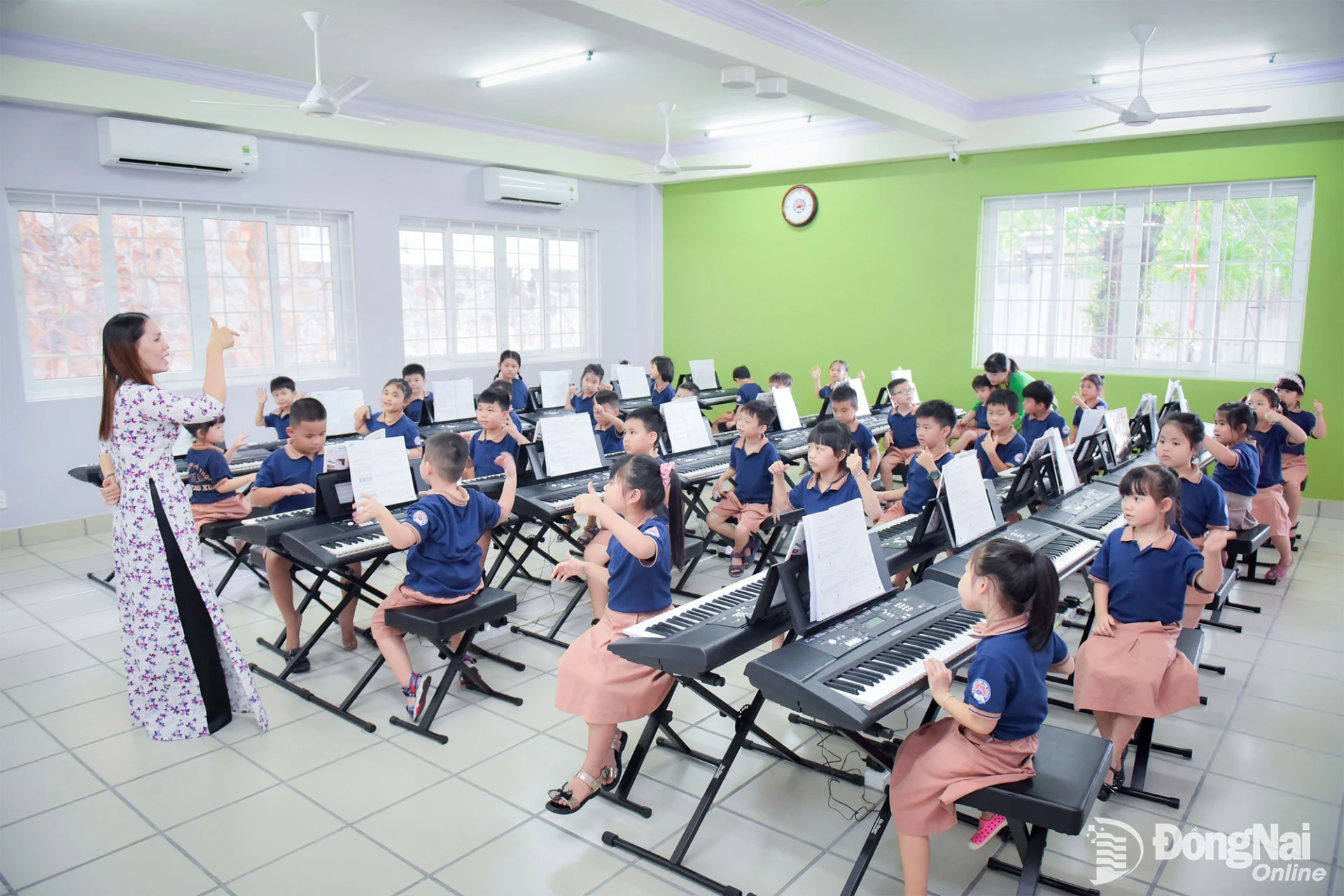 |
| A class at Bui Thi Xuan Private Primary-Secondary-High School in Tam Hiep Ward. Photo: Cong Nghia |
Dong Nai is stepping up efforts to attract a range of education projects, including a planned university-centered urban area and an international-standard innovation center. Several domestic and international education investors have visited Dong Nai to survey potential sites and explore opportunities to develop international-standard schools and universities offering programs related to aviation technology, logistics, healthcare and electronics in Long Thanh and Nhon Trach. These are also among the fields in which the city needs human resources to serve Long Thanh International Airport and next-generation industrial parks.
To attract more high-quality education projects that meet international standards, investors hope the city will soon complete its overall development plan, including the designation of potential land sites for educational projects. At the same time, the city is expected to effectively implement the provisions of the new Urban Development Law, recently passed by the National Assembly and scheduled to take effect on October 1, to facilitate investment procedures, accelerate project licensing and implementation, and enable educational institutions to begin education and training activities as soon as possible.
“Private schools have established their position through the quality of the education and services they provide. The perception that students should only attend private schools if they cannot get into public schools is no longer prevalent. In fact, many parents are now more willing to choose private schools for their children because they offer full-day schooling, diverse experiential learning activities and English instruction from Grade 1.”
Pham Ngoc Ly, Principal of Bui Thi Xuan Primary- Secondary-High School
At a meeting between the City Party Committee’s Standing Board and representatives of universities, colleges and other institutions, including private schools, participants proposed that the city adopt more flexible land and financial policies to facilitate the development of educational institutions. In particular, they called for equal opportunities for public and private schools so that all educational institutions can play a greater role and make larger contributions to the city. Dr. Phan Ngoc Son, Rector of Dong Nai University of Technology, said: “Investors are eager to contribute more to the city through human resources and technological solutions rather than asking the city to provide the same level of investment support as it does for public schools.”
According to the DoET, the city's education and training sector should not rely entirely on the state budget but should also make full use of the strengths and experience of private investors. This policy has been pursued consistently for many years and has produced tangible results. In addition, the city encourages businesses, particularly those in high-tech sectors, to cooperate with colleges and universities in training human resources, thereby establishing a three-way partnership among schools, the State and businesses to jointly train and provide skilled workers.
By C.Nghia – Translated by M.Nguyet, Minho


Thông tin bạn đọc
Đóng Lưu thông tin