
In recent years, Vietnam Fatherland Front (VFF) committees at all levels in Dong Nai City have implemented various measures to promote the application of information technology in management and professional activities, while developing digital skills and platforms for VFF officials and staff.
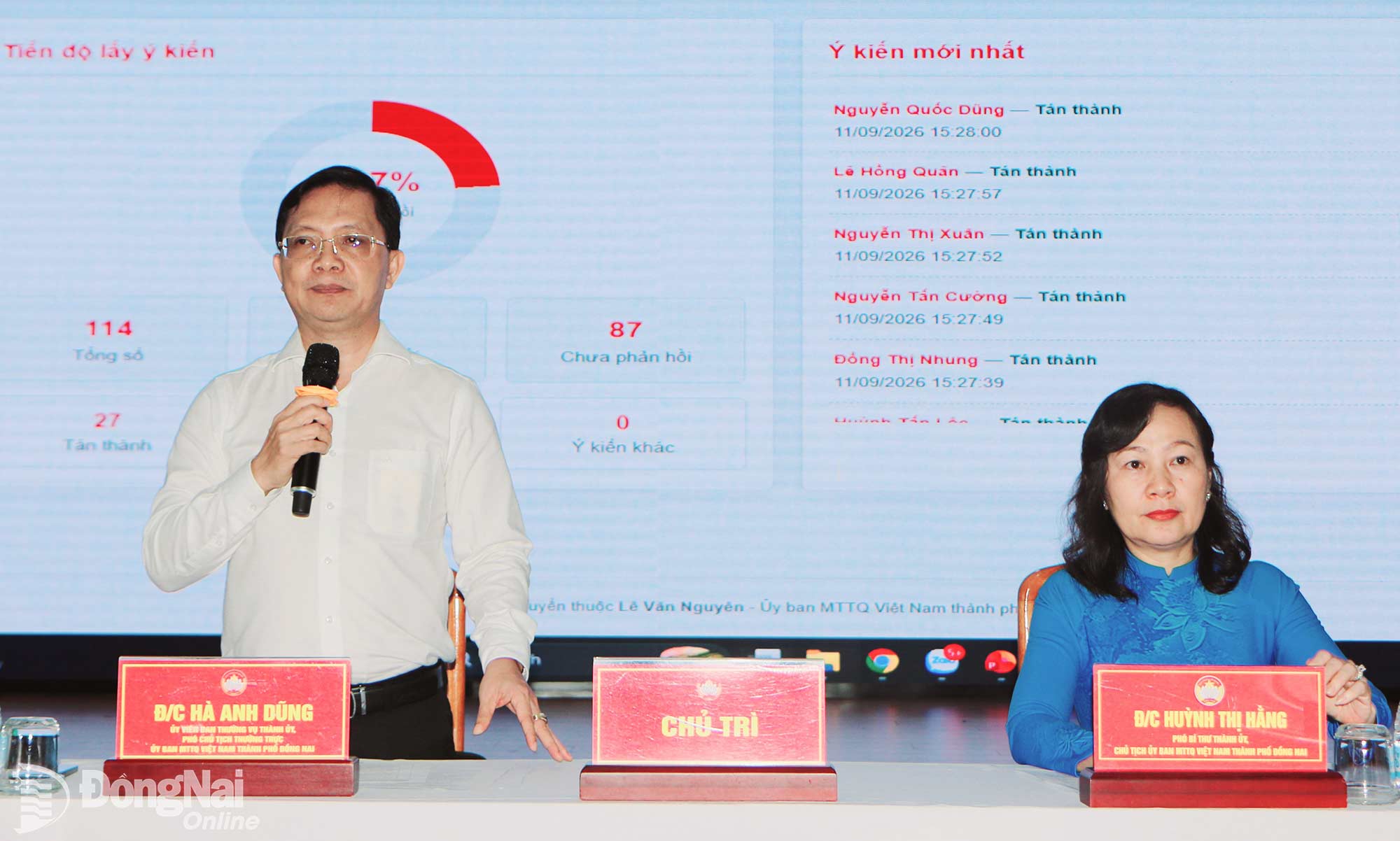 |
| Huynh Thi Hang, Deputy Secretary of the City Party Committee (CPC) and Chairwoman of the Dong Nai VFF Committee, and Ha Anh Dung, Standing Vice Chairman of the Dong Nai VFF Committee, chair a personnel consultation at the fourth extraordinary conference of the Dong Nai VFF Committee, first tenure (2025-2030), held both in person and online. |
These efforts have helped the VFF committee operate more efficiently and reach people more quickly and effectively, enabling it to promptly understand their concerns and recommendations on social and everyday issues.
Digital platforms put into use
Of the 15 key areas set out in the Resolution of the first Congress of the Dong Nai Provincial VFF, (now Dong Nai municipal VFF), for the 2025-2030 tenure, several targets related to digital technology have been set for the next five years. These include providing annual training and updates on VFF-related knowledge and digital skills to at least 95% of full-time officials at the city and commune levels. By the end of the tenure, the goal is for 100% of officials to receive training in VFF affairs and other professional skills. All VFF committees at all levels are also expected to operate a “Digital VFF Portal” to receive public recommendations 24/7.
To date, all 595 villages, hamlets and quarters have established community Zalo groups, while VFF committees in all 95 communes and wards have established fanpages as channels for sharing information and gathering public feedback. VFF committees at the city, commune and ward levels have also coordinated a number of training sessions on digital transformation for VFF officials at all levels.
Nguyen Thi Minh Phuong, Chairwoman of the Bien Hoa ward VFF Committee, said all six quarters in the ward have stable and active community Zalo groups, with most households having a member in the groups.
Members of VFF working committees have met the requirements of their new tasks, including effectively using information technology. This has helped streamline VFF activities and facilitate the management and implementation of campaigns in residential areas, particularly after the reorganization and merger of quarters, which have expanded their geographical coverage and increased their populations.
At the same time, VFF committees at all levels have stepped up the use of hybrid meetings combining in-person and online participation. While conferences were previously held largely in person, online participation has now been expanded to the commune/ward level.
For example, at a conference reviewing the 2021-2026 coordination program to promote the role of religious organizations and belief establishments in engaging in environmental protection and climate change response in the city, Dong Nai VFF Committee’s Standing Board organized the event both in person and online, connecting with all 95 communes and wards. Comments from delegates and guidance from the conference chair were delivered simultaneously to VFF organizations at all levels.
Similarly, the fourth irregular conference of the Dong Nai VFF Committee, first tenure (2025-2030), was held both in person and online. This enabled committee members working overseas or in different localities across the country to participate in the personnel consultation by casting their votes through an app provided by the organizers, instead of being absent with a valid reason as in the past.
These approaches have helped improve the effectiveness of VFF activities while meeting practical requirements in the new context.
A channel for receiving public feedback
At the same time, VFF committees at all levels have made effective use of digital platforms and digital applications to listen to residents and respond to their feedback through various digital VFF models.
In Dak Lua commune, the “Zalo Group for a Safe Community” model has enabled the authorities to receive and promptly address more than 100 information pieces from residents concerning public security and order. This has helped strengthen public trust in the local police and authorities.
The Dong Nai VFF Committee’s Standing Board has recently issued a plan to organize activities as part of the “Month of Listening to the People” initiative across the city. Accordingly, the peak campaign will run from October 1 to November 18, 2026.
City-level socio-political organizations will select appropriate times to participate in the campaign based on their own working programs and specific characteristics. The standing committees of VFF committees in communes and wards will develop detailed programs and plans suited to local conditions.
Nguyen Van Duc, a resident of Dak Lua commune, said that when residents have information or suspicions concerning security and order in their residential areas, they report them to hamlet authorities and commune police through the Zalo group. The tips receive prompt responses, giving residents confidence in the group as a reliable channel for communicating issues in their daily lives to the authorities.
According to Luu Thi Ha, Vice Chairwoman of the Dong Nai VFF Committee, the committee has in recent years taken the lead in applying artificial intelligence and digital VFF platforms to communications and administrative work. Modern communication tools, including short videos, infographics and online contests, have reached millions of users in cyberspace.
In particular, the use of QR codes to collect data, conduct surveys, receive feedback and recommendations, and compile reporting forms has helped improve management efficiency, reduce information-processing time and enhance interaction with residents.
Meanwhile, the public-service digital signature system has been deployed across the VFF network, with about 1,500 digital certificates newly issued or updated. This has created an important foundation for processing electronic documents, advancing administrative reform and building a digital working environment across VFF organizations at all levels.
Notable digital transformation initiatives, including “Using QR codes to receive public feedback, recommendations and connect social welfare support,” “Listening to the People on Digital Platforms,” and the “Digital VFF” Club, have enabled people in both remote and urban areas to access information and promptly submit their feedback to VFF organizations at all levels.
Going forward, the Dong Nai VFF will continue to accelerate the application of digital technologies and platforms, grassroots information systems, electronic portals and appropriate interactive channels to expand channels for receiving public feedback, particularly from young people, workers and those with limited conditions to participate directly in activities in their residential areas.
By V.Truyen – Translated by M.Nguyet, Thu Ha
Thông tin bạn đọc
Đóng Lưu thông tin