
Authorities in Dong Nai City are stepping up inspections and oversight of food safety at schools to prevent food poisoning, ensure adequate nutrition, and protect the health of students, teachers and staff.
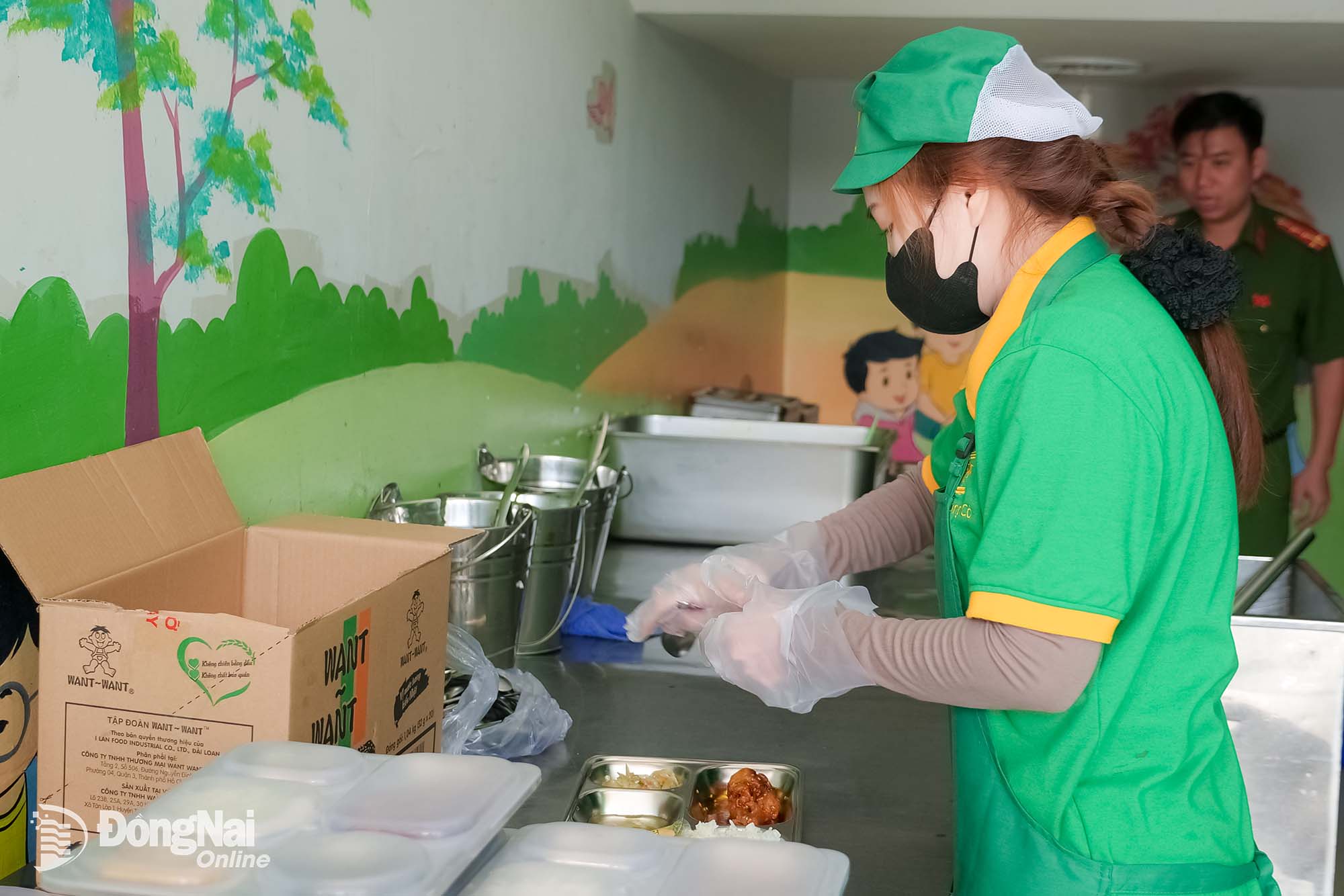 |
| A school health worker distributes meals to students at Thong Nhat Primary School in Tran Bien ward. |
School leaders have been required to take greater responsibility and remain vigilant about food safety.
Tight control at every stage
Since early September 2026, the city's inter-agency food safety inspection team, led by Van Thanh Binh, Deputy Director of the Department of Health (DoH), has inspected food safety practices at a number of schools in Long Hung, Tran Bien, Dong Xoai, Trang Bom, Long Thanh and Bu Dang.
At Le Quy Don - Long Binh Tan High School in Long Hung ward, the inspection team found that the school had contracted Song Hong Tan Co., Ltd. to operate its kitchen and provide about 1,100 meal portions a day for students, teachers and staff. Each portion costs VND29,500.
In addition to its collective kitchen, the school also operates a canteen selling packaged food products such as cakes, milk, bottled water and other items for students.
At Ngoi Sao Kindergarten in Long Hung ward, meanwhile, the school operates its own collective kitchen, providing breakfast, lunch and afternoon snacks for children, as well as lunch for teachers and staff. It serves more than 240 meal portions a day, at a cost of VND50,000 per student per day.
At Thanh Tam Kindergarten in Tran Bien ward, Deputy Principal Dinh Thi Tuoi said the school kitchen provides about 450 meal portions a day for students, teachers and staff. The school has contracted food suppliers whose products have clear and traceable origins. The processes for receiving ingredients, preliminary preparation and cooking follow a one-way flow.
The school pays close attention to food safety. All 10 kitchen staff undergo annual health check-ups and receive food safety training. Menus are publicly posted at the school gate and shared in class groups so that parents can stay informed and monitor the meals.
Dinh Thi Tuoi, Deputy Principal of Thanh Tam Kindergarten
Inspections of school kitchens found that the schools generally met requirements for facilities, equipment and food-processing utensils, while dining areas were clean and well ventilated. The schools had contracts and invoices for food ingredients purchased from suppliers, which had certification from the relevant ward or commune-level People's Committees confirming compliance with food safety requirements. The schools also strictly carried out the three-step food inspection process and retained food samples as required. Rapid tests of several food samples and utensils showed that they were safe.
Emphasizing the responsibility of school leaders
Although no violations were detected at the schools inspected, the inter-agency inspection team urged school management boards to remain vigilant. Schools were asked to ensure that food is thoroughly cooked and drinking water is safe, while streamlining their procedures to shorten the time between cooking and serving, so that meals remain hot and safe. They were also required to conduct regular testing of water used for food preparation and cooking.
For units and contractors operating collective kitchens, the inspection team requested that they continue to meet all food safety requirements and strictly comply with regulations governing the receipt, storage, preliminary preparation, cooking and serving of meals. They must also fully carry out the three-step food inspection process and retain food samples in accordance with regulations.
Deputy Director of the DoH Van Thanh Binh said that following the inspections, the team had asked schools to continue fully implementing the food safety tasks set out in Directive No. 33/CT-TTg, issued by the Prime Minister on August 14, 2026, on strengthening food safety in educational institutions (Directive No. 33).
A key requirement of Directive No. 33 is to emphasize the direct role and responsibility of heads of educational institutions in ensuring food safety and protecting students' health. Responsibilities must be clearly defined at every stage, from selecting suppliers and receiving ingredients to cooking, storing and serving meals.
The directive also requires food safety to be controlled throughout the entire school food supply chain, covering raw material sources, supplier selection, transportation, receipt, preliminary preparation, cooking, storage and meal portioning. Collective kitchens, school canteens and food and prepared-meal suppliers must be regularly reviewed in terms of personnel, facilities, equipment and supply capacity.
Alongside food safety controls, Directive No. 33 emphasizes transparency and disclosure to strengthen parents' participation in monitoring. Information on meal suppliers, ingredient sources, menus and conditions for organizing school meals should be disclosed in accordance with regulations, enabling parents to monitor food sources, meal portioning and food preparation areas.
Another requirement is to ensure that school meals are not only safe but also nutritionally adequate, consistent with approved menus and sufficient in portion size. Educational institutions must also proactively develop plans to prevent and respond to food safety incidents and food poisoning, while strengthening coordination among schools, health authorities and local administrations when incidents occur.
By H.Dung – Translated by M.Nguyet, Thu Ha

Thông tin bạn đọc
Đóng Lưu thông tin