
Atomic energy is one of humanity’s major scientific and technological achievements. It has been widely applied in production and everyday life, including healthcare, industry, agriculture and quality inspection.
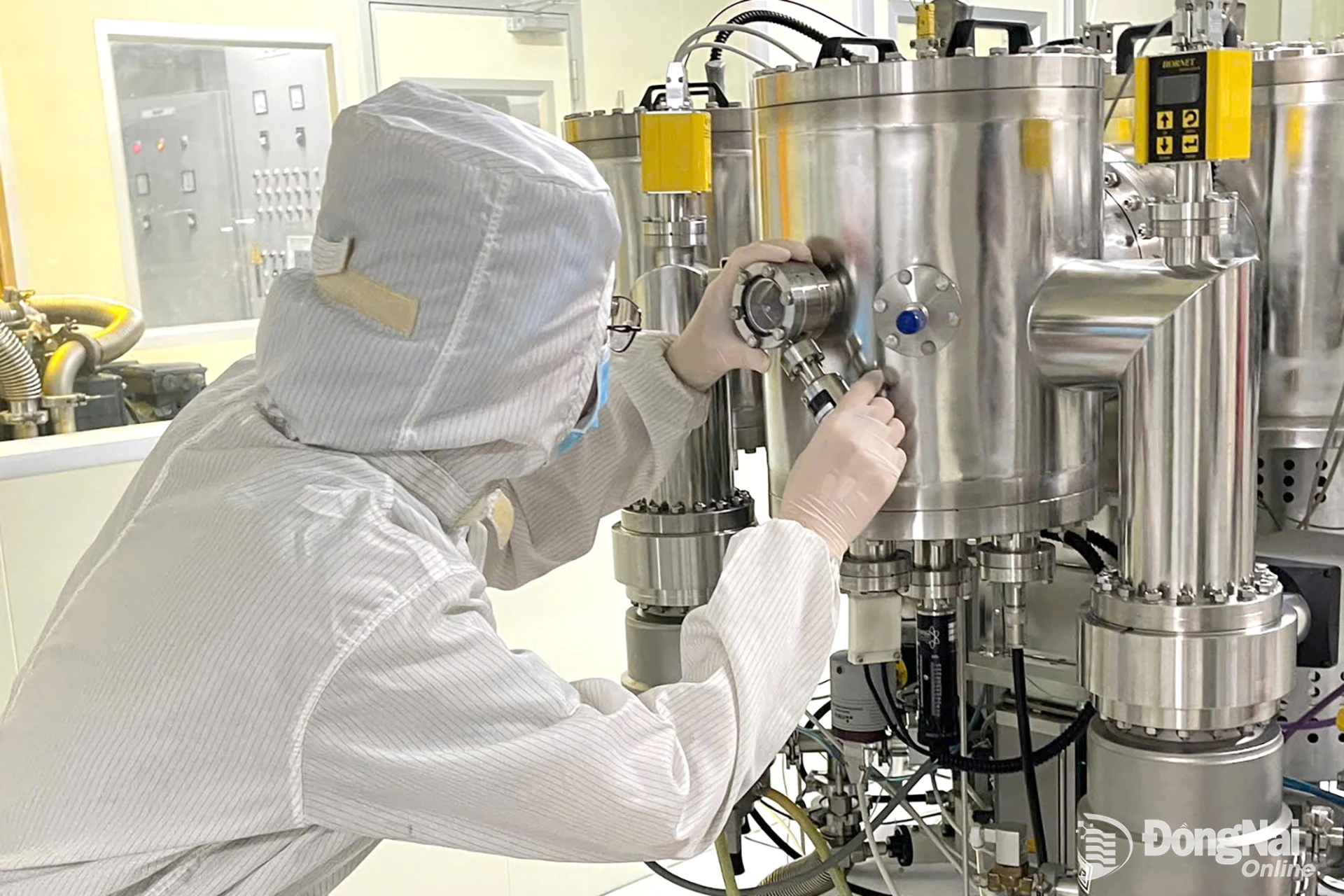 |
| A trainee practices during a training course on semiconductor integrated circuits, jointly organized by the Dong Nai Department of Science and Technology (DoST) and the Institute for Leadership Capacity Development of Vietnam National University Ho Chi Minh City. |
Atomic energy also plays an important role in the development of strategic industries such as semiconductors and other high-tech sectors.
Wide-ranging applications
According to the DoST, atomic energy has a wide range of applications beyond the energy sector. For Dong Nai, the development and application of atomic energy for peaceful purposes could bring practical benefits across various socio-economic fields.
In healthcare, radiation techniques and radioisotopes help improve diagnosis and treatment capabilities, particularly in nuclear medicine and radiotherapy. In industry, radiation techniques and non-destructive testing can be used for quality control, mechanical engineering and manufacturing, high-tech industries, semiconductor production and other sectors with stringent technical requirements.
The amended Law on Atomic Energy took effect on January 1, 2026. It sets strict safety and licensing requirements in line with the guidelines of the International Atomic Energy Agency (IAEA). This helps establish a comprehensive and consistent legal framework aligned with international standards, serving as a prerequisite for a new phase of development in the peaceful application of atomic energy.
In agriculture and logistics, irradiation technology can support the preservation and quarantine of agricultural products, improve product quality and expand market access. This is an area in which Dong Nai has favorable conditions, given its connectivity with logistics network and Long Thanh International Airport. In natural resources and environmental protection, nuclear techniques and isotopes can be used for monitoring, resource assessment and pollution control. Meanwhile, a radiation monitoring network can also strengthen early-warning capacity and environmental protection efforts.
Pham Van Trinh, Director of the DoST, said research, training and the application of nuclear technology would help develop a high-quality workforce, strengthen the city’s science and technology capacity, and and create additional momentum for high-tech industries as well as green and sustainable development in Dong Nai.
Nguyen Duc Hoa, a resident of Hang Gon quarter in Hang Gon ward, said attending local outreach activities on atomic energy and listening to experts and scientists share information and knowledge had given him a better understanding of the benefits of this field in science and daily life. He expressed his hope that departments, agencies and local authorities would conduct more activities to provide information and raise public awareness about this field, with specific content and diverse, accessible formats to help residents better understand the benefits of atomic energy for peaceful purposes and methods for ensuring radiation safety.
Opening up new development potential
Against the backdrop of rapidly rising electricity demand and growing pressure to reduce emissions, atomic energy is regarded as a long-term strategic option. According to experts, atomic energy can play an important role in the energy transition by providing a stable power supply with very low carbon emissions. Developing atomic energy and nuclear power would not only help ensure national energy security but also strengthen the capacity of the domestic industrial sector.
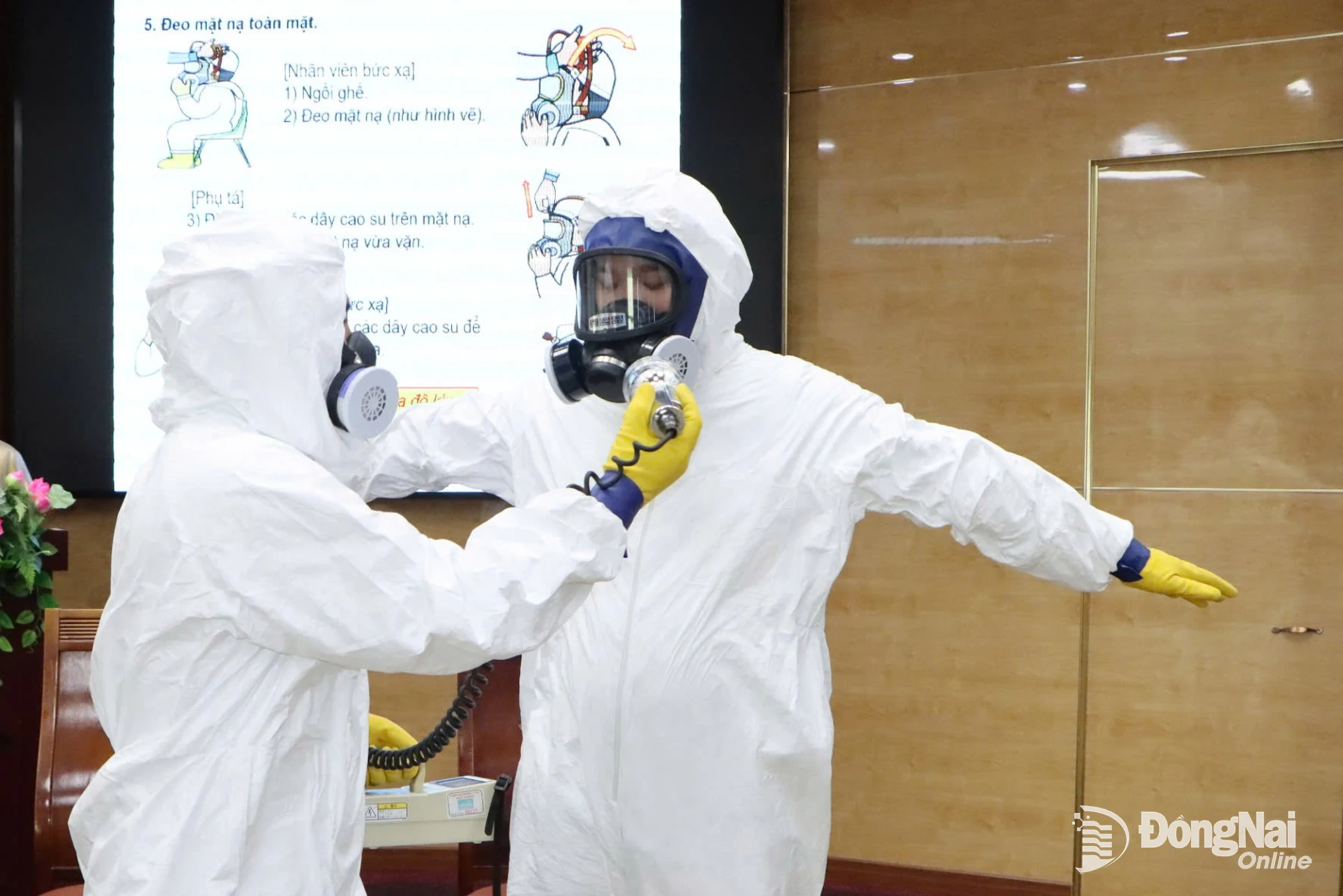 |
| Trainees practice using protective equipment during a basic radiation safety training course. Photo: Thanh Canh |
The Dong Nai City People’s Committee has issued Plan No. 118/KH-UBND to implement the Strategy for the Development and Application of Atomic Energy for Peaceful Purposes through 2035, with a vision to 2050. The plan sets out key tasks and solutions, including completing the institutional framework, accelerating digital transformation in management, strengthening radiation safety controls and environmental protection, and promoting the application of atomic energy across various sectors.
By 2035, the city aims to expand and improve the effectiveness of radiation and radioisotope applications in healthcare, industry, agriculture, natural resources and environmental protection; develop irradiation facilities linked to the logistics system; apply nuclear techniques in crop breeding; and strengthen environmental radiation monitoring systems by connecting and sharing data through relevant digital platforms. It will also focus on training and attracting high-quality human resources.
Assoc. Prof. Dr. Tran Thien Thanh, Deputy Head of the Faculty of Physics and Engineering Physics at the University of Science, Viet Nam National University Ho Chi Minh City, said Dong Nai’s strategic position, along with its significant advantages and potential creates favorable conditions for the application and development of atomic energy for peaceful purposes, particularly in high-tech industries, integrated circuits and semiconductors. Therefore, the locality should strengthen cooperation with research institutes, universities and nuclear technology training institutions and centers in the southern region and across the country to develop human resources and improve the effectiveness of research and applications in this field in the years ahead.
By L. Phuong – Translated by M.Nguyet, Thu Ha

Thông tin bạn đọc
Đóng Lưu thông tin