
Recent days have witnessed a historic milestone in the development journey of Bien Hoa – Dong Nai, as at the 2nd meeting of the 14th Party Central Committee, the Party Central Committee officially approved the policy of establishing Dong Nai as a centrally governed city.
 |
|
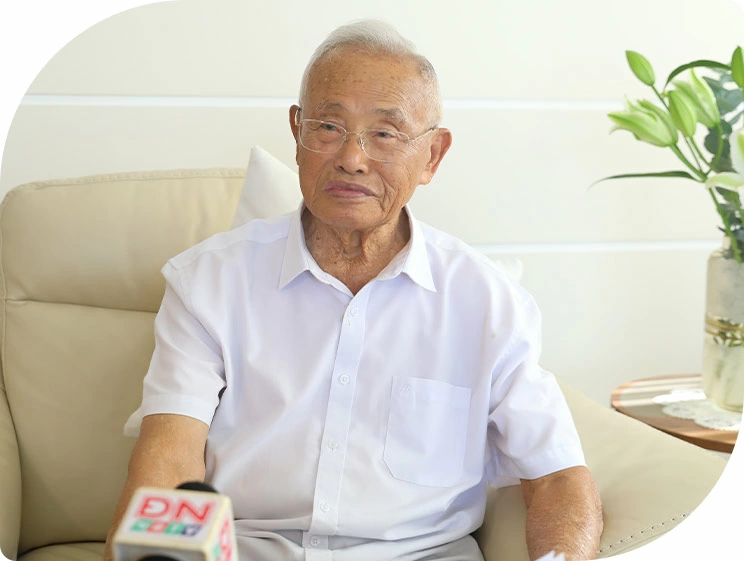
Phan Van Trang, former Secretary of Dong Nai Provincial Party Committee. Photo: Huy Anh |
This decision goes beyond a mere change in administrative boundaries; it is a recognition and affirmation of Dong Nai’s status as a “core urban center” within the Southern Key Economic Region.
* As someone who has accompanied Dong Nai’s development through different historical stages, how do you view this moment as the province stands on the threshold of becoming a centrally governed city? Is this a long-held aspiration of previous generations of leaders?
- Before the approval of this official policy, I - and perhaps many generations of leaders before me - have long believed that Dong Nai deserves a higher status, commensurate with its contributions and inherent potential.
Therefore, when I followed the 2nd meeting of the 14th Party Central Committee in March and learned that this policy had been approved, I was truly moved and delighted.
 |
| Nguyen Ai Quoc Street is proposed to be developed into a boulevard in Bien Hoa urban area. Photo: Pham Tung |
I fully support this policy, as it objectively reflects the province’s development through specific figures. According to resolution of the National Assembly Standing Committee, Dong Nai not only meets but also exceeds criteria on population size, area, and urbanization rate.
For me, as a person who has gone through “life-and-death” experiences and witnessed Dong Nai’s journey from the difficult post-war years to its strong transformation during the renewal period, it can be said that this turning point in 2026 represents a convergence of “good timing, geographical convenience, and harmonious human relations”. It is the crystallization of past aspirations and a solid foundation for the future.
 |
* What changes will the status of a centrally governed city bring to Dong Nai’s appearance and its internal development capacity?
- First and foremost, this decision will elevate the province’s political and administrative status. From a province, Dong Nai will become one of the nation’s “core urban centers." This new status grants greater autonomy in decision-making, access to special financial mechanisms, and priority in central budget allocations.
With this new status as a centrally governed city, Dong Nai will adopt a pioneering governance model. The province will implement a modern, streamlined urban management model, with fewer intermediary layers, enabling faster responses to the needs of citizens and businesses.
At the same time, the province will expand its development space. The merger with former Binh Phuoc (effective from July 1, 2025) has created the largest administrative entity among centrally governed cities. The combination of Dong Nai’s industrial-service infrastructure with the land fund and natural resource advantages of former Binh Phuoc creates a growth pole comparable to major regional cities.
Importantly, Dong Nai will be able to fully leverage the advantages of Long Thanh International Airport and the Long Thanh Airport urban project. Once elevated to centrally governed city status, planning and operating the Long Thanh International Airport can be managed at a broader, international scale, directly connected to global supply chains.
The policy to establish Dong Nai as a centrally governed city will also mark the end of its status as a purely industrial province. This represents a pivotal shift from a locality focused on contract manufacturing and industrial production to a multifunctional urban center, serving as a hub for services, logistics, high technology (both research and production), and finance within the Southern Key Economic Region.
 |
* To realize its post-establishment goals as a centrally governed city, which sectors should Dong Nai prioritize in order to meet the standards of a modern urban center?
- To realize the vision for the next phase and develop the city sustainably, Dong Nai needs to focus on several key tasks.
First, Long Thanh “Airport City” must be developed into the economic “heart”. Areas surrounding the airport should be transformed into internationally scaled hubs for logistics, aviation services, and finance.
At the same time, priority should be given to rapidly developing a green urban corridor, with a focus on the Dong Nai riverside axis linking Bien Hoa - Nhon Trach - Long Thanh, and Trang Bom. This will form a smart urban strip that remains in harmony with nature.
In particular, reforming the governance apparatus is a decisive factor. The new urban administration must be streamlined and strongly promote digital transformation to respond swiftly to the needs of both residents and businesses.
In parallel, Dong Nai should attract selective investment in semiconductor industry and the digital economy in order to gradually replace labor-intensive industries. Social infrastructure must also be developed in a synchronized manner, with priority given to healthcare, education, and social housing to retain high-quality human resources.
 |
* Rapid urbanization is often accompanied by concerns over the loss of identity. According to you, which core values or defining characteristics of the people and the land of Dong Nai should be preserved and promoted?
- Urbanization may change architectural landscapes, but it cannot erode cultural “roots”. Dong Nai has a history of establishment and development spanning more than 325 years.
Historically, Nong Nai Dai Pho - now part of Hiep Hoa Islet - was once one of the most vibrant trading ports in southern Vietnam in the 17th and 18th centuries, playing an important role as a vital hub of trade and cultural exchange. This long-standing tradition of trade and cultural exchange has laid a strong foundation for the current urban development of Dong Nai province.
Therefore, in my view, the first aspect of identity that must be preserved is the character of Dong Nai’s people: openness, tolerance, and generosity.
Second, we must safeguard our invaluable heritage that we possess: from historical relics of resistance wars to cultural, religious, archaeological, and industrial heritage, as well as folk festivals and landmarks like Pho Islet.
I hope the future city government will know how to protect and promote these assets, turning them into unique cultural tourism products.
Cultural development must go hand in hand with economic growth so that residents of a modern city remain proud of their roots, and Dong Nai continues to be associated with the image of a land of “heroic spirit”.
* The ultimate goal of all policies and decisions is the happiness of the people. What are your expectations regarding improvements in residents’ quality of life when the new urban governance model is put into operation?
- Becoming a city under a new governance model - one that is smart and innovation-driven - Dong Nai will need a workforce with strong theoretical grounding, professional expertise, and proficiency in foreign languages, while also possessing innovative thinking and creativity in the digital era to effectively manage and contribute to the city’s future development.
Therefore, greater investment in education and training - from early childhood to higher education - is essential, along with improving teachers’ living conditions. Learning must go hand in hand with practice, with gratitude to past generations to constantly strive to learn and develop both in character and the ability to apply and create.
I hope and firmly believe that once it becomes a centrally governed city, Dong Nai will develop into a smart, green, and sustainable city. There, access to education will be ensured for all, while living standards and social welfare continue to improve. The urban administration will continuously innovate in leadership and governance, remain close to the people, and care for all segments of society - from material to spiritual well-being to unlock the full potential of the population for a dynamic, creative, and forward-looking city.
By Ha Le – Translated by Minh Hong, Thu Ha


Thông tin bạn đọc
Đóng Lưu thông tin