
From April 30, 2026, Dong Nai will officially become Vietnam’s seventh city. This marks an important milestone in its development journey after years of building internal strength, ushering in a new phase marked by higher expectations, broader vision and greater responsibility.
Following the Liberation of the South and National Reunification on April 30, 1975, Dong Nai has risen from a predominantly agricultural province that had suffered heavy wartime losses to become one of the country’s largest industrial centers. After more than half a century, the province’s economic scale has reached nearly VND678 trillion, ranking fourth nationwide, behind only Ho Chi Minh, Hanoi and Hai Phong cities. Its population now stands at nearly 4.5 million, while GRDP per capita is close to VND153 million. State budget revenue in 2025 reached nearly VND103 trillion, and indicators such as domestic and foreign investment attraction, export turnover and trade surplus all ranked among Vietnam’s leading localities. With these achievements, Dong Nai has established a solid foundation to step into a new position.
Dong Nai City will not merely be a title, but is expected to become a development hub, a growth pole and a leading engine capable of driving the wider region. In the longer term, it aims to emerge as a dynamic economic center of Southeast Asia. As such, Dong Nai is embracing a major opportunity to turn this vision into reality.
One of Dong Nai’s greatest advantages lies in its role as a transportation hub connecting the Southern Key Economic Region with neighboring areas. In addition, the Government is prioritizing a series of nationally significant transport infrastructure projects, including Long Thanh International Airport, the Bien Hoa – Vung Tau Expressway, Ben Luc – Long Thanh Expressway, Gia Nghia – Chon Thanh Expressway, Dau Giay – Lien Khuong Expressway, Ring Roads 3 and 4, as well as the North–South high-speed railway. Once completed and put into operation, these projects will further strengthen the locality’s competitive edge.
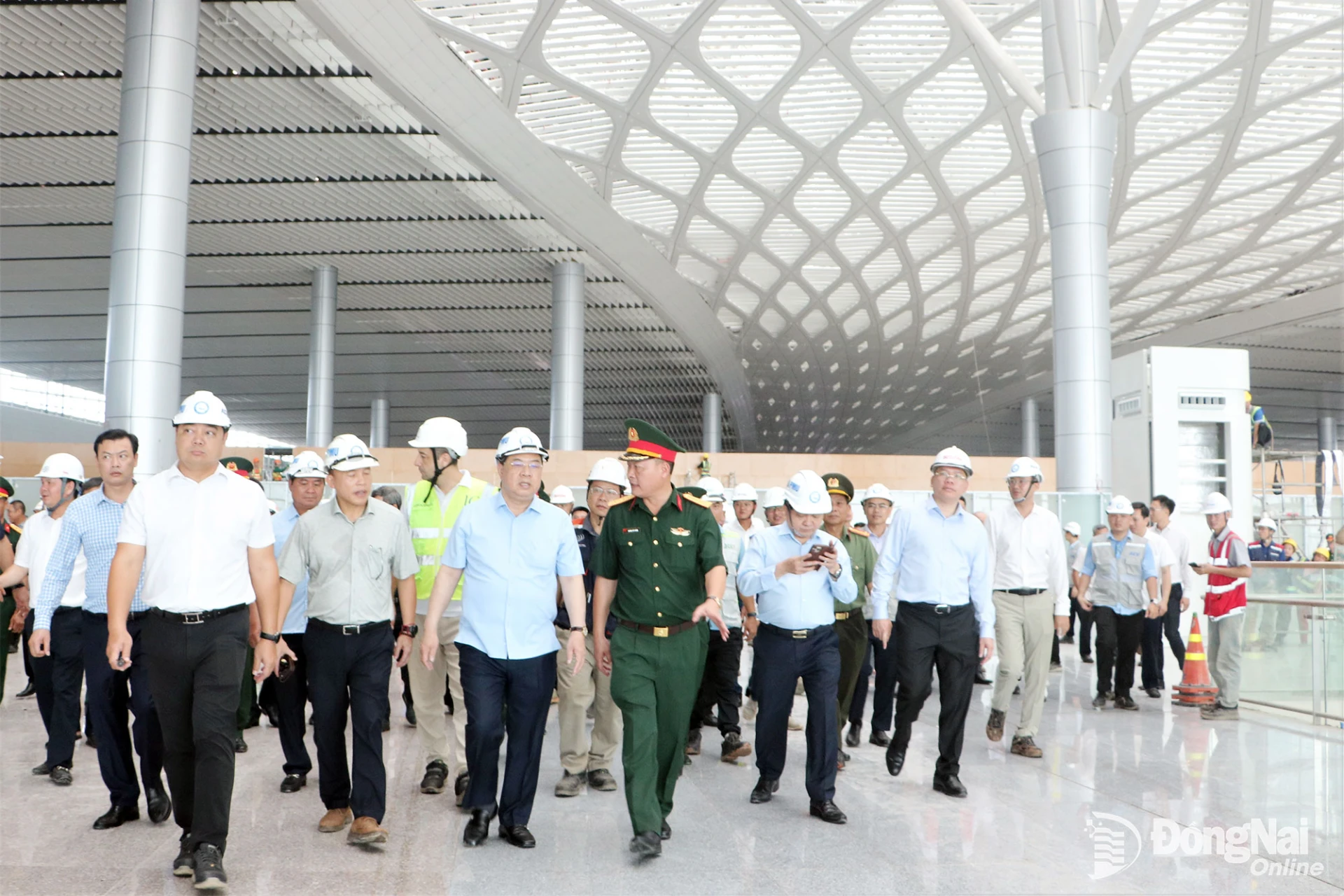
Among them, Long Thanh International Airport is widely regarded as a historic catalyst. Once operational, the airport will not only reinforce Dong Nai’s industrial role, but also transform it into a center for services, logistics, international trade and modern airport urban development on a national scale. Few provinces or cities in Vietnam possess such an advantage.
Beyond its strategic location, Dong Nai has built a sustainable industrial foundation over decades, with industry and construction accounting for 58% of its economic structure. Consequently, the province has consistently ranked among the nation’s leaders in attracting both domestic and foreign investment. At present, Dong Nai has nearly 60 established industrial parks, drawing investors from more than 50 countries and territories, with total registered capital of nearly US$43.5 billion. Notably, many of the world’s major multinational corporations have set up manufacturing facilities here.
Dong Nai’s industrial sector is also shifting toward high-tech application in pursuit of green and sustainable standards. Several factories have already achieved net zero emissions. This serves as an important foundation for strengthening competitiveness in the next stage of development.
In addition to industrial strength, Dong Nai also holds significant advantages in high-tech agriculture. The province ranks among the country’s leaders in pig and poultry farming, while also possessing large-scale, high-quality raw material zones. Many of its agricultural products are exported to demanding markets such as Japan, the United States and Europe. At the same time, Dong Nai is attracting investment to expand green, circular and organic agriculture, alongside deep processing to enhance the value of farm produce.
To support the development of both high-tech industry and agriculture, Dong Nai is prioritizing human resources training, digital transformation and innovation. However, opportunities always come with challenges as the province transitions into city status. These include pressures related to urban governance, city planning and improving residents’ quality of life.
If growth is pursued at the expense of development quality, environmental sustainability and social welfare, even a large city may struggle to become a truly livable one. For that reason, many residents place their hopes in Dong Nai City’s future, one that is sustainable, elevates living standards and creates better prospects for generations to come.
By K. Minh – Translated by M.Nguyet, Thu Ha


Thông tin bạn đọc
Đóng Lưu thông tin