
With an extensive network of facilities, a diverse range of medical specialties and increasingly well-planned investment, the private healthcare system is helping share the burden with the public healthcare system, improve the quality of healthcare for residents and provide fresh impetus for the development of Dong Nai City’s healthcare sector.
Politburo Resolution No. 16-NQ/TW, dated July 21, 2026, on the development of Dong Nai City through 2035, with a vision to 2065, has charted a new direction for the healthcare system, including measures to mobilize and maximize the potential of private healthcare providers.
Strategic investment to improve treatment quality
Dong Nai is among Vietnam’s leading localities in private healthcare development. The city currently has 13 private general and specialty hospitals, 111 private general clinics, more than 2,400 specialty clinics and over 4,000 pharmacies, drugstores and other healthcare service establishments.
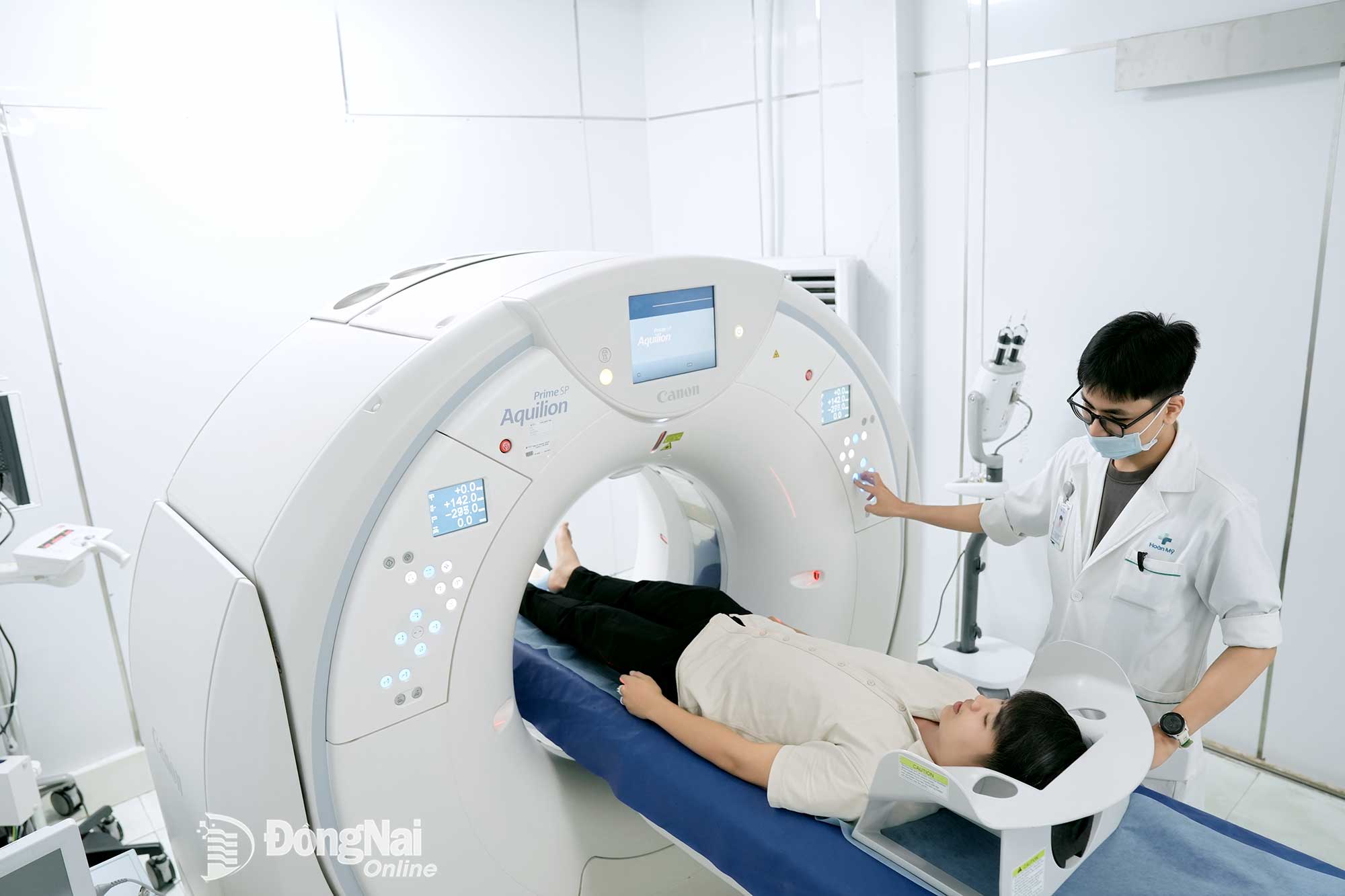 |
| Hoan My Binh Phuoc Hospital in Binh Phuoc Ward has invested in a 160-slice CT scanner integrated with artificial intelligence to support medical examinations and treatment. |
Many private healthcare facilities have invested in modern equipment, expanded specialized departments and introduced new and advanced medical techniques to meet the public’s growing healthcare needs.
Shing Mark Medical University Hospital in Long Hung Ward, for example, has equipped itself with an advanced radiotherapy system for cancer treatment and established an interventional cardiology unit to treat complex cardiovascular conditions. Recently, the Dong Nai Department of Health approved an adjustment to the hospital’s operating license, increasing its capacity from 300 to 380 beds and adding an Outpatient Department and an Emergency and Intensive Care Department to its organizational structure. The changes will enable the hospital to expand its capacity to receive, treat and care for patients in Dong Nai and neighboring localities.
Meanwhile, Hoan My Dong Nai Hospital in Tam Hiep Ward has recently launched a 22-bed hemodialysis unit, helping meet the substantial demand for dialysis among patients with end-stage chronic kidney disease.
Specialist Level II Doctor Tran Van Thuan, Medical Director of Hoan My Dong Nai Hospital, said the hospital had steadily expanded its bed capacity from 150 to 250 over its 13 years of operation in Dong Nai. The hospital has also strengthened cooperation with higher-level specialized hospitals to enhance the professional expertise of its doctors. With a patient-centered approach, the hospital will continue to develop key specialties, including interventional cardiology and hemodialysis, while further strengthening its capabilities in general surgery, urological surgery, trauma and orthopedics, and neurosurgery. It will also invest in additional next-generation endoscopy systems and modern CT and MRI scanners.
In orthopedics, Thuan My ITO Dong Nai Hospital in Tran Bien Ward has emerged as a notable private healthcare provider. Hospital Director Lam Hien Vu said the facility had benefited from support from local leaders in Dong Nai, allowing it to operate under favorable conditions. The hospital is currently renovating its operating rooms to meet international standards and improve patient care. It is also focusing on advanced orthopedic techniques, including joint replacement and ligament reconstruction, while expanding spinal neurosurgery services and applying modern treatments for herniated discs. Further investment in rehabilitation equipment and physical therapy facilities is helping the hospital treat musculoskeletal conditions and provide healthcare services for older adults.
In obstetrics and pediatrics, Au Co Hospital in Long Binh Ward is among the private healthcare facilities with particular strengths in maternity care, pediatrics and assisted reproduction. The hospital has introduced intrauterine insemination (IUI) and collaborates with assisted reproduction centers in Ho Chi Minh City to carry out specialized procedures such as in vitro fertilization (IVF), opening up new opportunities for couples experiencing infertility.
In ophthalmology, Dong Nai has four private eye hospitals. Hanoi Eye Hospital–Dong Nai in Tam Hiep Ward has introduced modern refractive surgery techniques to treat myopia. Saigon Eye Hospital–Bien Hoa, also in Tam Hiep Ward, has invested in new techniques and incorporated technology and artificial intelligence (AI) into its myopia surgery procedures.
In Binh Phuoc Ward, Hoan My Binh Phuoc Hospital plays an important role in providing healthcare services to local residents. The hospital has 160 beds and offers a broad range of specialties, including internal medicine, surgery, obstetrics and gynecology, pediatrics, emergency care, traditional medicine and rehabilitation. It has also invested in modern diagnostic equipment, including a 1.5-tesla MRI system and an AI-enabled 160-slice CT scanner, strengthening its diagnostic and treatment capabilities.
Creating an enabling environment for sustainable growth
Specialist Level II Doctor Nguyen Van Binh, Deputy Director of the Dong Nai Department of Health, said the health sector recognized and highly valued the private sector’s contributions to the overall development of healthcare services. Private providers have helped expand service capacity, share the burden on the public healthcare system and give residents more options when seeking medical examinations and treatment.
According to the department’s leadership, demand for healthcare is expected to continue rising as Dong Nai pursues a modern, green and smart airport-city development model aimed at providing a high quality of life. Coordinated development of both public and private healthcare is therefore not only an immediate necessity but also an important part of the strategy for sustainable urban development.
Politburo Resolution No. 16 sets out a vision of Dong Nai as a modern city offering a high quality of life. It also calls for greater mobilization of social resources and the development of a comprehensive, modern healthcare system centered on public health. The resolution’s development priorities include private healthcare, high-tech medicine, smart healthcare, medical tourism and services for older adults. These directions provide a basis for the city to consider appropriate policies to attract investment from non-state sources.
To put Resolution No. 16 into practice as soon as possible, Dong Nai City leaders have directed the health sector to continue reviewing residents' healthcare needs across the city, while also facilitating administrative procedures and creating a favorable investment environment in accordance with regulations. These efforts are intended to guide the development of a network of healthcare facilities suited to local needs, encourage investment in medical specialties where services remain lacking and strengthen cooperation between public and private providers. Healthcare facilities also need to prioritize workforce development, digital transformation and data interoperability, further improve the quality of medical examination and treatment and build trust with patients.
Against the backdrop of an aging population, the city is encouraging businesses to invest in modern nursing homes in promising locations identified by the authorities. The city will create the most favorable conditions possible for investment in this sector to capitalize on the emerging “silver economy” and meet older residents’ growing healthcare needs.
Le Truong Son, Member of the Dong Nai City Party Committee’s Standing Board, Vice Chairman of the city People’s Committee
Le Truong Son, Member of the Dong Nai City Party Committee’s Standing Board, Vice Chairman of the city People’s Committee, said the goal was for private healthcare to expand beyond simply increasing the number of hospital beds and medical facilities. It should also strengthen professional capabilities, improve service quality and play a greater role in community healthcare programs. With an enabling environment within the framework of the law, the private sector can continue contributing resources to the healthcare system, making medical services more accessible and convenient for residents. Such progress would also help advance Dong Nai’s ambition to become a modern, livable city where public health and quality of life remain central to development.
By Hanh Dung – Translated by Mai Nga, Minho




Thông tin bạn đọc
Đóng Lưu thông tin