
Dong Nai’s health sector is working with the education and training sector, local authorities and schools to accelerate the implementation of health checkups at the start of the school year for students.
The initiative aims to identify school-age health problems at an early stage and help ensure that students have the conditions they need to develop fully.
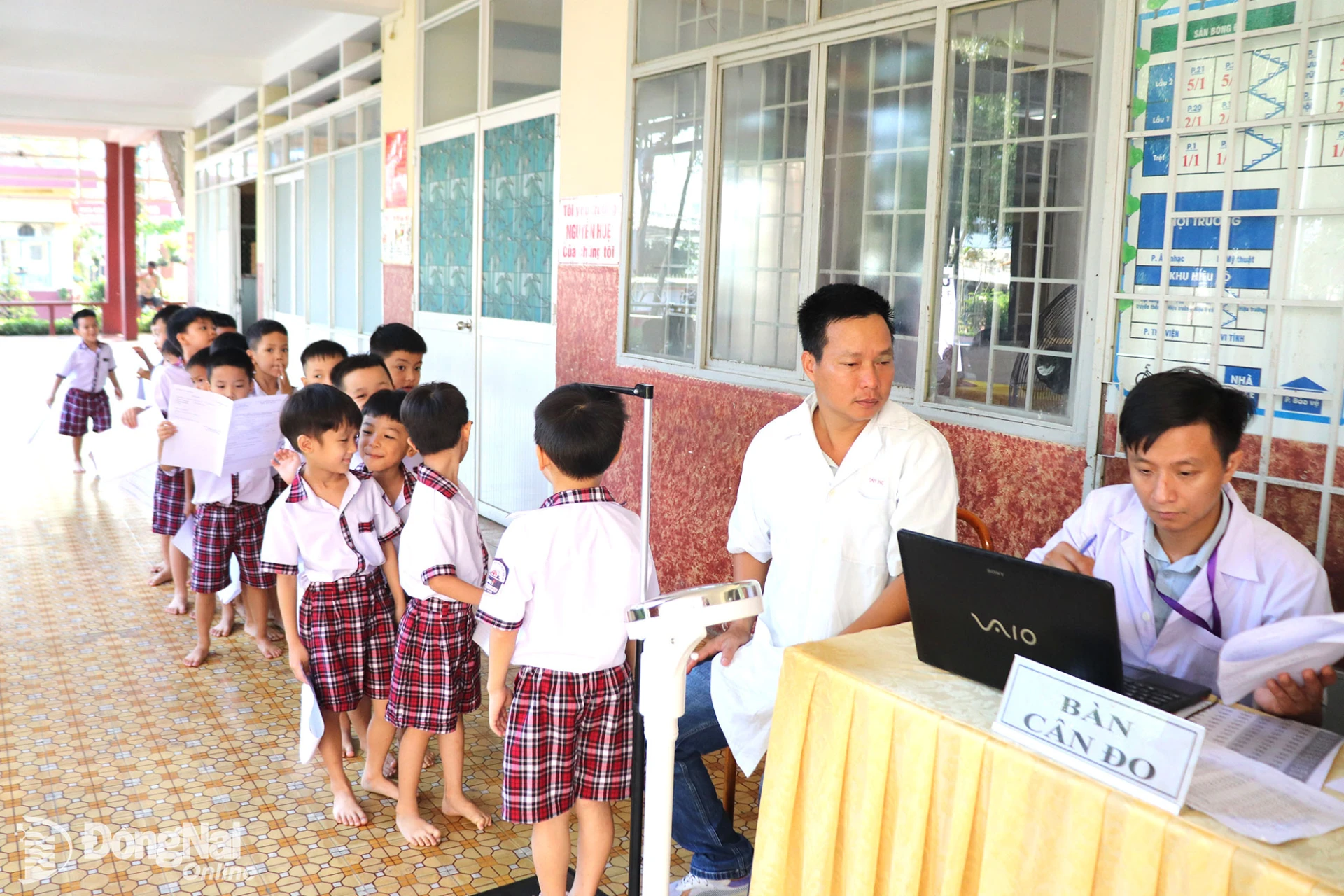 |
| Students at Nguyen Hue Primary School in Long Binh Ward undergo health checkups at the start of the school year. |
More than 80% of schools have conducted health checkups
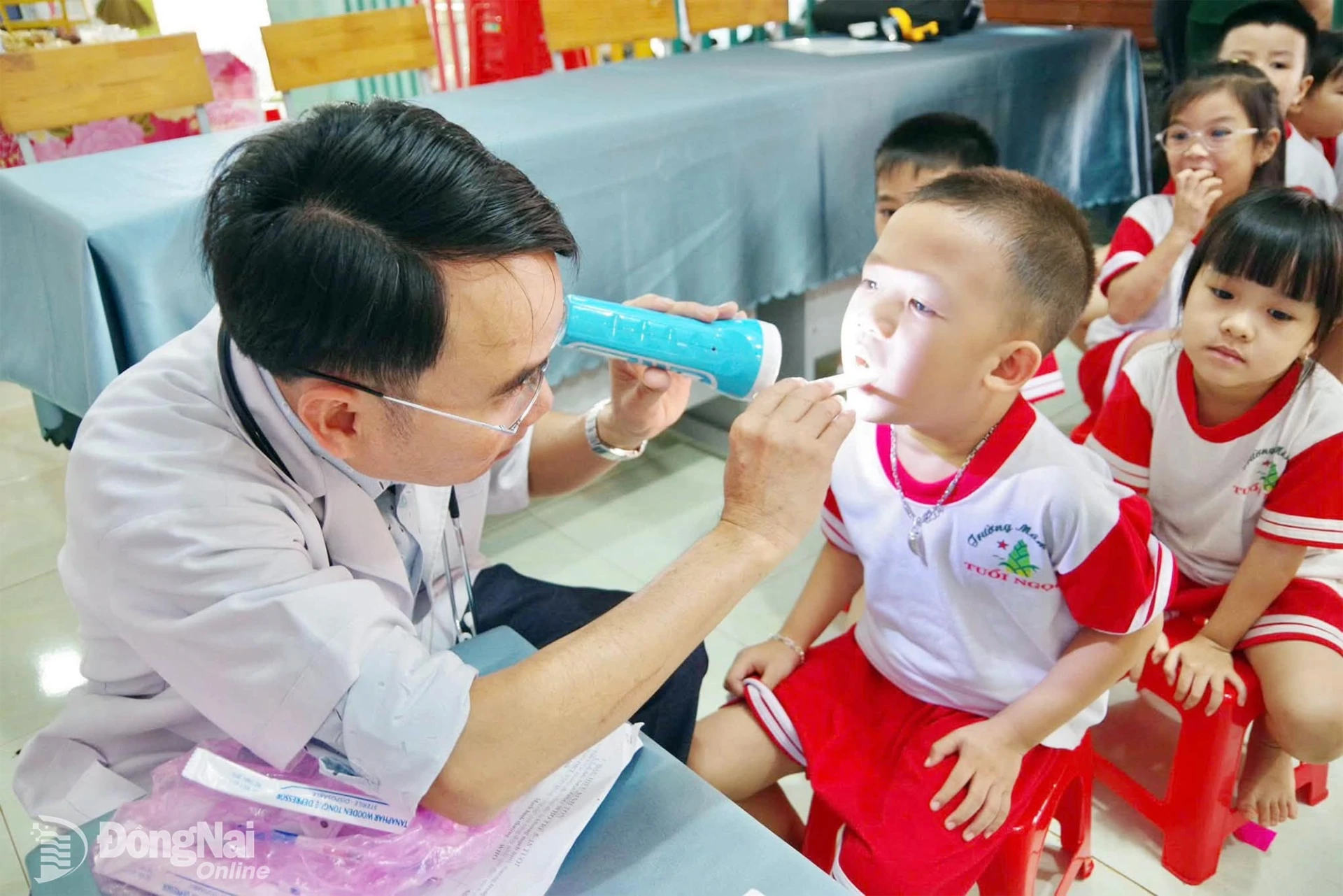
In October 2026, periodic health examinations for students were carried out at schools across the city. At Nguyen Hue Primary School in Long Binh Ward, a team of doctors and medical staff from the Dong Nai Center for Disease Control (CDC) recently conducted health checkups for more than 1,000 students. The examinations included measurements of height and weight, calculation of body mass index (BMI), pulse and blood pressure checks, and specialist examinations covering eye health, ear, nose and throat conditions, dental and oral health, and pediatrics.
Previously, Dong Nai CDC conducted periodic health checkups for 1,700 students at Tan An Secondary School in Bien Hoa Ward; more than 3,700 students at Phan Dinh Phung Primary School in Long Binh Ward; and more than 800 students at Tan Binh Primary School and Tan Dong Primary and Secondary School in Binh Phuoc Ward, among other institutions. The examinations were arranged on school premises and organized by grade level, making it easier for students to access health services while minimizing disruption to teaching and learning.
According to Do Thi Nguyen, Director of the Dong Nai Department of Health, more than 80% of schools across the city have now conducted health checkups for their students. The remaining schools are coordinating with qualified healthcare facilities to arrange examinations and speed up implementation. Health checkups at the start of the school year are an important component of school health services. They allow students’ basic health indicators to be assessed, while those showing signs of abnormalities are referred to healthcare facilities for further examinations, consultation and treatment when necessary. Early intervention helps prevent health problems from affecting students’ learning and daily activities.
Under the Department of Education and Training’s plan, more than one million children, school pupils and university students across the city are scheduled to undergo health checks at the start of the school year or periodic medical examinations during the current academic year. September through November 2026 is the peak period for student health checkups. At year-end, schools will compile the results, notify parents and update students’ health records in accordance with regulations.
Ensuring long-term healthcare for students
To improve the effectiveness of the examinations, schools are proactively developing implementation plans and coordinating with healthcare facilities to agree on schedules, locations and examination procedures. Parents are notified in advance, and students are organized by class and grade to ensure that the process runs smoothly and safely.
Pham Thi Diu, Principal of Nguyen Hue Primary School in Long Binh Ward, said the examination results would be entered into the Electronic Health Book, making it easier for both the school and parents to monitor students’ health conditions.
Nguyen Thi Hong Hanh, Principal of Bien Hoa Primary School in Bien Hoa Ward, said the school organizes routine health checkups for students twice a year. This year, the school has compiled a list of more than 1,800 students and made the necessary preparations, including funding arrangements, to conduct the checkups.
Hoang Tram Anh, a fifth-grade student in Class 5/11 at Bien Hoa Primary School, said that, in addition to receiving health checkups, she and her friends received guidance from doctors and nurses on personal hygiene, dental care and eating a balanced diet to stay healthy.
Tran Le Duy Cuong, a master’s-qualified physician, Deputy Head in charge of the Respiratory Department at Dong Nai Children’s Hospital, said common health problems among school-age children that warrant attention include refractive errors, dental and oral diseases, abnormal spinal curvature, malnutrition, overweight, obesity and mental health issues. Without timely detection, counseling and follow-up monitoring, these conditions can affect children’s ability to understand lessons, their daily activities and their long-term development.
Following the examinations, schools should therefore inform parents of the results in full, coordinate follow-up for students requiring special attention and advise families to seek more specialized medical assessments when necessary. Health checkups can deliver meaningful benefits only when the results are used to develop appropriate care plans for individual students, rather than being treated as a one-off screening exercise.
Dong Nai Department of Health Director Do Thi Nguyen emphasized that accelerating student health checkups forms part of the city’s broader goal of providing every resident with at least one periodic health examination or free screening each year. When implemented consistently and linked to health record management and post-examination follow-up, each school will become an important link in the primary healthcare network for students. This coordinated approach will enable the health and education sectors, together with families, not only to detect school-age health problems proactively but also to create a safe and healthy learning environment, laying the foundation for the younger generation’s physical and mental well-being.
By Hanh Dung – Translated by Mai Nga, Minho



Thông tin bạn đọc
Đóng Lưu thông tin