
Rather than leaving home in search of opportunities, many young people are choosing to stay or return to their hometowns and develop tourism. By sharing stories about their communities, they are bringing local culture closer to visitors. For them, tourism development is not just about providing a livelihood but also a way to preserve the values passed down through generations and help their hometowns prosper.
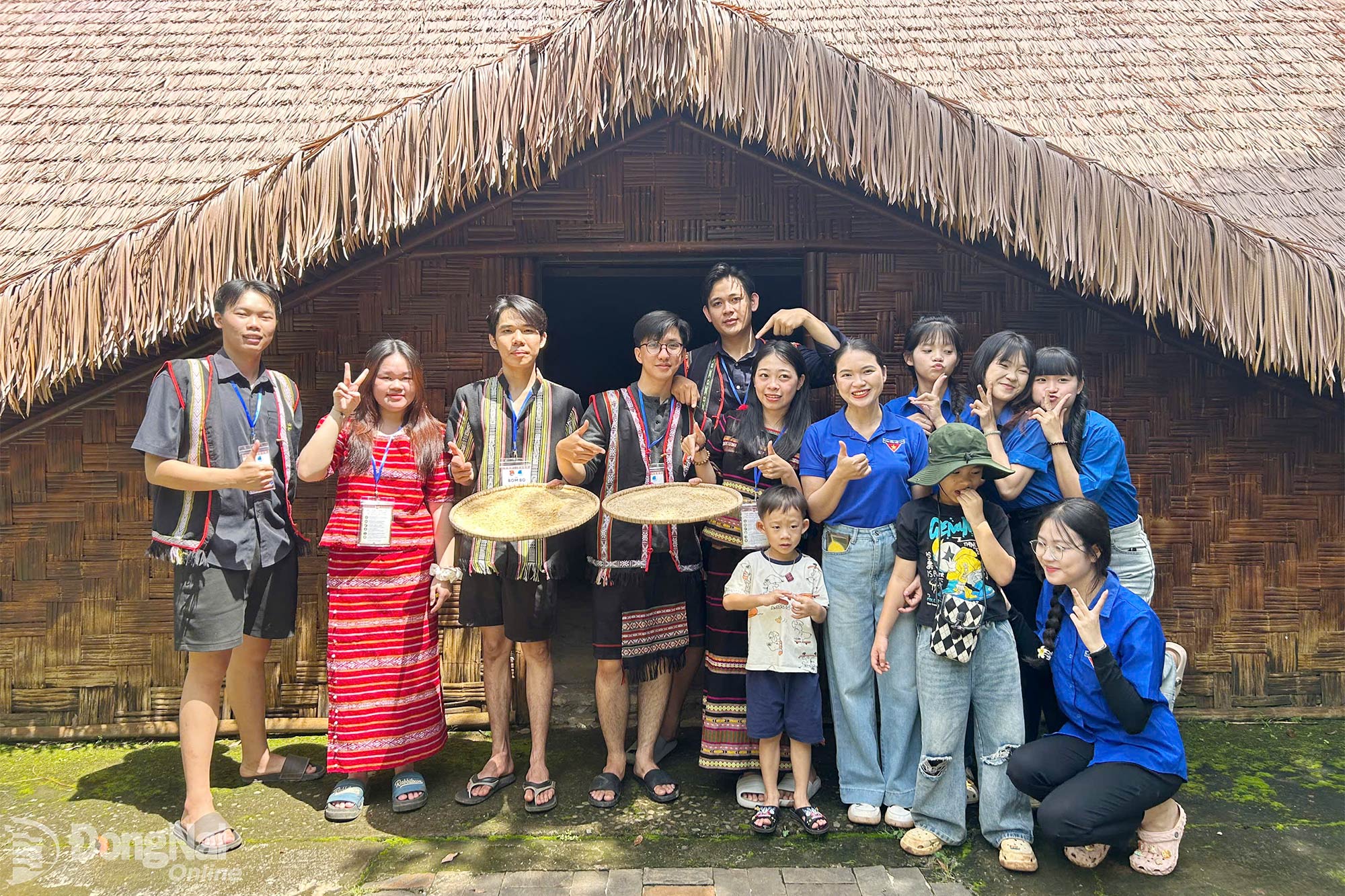 |
| Visitors enjoy trying their hand at traditional rice pounding at the Bom Bo Hamlet National Historical Relic Site. |
The involvement of young people, particularly those from ethnic minority communities, in tourism in their own hometowns highlights an important point: sustainable community-based tourism cannot rely on scenery alone. A destination needs stories to tell, distinctive products to offer and, above all, people who understand their homeland well enough to share its stories with visitors.
Tourism creates new livelihoods for local communities
At Ta Lai Longhouse in Ta Lai commune, Ka’ Nga welcomes visitors, prepares dining and accommodation facilities, and helps organize cultural experiences. For the 27-year-old Stieng woman, the job is more than a livelihood. It offers her an opportunity to help preserve and promote Stieng culture while contributing to a community-based tourism model built around local heritage.
More than a decade ago, Ka’ Nga expected to find a factory job after graduating from high school so she could help support her family. This was a common choice among young people in the Stieng community where she lived. However, English classes at Ta Lai Longhouse and opportunities to meet and interact with visitors gradually changed her outlook. “Back then, I realized that if I finished high school and went straight to work in a factory, I would miss out on many opportunities, because I was capable of studying further,” Ka’ Nga recalled.
More importantly, Ka’ Nga recognized her hometown’s tourism potential and believed that local cultural heritage could attract visitors if it were properly promoted and developed. The Ta Lai Longhouse project also offered financial support for her university studies, on the condition that she return to work at the longhouse for at least five years after graduation. Determined to continue her education, Ka’ Nga gained admission to the French Language program at the University of Social Sciences and Humanities, Vietnam National University Ho Chi Minh City.
Ka’ Nga returned to work at Ta Lai Longhouse in 2023. Alongside welcoming visitors, she has continued to learn about her community’s cultural heritage. The Stieng people in Ta Lai have preserved many traditions, including gong music, weaving and folk literature. Yet those who keep these traditions alive are growing older, while few young people are ready to carry them forward. For Ka’ Nga, community-based tourism development is therefore a way to give local culture a place in contemporary life.
As visitors come to hear the gongs, watch basket weaving, learn about local life and experience indigenous culture, these traditions are no longer confined to memory. Instead, they become part of contemporary life.
Like Ka’ Nga, Dieu Cuong, a 30-year-old Stieng man from Bom Bo commune, left his hometown to pursue higher education before returning to work in tourism. He now works at the Bom Bo Hamlet National Historical Relic Site, previously known as the Bom Bo Hamlet Stieng Ethnic Culture Conservation Area. Over the past seven years, he has guided visitors around the site and introduced them to its exhibits, particularly artifacts reflecting Stieng culture. Through these displays, he helps visitors learn about the community’s daily life, livelihoods, customs and traditions.
Beyond the knowledge he has already acquired, Cuong also turns to older residents in the community to learn more about Stieng culture and gather additional stories and insights for his work with visitors.
Turning cultural heritage into an immersive experience
Also in Bom Bo commune, young people are developing tourism through a different approach. The commune Youth Union has formed a 15-member team to promote community-based tourism, eight of whom are young Stieng people. The team guides visitors and introduces them to local history, revolutionary traditions and Stieng cultural identity. Its members also produce digital content, organize cultural experiences, and help promote goods under the One Commune, One Product (OCOP) program, local agricultural products and traditional handicrafts. In addition, they help protect the local landscape and build Bom Bo’s image as a green, clean, attractive and welcoming destination.
One of the commune Youth Union’s flagship initiatives is “A Day as a Stieng Person,” an experiential tourism model. Visitors can wear traditional costumes, be given Stieng names and learn about their meanings, join community activities and experience aspects of Stieng culture firsthand, rather than simply tour the site.
Le Thi Thu Thuan, Secretary of the Bom Bo commune Youth Union, said the experiential programs are tailored to the time of year, local conditions and visitors’ needs. Members of the tourism promotion team volunteer their time because they want to contribute to the local economy through tourism. For young Stieng members, the initiative also offers a chance to share their cultural heritage. Their understanding of local customs and traditions enables them to advise on activities, design itineraries and guide visitors through authentic cultural experiences.
“We came up with this model based on a simple idea: if we want young people to love Stieng culture, we should let them experience life within that cultural environment. And if we want visitors to remember Bom Bo, we should offer them an experience they cannot easily find elsewhere,” Thuan said.
“Building on this cultural experience model, I am exploring the development of handmade souvenirs that reflect Stieng identity, such as bookmarks, keychains, fabric bags, brocade products and other distinctive gifts. In the longer term, once these products are fully developed, meet quality standards and satisfy regulatory requirements, I hope to develop them into local specialties that could qualify for the OCOP program.
“For me, this is more than an idea for tourism development. It is a concrete way for young people to express love for their hometowns and help ensure that the historical and cultural heritage passed down by previous generations remains alive. I want young people to learn about and take pride in this heritage, preserve it and find creative ways to share it with the wider community today.”
Le Thi Thu Thuan, Secretary of the Bom Bo commune Youth Union
At Bom Bo hamlet, the history of hand-pounding rice, the solidarity between soldiers and local residents, and the Stieng people’s traditional costumes, language, cuisine, livelihoods and community life have been brought together in a distinctive tourism experience. Visitors do more than see the sights: they can listen, take part in activities, talk with local people and experience firsthand the cultural heritage preserved by generations of the Stieng community. In this way, history and culture become vivid, lasting memories.
Thieu Thi Thao, a visitor who took part in the program, said she particularly enjoyed being immersed in Stieng culture and trying activities such as brocade weaving, traditional rice pounding and learning about the community’s survival skills. She also appreciated the opportunity to prepare and sample traditional Stieng dishes herself.
Young members of the tourism promotion team accompany visitors throughout the journey. Their friendliness and enthusiasm encourage visitors to ask questions, engage in conversations and gain a deeper understanding of local culture.
For young people such as Ka’ Nga and Dieu Cuong, as well as members of Bom Bo Commune’s community-based tourism promotion team, staying in their hometown does not mean standing still. They are finding new ways to showcase local culture, attract visitors and create livelihoods, helping their communities preserve their heritage while building a more prosperous future.
By H.Yen – Translated by M.Nguyet,Thu Ha



Thông tin bạn đọc
Đóng Lưu thông tin