
Dong Nai’s tax authorities are stepping up efforts to disseminate information and guide taxpayers in complying with tax-related laws, while getting ready to connect and share electronic data with tax authorities.
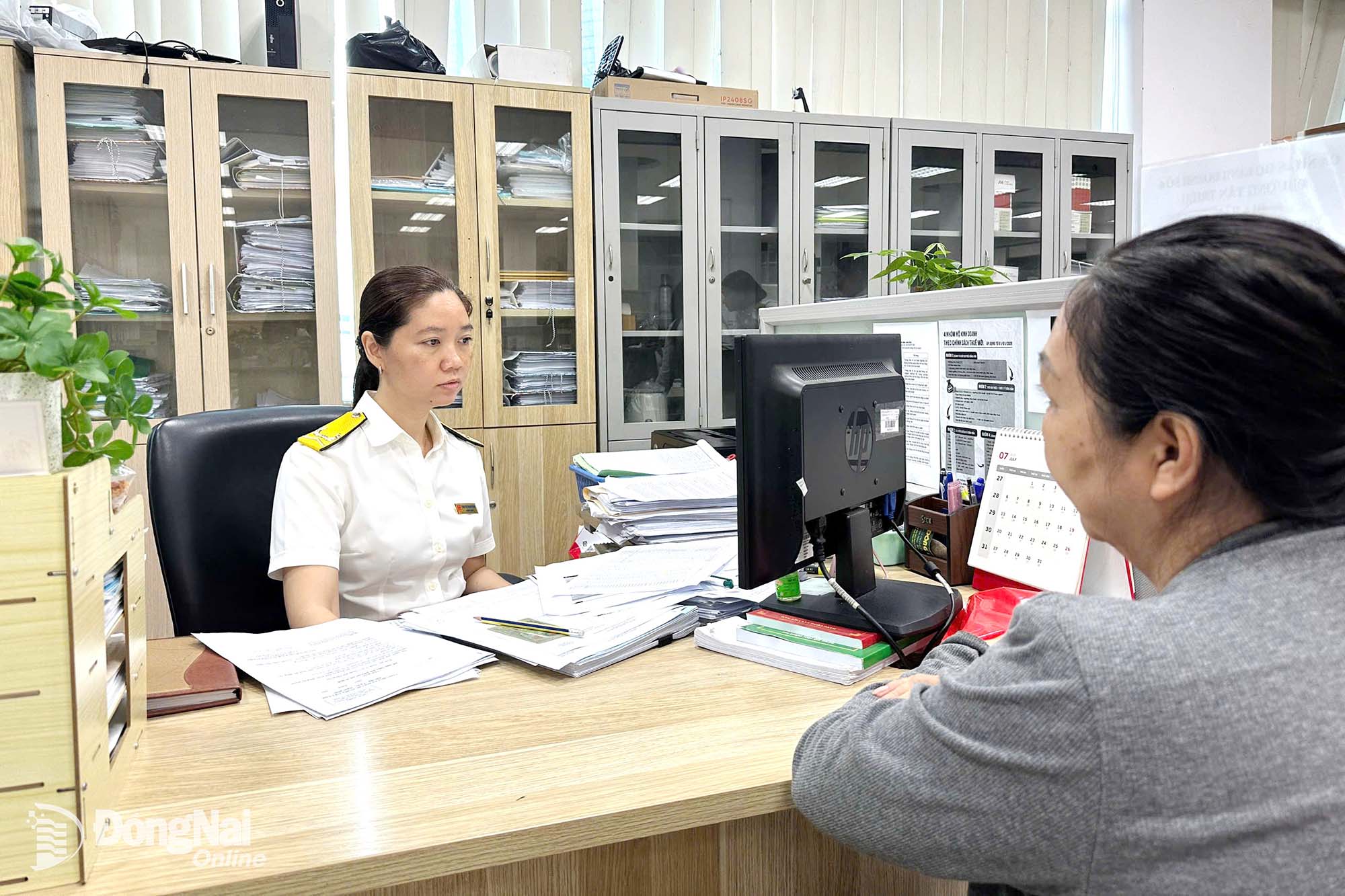 |
| Taxpayers carry out tax-related procedures at Tax Office No. 3. |
According to the tax authorities, taxpayers who proactively connect to the tax administration’s information system and share data on their accounting books, invoices, documents and other matters related to their tax obligations, in accordance with regulations, may qualify for preferential treatment. The tax incentives include automated processing of tax-related administrative procedures, faster handling of tax applications, and priority arrangements for tax inspections and supervision.
Conditions for preferential treatment
Under Government Decree No. 252/2026/ND-CP dated June 30, 2026, which details and guides the implementation of certain provisions of the Law on Tax Administration (Decree No. 252), taxpayers must meet several conditions to qualify for preferential treatment
Specifically, taxpayers must have received good compliance ratings and low-risk ratings in the tax authority’s database for at least two consecutive years before the year in which they apply for preferential treatment. They must also connect to the tax administration’s information system and share electronic data fully, accurately and on time. Taxpayers are also required to prepare, retain and transmit electronic data on their accounting books, e-invoices, accounting documents and transactions related to their tax obligations. They must maintain accounting books and prepare and present financial statements in accordance with Vietnamese accounting standards and regulations. In addition, they must have internal control systems and tax risk management mechanisms to ensure compliance with tax laws.
According to information presented at the City People's Committee's regular meeting for October and its November 2026 work agenda on November 3, state budget revenue reached more than VND88.1 trillion by the end of October, equivalent to 88% of the estimate assigned by the Prime Minister and 59% of the city's target.
Taxpayers engaged in related-party transactions must also meet the requirements set out in Decree No. 252 (Clause 3, Article 48). These include preparing, retaining and providing transfer pricing documentation, establishing internal controls and risk management mechanisms for related-party transactions, ensuring transparent disclosure of information, and cooperating with tax authorities in exchanging and providing data.
Huynh Thien Duy Phuong, Head of the Accounting, Professional Affairs and Legal Division of the City Tax Department, said the department was focusing on helping taxpayers fulfil their tax obligations and comply with relevant procedures. It was also ready to support them in resolving outstanding difficulties and implementing tax code clean-up, with the aim of building a transparent tax administration system and helping meet state budget revenue targets.
Six preferential regimes for compliant taxpayers
Under Decree No. 252, taxpayers who meet all the prescribed conditions will be entitled to six forms of preferential treatment. These include automated processing of tax-related administrative procedures; shorter processing times for applications for tax refunds, exemptions and reductions, as well as other administrative procedures; and remote tax inspections and supervision based on taxpayers’ electronic data. They will also receive online support and be able to communicate directly with tax authorities.
Tran Thi Minh Trang, an accountant at a foreign-invested enterprise in Bien Hoa 2 Industrial Park, said frequent changes to tax regulations in recent years required businesses to keep up to date with new policies to ensure that the interests of thousands of employees were protected. Thanks to the company’s proactive efforts to stay informed about regulatory changes, it had encountered no tax-related problems in recent years.
Under current regulations, the tax office responsible for each taxpayer must review and confirm whether the taxpayer meets the conditions for preferential treatment. It is also responsible for implementing the policy, monitoring compliance and providing guidance and supervision to ensure that the taxpayer continues to meet the requirements.
Compliance with tax laws and the willingness to connect to tax systems and share electronic data not only help improve the efficiency of tax administration but also promote the use of modern digital technologies and the automation of operational processes. Data connectivity and sharing with relevant agencies and organizations also contributes to building a comprehensive database to support tax administration. These efforts must be accompanied by cybersecurity standards and measures to protect data and personal privacy in accordance with the law.
In addition, digital transformation in tax administration follows a user-centred approach to improving service quality. It also aims to ensure transparency and accountability in decisions supported by digital technologies, thereby strengthening users’ trust.
By N. Lien – Translated by M.Nguyet, Thu Ha




Thông tin bạn đọc
Đóng Lưu thông tin