
In 2025, Vietnam’s cashew industry set a record, with export revenue reaching US$5.4 billion. The country maintained its position as the world’s largest processor and exporter of cashew kernels for the 19th consecutive year, accounting for more than 80% of global cashew kernel exports.
 |
| Foreign businesses explore cooperation opportunities with Vietnamese cashew processors and exporters at the 15th Vinacas Golden Cashew Renderzvour 2026. |
Pham Van Cong, Chairman of the Vietnam Cashew Association (VINACAS), said Vietnam, as one of the world’s major cashew processing and export hubs, was ready to continue working with countries, organizations, industry associations and the international business community to build a stable, transparent supply chain that delivers greater value.
Securing record-high cashew exports
According to VINACAS, the cashew industry faced numerous challenges in 2026, including shifts in the global trade environment and tariff policies, mounting trade barriers, rising production and logistics costs, increasing financial pressures and global economic volatility. Nevertheless, in the first 9 months of 2026, Vietnam exported more than 594,000 tonnes of cashew kernels worth nearly US$4.2 billion. Export volume rose by more than 3.5%, while export value increased by nearly 7.4%. The results point to a shift from volume-driven exports towards greater value creation. Export revenue is projected to exceed US$5 billion in 2026, which would mark another record for the industry.
However, the industry faces a major structural challenge: processors rely on imports for up to 85% of their raw cashew nut requirements. In Jan-Sept, Vietnam spent more than US$4.4 billion importing nearly 2.8 million tonnes of raw cashew nuts. This dependence leaves domestic processors vulnerable, particularly as several major raw cashew nut-producing countries are expanding their own processing industries and restricting exports of unprocessed nuts.
Cong said sustainable growth would require greater investment in advanced processing technologies and the development of new products. The cashew industry must build its competitive edge through product quality, strong brands, technological innovation and higher value-added products. Meanwhile, major markets are imposing increasingly stringent requirements on environmental performance, product traceability, quality and corporate responsibility. The industry must respond proactively by strengthening traceability systems, reducing emissions, improving the efficiency of raw material and energy use, and adopting greener, more sustainable production practices. Businesses that prepare early will be better positioned to capitalize on opportunities as new standards come into force.
Sharing his company’s success story in exporting deeply processed cashew products to demanding markets, Ta Quang Huyen, Chairman and General Director of Hoang Son 1 Joint Stock Company (JSC) in Nghia Trung commune, said: “We were among the first to invest in high technology for deep processing. Our deeply processed products are now available on supermarket shelves in Europe and in several other demanding markets. The key to entering demanding markets is to ensure food safety while offering competitive prices.”
Building sustainable value chains
The 15th Vinacas Golden Cashew Renderzvour 2026 was held to strengthen international cooperation through facilitating information sharing and identifying new solutions, particularly to build a more stable, transparent and value-driven cashew supply chain that benefits all stakeholders.
Ashok Krishen, Chairman of the International Nut and Dried Fruit Council, called for stronger cooperation among countries to develop common quality standards and technical requirements for nuts and dried fruit, including cashews. Harmonized standards would facilitate trade and improve the industry’s competitiveness. As a major global processor and exporter of cashew kernels, Vietnam is well positioned to play a greater role in the international value chain.
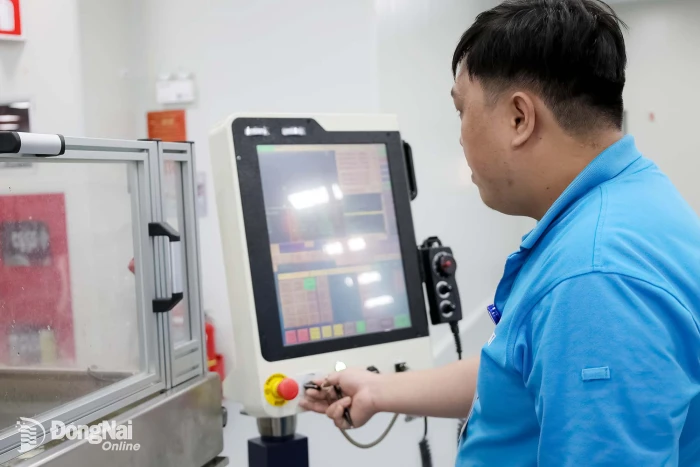
Technology, mechanization and automation have played an important role in the development of Vietnam’s cashew processing industry. Several major cashew-producing countries in Africa are seeking partnerships with Vietnam to expand their processing capacity, particularly by drawing on Vietnam’s expertise in processing technology.
Ojo Joseph Ajanaku, Head of the Nigerian cashew business delegation, said: “I have worked closely with Vietnam for two decades, and our relationship has been very positive. We hope to build on this successful cooperation. Nigeria produces high-quality cashew nuts and is a major supplier of raw cashew nuts to Vietnam. We look forward to continuing our partnership with Vietnam in a new phase of developing the cashew processing industry, particularly processing technology.”
The changing global landscape calls for a new mindset and decisive action across Vietnam’s cashew industry. The sector must shift from competing on export volume to delivering higher quality, and from selling existing products to offering greater value to global markets. It also needs to explore new market channels, including cross-border e-commerce, build more sustainable supply chains, strengthen links across the value chain from raw cashew production to processing, and step up investment overseas.
Tran Ngoc Hai, representative of the Vietnam Trade Promotion Agency under the Ministry of Industry and Trade
By B. Nguyen – Translated by M.Nguyet, Thu Ha
Thông tin bạn đọc
Đóng Lưu thông tin