
Nguyen Thi Cat Tien, Vice Chairwoman of the City People’s Committee, chaired a meeting with the Department of Agriculture and Environment (DoAE) on October 28 to discuss agricultural production planning and strategies for sustainable agricultural development in the city.
Dong Nai has approximately 1 million hectares of agricultural land, accounting for nearly 79% of its total natural area. Perennial crops cover more than 615,000 hectares, while annual crops occupy nearly 164,500 hectares. Nearly 4,300 hectares of key crops have been certified under Vietnamese Good Agricultural Practices (VietGAP) or equivalent standards, while more than 3,000 additional hectares are cultivated in accordance with good agricultural practices (GAP) criteria. The city has also established 15 production areas following organic farming practices, covering nearly 1,600 hectares.
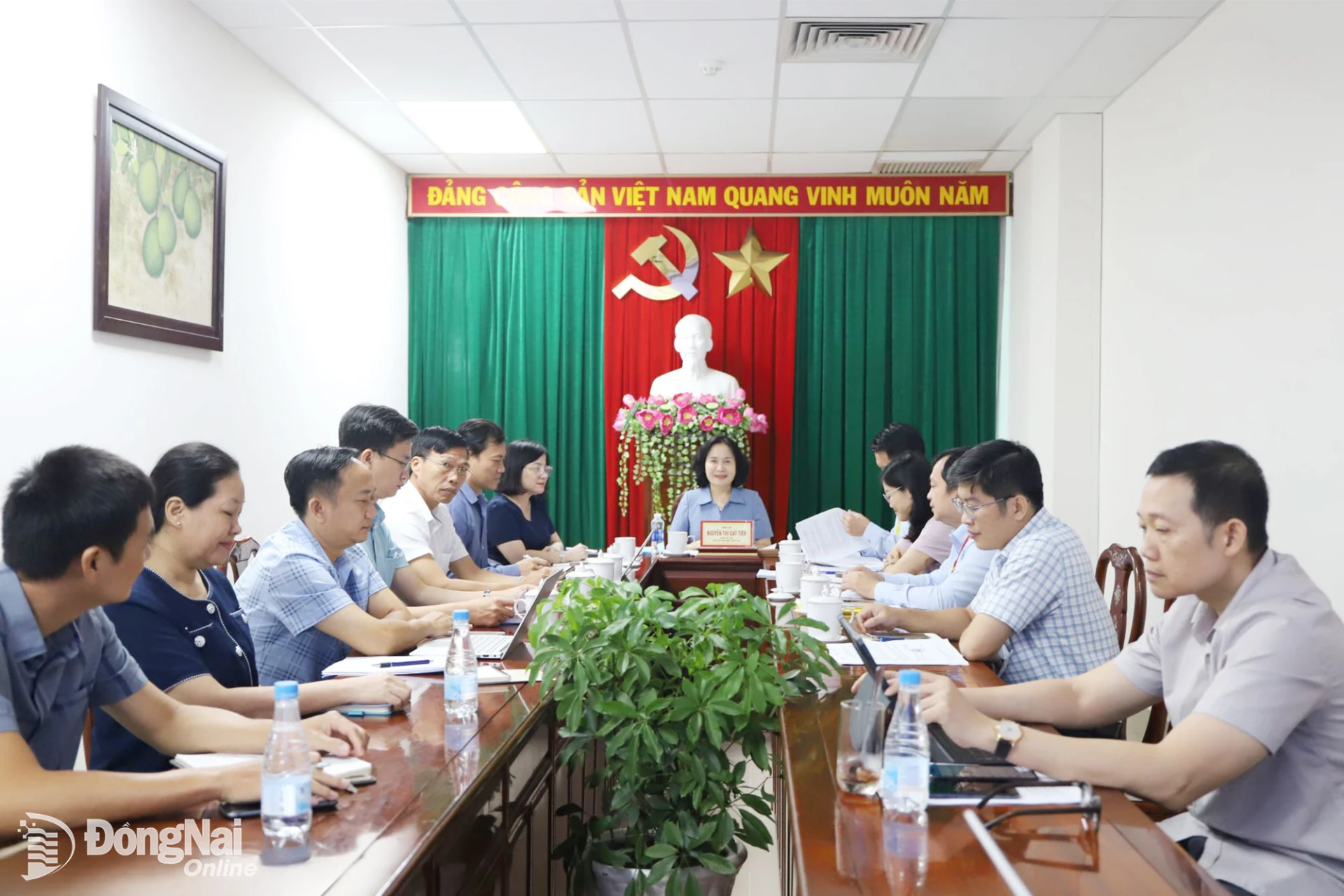 |
| Nguyen Thi Cat Tien, Vice Chairwoman of the City People’s Committee, chairs the meeting. Photo: B. Nguyen |
The city has 205 concentrated agricultural production areas covering nearly 355,700 hectares. These include 13 rice-growing areas, 16 vegetable-growing areas, 105 areas devoted to industrial crops such as rubber, cashew, pepper, coffee and cocoa, and 71 fruit production areas for bananas, durian, mangoes, pomelos, jackfruit and rambutan.
Livestock production is organized in concentrated farming zones across 22 communes, including 20 communes in northern Dong Nai and two zones in the southern part of the city. In aquaculture, the city has 52 freshwater farming areas, three brackish-water farming areas and 17 cage aquaculture areas.
Vice Chairwoman Nguyen Thi Cat Tien said livestock farming in Southern Dong Nai had reached capacity limits, and future development should therefore focus on the northern part of the city. Priority should be given to attracting investment in a high-tech livestock farming project in Thuan Loi commune. She instructed the DoAE to review existing livestock farms within urban planning areas and draw up relocation plans for those located in residential areas. The department was also asked to strengthen environmental controls on livestock farming to prevent pollution
Regarding the 205 planned crop production areas, the DoAE and local authorities were instructed to review the existing plans and identify the crops best suited to each locality. Pilot production models should then be developed based on current cultivation patterns, with planting densities adjusted to suit local conditions. Land-use planning should come first and serve as the basis for proposals to develop infrastructure tailored to each production area, including irrigation systems, electricity supply, transport links and commercial connectivity. The city should also strengthen the promotion and marketing of local agricultural products, particularly key products under the One Commune, One Product (OCOP) programme, to support sustainable agricultural development.
By B. Nguyen – Translated by M.Nguyet, Thu Ha
Thông tin bạn đọc
Đóng Lưu thông tin