
Years of excessive use of chemical fertilizers and pesticides in conventional farming have polluted the environment, disrupted ecological balance and left farmland increasingly depleted and barren. Safe farming practices and a shift toward organic production are therefore vital to promoting healthy soil, healthy crops and a healthy environment, while also protecting the health of those who work the land.
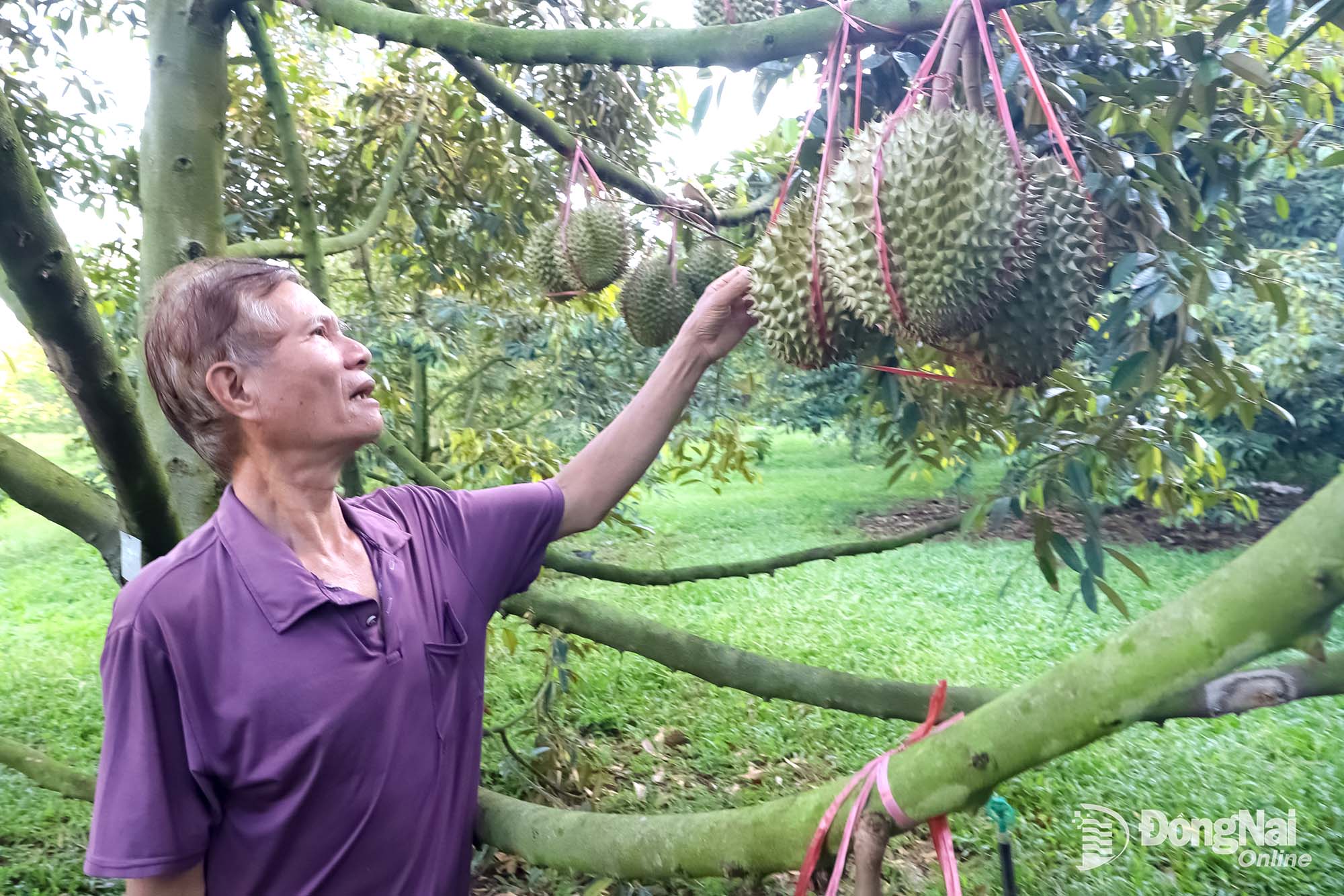 |
| Dau Giay Ward farmer Nguyen Thanh Dong in his recovered durian orchard after implementing soil improvement measures. Photo: Binh Nguyen |
The Vietnamese farming adage “water first, fertilizer second, hard work third and seeds fourth” reflects generations of agricultural experience. Today, more farmers are turning to organic-oriented farming to restore soil fertility, improve crops’ resilience to pests and diseases, and build sustainable agricultural ecosystems.
Reviving “dead” soil
Many orchards have suffered from compacted, depleted soil after years of overexploitation and excessive use of chemical herbicides, fertilizers and pesticides. These practices can compromise the safety of agricultural produce and degrade soil quality, weakening crops and making them more vulnerable to disease. In severe cases, entire sections of orchards have died.
Nguyen Thanh Dong, a farmer in Dau Giay Ward, has spent decades cultivating crops such as pepper and mangosteen. In 2025, his family’s six-year-old durian orchard began suffering from serious pest and disease problems, particularly root rot and gum exudation from the trunks. The trees weakened, some developed dieback at the tops, and their branches dried out. The soil became increasingly barren, and even grass struggled to grow. After attending a training course on organic farming, Dong began adopting practices aimed at restoring soil health.
Farmers across Dong Nai have for years used IMO, a preparation containing indigenous microorganisms, and MEVI yeast to make organic fertilizer from organic waste and produce biological crop-protection products. The approach has now been adopted across more than 1,000 hectares of fruit trees and vegetable crops. Photo: Binh Nguyen
Dong said he had been advised to combine several soil improvement measures. He used the tines of a harrow to loosen the soil around the trees, allowing more air to circulate. He then watered the soil with molasses, added organic fertilizers, mainly livestock manure, and applied foliar fertilizer to the trees. After more than six months, the once-barren soil began to recover, becoming softer and more porous. “When the soil is alive, the crops growing in it can thrive,” Dong said. The damaged bark on durian trunks began to heal, while trees whose tops had died back started producing new shoots, with branches and foliage gradually becoming lush again. As a result, many trees in his orchard yielded well during the 2026 harvest, and the fruit also improved in appearance and quality.
In the past, the rocky, stone-strewn land in Gia Kiem Commune was used mainly to grow annual crops that yielded poor economic returns. Today, the area has developed specialized fruit-growing zones cultivating specialty fruits such as avocado and durian, with high yields and good-quality produce.
Pham Duy Long, a farmer who grows specialty avocado varieties in Gia Kiem Commune, said pepper had once been a major crop in the area. Initially, the plants grew well and produced high yields. However, years of excessive use of chemical fertilizers and pesticides gradually degraded the soil, and many pepper plantations were wiped out by disease. As a result, farmers have become more aware of the need to manage fertilizer and pesticide use and have begun shifting toward organic-oriented farming. For years, local growers have followed VietGAP standards and focused on restoring soil fertility. Fruit crops such as avocado and durian now produce high yields and meet export-quality standards, enabling farmers to sell their produce to traders at higher prices.
Toward cleaner farming
More farmers are turning to organic-oriented farming to rehabilitate their soil. Measures include cutting grass manually and composting the cuttings to enrich the soil, as well as growing grass in orchards to provide feed for cattle. Farmers are also making greater use of agricultural by-products, such as discarded bananas left over from export packaging and surplus fruits and vegetables, as raw materials for homemade organic fertilizers. These practices help crops grow better, and mature fruit trees can become increasingly productive over time.
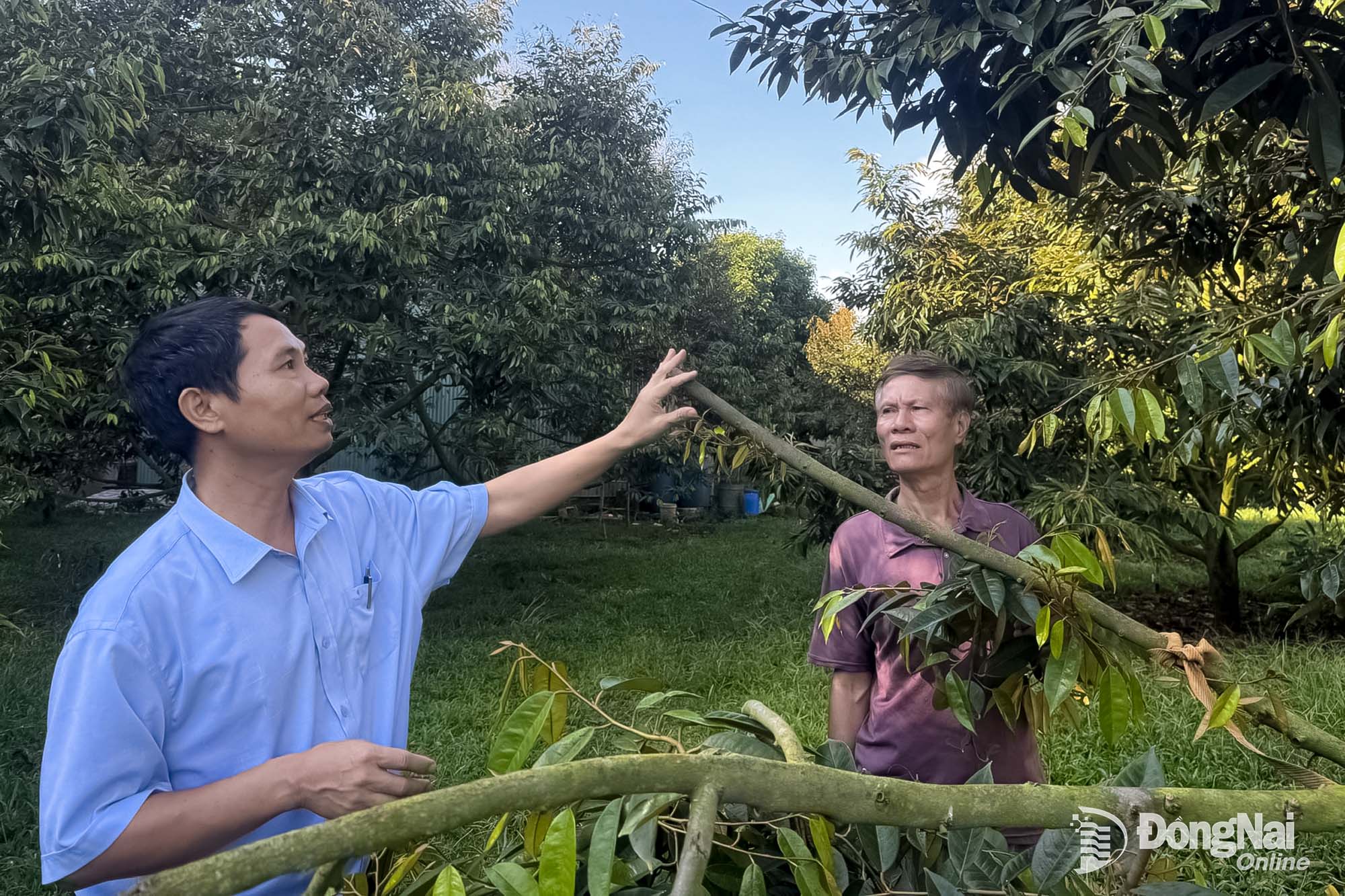 |
| Nguyen Thanh Dong (right), a farmer in Dau Giay Ward, in his recovered durian orchard after implementing soil improvement measures. Photo: Binh Nguyen |
Nguyen Pham Xuan Vu, a pomelo grower in Dau Giay Ward, said excessive use of chemical fertilizers and pesticides not only degrades the soil but also harms human health. After seeing an organic farming model in practice, he decided to change his production methods. He now uses biological preparations and turns organic waste into homemade compost to improve soil structure and promote root growth, helping crops absorb nutrients more effectively. The soil has gradually become more fertile, the crops are growing well, and production costs have fallen compared with conventional farming methods.
Tam Minh Quang Production, Trade and Services Cooperative in Tan An Commune is a pioneer in developing large-scale organic farming in the city. Describing the challenge of restoring degraded soil, Nguyen Ngoc Bich Huyen, the cooperative’s manager, said the land was composed of poor, gravelly clay, making soil improvement a lengthy and costly undertaking. The cooperative has adopted several measures to restore soil fertility. Banana plants are grown along fences and on strips separating different sections of the farm. The fruit is harvested for sale, while the chopped plants are used as organic mulch. The cooperative also grows straw mushrooms, generating additional income while helping straw decompose more quickly for use as compost in its fruit orchards. The cooperative also produces IMO, a biological preparation made from locally available materials and indigenous microorganisms, to help restore the balance of soil microorganisms. It has also invested in modern fly farms to produce large quantities of organic fertilizer for its fields and orchards. The cooperative currently manages approximately 35 hectares under organic production, of which 15 hectares have been certified organic for various agricultural products. Its annual output reaches hundreds of tonnes.
By B.Nguyen – Translated by M.Nguyet, Minho



Thông tin bạn đọc
Đóng Lưu thông tin