
Following its merger and elevation to city status, Dong Nai now has greater scope for development, with new growth hubs emerging across the city. Politburo Resolution No. 16-NQ/TW, dated July 21, 2026, which sets out a development strategy for Dong Nai through 2035 with a vision to 2065, and the Urban Development Law (UDL) provide a stronger legal and policy foundation for urban planning and development.
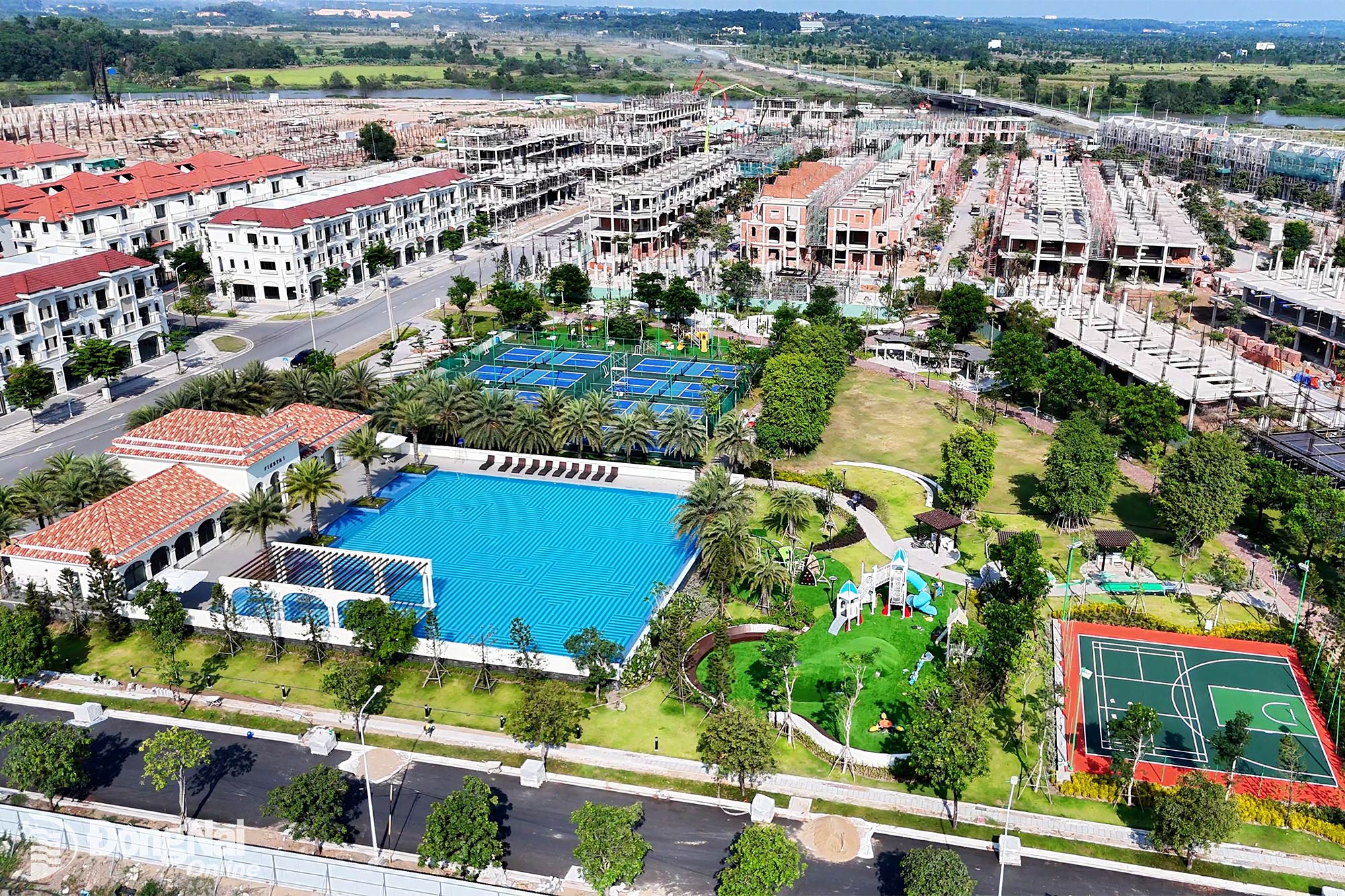 |
| Part of the urban area taking shape in Long Hung ward. |
As urban areas expand, the city must also develop technical and social infrastructure, essential services and a healthy living environment to ensure that residents genuinely enjoy a better quality of life.
Urbanization must go hand in hand with quality of life
Dong Nai covers more than 12,700 square kilometers and comprises 95 commune-level administrative units. Its large development area, together with a series of strategic transport projects, Long Thanh International Airport, seaports, industrial parks, logistics centers and emerging urban areas, is creating new growth hubs across the city.
Alongside this development, the city is seeking to answer two fundamental questions: What benefits will residents gain from Dong Nai becoming a city? And will improvements in their quality of life keep pace with the expansion of urban areas?
To address both questions, the city is accelerating major growth-driving projects while prioritizing infrastructure and services that directly affect daily life, including housing, schools, healthcare facilities, water supply and drainage systems, cultural facilities and public transport. Residents’ quality of life improves when they have stable housing and jobs, places to relax, convenient transport, access to healthcare and better educational opportunities for their children.
Resolution No. 16 sets out a vision for a polycentric urban structure in Dong Nai. This approach aims to ease pressure on central urban areas, bring homes closer to workplaces and make public services more accessible, reducing residents’ commuting time. It also calls for more coordinated and modern urban planning to better meet residents’ needs.
Dr. Tran Du Lich, a member of the National Monetary Policy Advisory Council and Dong Nai’s socio-economic advisory group, stressed that when developing new urban areas, technical and social infrastructure must be planned in line with projected population growth. Housing must not be completed and occupied before schools, healthcare facilities, parks and public transport are provided.
Dr. Lich also highlighted the importance of transit-oriented development (TOD) in reshaping urban areas. In major cities, he said, this model can help ease traffic congestion, promote urban renewal, support housing development and improve residents’ quality of life.
Infrastructure paves the way for development
Dong Nai is entering a major infrastructure investment cycle. Long Thanh International Airport, ring roads, expressways, port access routes, industrial parks and new urban areas are set to reshape the city’s spatial structure and urban landscape. These strategic infrastructure projects will also help the city attract investment, create jobs and drive economic growth.
However, residents need more than jobs, convenient transport and higher incomes. They also need schools, hospitals, parks, housing and public spaces. Dong Nai is therefore prioritizing roads connecting residential areas with industrial parks. The city also requires new urban areas to set aside land for schools, healthcare facilities, green spaces and public amenities. Industrial parks must be accompanied by housing and services for workers, while riverside urban areas should preserve ecological spaces and improve public access.
Alongside transport infrastructure, housing development is a key component of the city’s development strategy. Nguyen Van Ut, Deputy Secretary of the Dong Nai City Party Committee (CPC) and Chairman of the city People’s Committee, said sustainable development required local authorities to focus not only on economic infrastructure, investment attraction and production growth, but also on workers’ living conditions. Housing, he stressed, does more than meet basic needs: it enables workers to settle down, work with greater peace of mind, stay with their employers and contribute to the local development over the long term.
In response, the city has made housing development a priority to support both social welfare and economic growth. It is creating favorable conditions for businesses to invest in social housing to help meet the growing needs of industrial workers, low-income earners and people eligible for government policy support. Most recently, the city People’s Council approved a resolution on a VND3 trillion housing fund to support the development of different types of housing for residents.
The city and businesses are developing social housing and worker housing projects in urban areas and near industrial parks, giving residents more opportunities to find affordable homes close to their workplaces. In this sense, expanding urban space should also mean improving access to housing and creating better living environments.
Dong Nai also benefits from its rivers, lakes, forests and diverse ecosystems—natural assets that not every city possesses. The city aims to protect and make proper use of these resources to safeguard the environment while ensuring while ensuring a healthy living environment for residents.
Expanding urban space while improving quality of life
The UDL, which took effect on October 1, 2026, provides a legal framework for Dong Nai and other cities to pursue more systematic, coordinated and long-term urban development.
Ho Van Ha, member of the CPC and Vice Chairman of the city People’s Committee, said urban planning required a new mindset, with a more open approach to spatial planning, an integrated transport network and a multi-level, polycentric urban structure. Rivers and natural ecosystems should serve as key landscape axes. Other priorities include smart transport systems, smart-city development, green urban planning and climate change adaptation. Science and technology, innovation and digital transformation are also expected to become new drivers of growth.
The goal is to build Dong Nai into a “civilized, modern and happy” city and make it a desirable place to live. Resolution No. 16 envisions Dong Nai becoming a globally connected city where residents enjoy a high quality of life and well-being by international standards.
One of the guiding principles of Resolution No. 16 is to develop Dong Nai into a “civilized, modern and happy” city, with people at the center of development—as its main actors, driving force, ultimate goal and beneficiaries. The resolution also calls for balanced and equitable development across regions and among different population, ethnic and religious groups. It identifies cultural values, environmental protection, better health and improved material and spiritual well-being as pillars of sustainable development.
Dong Nai now has a major opportunity to reshape its development landscape on a broader scale. Resolution No. 16 provides a long-term vision, the UDL establishes the legal framework, and strategic infrastructure projects are gradually transforming the city. By building on these mutually reinforcing factors, Dong Nai can improve its urban development standards while enhancing residents’ quality of life.
By H.Loc – Translated by M.Nguyet, Thu Ha


Thông tin bạn đọc
Đóng Lưu thông tin