
Among the bridges planned to connect Ho Chi Minh City with Dong Nai City, Cat Lai Bridge is the most eagerly anticipated by residents. For nearly three decades, the bridge has been a long-cherished aspiration for people in both localities.
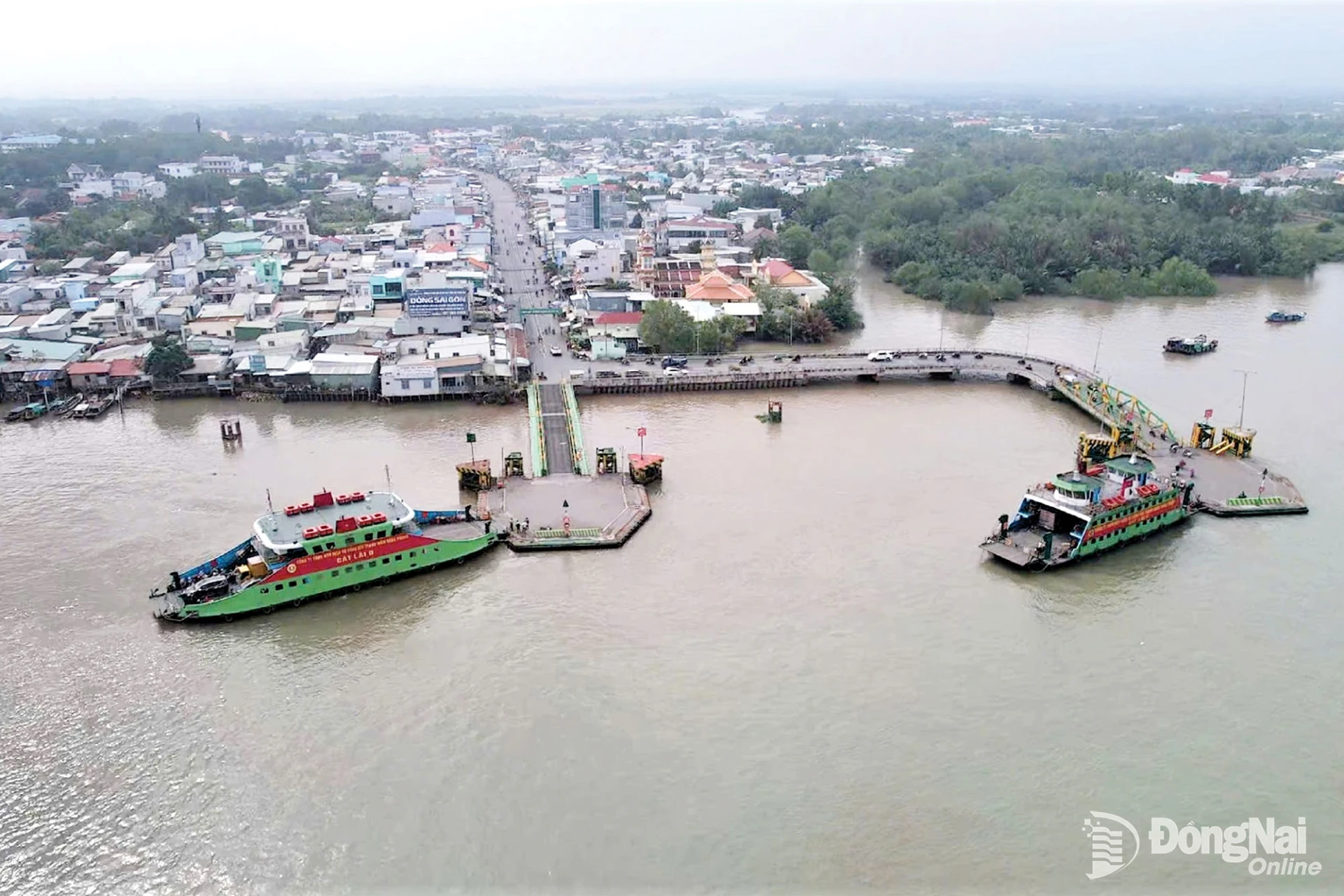 |
| Once completed and put into operation, Cat Lai Bridge will free residents on both banks of the Dong Nai River from their dependence on ferry services. |
The official groundbreaking of the Cat Lai Bridge project late last September marked a major milestone in turning this long-standing aspiration into reality.
Eagerly awaiting the bridge to end reliance on ferries
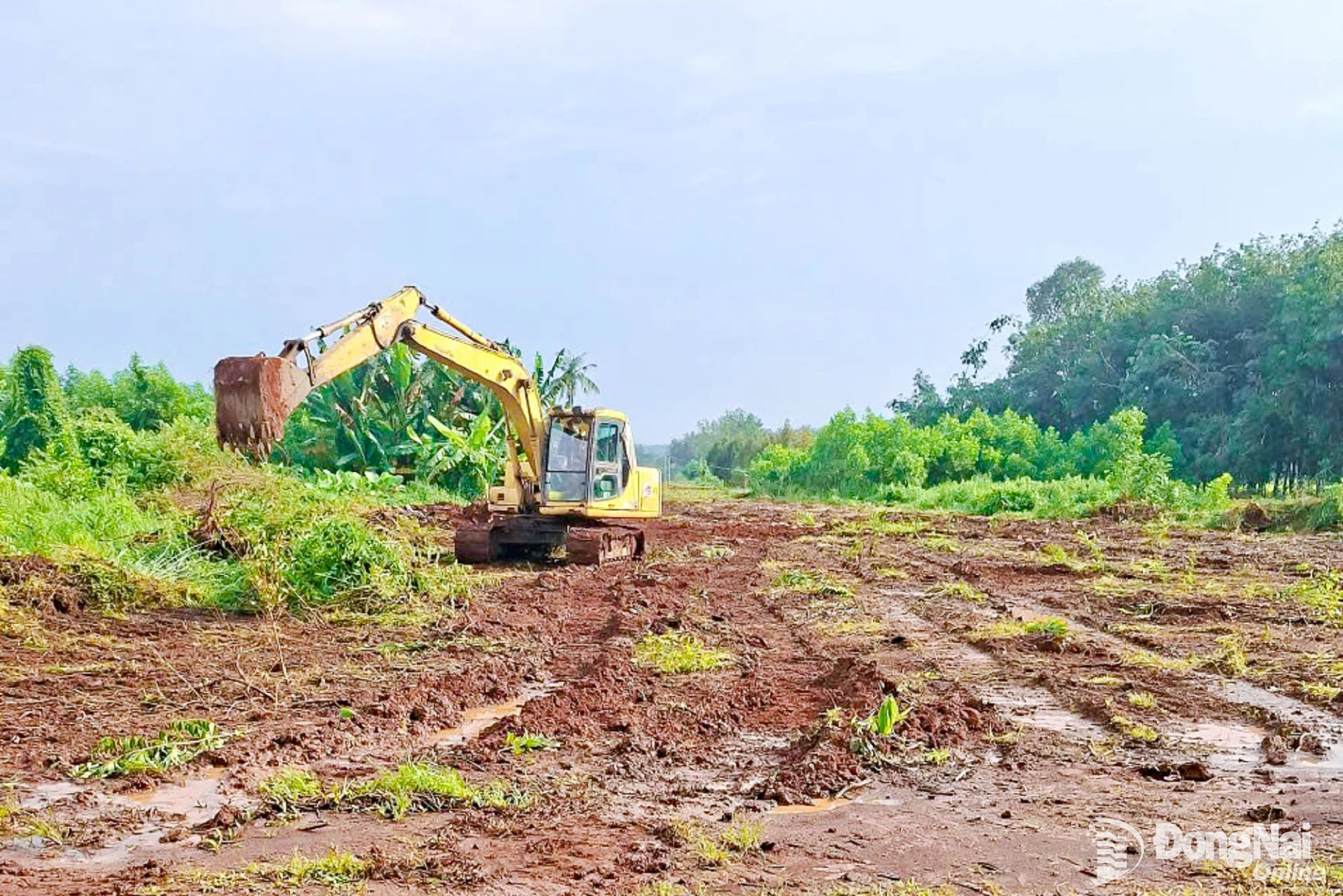
Tran Ngoc Thanh, a resident of Dai Phuoc Commune, could not hide his joy as he witnessed the historic moment when construction under Component Project 2 of the Cat Lai Bridge project officially began on September 29. After years of waiting, the groundbreaking has brought residents closer to realizing their long-held dream of a bridge spanning the Dong Nai River.
Thanh said residents in the area had long relied almost entirely on the Cat Lai ferry to travel to Ho Chi Minh City. More than 20 years ago, when the first information about the proposed bridge emerged, he and other local residents were delighted. However, this was followed by years of waiting and repeated disappointments as they heard announcements that construction was about to begin, only for the project to fade from public attention again. “Now that construction has officially begun, everyone is delighted. We hope the bridge will be built quickly so residents no longer have to depend on ferries to cross the river,” Thanh said.
Le Van Chien, another resident of Dai Phuoc Commune, also welcomed the start of construction. He hopes the project will do more than improve transport connectivity, becoming an architectural and landscape landmark for the locality.
The Cat Lai Bridge project will have a total route length of more than 11.6 kilometers, running from the My Thuy interchange on Ho Chi Minh City’s Ring Road 2 in Cat Lai Ward, crossing the Dong Nai River, and connecting with the Ben Luc–Long Thanh Expressway at Dai Phuoc Commune, Dong Nai City. The main bridge and its approach bridges will span more than 3.6 kilometers.
A new landmark on the Dong Nai River
Cat Lai Bridge is one of the key links in the transport network, connecting with Road 25C to form a strategic transport corridor linking Long Thanh International Airport and Nhon Trach urban area with Ho Chi Minh City.
Once completed, the bridge will provide an additional direct route between eastern Ho Chi Minh City and Dong Nai City, while improving connections to the regional expressway network and logistics hubs. This will help complete the interregional transport network and open up more space for urban, industrial and logistics development linked to Long Thanh Airport.
The Cat Lai Bridge project is being developed under a public-private partnership (PPP) model. Construction began in 2026, and the bridge is expected to be completed and opened to traffic in 2029. The project has a total investment of more than VND 24 trillion. Component Project 2, the project's most important component, covers the construction of the main bridge across the Dong Nai River and approach bridges on both the Ho Chi Minh City and Dong Nai City sides, with a total investment of nearly VND 15 trillion.
Hoang Nhut Hai, general director of CC1 Cat Lai Co., Ltd., the project company, said the centerpiece would be the main Cat Lai Bridge, designed as a cable-stayed bridge with two cable planes and a main span of 450 meters. It will have a navigational clearance of 55 meters, six motor-vehicle lanes and two lanes for non-motorized traffic, with a design speed of 80 kilometers per hour. “Architecturally, Cat Lai Bridge embodies the concept of 'Reaching New Heights'. Its two main towers draw inspiration from water droplets, combining graceful lines with the robust form of a cable-stayed bridge to create a new landmark on the Dong Nai River,” Hai said.
According to a representative of the project’s construction contractor, the bridge is located on a busy waterway, placing stringent demands on structural design, foundations and wind resistance. The design incorporates a composite steel girder system engineered to withstand dynamic wind loads, together with ultra-deep pile foundations extending through complex geological layers to ensure load-bearing capacity and long-term stability. The planned navigational clearance of 55 meters will allow container vessels of up to 60,000 deadweight tons (DWT) to pass beneath the bridge, meeting the requirements of waterway transport on the Dong Nai River. Cat Lai Bridge is not only a major infrastructure project but also a technically challenging construction undertaking.
By Pham Tung – Translated by Mai Nga, Minho


Thông tin bạn đọc
Đóng Lưu thông tin