
Market pressures, the need for green and digital transformation, and shifts in supply chains are forcing businesses to reassess their business models. Many still generate revenue but lack stable cash flow, invest without seeing commensurate results, and produce goods but struggle to participate more deeply in supply chains.
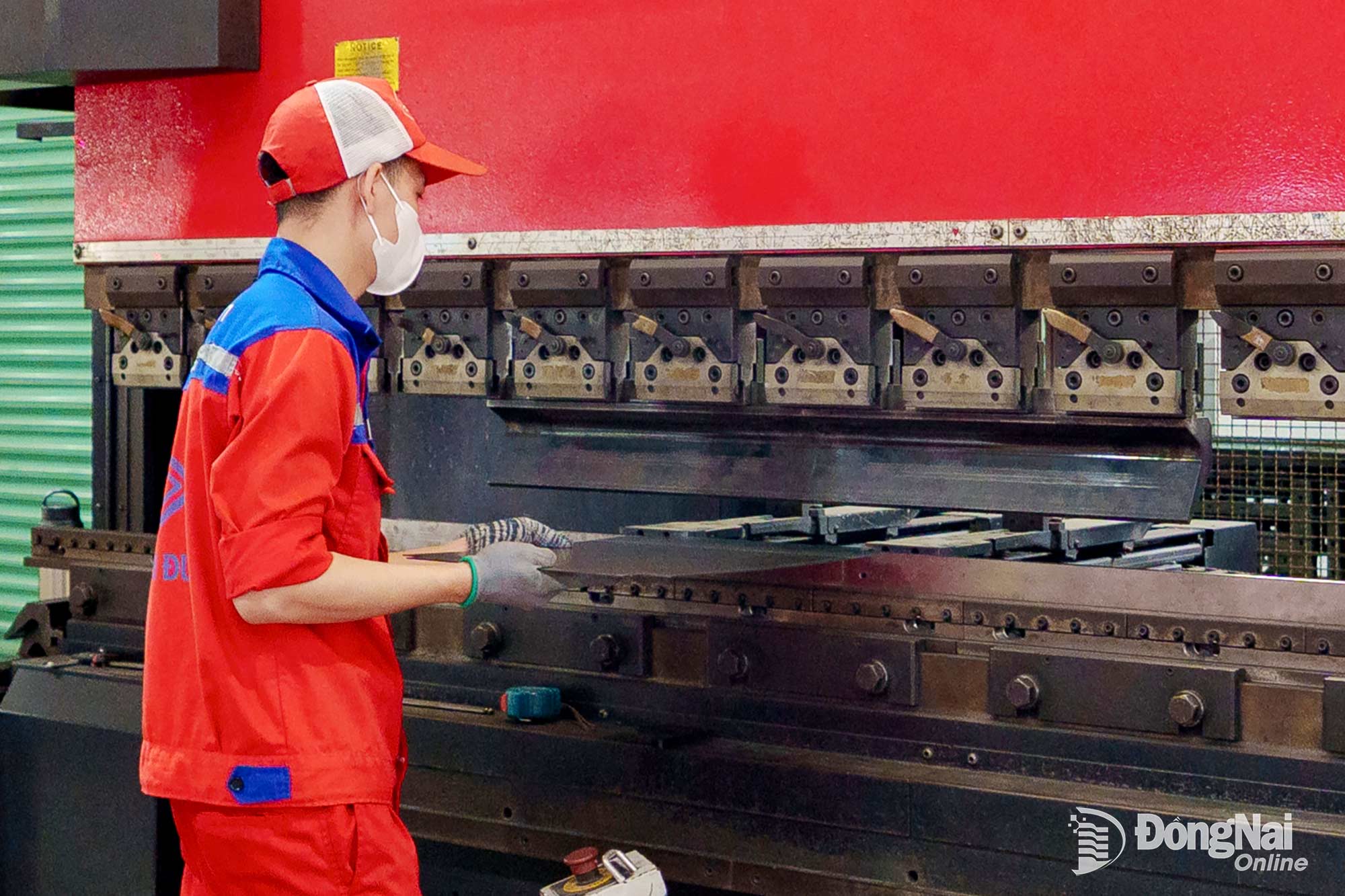 |
| Production activities at a company in Amata Industrial Park. |
In this context, restructuring involves more than streamlining organizational structures or cutting costs. It also requires changes in management practices, investment decisions, market strategies and business partnerships. This is particularly important for companies in Dong Nai as the city enters a new phase of development.
Changing the way businesses operate
According to the National Statistics Office under the Ministry of Finance, more than 223,000 businesses entered the Vietnamese market in the first nine months of 2026, while around 172,000 exited. More than 48,700 completed dissolution procedures, an increase of 118.8% from the same period in 2025. The figures highlight the challenge of sustaining business growth while maintaining financial stability and resilience.
Speaking at the “Business Restructuring in a New Context” forum in Ho Chi Minh City on October 22, Tran Ngoc Liem, Deputy Secretary-General of the Vietnam Chamber of Commerce and Industry (VCCI) and Director of VCCI's Ho Chi Minh City Regional Branch, said restructuring should be an ongoing priority, even for businesses performing well. Geopolitical tensions, rising trade protectionism, inflationary pressures and changes in consumer purchasing power can directly affect orders, operating costs and cash flow. Companies that continue to rely on outdated management practices risk being caught unprepared as market conditions shift.
Improving operational efficiency should be the first priority. Businesses need to determine which activities generate the most value, where costs can be reduced and which operations no longer support their long-term strategies. Organizational streamlining and operational cuts will have limited impact unless they are accompanied by gains in productivity, product quality and the ability to respond to customer needs.
Capital management is another priority. Rather than relying too heavily on bank loans, businesses need to manage cash flow more closely and make better use of information from sales contracts and supply chains. Rising revenue does not necessarily guarantee financial stability: delayed payments, excess inventory and dependence on a small number of customers can all undermine a company's ability to meet its obligations and sustain production. Cash flow planning should therefore be closely coordinated with production schedules, deliveries and debt collection.
Nguyen Duc Lenh, Deputy Director of the State Bank of Vietnam's Region 2 branch, said capital was essential for maintaining production, investing in technology and expanding into new markets. However, the ability to use capital effectively depended largely on management capacity. A lack of transparency in financial reporting, weak management systems and decisions based mainly on personal experience can hinder businesses' access to financing and potential partners. Standardized accounting, stronger risk management and the effective use of technology should therefore be integral to restructuring efforts.
Do Thien Anh Tuan, an expert at the Fulbright School of Public Policy and Management, recommended that businesses optimize costs, restructure underperforming operations, diversify their markets and improve the quality of their workforce. Digital and green transformation should be aligned with specific business strategies. For manufacturers, technology investments should address practical challenges, such as reducing product defects, saving raw materials, shortening production times and ensuring orders are fulfilled on schedule. Businesses should avoid investing in modern equipment without first assessing its potential benefits.
Restructuring is unlikely to deliver lasting results if treated merely as a short-term fix. Businesses need to improve management, allocate resources more effectively and reassess their market strategies before mounting pressures escalate into a crisis. Stronger individual companies, together with partnerships that lead to real orders, contracts and closer supply chain integration, can create a firmer foundation for sustainable growth.
Partnerships create new opportunities
While internal restructuring can improve operational efficiency, stronger business partnerships are essential for expanding markets and participating more deeply in value chains. Building such linkages remains a challenge for many small and medium-sized enterprises (SMEs), particularly as large corporations and foreign direct investment (FDI) enterprises impose increasingly stringent requirements on their suppliers.
Phan Tan Dat, Chairman of the Ho Chi Minh City Young Business Association (YBA HCM) and Chairman of the Board of Binh Duong Mineral and Construction Joint Stock Company, said restructuring should involve redefining business strategies, reshaping growth models and strengthening long-term competitiveness. He called for closer links between large enterprises and SMEs, as well as between domestic companies and FDI enterprises. He also highlighted the need for databases detailing suppliers' capabilities, more direct connections between foreign-invested and domestic businesses, and greater cooperation among smaller companies to help them secure and fulfill larger orders.
In Dong Nai, stronger business linkages will be key to turning new development opportunities into concrete commercial partnerships and expanding local companies' participation in supply chains. Dang Quoc Nghi, Chairman of the Dong Nai City YBA and Director of Rong Nam Viet One Member Company Limited, said companies in the city could capitalize on growing business opportunities by strengthening cooperation. The association aims to turn connections among its members into practical collaboration, commercial orders and lasting business relationships, ensuring that networking leads to tangible results. Nghi said businesses should take the initiative to strengthen their supply capabilities, standardize processes, adopt appropriate technologies and seek partners with complementary strengths. They also need support in accessing capital, production premises, workforce training, technology and markets, as well as in resolving obstacles to investment and business operations.
By V. The – Translated by M.Nguyet, Minho



Thông tin bạn đọc
Đóng Lưu thông tin