
The development of an international financial center is expected to play an important role in mobilizing, allocating, and efficiently utilizing domestic and international financial resources, helping drive rapid and sustainable economic growth while improving economic quality and efficiency. It is also expected to strengthen Vietnam's position and role in the regional and global financial system.
Article 24 of the Urban Development Law (UDL) sets out mechanisms and policies to promote the development of an international financial center in Vietnam. The provisions focus on mobilizing resources, developing financial products and services, and connecting the center with new economic spaces, while ensuring that its operations remain subject to foreign exchange management, anti-money laundering measures, and financial security requirements.
Clearly defining powers and building a financial ecosystem
 |
| Dau Giay Industrial Park in Dong Nai City. Photo: Vuong The |
Under Clause 1, Article 24, the municipal People's Council is authorized to regulate the issuance of municipal and project bonds at the International Financial Center in Vietnam to mobilize capital for key city projects.
The municipal People's Council is also authorized to prescribe the conditions and procedures for licensing the establishment of banks engaged in investment banking activities at the International Financial Center (IFC) in Vietnam, as well as the issuance of international financial products through the center, after receiving the opinions of the Ministry of Finance and the State Bank of Vietnam.
The provision clearly defines the role of the municipal People's Council in determining key mechanisms for capital mobilization and financial activities at the center, while requiring the opinions of the Ministry of Finance and the State Bank of Vietnam on the matters specified in Point b, Clause 1, Article 24.
 |
| Financial transactions at a bank. |
Another notable provision is Point c, Clause 1, Article 24, under which the municipal People's Council is authorized to establish mechanisms for connectivity, financing and value-chain support between the IFC in Vietnam and free trade zones, integrated logistics zones, open-port areas, science, technology and innovation urban areas, other functional zones, and public transport systems developed under the Transit-Oriented Development (TOD) model.
The provision for connectivity with multiple functional areas shows that the IFC is designed to operate in close association with other economic, urban, and infrastructure spaces. Finance, therefore, is linked to the capital mobilization, financing, and value-chain support needs of the functional areas specified by the law.
The municipal People's Council is also authorized to decide on salaries, remuneration, bonuses, and other forms of income for cadres, civil servants, public employees, salaried personnel, and other workers receiving salaries or allowances at the management body of the IFC.
Notably, Point dd, Clause 1, Article 24 authorizes the municipal People's Council to introduce other mechanisms and policies in accordance with this law and other relevant legislation to ensure the effective establishment and operation of a new-generation IFC in Vietnam, with a comprehensive and diversified financial ecosystem and stronger integration with international capital markets.
Taken together, the mechanisms set out in Clause 1 cover a wide range of areas, from capital mobilization, investment banking, and international financial products to value-chain connectivity and human resources for the center's management body.
Financial center linked to smart infrastructure and international capital markets
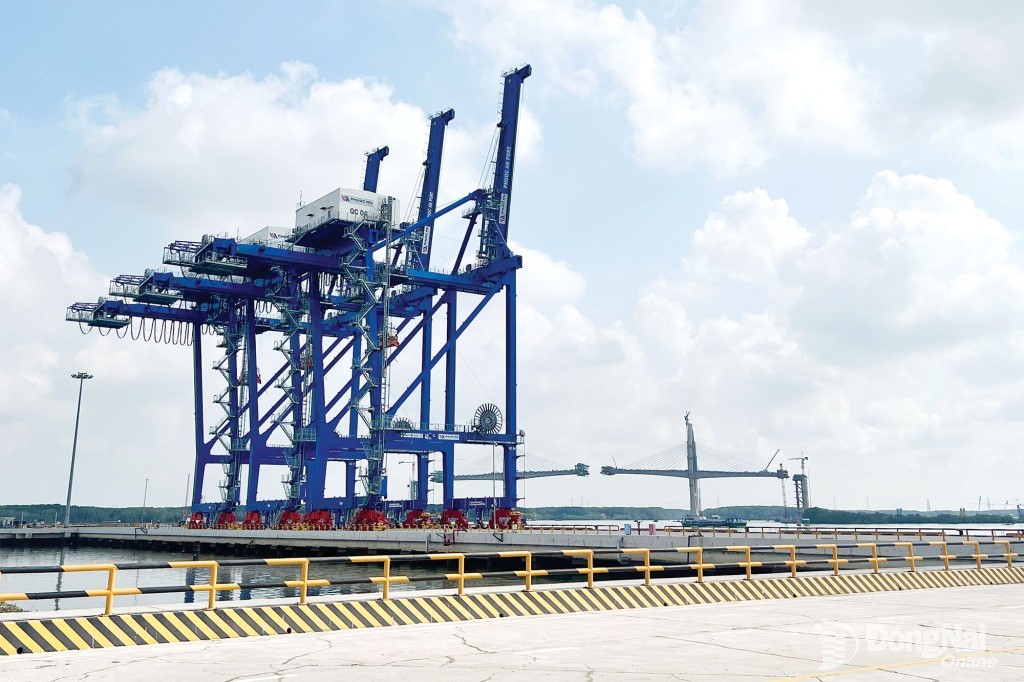 |
| The UDL lays the foundation for a financial center linked to smart infrastructure and international capital markets. |
Clause 2, Article 24 sets out the powers of the municipal People's Committee. Under Point a, the municipal People's Committee is authorized to decide on adjustments to the location, boundaries, and area of the IFC in Vietnam.
Under Point b, Clause 2, the municipal People's Committee is authorized to assign the management body in the city to exercise the state's ownership rights over enterprises in which the municipal People's Committee holds 100 percent of the charter capital. These enterprises may invest in smart and technology infrastructure, manage and operate infrastructure, and issue financial products through the IFC in Vietnam.
Meanwhile, Clause 3, Article 24 sets out the powers of the management body in the city. The body is authorized to establish affiliated public service units and other subordinate entities to perform the functions and tasks of the IFC in Vietnam.
The management body in the city is also authorized to license the establishment of banks engaged in investment banking activities and to license the issuance of international financial products in accordance with regulations issued by the municipal People's Council.
In addition, the body may apply the mechanisms and policies on attracting, utilizing, and developing human resources set out in Article 38 of the law and other legal provisions governing the IFC in Vietnam.
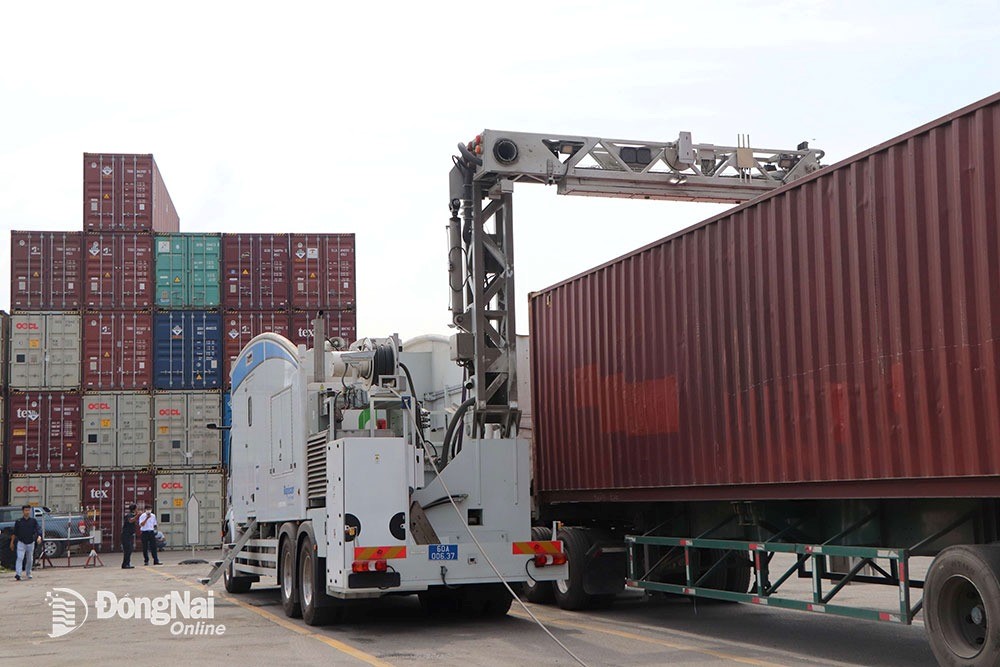 |
| Inspection and control of import and export goods. Photo: Ngoc Lien |
An important provision of Article 24 is found in Clause 4, which regulates the activities of members of the IFC in Vietnam. Under this provision, members may provide financial and other support services at the center in accordance with their establishment and operating licenses to domestic organizations for transactions and international capital mobilization. This is an important limitation that must be fully taken into account when assessing the mechanisms applicable to the IFC.
The law grants extensive powers to the municipal authorities and the management body, while providing for financial mechanisms and products, and stronger links with international capital markets. At the same time, members of the center must fully comply with the regulatory requirements set out in Clause 4, Article 24.
These provisions show that Article 24 establishes a relatively comprehensive framework for the IFC in Vietnam, covering its organizational structure, operating space, capital mobilization, technological infrastructure, financial services, and human resources.
At the core of this framework is a clear division of powers among different levels of authority, closer integration of the financial center with new economic spaces, and stronger links with international capital markets. At the same time, the framework maintains necessary safeguards for foreign exchange management, anti-money laundering, countering the financing of terrorism, countering the financing of proliferation of weapons of mass destruction, and public debt management.
By H.Thanh – Translated by M.Nguyet, Minho



Thông tin bạn đọc
Đóng Lưu thông tin