
From industrial sludge and plastic waste to household garbage, materials once considered suitable only for disposal or treatment are being given new life by businesses in the city.
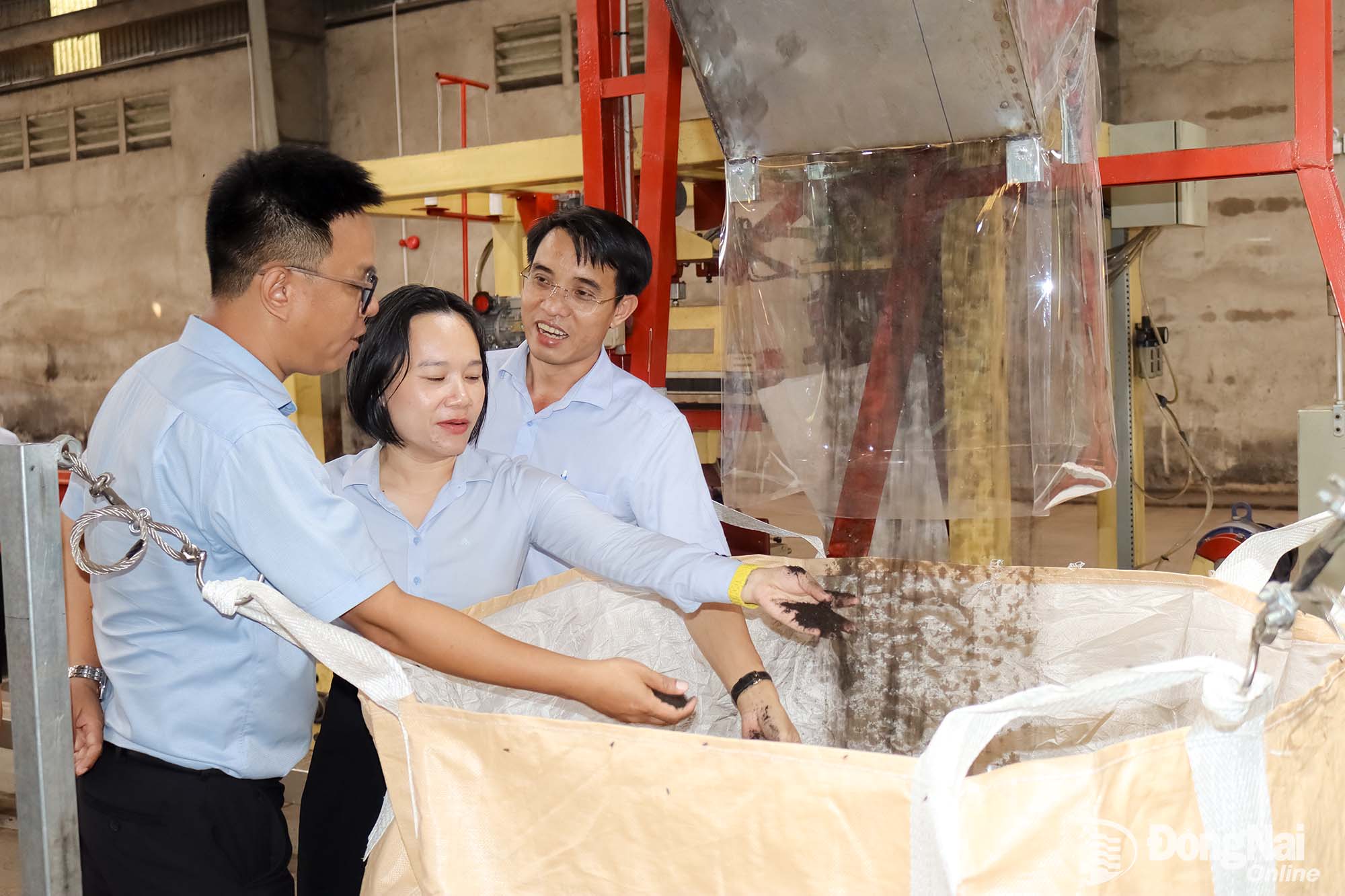 |
| An employee of Sonadezi Services Joint Stock Company inspects organic fertilizer compost made from household waste at the Quang Trung Waste Treatment Complex in Gia Kiem Commune. |
When waste becomes an input material, both environmental and economic challenges can be addressed.
When waste becomes raw material
A brick made from sludge. A panel, painting, table or trash bin made from plastic waste. Such products show that the boundary between waste and raw materials sometimes lies not in the material itself, but in how it is processed and used.
At Thanh Tung 2 Co., Ltd. in Tan An Commune, industrial waste, after being treated in accordance with regulations, is researched and recycled into a range of products. One approach is to use treated sludge to produce recycled bricks and roof tiles.
The company has also invested in a plastic recycling line. After being sorted and processed, plastic waste is fed back into the production line to make plastic panels, plastic bricks, plastic roof tiles and various household products such as tables and chairs, trash bins, wardrobes, handbags and 3D paintings.
In recent years, Dong Nai authorities have issued a number of policies on waste recycling and reuse, including Decision No. 58/2026/QD-UBND on the roadmap for source separation of household solid waste; Resolution No. 12/2026/NQ-HDND on support policies for household solid waste management; Decision No. 385/QD-UBND approving the Carbon Reduction Project through 2030, with a vision to 2050; and Plan No. 76/KH-UBND on transforming existing industrial parks into green and eco-industrial parks by 2030, with a vision to 2050.
According to Bui Xuan Hung, General Director of Thanh Tung 2 Co., Ltd., the company's recycled waste products are currently sold both domestically and internationally. Its recycled plastic panels, for example, have been supplied to furniture manufacturers, garden sheds and convenience stores in Spain, Scotland, Germany and the United States. Paintings made from plastic waste have also been ordered by many foreign customers and partners as gifts.
With this approach, industrial waste is given a new life cycle: what was once discarded becomes raw material, then a finished product, and eventually a commodity circulated on the market.
Another approach is being implemented by Sonadezi Services Joint Stock Company at the Quang Trung Waste Treatment Complex in Gia Kiem Commune, which the company has invested in. Instead of sending all household waste directly to landfills, the waste is fed through a sorting line. Organic materials, recyclable materials and inert waste are separated into different streams for treatment.
Tran Anh Dung, General Director of Sonadezi Services Joint Stock Company, said the facility currently receives 1,500 tons of household waste per day, accounting for about 55% of the city's total waste volume. Most of this waste is recycled or reused. Organic waste is processed into compost. Materials such as glass, paper, cardboard, nylon and metals are recovered for recycling or transferred to specialized treatment facilities. Only about 14% of inert materials that can no longer be recovered are sent to landfill.
Recently, the company inaugurated a system for producing organic and organic-mineral fertilizers from compost, allowing the material to be used in agricultural production rather than simply being processed into compost as before. At the end of 2025, the company also put into operation a recycling system for plastic, nylon bags and plastic waste, converting them into plastic pellets for reuse in production.
Creating value from waste
In addition to industrial and household waste, a number of models for reusing agricultural by-products and industrial wastewater are also being implemented by households and businesses. The first value generated by these models is environmental. Every amount of waste recovered and reused means less waste that needs to be landfilled or treated, thereby reducing pressure on waste treatment facilities and limiting adverse environmental impacts.
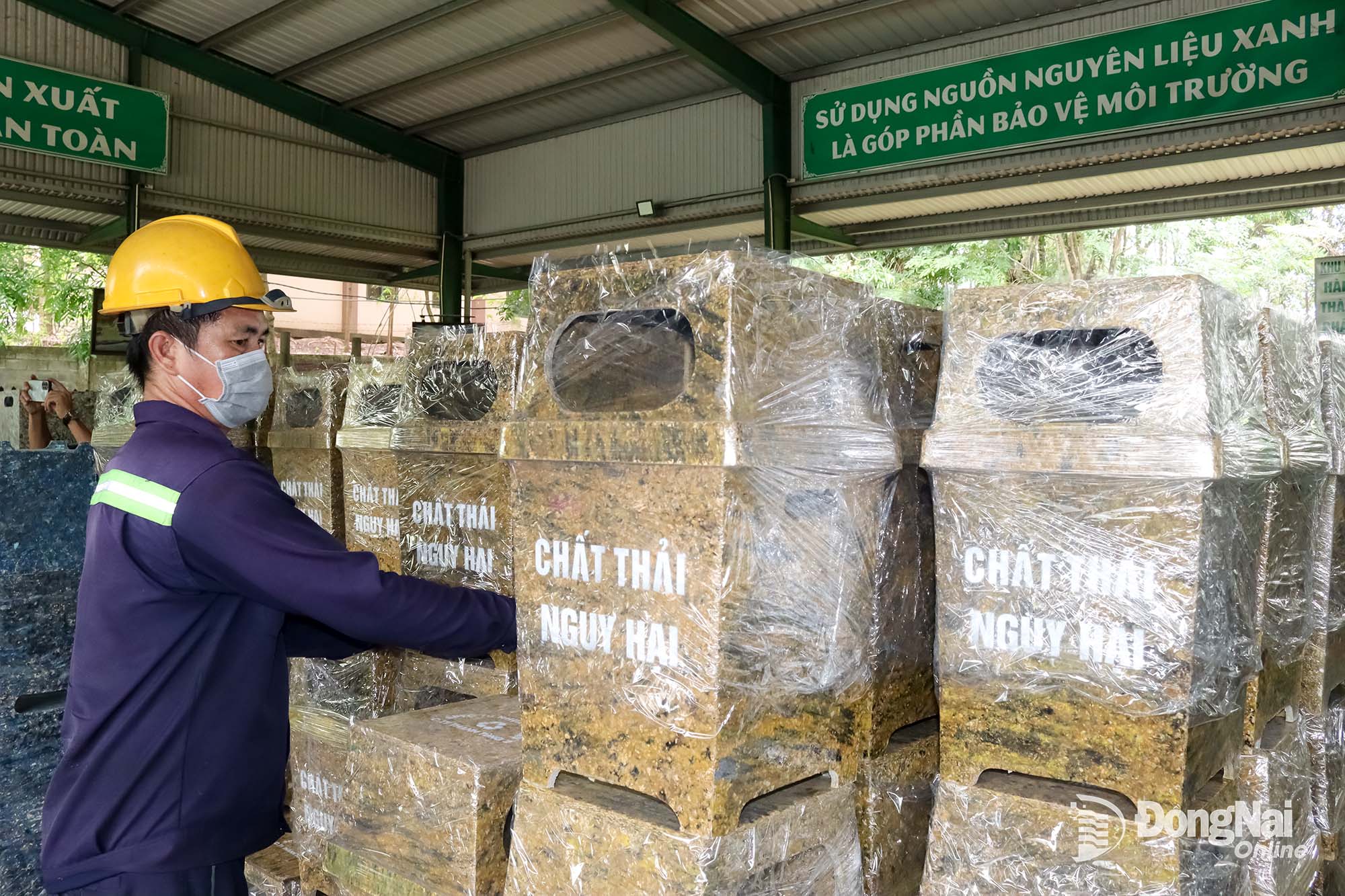 |
| Trash bins made from industrial plastic waste at Thanh Tung 2 Co., Ltd. in Tan An Commune. |
However, looking at recycling and reuse solely from an environmental perspective is not enough. The greater value lies in the ability to turn treatment costs into productive resources. Instead of spending money to treat all waste, when part of the waste is recovered and recycled into raw materials or products for sale, the waste stream itself generates economic value. This distinguishes traditional waste treatment from a circular-economy approach.
Beyond the requirement to safely treat waste, the higher goal is to turn waste into production materials and products that serve people's daily lives. Achieving this means adding value to waste.
Environmental experts say that to maximize waste recycling and reuse, waste must first be separated at source, its composition controlled, and appropriate technologies applied. Recycled products must meet quality and safety requirements and be competitively priced in the market.
Consumers also need to raise their environmental awareness by using recycled products, thereby creating a market that gives businesses confidence to invest in technology and production lines.
Turning waste into products first requires a change in how waste is perceived. Waste is not merely something to be discarded, but can also be a secondary resource. Industrial sludge can be used as raw material for brick production, food waste can be used to produce organic fertilizer, and industrial waste can be used as fuel.
In a circular economy, what is discarded in one process can become an input for another. Therefore, recycling should not be measured solely by how many tons of waste are diverted from landfills, but also by how much resource value is retained and how much value is created from those resources. With this approach, waste management is no longer simply about treating waste, but about extracting value from it.
By Hoang Loc – Translated by Mai Nga, Minho
Thông tin bạn đọc
Đóng Lưu thông tin