
Politburo Resolution No. 16-NQ/TW, dated July 21, 2026, on the construction and development of Dong Nai City to 2035, with a vision to 2065 (hereinafter referred to as Resolution No. 16), identifies the study of using land resources in areas around railway stations and along new transport routes to generate funding for infrastructure reinvestment as one of the city's key tasks, with a focus on urban railways.
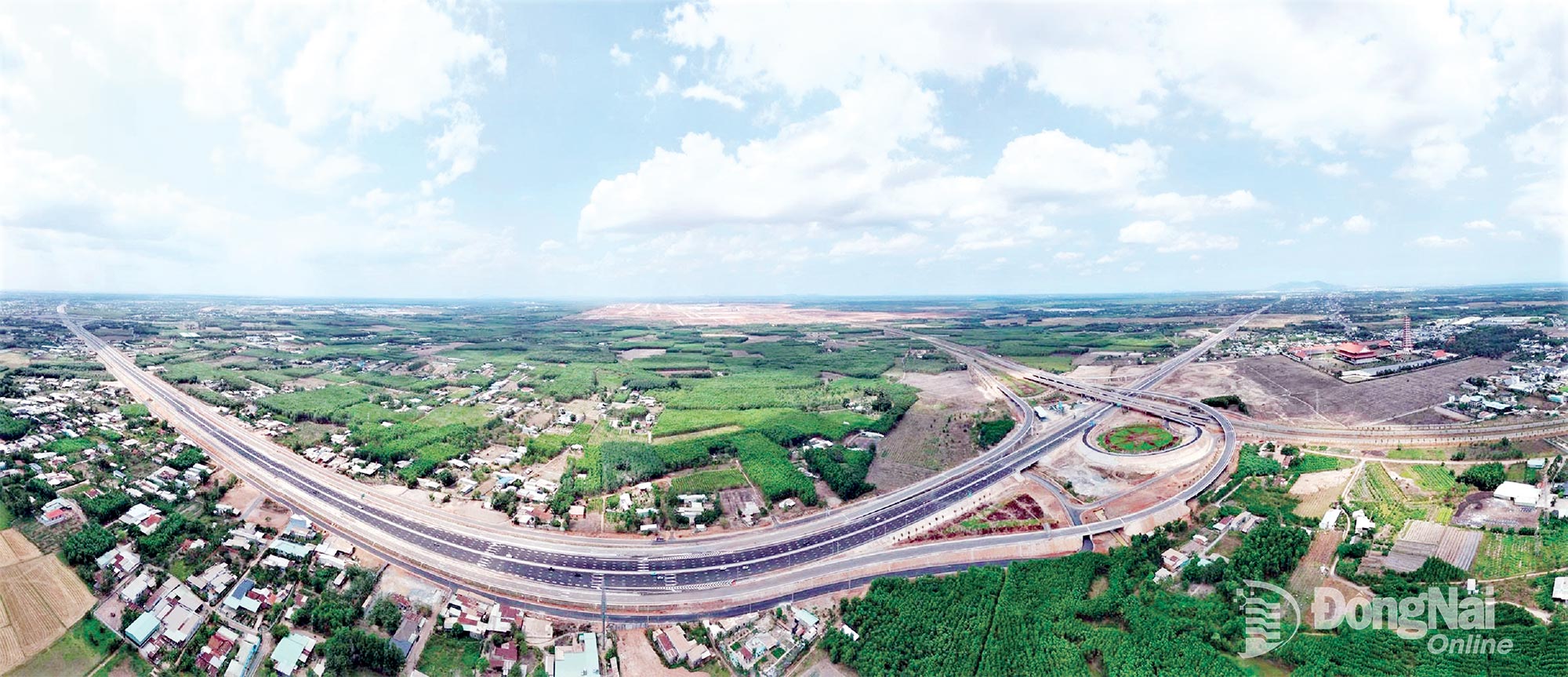 |
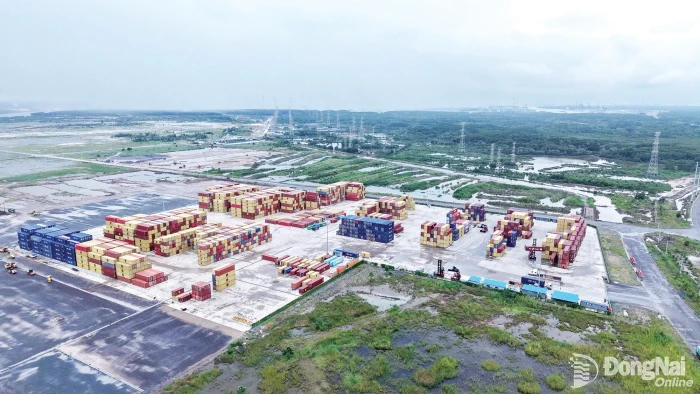
| With Long Thanh International Airport and major transport routes running through the area, Long Thanh area could become a particularly important TOD space of Dong Nai City. |
Against this backdrop, transit-oriented development (TOD) is expected not only to drive the restructuring of the city's urban space but also to increase the value of the city’s land bank and generate resources for reinvestment.
Significant potential
With 10 expressway projects already completed or currently underway, Dong Nai is among the localities with the largest number of expressway projects running through the area.
In addition to expressways and ring roads, Long Thanh International Airport — the country's largest airport — is under construction in the city. In this new phase of development, the city is also working with ministries, central agencies and localities to develop the North-South high-speed railway and urban railway (metro) lines.
With a multimodal transport infrastructure system being developed in a coordinated manner, alongside the strong expansion of various forms of public transport, the city has highly favorable conditions for developing the TOD model.
Assoc. Prof. Dr. Tran Quang Phu, former Vice Rector of Ho Chi Minh City University of Transport, said Dong Nai currently is among the localities in Vietnam with quite favorable conditions for pursuing TOD-oriented urban development. According to Phu, Dong Nai's opportunity lies in the fact that it is simultaneously developing a new strategic transport infrastructure system and a new urban structure, creating conditions for the two processes to be planned and integrated from the outset.
Dong Nai's TOD development potential stems from major changes in its transport structure and development space, he said. Long Thanh International Airport, expressways, ring roads, railways and planned urban transport routes are expected to form a large-scale, multimodal regional connectivity network. Under Dong Nai's current development orientation, next-generation strategic infrastructure is also identified as a key axis for reorganizing development space, while requiring urban development to be integrated with public transport. This is particularly important because TOD is much more effective when incorporated into a public transport network capable of connecting different urban areas, rather than being developed separately around individual railway stations.
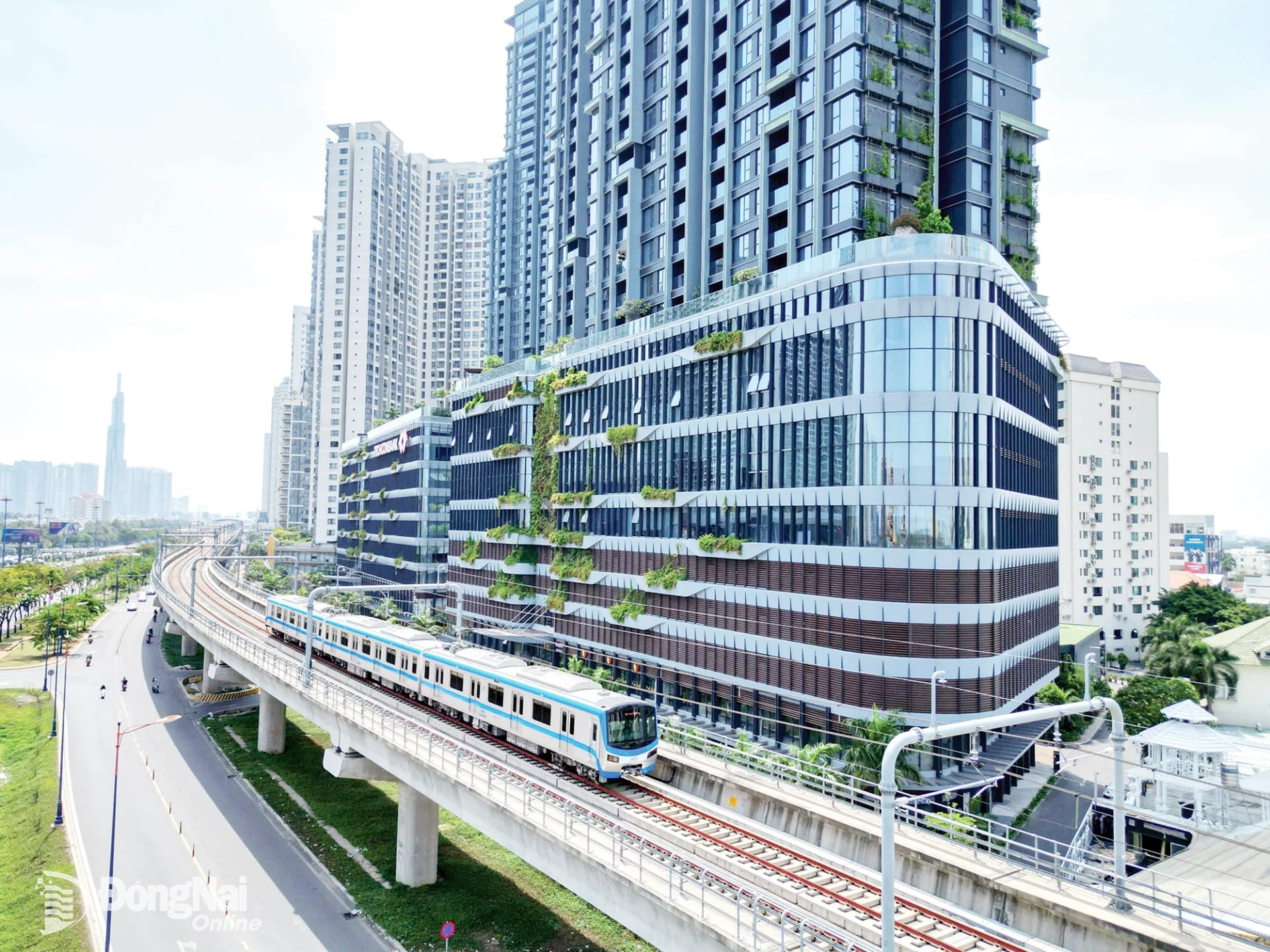 |
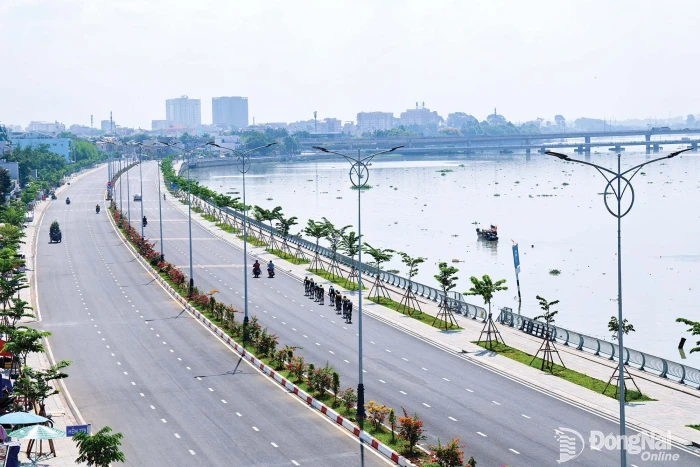
| The project to extend the Ben Thanh–Suoi Tien metro line to the city's administrative center and Long Thanh International Airport opens up significant potential for TOD model in Dong Nai City. |
Meanwhile, the Long Thanh–Long Thanh International Airport area could become a particularly important TOD space for the city. This is because the airport area is being oriented for development as an airport city, with functions including logistics, aviation services, commerce, high technology, innovation, education and high-quality services. At the same time, Dong Nai is studying urban development in association with railway and metro lines and strategic transport corridors.
Increasing land bank values in TOD areas
According to Vo Tan Duc, Deputy Secretary of the City Party Committee, Dong Nai is facing the need to carry out multiple major tasks simultaneously, including implementing Resolution No. 16, the Urban Development Law and the completion of the city's master plan. In the current development phase, land is not only a resource for implementing projects but also one of the important resources for the city to mobilize capital for investment and development, restructure urban space and drive socio-economic development, Duc said.
To increase the value of the land banks in TOD areas, Assoc. Prof. Dr. Tran Quang Phu said the city needs to control the exploitation of land values around railway stations. TOD can increase land values by improving transport accessibility and infrastructure investment, creating an opportunity to generate resources for infrastructure development. However, without effective controls, it could also lead to land speculation, rising housing prices, reduced access to housing for existing residents and the emergence of urban areas driven more by real estate development than public transport. Therefore, land value capture must go hand in hand with housing policies, resettlement, public spaces and community interests, Phu said.
Huynh Ho Dai Nghia, a public policy expert at the University of Social Sciences and Humanities under Vietnam National University Ho Chi Minh City, said Dong Nai City needs to select “anchor” investors, organize land resources around infrastructure, establish mechanisms to capture increases in land value and use TOD to regenerate resources for investment.
TOD is essentially a way of organizing urban space in which public transport becomes one of the factors guiding the structure of urban development, associated with land use, the distribution of residents, jobs and services, and the organization of urban space.
Assoc. Prof. Dr. Tran Quang Phu, former Vice Rector of Ho Chi Minh City University of Transport
By Pham Tung - Translated by Mai Nga, Thu Ha
Thông tin bạn đọc
Đóng Lưu thông tin