
Coffee trees in localities across Dong Nai are entering the ripening stage. The 2026 crop is expected to produce significantly higher yields and better-quality beans than in previous years, raising hopes among growers for a bumper harvest and favorable prices.
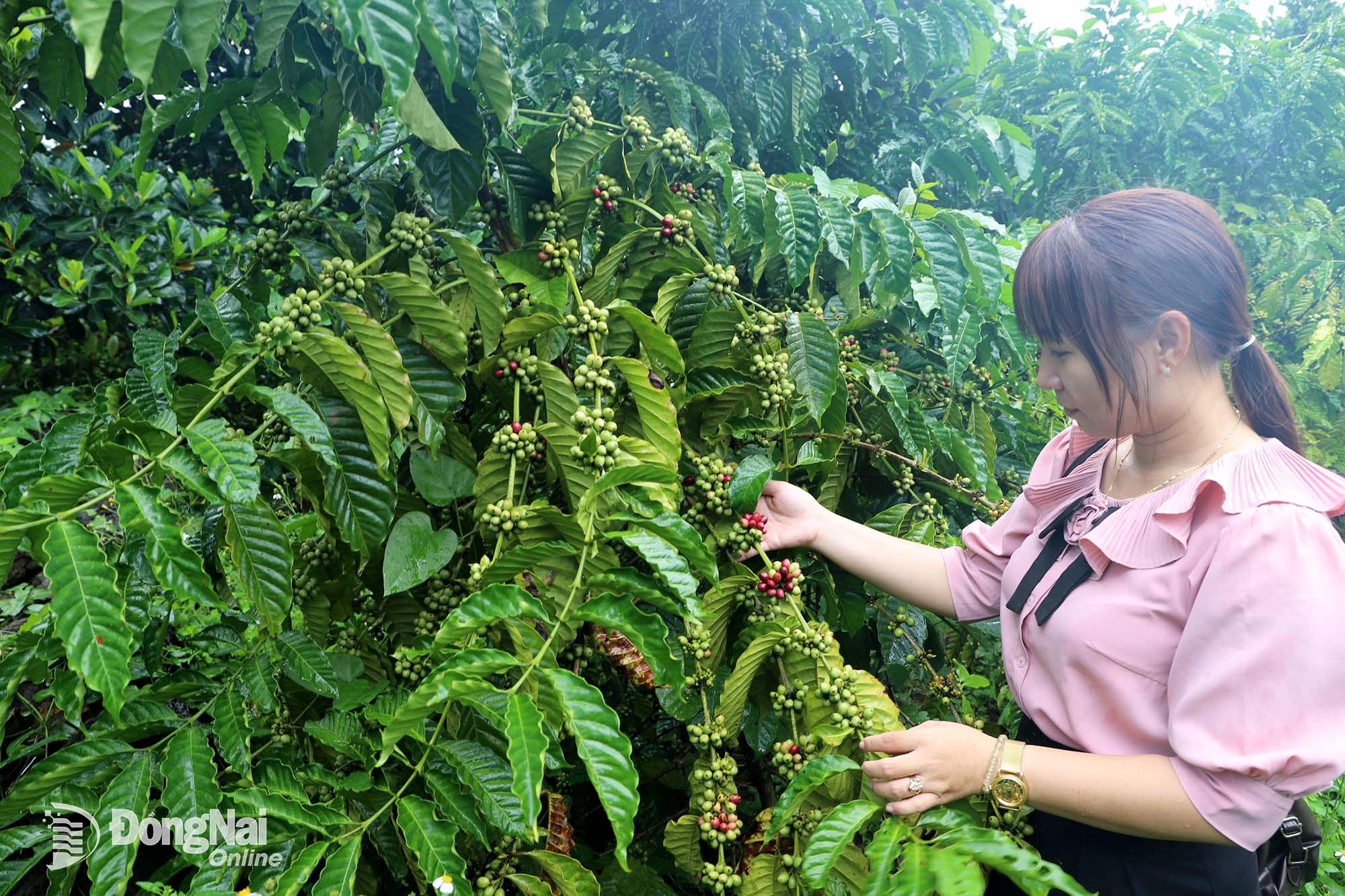 |
| Coffee plantations are about to enter the harvest season in Hang Gon Ward. |
In recent years, coffee prices have generally remained high, allowing growers to earn good profits and encouraging them to replant coffee trees. Farmers are also paying increasing attention to safe production practices to add value and promote sustainable coffee production.
A bumper coffee crop
According to coffee growers in several localities, coffee cherries have begun to ripen, with the peak harvest expected in about a month. Favorable weather conditions this year, particularly abundant rainfall, have helped coffee trees produce high yields and better-quality beans. Farmers are currently selling coffee at more than VND90,000 per kilogram at the farm gate. At this price, coffee growers are expected to earn good profits.
Tran Tuan Kiet, a farmer in Hang Gon Ward, said the area was once home to extensive coffee plantations. However, after coffee prices plunged, many farmers abandoned the crop in favor of other crops. When coffee prices fell sharply, he decided to replant coffee, considering it a key crop with strong export potential and expecting prices to recover. His family now has nearly 3 hectares of coffee in production, all of which is planted with new varieties that offer higher yields and better-quality beans. Thanks to favorable weather conditions, this year's crop is expected to yield more than last year's. The coffee beans are also of better quality.
Dong Nai is one of the country's major coffee processing and export centers, thanks to its concentration of large-scale, modern coffee processing and export facilities. The city aims to continue developing coffee-growing areas linked to deep processing to increase value and promote sustainable development of the crop.
Sharing this view, Thi Khui, Director of the Bu Lach Grassland Organic Cashew Agricultural Cooperative in Tho Son Commune, said about 2,000 hectares in the locality are planted with cashew trees, most of which are intercropped with coffee. The intercropping model has proved economically effective in the locality. This crop year, higher rainfall has helped coffee trees grow well, with a bumper harvest expected thanks to higher yields and better-quality beans. Coffee prices have remained relatively high in recent years, enabling farmers to earn good profits. As a result, the coffee-growing area has expanded compared with previous years. With prices at a level that allows farmers to earn reasonable profits at the beginning of this year's harvest, coffee growers are hoping for a bumper crop and favorable prices.
Toward sustainable development
In 2025, coffee prices surged to VND130,000-150,000 per kilogram, depending on the type of coffee, marking a record increase for the industry in 50 years. Accordingly, Viet Nam's coffee export turnover reached a record USD8.92 billion in 2025, up nearly 59% from 2024.
In 2026, global coffee prices have cooled following a period of sharp increases, but Viet Nam's coffee exports have continued to record solid growth. According to the Vietnam Coffee and Cocoa Association, in the first eight months of 2026, Viet Nam exported nearly 1.7 million tonnes of coffee worth more than USD6 billion, with export volume increasing by more than 10% compared with 2025. Vietnam's coffee is forecast to maintain its market share and competitive advantages in international markets in 2026.
With more than 20,000 hectares under coffee cultivation, Dong Nai is among the localities with large coffee-growing areas in the country. Many localities continue to identify coffee as a key crop with strong export potential. To develop coffee production sustainably, growers across the city are investing in new varieties and adopting safe farming practices to improve product quality and strengthen competitiveness.
Truong Xuan Hoan, a farmer in Song Ray Commune, said many farmers are choosing to replant coffee because the initial investment is lower than that required for growing fruit crops. Coffee also has an advantage in export markets. After harvesting, farmers can store their coffee and wait for better prices, reducing the risk of difficulties in finding buyers compared with fresh fruit products.
Hoan said he chose to replant coffee because he has many years of experience cultivating the crop. Many new coffee varieties available on the market can be harvested earlier and deliver much higher yields and better quality than traditional varieties. He is now shifting toward organic coffee farming to produce high-quality coffee that can better meet the requirements of export markets.
Thi Khui, Director of the Bu Lach Grassland Organic Cashew Agricultural Cooperative, added that the cooperative has been transitioning toward organic farming for many years. As a result, its organic cashew products have found businesses willing to purchase them at favorable prices. However, because the cooperative's coffee products have yet to obtain organic and safety certifications, they are still sold at conventional market prices.
Recently, some businesses have approached the cooperative about developing a supply of clean coffee that meets export standards for demanding markets. The cooperative hopes to receive support through programs and policies to obtain organic certification for its coffee products, thereby increasing the added value of this key local agricultural product.
By B.Nguyen – Translated by M.Nguyet, Minho
Thông tin bạn đọc
Đóng Lưu thông tin