
According to the Ministry of Agriculture and Environment, Viet Nam’s exports of livestock products reached US$511.9 million in the first six months of 2026, up 30% year on year. Full-year export turnover is projected to reach around US$700 million, significantly higher than the US$627.8 million recorded in 2025.
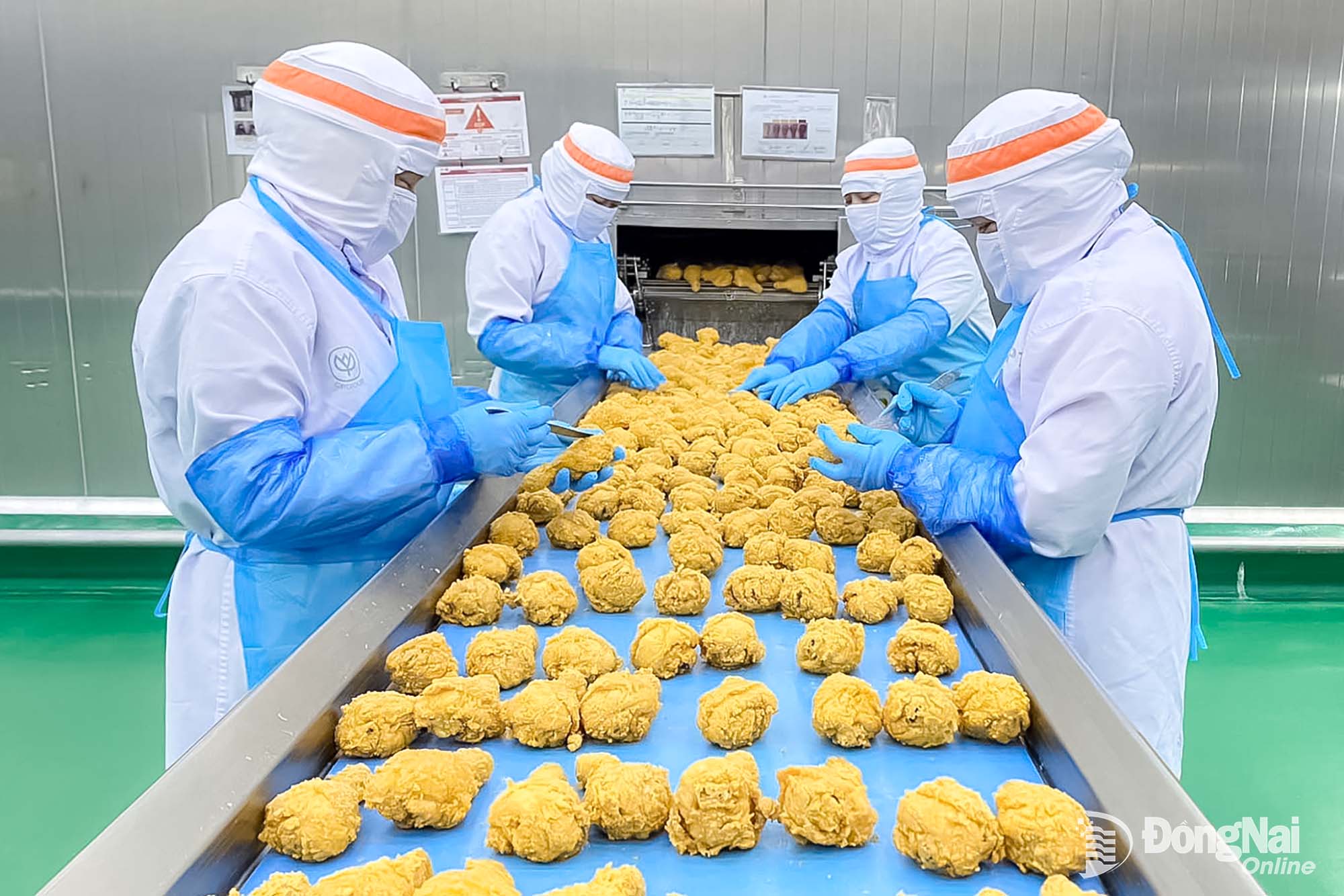 |
| Workers process chicken for export at C.P. Vietnam Corporation. |
Meat and meat products from Viet Nam have been exported to 25 markets worldwide, including markets with stringent requirements. As one of the country’s major livestock production hubs, Dong Nai is home to numerous livestock enterprises that are increasing investment in technology and expanding their deep-processing capacity to become more deeply integrated into the global food supply chain.
Strong export growth
According to the Viet Nam Livestock Association, the country’s livestock sector has developed into a large-scale industry, with Viet Nam ranking fifth globally in pig population and sixth in pork production. Meanwhile, its poultry population ranks among the world’s top 10. Livestock exports have also grown significantly, with export value rising from US$434 million in 2021 to US$627.8 million in 2025 and projected to reach US$700 million in 2026. Notably, the growth has been driven not only by higher export volumes but also by an increase in the value of livestock products shipped abroad.
Dr. Nguyen Xuan Duong, Chairman of the Viet Nam Livestock Association, said the export performance of Viet Nam’s livestock sector showed that the industry had made significant progress. Most notably, livestock production has shifted from traditional farming models to modern ones based on the application of science and technology, from breeding and investment in modern livestock housing technologies to disease prevention and control. Many corporations and enterprises in the livestock sector have also stepped up the application of modern technologies in deep processing, helping increase the value of livestock products.
“The export of Viet Nam’s first shipment of chicken to the Republic of Korea (RoK) marked an important milestone in agricultural and trade cooperation between the two countries. RoK has stringent requirements for products of animal origin, particularly regarding quarantine, food safety and traceability. The entry of C.P. Vietnam’s products into the RoK market demonstrates the company’s ability to meet high production standards. I hope this achievement will help strengthen bilateral cooperation and open up further opportunities for agricultural and food trade between Viet Nam and South Korea.”
Kim Hyung Woo, Agricultural Counselor at the Embassy of the RoK in Viet Nam
With nearly 4.4 million head of livestock, up more than 4% year on year, and a poultry population of over 37.3 million, up more than 4.4%, Dong Nai ranks among Viet Nam’s leading livestock-producing localities. The city is not only home to one of the country’s largest livestock populations but is also at the forefront of applying advanced technologies to livestock production and shifting toward large-scale commercial farming. These efforts have enabled the sector to meet domestic demand while expanding into export markets.
Dr. Nguyen Xuan Duong said Dong Nai has been effective in attracting major corporations and enterprises to invest in livestock production. The city has developed several livestock production linkages and established disease-free farming areas that meet the requirements of export markets. These provide a solid foundation for Dong Nai to further modernize its livestock sector, expand investment in deep processing and develop higher-value brands for international markets.
Reaching demanding markets
In late August 2026, the CPV Food Binh Phuoc Complex in Chon Thanh Ward held a ceremony to mark the export of Viet Nam’s first shipment of processed chicken to the RoK. To meet the requirements of this demanding market, C.P. Vietnam spent more than five years preparing for market entry and underwent a rigorous eight-step assessment process by South Korean authorities, covering animal and plant quarantine, food safety and pharmaceutical safety.
Pawalit Ua-amornwanit, General Director of C.P. Vietnam in Tran Bien Ward, said the key challenge in entering the South Korean market was ensuring consistency throughout the entire production process and meeting all the stringent requirements set by South Korean authorities. The export of C.P. Vietnam’s chicken to the RoK was the result of years of preparation, with support from Vietnamese and RoK authorities, local administrations, customers and partners. The company hopes the move will not only create new opportunities for Vietnamese processed foods to reach international consumers but also increase the value of the country’s livestock and food-processing industries, while bringing its “From Farm to Home” approach to more consumers worldwide. C.P. Vietnam’s processed chicken is now available in eight international markets, including several with stringent standards, such as Japan, Singapore and Russia.
Koyu & Unitek Co., Ltd., based in Loteco Industrial Park in Long Binh Ward, was the first Vietnamese enterprise to export processed chicken to Japan. The company has partnered with numerous farms in Dong Nai, providing technical guidance and helping them adopt production processes and standards for supplying chickens to its processing plant.
Tran Khanh Huy, Head of Logistics at Koyu & Unitek Co., Ltd., said that after nine years of working with farmers, the company has secured a stable supply of quality raw materials to meet orders from Japanese partners, while chicken farms in Dong Nai have secured stable outlets at commercially viable prices. Farms in the Koyu & Unitek supply chain have adopted modern technologies to reduce costs, increase productivity, improve product quality and meet environmental standards, helping build a sustainable supply chain. The company currently exports more than 300 tonnes of processed chicken to Japan each month. The company plans to further expand partnerships with chicken farmers and establish additional processing plants for export in response to strong market demand. This is expected to create more opportunities for chicken farms across Dong Nai.
By B. Nguyen – Translated by M.Nguyet, Minho


Thông tin bạn đọc
Đóng Lưu thông tin