
Through study visits to collective economic models inside and outside Dong Nai City, many cooperatives have not only discovered new approaches but also opened up new opportunities for cooperation.
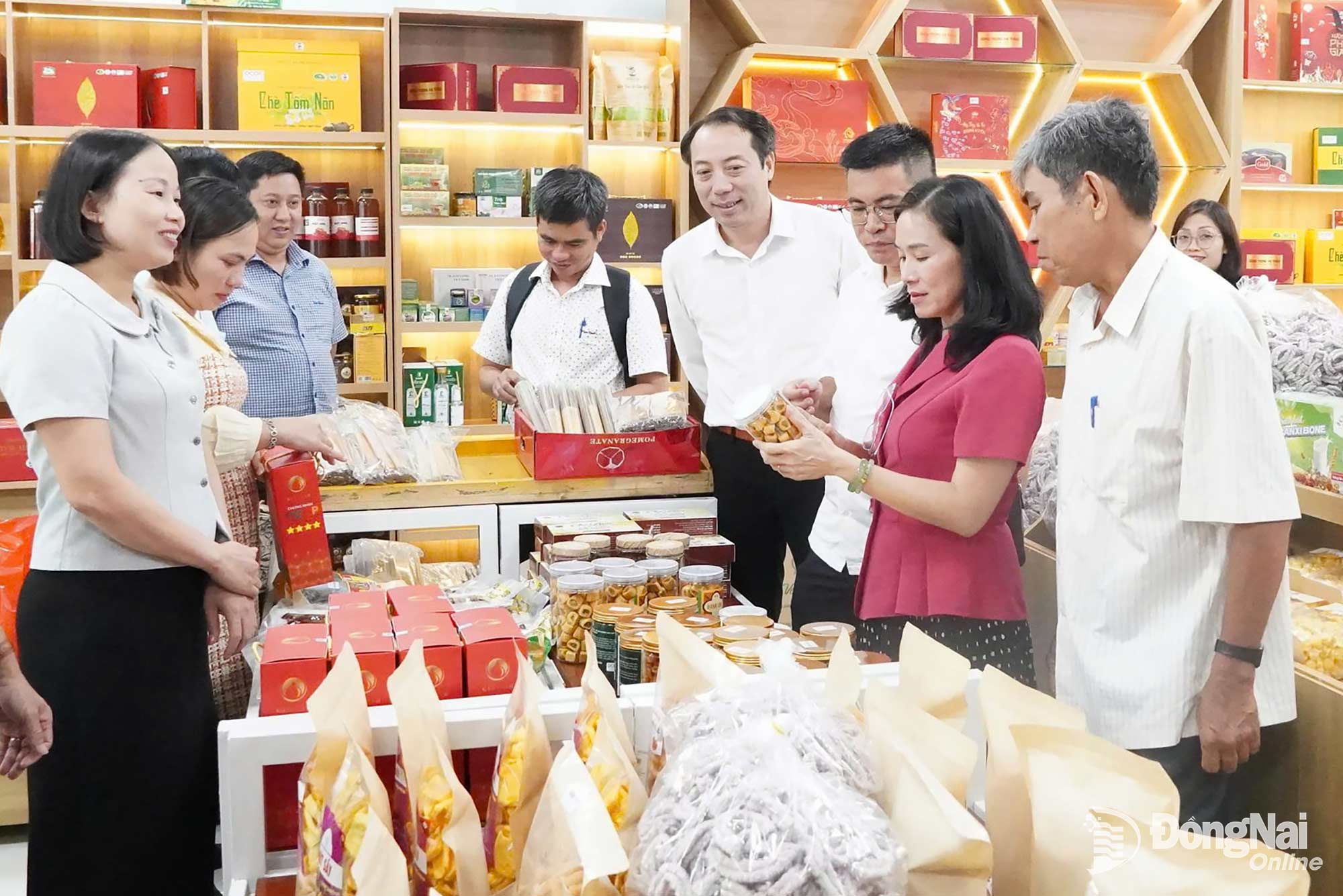 |
| The Dong Nai City Cooperative Alliance delegation visits an agricultural product processing model in Bac Ninh Province, now Bac Ninh City. Photo: Cong Nghia |
Each visit is therefore more than a learning opportunity. It also provides a chance to build business connections, share technology and explore new avenues for development.
Study visits open up new connections
In late August 2026, amid the cool, green landscape of Moc Chau Plateau, delegation members exchanged views on crops, products, markets and cooperative management during a series of meetings.
A delegation from the Dong Nai City Cooperative Alliance (DNCA) visited several outstanding agricultural cooperatives in Son La Province. What they saw firsthand provided delegation members with practical lessons in organizing production, developing raw-material areas, and linking production with processing and markets.
Earlier, a delegation organized by the DNCA also visited and worked with cooperatives in Bac Ninh. There, the two sides signed a memorandum of understanding to support cooperatives and connect them with markets for their products. Notably, the cooperation went beyond experience sharing and led to actual business partnerships. During the visit, Phuong Lam Trade and Services Cooperative in Dong Nai signed a contract with Toan Thang Agricultural Production and Services Cooperative in Bac Ninh Province, now Bac Ninh City, to establish a hub for the collection and exchange of goods between Bac Ninh and Dong Nai. The delegation also visited and held discussions with agricultural service and handicraft cooperatives in Bac Ninh Province, now Bac Ninh City.
According to Phan Huy Su, Chairman of the Board of Directors and Director of Nhon Trach Transport Services Cooperative, such study visits provide valuable practical experience. He said he had visited collective economic models in Dong Nai and other provinces and cities on many occasions to learn from effective approaches.
“Regular meetings and exchanges among cooperatives give each organization more information, experience and opportunities for cooperation. A study visit or a conversation can open up a new relationship and create opportunities to cooperate on raw materials, markets or technology,” Su said.
Sharing the same view, Le Van Quyet, Chairman of the Board of Directors of Long Thanh Phat High-Tech Agricultural Cooperative, said the application of technology was creating significant value in agriculture. His cooperative has developed modern chicken farming methods, gradually improving product quality.
Recently, Long Thanh Phat High-Tech Agricultural Cooperative has also welcomed delegations from cooperatives inside and outside the city to visit its operations, explore business opportunities and exchange information on technology. Quyet said he hoped the transfer of technical expertise and technology would continue to expand, helping improve the quality of Vietnamese food products and creating more opportunities for them to reach international markets.
In Xuan Loc Ward, Suoi Cat Cocoa Agricultural Service Cooperative, headed by Truong Van My, also regularly welcomes groups to visit and learn from its operations. Visitors include not only cooperatives but also students and foreign delegations seeking to study the model and explore commercial opportunities for cocoa products.
“We also regularly visit and learn from models in Dong Nai and other provinces and cities. This has helped us expand our market, learn new techniques and explore new projects so that we can work with cooperative members to expand production and diversify our activities,” My said.
Learning to prosper together
According to Nguyen Thi Hong Nhung, Vice Chairwoman of the DNCA, the need for cooperatives in Dong Nai to learn from and forge links with cooperatives in other provinces and cities is becoming increasingly important and practical. Cooperatives need to learn not only about production techniques but also about management, brand development, market development, digital transformation, business partnerships and value chain development.
This is also the goal pursued by the DNCA in its 2026 study program. Under the plan, the alliance's 2026 study program comprises three delegations to Bac Ninh, Son La and Gia Lai. The delegation to Bac Ninh focused on agricultural service and handicraft cooperative models; the delegation to Son La studied agricultural and construction cooperatives; and the delegation to Gia Lai is expected to examine effective agricultural cooperatives and people's credit funds. Each delegation comprises around 20 members and works directly with local cooperative alliances and leading cooperatives.
According to Nhung, what matters most is that exchanges should go hand in hand with business connections. Representatives of Dong Nai cooperatives not only visit other localities to learn from their experience but also have opportunities to introduce their products, seek partners, discuss needs for raw materials and markets, and gradually establish long-term partnerships. From a management perspective, direct exchanges with successful cooperatives also give managers a clearer understanding of issues such as the division of management responsibilities, financial transparency, member recruitment, internal controls and market-oriented production.
“After each visit, the alliance reviews the results, facilitates connections and selects suitable models for promotion and wider adoption. It also provides support in areas such as policy, trade promotion, OCOP product development under the One Commune One Product program, digital transformation and business linkages,” Nhung said.
Each locality has models and approaches suited to its own production conditions. Therefore, visiting cooperatives in person, seeing their operations firsthand and exchanging views directly with those operating effectively gives Dong Nai cooperatives a more practical perspective. This allows them to select models and approaches suited to their own conditions rather than having to figure things out from scratch.
Nguyen Thi Hong Nhung, Vice Chairwoman of the DNCA
In the coming period, the alliance plans to shift from connections formed through individual study visits to establishing regular cooperation among cooperatives and cooperative alliances in different localities. It will also focus on practical areas such as cooperative governance, digital transformation, green agriculture, the circular economy, deep processing, e-commerce, OCOP and value-chain linkages. When cooperatives that have participated in study visits become bridges for sharing their experience and when products, raw material areas, businesses and markets are connected across localities, these visits will create lasting value and foster further development.
By T.Tam – Translated by M.Nguyet, Minho

Thông tin bạn đọc
Đóng Lưu thông tin