
To improve investment efficiency, avoid fragmented and small-scale development, and ensure a sufficient resettlement land bank as projects are implemented, Dong Nai City needs to scale up investment in resettlement areas.
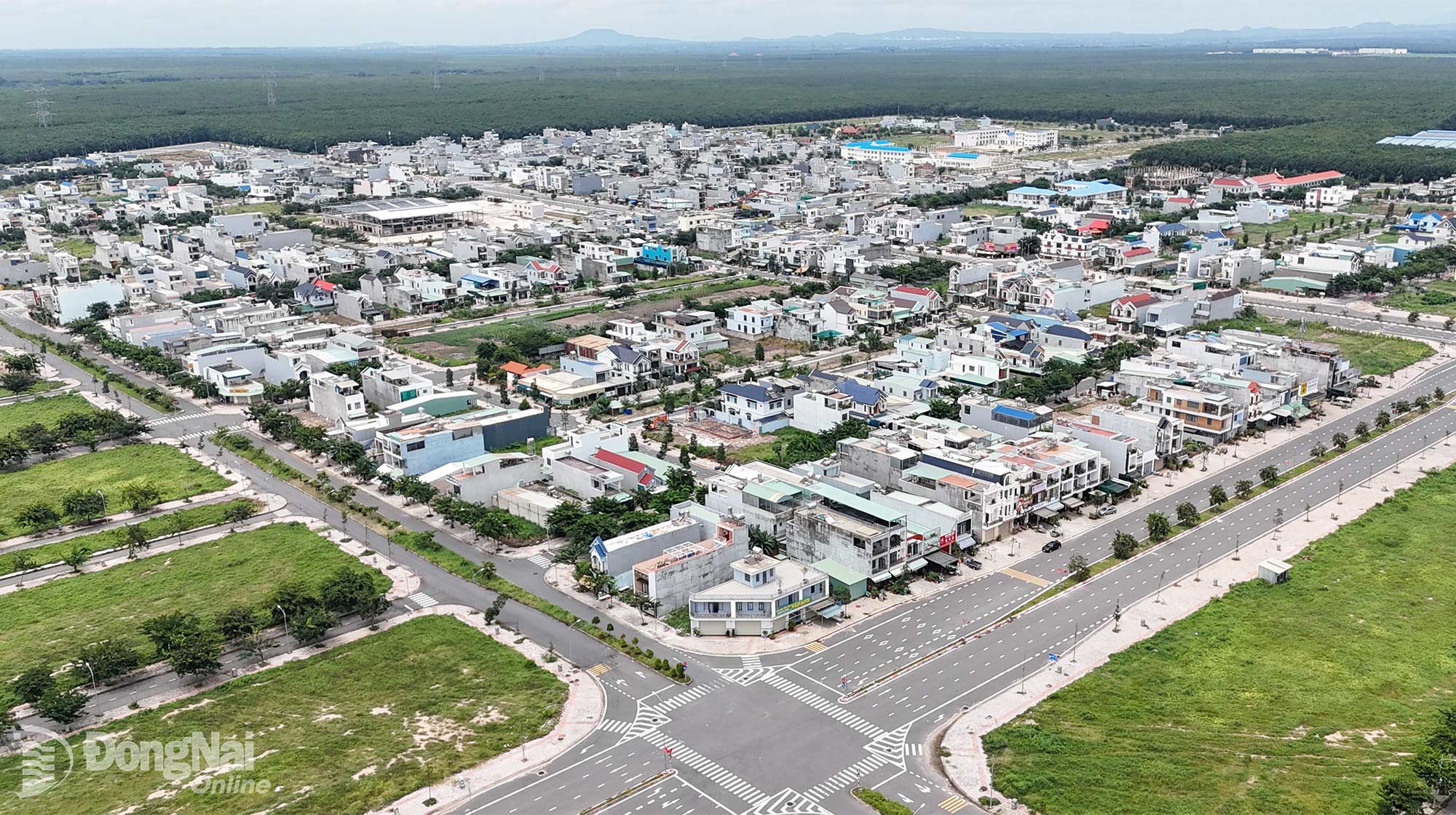 |
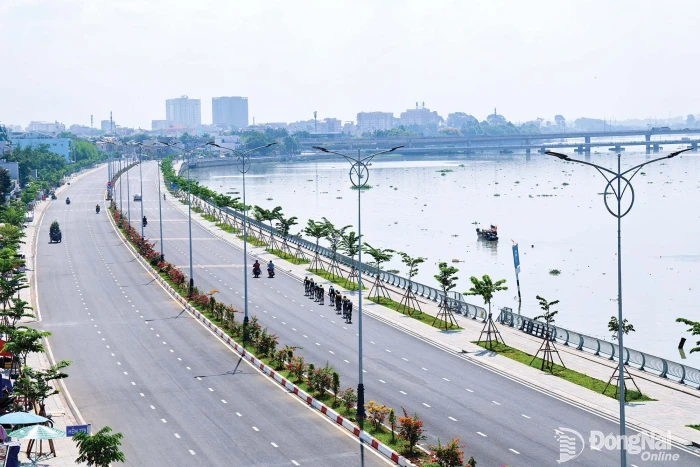
| Loc An - Binh Son Resettlement Area is one of the large-scale resettlement areas developed with modern, integrated infrastructure. |
With numerous projects already underway or in the pipeline, demand for resettlement land across the city is substantial.
Many resettlement areas are small
In late 2021, construction officially began on the Thong Nhat - Tan Mai Resettlement Area, located in Tran Bien and Tam Hiep wards. It is one of the resettlement areas planned to serve key works and projects in the region.
Under the plan, the Thong Nhat - Tan Mai Resettlement Area covers more than 8.5 hectares and is being developed with comprehensive infrastructure, including roads, green spaces, water supply and drainage systems, and other technical facilities. Once completed, the project will provide housing for nearly 1,900 people, equivalent to more than 400 resettlement lots.
However, according to Tran Dai Duong, Deputy Director of the Dong Nai City Civil Construction Investment Project Management Board, after taking over the project and reviewing the plan, the board found that more than 200 of the over 400 resettlement lots at the Thong Nhat - Tan Mai Resettlement Area would be used for on-site resettlement of households that had relocated to make way for the construction of the resettlement area itself. As a result, only about half of the lots will be available for resettlement associated with other projects.
Tran Dai Duong added that after its establishment, the Dong Nai City Civil Construction Investment Project Management Board took over 30 resettlement-area construction projects from the former regional project management boards. Of these, 14 are under construction and 16 are in the investment preparation stage. A review by the board found that many resettlement areas are very small. In addition, 20-30% of the total lots in these areas are allocated for on-site resettlement of affected households. “Besides the Thong Nhat - Tan Mai Resettlement Area, the Tam Hiep and Binh Da resettlement areas are facing similar circumstances,” Tran Dai Duong said.
Proposal for large-scale resettlement areas
In practice, investing in small-scale resettlement areas, particularly those with a high proportion of land allocated for on-site resettlement, risks reducing investment efficiency. Against this backdrop, at a mid-September 2026 meeting between Deputy Secretary of the Dong Nai City Party Committee Vo Tan Duc and the city's Land Fund Development Center and relevant agencies, representatives of the Dong Nai City Civil Construction Investment Project Management Board said the board was compiling information on the scale of the resettlement-area projects it had taken over for submission to the city People's Committee. The board also proposed that projects already under construction continue as planned. For projects still in the investment preparation stage, those found to have low investment efficiency should be considered for suspension.
According to the Dong Nai City Civil Construction Investment Project Management Board, two additional resettlement areas are scheduled to begin construction by the end of 2026, including the Nhan Nghia Resettlement Area in Cam My Commune and the Xuan Hiep Resettlement Area in Xuan Loc Ward.
“The Dong Nai City Civil Construction Investment Project Management Board has also proposed that the city People's Committee plan and develop large-scale resettlement areas to meet resettlement needs across the city,” Tran Dai Duong added.
At the same meeting, Member of the Dong Nai City Party Committee, Vice Chairwoman of the City People's Committee Nguyen Thi Cat Tien said that the planning and development of resettlement areas to serve project implementation should be based on the city's development orientation and public investment plans. She stressed that relevant agencies should identify which works and projects are scheduled for investment and determine their resettlement land requirements before planning and developing resettlement areas. Locations planned for building resettlement areas should also be carefully selected to ensure favorable conditions and make them attractive places for relocated residents. In particular, transport connectivity must be carefully considered so that residents can enjoy convenient access and view the resettlement areas as truly desirable places to live.
“First of all, it’s necessary to review preparations for resettlement areas serving key projects scheduled for implementation in 2026 and 2027,” Vice Chairwoman of the City People’s Committee Nguyen Thi Cat Tien said.
Meanwhile, Deputy Secretary of the Dong Nai City Party Committee Vo Tan Duc said that at a meeting with relevant agencies and localities in July 2026 on the progress of developing resettlement areas, the city had outlined plans to develop resettlement areas with integrated technical and social infrastructure on a regional scale to meet resettlement needs across the city.
By Pham Tung - Translated by Mai Nga, Thu Ha
Thông tin bạn đọc
Đóng Lưu thông tin