
Part 1: From the fields to major markets
Part 2: Businesses bring farmers into value chains
Part 3: Cooperatives forge stronger links among farmers
Final Part: Taking agricultural products to global tables
Dong Nai has many agricultural products that have entered export supply chains, but their added value remains limited. This is largely because most agricultural products are still exported in raw form. The challenge for Dong Nai's agriculture is therefore to develop raw-material areas linked to deep processing, build brands, expand export markets, and increase returns for farmers and businesses.
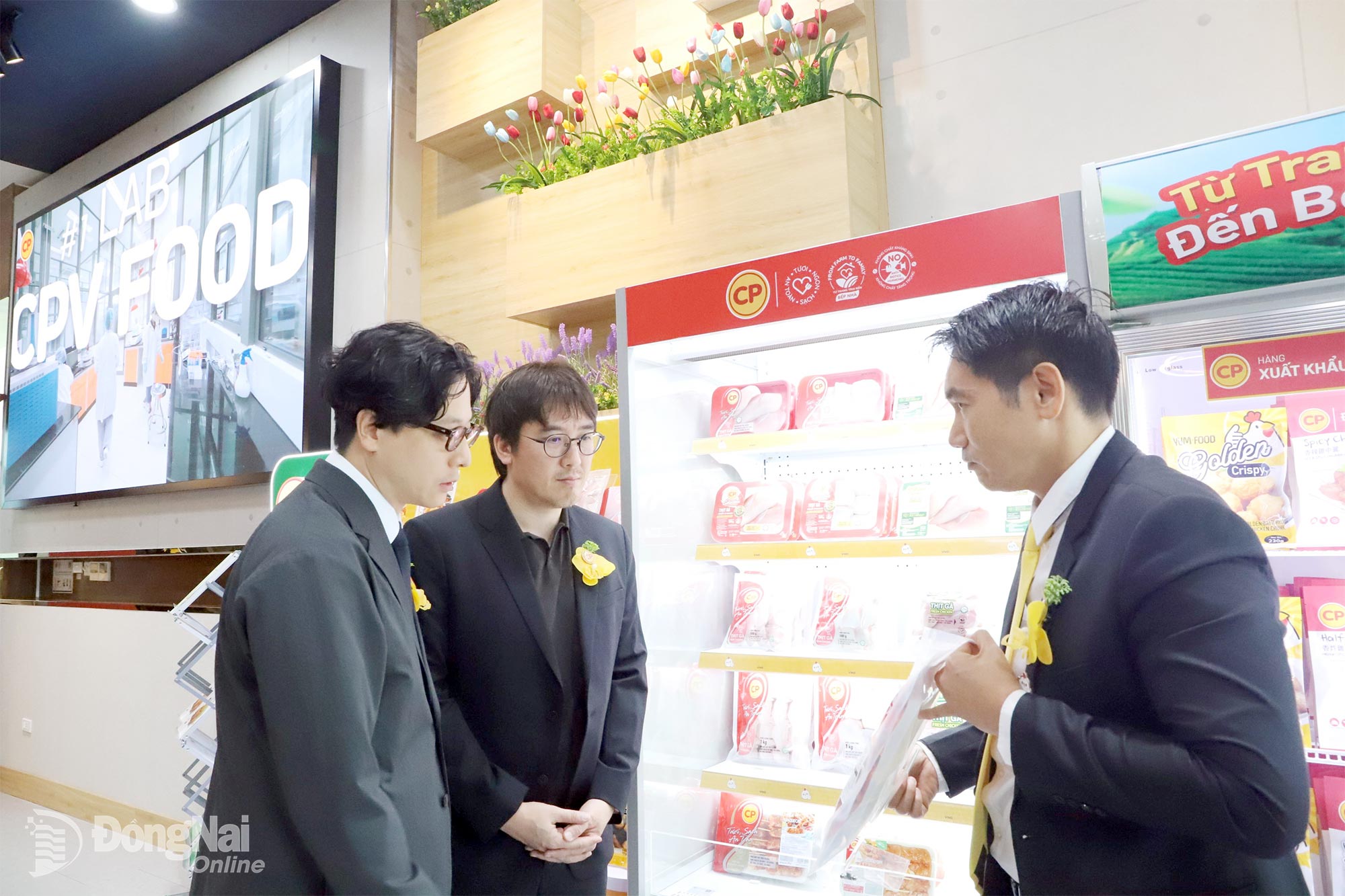 |
| A South Korean partner explores processed chicken products for export at an event marking Vietnam’s first shipment of processed chicken to the South Korean market by C.P. Vietnam Livestock Corporation. |
The key question for the city's agricultural sector is how to generate greater value from every tonne of agricultural products, raise farmers' incomes and give businesses stronger incentives to invest in raw-material areas, technology and markets.
Processing to retain greater value
Dong Nai's agricultural development over the years shows a clear shift toward commodity production that is increasingly linked to businesses and markets. Farmers in Dong Nai earn significantly higher incomes than the national average.
Trong Duc Cocoa Co., Ltd. in Phu Hoa Commune is one example. Starting with cocoa, which was not previously a widely cultivated crop, the company has partnered with farmers to develop a raw-material area covering thousands of hectares while investing in deep processing. Two of its processed products have received five-star OCOP certification at the national level and are exported. What makes this model notable is not simply its access to foreign markets, but the value added at each stage of the chain. Instead of stopping with harvested cocoa beans, the company uses farmers' raw materials to invest in technology, develop processed products, build its brand and secure markets. Farmers and businesses work together along the value chain, generating greater added value for the cocoa industry. The model offers a practical approach that could be replicated as Dong Nai seeks to raise the value of its agricultural products.
In 2025, Dong Nai's merchandise exports exceeded US$34.64 billion. Cashew nuts accounted for nearly US$2.8 billion, coffee nearly US$1.6 billion and rubber more than US$1.35 billion, while durians and bananas each generated several hundred million US dollars. These figures demonstrate the strong production capacity of farmers and businesses, as well as the ability of Dong Nai's agricultural products to access international markets.
However, high export volumes do not necessarily mean that Dong Nai retains a large share of the value generated along the agricultural value chain. One tonne of raw materials sold at the beginning of the chain is worth far less than the same volume after processing, packaging, branding and export to international markets. Much of the added value is created after harvest, an area where Dong Nai's agricultural sector still has considerable room for development. According to groups and businesses investing in agricultural processing, the city has favorable conditions for further development, thanks to its established industrial, commercial and service sectors and its access to major consumer markets.
In reality, many domestic and foreign corporations and businesses have invested in agriculture through value chains spanning raw-material production, processing and distribution. They include C.P., Nestlé, Cargill, Masan, Ajinomoto and Vedan. These businesses have contributed to the development of large-scale production and processing chains for Dong Nai's agricultural products.
In the animal-feed production sector alone, the city is home to 63 businesses, with a combined annual output of about 5 million tonnes. Many of their plants use production technologies that rank among the world's most advanced. Meanwhile, the OCOP program has opened up another avenue for development. By building on locally produced goods, businesses and cooperatives can invest in processing and brand building to expand their markets.
The city currently has 451 OCOP products, including 11 five-star and 89 four-star products. OCOP products from communes and wards across the city are distributed through supermarket and retail-store networks, while more than 90 products are available on e-commerce platforms. These results show that Dong Nai's agriculture is not short of products. The next step is to increase the value of these products after they leave the farm.
Paving the way for investment
Dong Nai still has considerable room to develop large-scale commercial agriculture. Following the administrative reorganization, the city has advantages in land resources, raw material areas, livestock farming, industrial crops and fruit trees, as well as a well-developed agricultural processing industry. The key is to link farmers, cooperatives and businesses to form value chains spanning production, deep processing, brand building and exports, thereby generating greater added value for agricultural products, higher profits for farmers and businesses and additional revenue for the state budget.
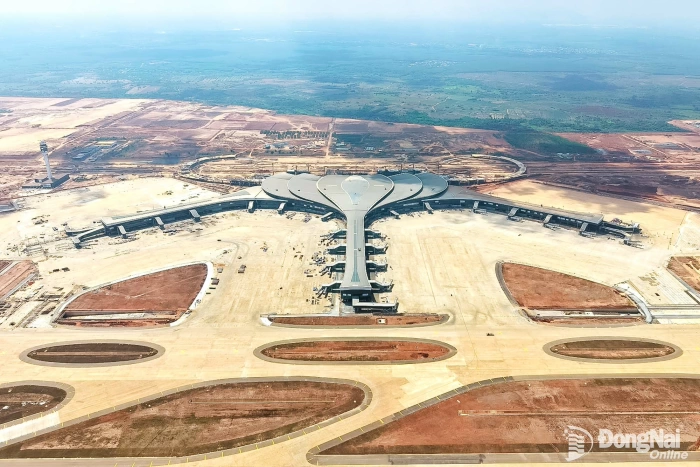
New policies introduced by the central authorities and Dong Nai are creating additional momentum for this goal. Politburo Resolution No. 16-NQ/TW on the construction and development of Dong Nai City through 2035, with a vision to 2065, opens up new development space, with the city seeking to become a globally connected urban center and capitalize on the advantages of Long Thanh International Airport and its transport and logistics infrastructure. For agriculture, these developments will support the expansion of transport, logistics and processing industries and related services, helping to shorten delivery times, reduce transport costs and improve the competitiveness of agricultural products in international markets.
However, the key is how these policies are implemented to ensure practical results. Resolution No. 05-NQ/TU of the Dong Nai City Party Committee’s Executive Board on the special 500-day-and-night emulation campaign calls for bottlenecks to be removed, resources to be mobilized, and implementation efficiency to be improved. For agricultural businesses, these policies need to translate into concrete measures, including more streamlined investment procedures, more stable raw-material supply areas, better infrastructure for production and processing, and effective support policies that encourage long-term investment.
The experience of Trong Duc Cocoa demonstrates what can be achieved. Dang Tuong Khanh, Chairman of the Members' Council of Trong Duc Cocoa Co., Ltd., said the company's success was largely attributable to government support policies, particularly those encouraging investment in large-scale production fields and deep processing. In particular, Politburo Resolution No. 57-NQ/TW on breakthroughs in the development of science, technology, innovation and national digital transformation has provided a strong impetus for the company to adopt advanced technologies and digital transformation in deep processing toward greener, more circular production.
Beyond increasing output
Following the merger, Dong Nai has a large agricultural land base, one of the country's largest livestock herds and extensive areas devoted to industrial and fruit crops with strong export potential, including cashews, pepper, durians, bananas and rubber. These remain important advantages for the city in attracting investment in crop production, livestock farming and agricultural processing.
Notably, the city is implementing a major 1,500-hectare project for concentrated livestock farming and agricultural production and processing using high technology in Thuan Loi Commune. The project aims to develop a large-scale, high-tech agricultural zone that integrates livestock farming, crop production and processing into a closed-loop value chain.
Dr. Nguyen Xuan Duong, Chairman of the Vietnam Animal Husbandry Association, said Dong Nai was among the first localities to attract investment in livestock farming. Many major economic groups that have invested in Vietnam's livestock sector began their operations and expanded their businesses in Dong Nai. As a result, the application of science and technology in local livestock farming is relatively advanced, covering the entire chain from animal feed and breeding stock to livestock production, slaughtering and deep processing.
According to Dr. Nguyen Xuan Duong, Dong Nai should continue to capitalize on its strengths in high-tech livestock farming, take the lead in digital transformation, develop a circular economy through value chains, strengthen international cooperation and attract high-quality investment. The goal is to develop livestock and deep-processing value chains linked to export markets.
Nguyen Van Thang, Deputy Director of the Department of Agriculture and Environment, said that as international economic integration deepens, Dong Nai would continue to introduce favorable mechanisms and policies to attract investment in the preliminary processing, preservation and deep processing of agricultural products linked to raw-material areas. The city is also focusing on attracting investment in modern agricultural processing industries to increase the value of its agricultural products.
According to statistics, high-tech agricultural products currently account for more than 51% of the total value of the city's key agricultural products. Dong Nai has eight high-tech agricultural zones covering a combined area of about 6,500 hectares, along with 436 high-tech agricultural models, involving 328 businesses and 96 cooperatives. These figures show that Dong Nai's agriculture has strong potential to increase added value and bring its products to more tables around the world.
By B.Nguyen, K.Minh – Translated by M.Nguyet, Minho


Thông tin bạn đọc
Đóng Lưu thông tin