
For healthy people, paying for an annual health insurance card is a precautionary measure.
For people with cancer, chronic kidney failure, cardiovascular disease, or other conditions requiring long-term treatment, however, a health insurance card serves as an important financial "shield," helping patients significantly reduce out-of-pocket expenses throughout the treatment process.
Health insurance cards help patients live longer
T.T.H.O. of Trang Dai Ward shared that when she was seven months pregnant, an ultrasound revealed that the fetus had congenital renal atrophy. Distraught, O. cried until she had no tears left. However, for various reasons, she and her husband could not terminate the pregnancy. When the baby girl was born, she had only one kidney. She also suffered from several other conditions, including pneumonia, cardiac effusion, and pleural effusion, requiring her to remain in an incubator for six months at Tu Du Hospital. At the age of five, the girl was diagnosed with a cleft palate, while her physical and intellectual development lagged behind that of other children.
Since their daughter's birth, O. and her husband have taken turns bringing her to hospitals in Ho Chi Minh City for treatment. After many years of taking maintenance medication, when the girl turned eight, doctors required her to undergo dialysis to sustain her life.
"Ever since then, for nine long years, three days a week, regardless of the weather, days off or public holidays, I have been taking my daughter by motorbike from Dong Nai to Children's Hospital 2 in Ho Chi Minh City, and recently to Thong Nhat General Hospital for dialysis, hoping to keep my child alive. I had to quit my job to care for her, leaving only my husband to work and support the whole family. As a result, our family's finances have been depleted, with all our money has been eaten up by the expenses," O. confided.
 |
| H.O. accompanies her daughter to every dialysis session. Photo: Hanh Dung |
Elaborating on the costs of raising a sick child, O. said that when a family has someone with a serious, lifelong illness such as chronic kidney disease, the effort and financial burden involved are immense. Expenses include travel, medication, medical supplies, accommodation, food, and daily living costs during hospital stays. On average, dialysis costs nearly 3 million VND per week, an amount the family could not possibly afford on its own.
It was precisely when O.'s family was facing countless difficulties that the health insurance card provided them with additional motivation. Knowing that her daughter had a chronic illness, the local authorities issued the girl a health insurance card for poor households, with 100% coverage. As a result, O.'s family only has to pay for travel and food. All expenses for medicines and dialysis are fully covered by the health insurance fund. Consequently, instead of having to pay 3 million VND per week, the family now pays only a few hundred thousand VND.
"Without the health insurance card, my family truly wouldn't know how to manage to pay for my child's treatment," O. confided.
Multiple benefits of participating in health insurance
Treatment for a serious illness often lasts far longer than just a few days. Patients may require multiple hospital admissions, long-term medication, surgery, chemotherapy, radiation therapy, dialysis, or other specialized procedures. Consequently, treatment costs can reach tens or even hundreds of millions of VND.
For example, a cancer patient undergoing chemotherapy, medication, and supportive procedures may incur total treatment costs of about 30 million VND per treatment course within the scope of health insurance coverage, excluding services and medications not covered by the health insurance fund. If the patient is entitled to 80% health insurance coverage and seeks medical care in accordance with regulations, the health insurance fund may cover about 24 million VND, patient only has to co-pay about 6 million VND. If the patient belongs to a group entitled to 95% or 100% coverage, the health insurance fund will cover a larger amount, correspondingly reducing the patient's co-payment.
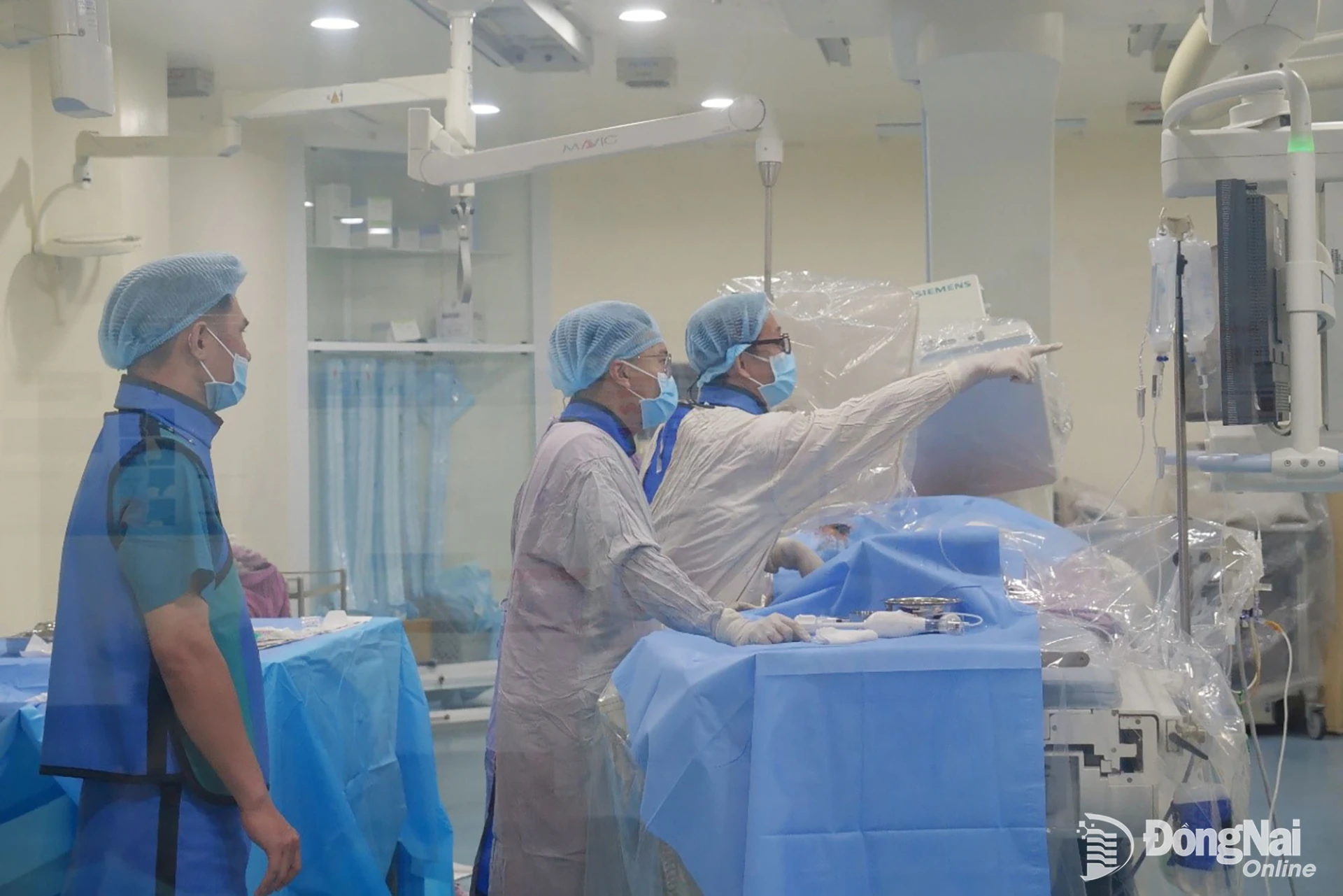 |
| A cardiovascular intervention procedure at Thong Nhat General Hospital. Photo: Hanh Dung |
Notably, people who have participated in health insurance for five consecutive years and whose annual co-payments exceeds six times the statutory base salary will be entitled to higher benefits in accordance with regulations. From July 1, 2026, the statutory base salary is 2.53 million VND per month, and the threshold of six times the statutory base salary is equivalent to 15.18 million VND.
This is especially meaningful for people with chronic illnesses or critical diseases requiring frequent treatment. Once the annual co-payment exceeds the regulated threshold, patients may be entitled to "zero co-payment" benefits within the scope and under the conditions prescribed by law.
In many cases, seeking medical care in accordance with regulations and fully complying with health insurance procedures is essential to ensuring patients' benefits. Specifically, in emergencies, patients can seek treatment at any medical facility and should present their chip-based citizen ID card as required to ensure their health insurance benefits.
Doctors advise the public, especially the elderly and people with underlying health conditions, not to wait until they fall ill to purchase a health insurance card. Maintaining continuous health insurance participation not only helps people proactively access medical services but also creates a financial "safety net" in the event of emergency hospitalization or long-term treatment.
By Hanh Dung – Translated by Minh Hong, Minho





Thông tin bạn đọc
Đóng Lưu thông tin