
With a history spanning nearly 330 years of formation and development, Dong Nai is home to diverse cultural values that have been nurtured over many generations.
Amid development and urbanization, preserving and promoting Dong Nai's cultural identity has become an essential requirement, contributing to shaping a modern urban landscape rich in identity and bearing the distinctive imprint of the Southern region.
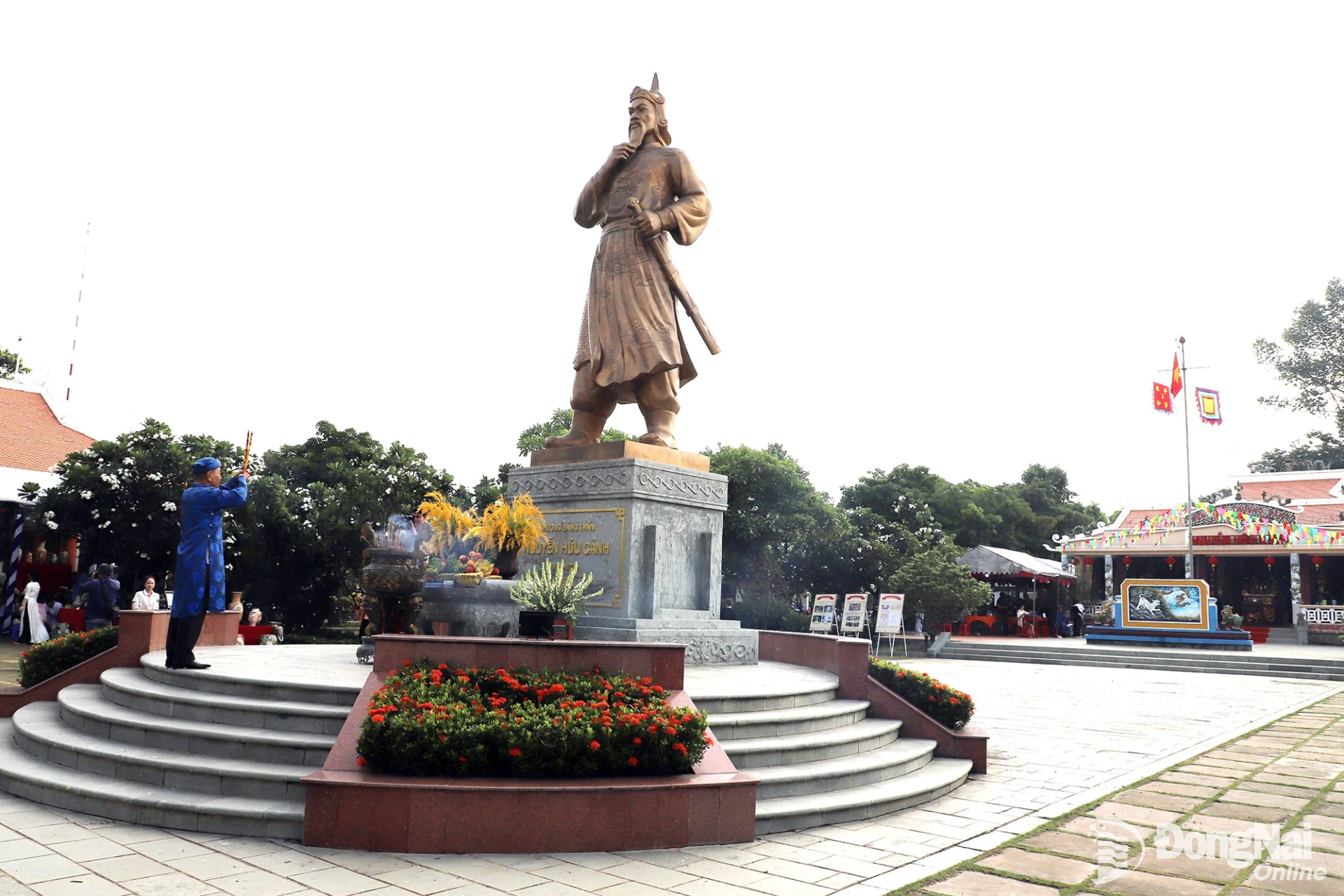 |
| The relic of Marquis Nguyen Huu Canh Temple is a destination for visitors to learn about the culture and history of the Dong Nai region. |
Preserving heritage amid urban development
Dong Nai currently boasts a rich heritage system comprising 121 ranked relics, including six special national relics, 42 national relics, and 73 provincial-level relics, along with nearly 1,500 inventoried relics. Sites such as the location where the Indochinese Communist Party Cell was founded in Phu Rieng (Thuan Loi Commune); Tran Bien Temple of Literature and the Temple and Tomb of Marquis Nguyen Huu Canh (Tran Bien Ward); War Zone D (Tri An Ward); Bom Bo Hamlet (Bom Bo Commune); and the Command Headquarters for the Liberation Army of South Vietnam (Loc Thanh Commune) have long been "red addresses" preserving distinctive historical and cultural imprints, contributing to the rich cultural depth of the land.
For many years, authorities and sectors at all levels in Dong Nai have prioritized the preservation and promotion of heritage values by allocating funds for the restoration and embellishment of relics, investing in cultural institutions, and maintaining traditional festivals. In the 2020-2025 period alone, Dong Nai allocated more than 161 billion VND for the restoration and embellishment of relics. Every year, the city maintains more than 100 traditional festivals, vividly reflecting the religious life of local communities.
However, amid rapid urban and industrial development, heritage conservation continues to face numerous difficulties and challenges, particularly at archaeological sites, which hold special value for research into the history of the land's formation and development.
Chairman of the Dong Nai Association of Historical Sciences Tran Quang Toai said a prominent characteristic of Dong Nai culture is its convergence. The interplay of identities among many ethnic groups that have lived together and forged bonds throughout different historical periods has created a unique cultural character that is diverse yet unified. In particular, many valuable archaeological sites have been discovered along the Dong Nai River. However, protecting these sites faces numerous difficulties due to geographical conditions and the pace of urban development. After some sites are surveyed and excavated and their artifacts are removed, the excavated areas must be backfilled because conditions and resources are insufficient to continue research and protection and to promote the sites' values.
"Heritage conservation in Dong Nai needs to go hand in hand with urban development, especially in the context of development associated with Long Thanh Airport. According to the Law on Cultural Heritage, the cultural sector needs to propose that, during construction and development, archaeological work must be carried out in advance in areas that may contain historical and cultural values. At the same time, it is necessary to promptly study the classification of Pho Islet to fully preserve the space of tangible and intangible heritage, thereby transforming it into a distinctive tourism product," emphasized Toai.
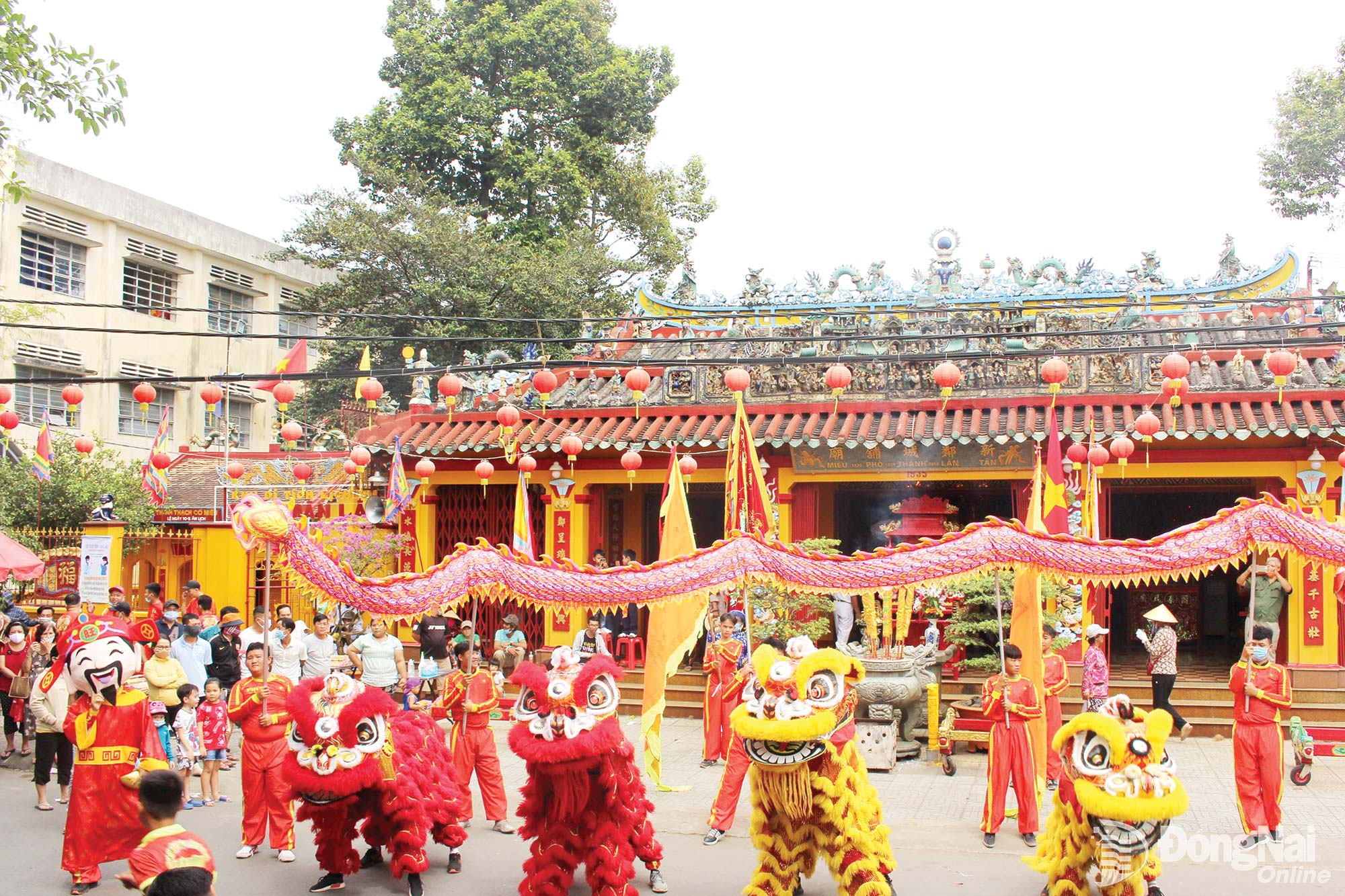 |
| The Ky Yen Festival takes place at the Tan Lan Communal House relic in Tran Bien Ward. Photo: My Ny |
Building an urban area rooted in cultural depth
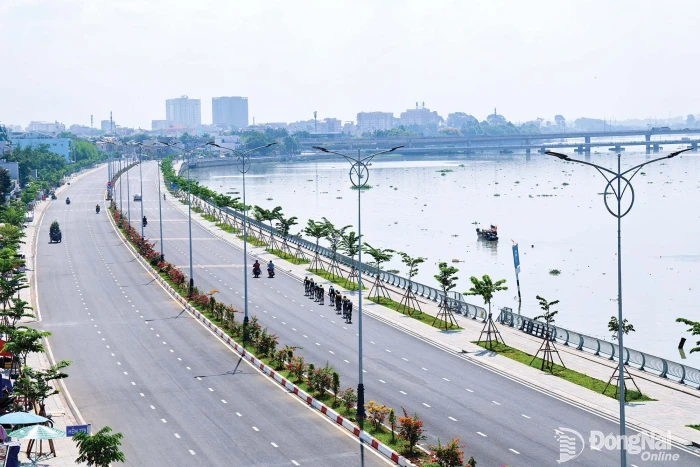
If heritage represents the memory of a land, architecture, landscapes, and public spaces are elements that contribute to shaping the cultural appearance of today's city. As Dong Nai expands its development space, the locality has focused on building works that bear its own imprint, creating connections among history, culture, and the modern pace of life.
Following the administrative reorganization, Dong Nai City currently has more than 590 villages, hamlets, and quarters with cultural houses and sports areas. Of these, 480 cultural houses and sports areas meet prescribed standards, accounting for more than 80%.
According to architect Khuong Van Muoi, former Vice Chairman of the Vietnam Association of Architects, Dong Nai has many advantages in transport infrastructure, with road, rail, inland waterway, maritime, and air transport converging in the city. Long Thanh International Airport and expressways are forming and will continue to form an inter-regional connectivity network, opening up new development space for the locality. In particular, the area along the Dong Nai River needs to be planned with a focus on serving community activities and creating more attractive destinations for residents and tourists.
"When transport works, landscapes and public spaces are harmoniously connected, the city will have more cultural spaces offering rich experiences, contributing to improving people's quality of life," said Muoi.
People's Artist Giang Manh Ha, Chairman of the Dong Nai Association of Literature and Arts, said that amid today's integration process, the city faces a major requirement that is to develop not only rapidly but also with its own identity, thereby creating a distinctive Dong Nai brand. Building a Dong Nai urban area that both embodies cultural depth and creates its own imprint is the key to creating living spaces for the future.
Dong Nai today has the stature of a national-level economic center, where science, technology, innovation, and digital transformation have become driving forces for development. Preserving cultural identity amid urbanization will create a solid foundation for Dong Nai to develop rapidly, sustainably, and modernly, with deep international integration.
By My Ny – Translated by Minh Hong, Thu Ha


Thông tin bạn đọc
Đóng Lưu thông tin