
Recently, a series of tax policies and regulations have been issued and amended, requiring taxpayers to stay informed, keep abreast of changes, and ensure compliance.
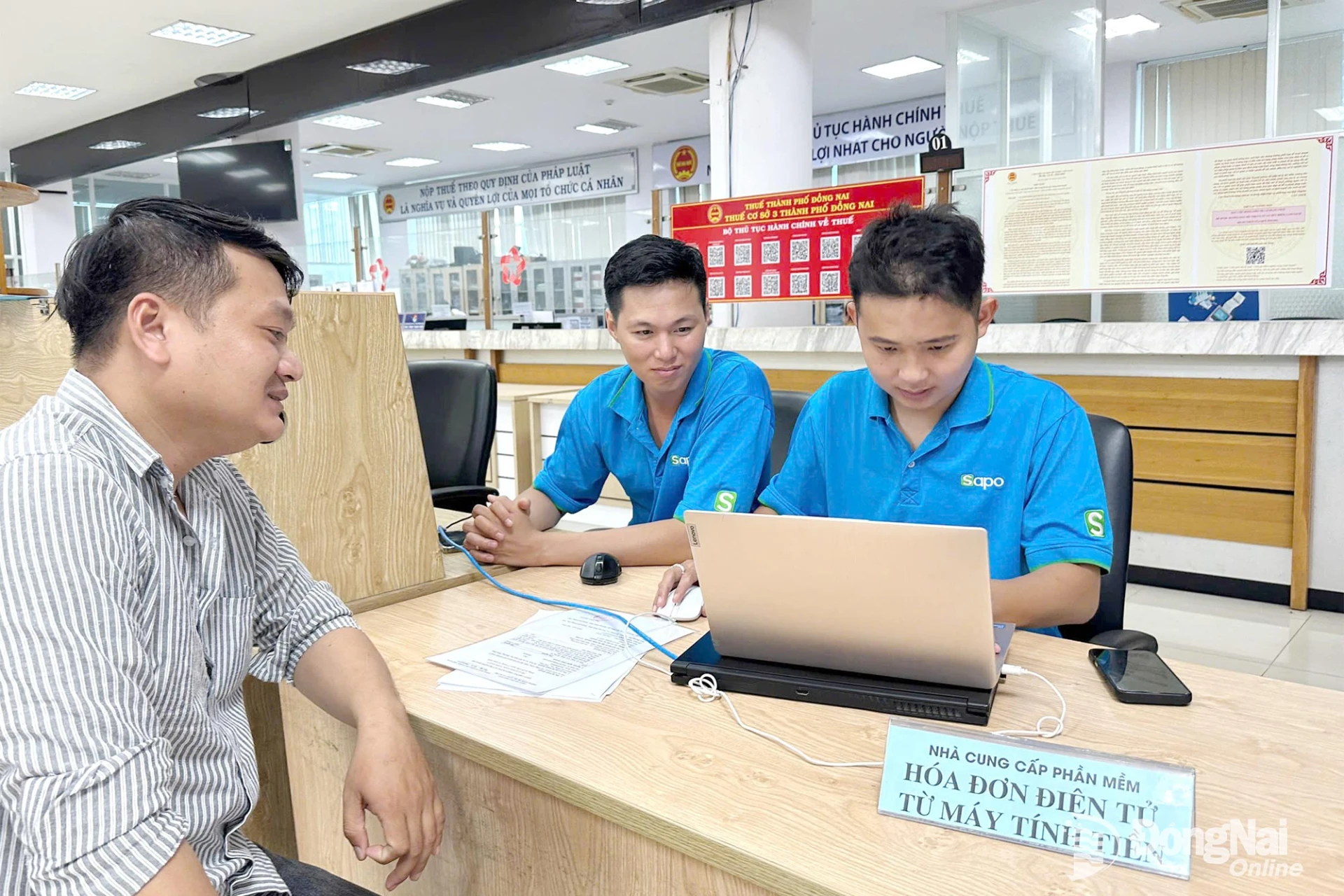 |
| The taxpayer support area for registering to use electronic invoicing software linked to cash registers at Tax Office No. 3. |
With support from tax authorities, an increasing proportion of taxpayers are proactively seeking information and complying with tax regulations. Through the press, social media platforms, and the eTaxMobile electronic tax management application, taxpayers have gradually gained a clearer understanding of tax policies and regulations.
Taxpayers’ responsibilities
The implementation of tax exemption and reduction policies in accordance with the regulations of the National Assembly, the Government, the Ministry of Finance, and the Department of Taxation has helped taxpayers promptly grasp tax regulations.
The tax sector has promptly updated and disseminated to taxpayers laws such as the Law on Tax Administration and the Law on Personal Income Tax, along with tax-related resolutions, decrees, and circulars. In particular, campaigns such as the 60-day peak period for business households to transition from lump-sum tax model to declaration-based tax method, along with the campaign to clean up tax identification numbers and remove bottlenecks in business, as well as new regulations on tax management, personal income tax, electronic invoices and electronic documents and on the deployment of the eTaxMobile application, have been widely disseminated to the public, contributing to raising awareness and bringing tax policies closer to citizens.
Tran Thi Tuyet, owner of a coffee and beverage business household in Tran Bien Ward, said that during the tax sector's peak period to help business households transition from lump-sum tax model to declaration-based method, she received guidance from the tax sector, solution providers, and banks on how to use applications and register accounts for her business. After a short period, Tuyet became quite proficient in using the eTaxMobile application to register, declare, and pay taxes. In addition, her business household opened a separate bank account, both to document income and to support the cashless payment solutions that tax authorities have recently been encouraging business households to adopt.
Business households, individuals, families, and many large enterprises making significant contributions to the budget have also received support and timely dissemination of new policies and regulations. Nguyen Thuy Dung, an accountant at a private enterprise in Long Khanh Ward, said that her business has recently had to keep updated on new regulations related to corporate income tax, personal income tax, and invoices and documents. Faced with regulatory pressures and the large volume of tax documents and filings that must be completed on time, Dung proactively contacted tax authorities for support. Through tax support groups on social media platforms such as Facebook and Zalo, as well as training sessions organized by tax authorities, Dung has applied the knowledge gained to her work, ensuring that the business complies with tax regulations.
Dung said, "Because I frequently keep up with tax regulations and receive support from tax authorities through business support groups, I save time by not having to visit the tax office to carry out tax procedures. I hope that in the future, I will continue to receive timely support regarding new tax policies so that the business can focus on production with peace of mind."
Accompanying and supporting taxpayers
Although the tax sector has achieved many positive results in tax management while implementing new regulations and policies, taxpayers still face many difficulties during the implementation process due to constant changes in tax policies and regulations. Furthermore, the tax sector is in the process of
transitioning to technology-based tax management, making it quite challenging for taxpayers to update their knowledge and use the software in the initial stages.
Tran Van Quang, owner of an eatery in Tan Trieu Ward, said that he was perplexed at first when switching to eTaxMobile for making tax declaration and monitoring information on the system. According to Quang, after nearly 20 years of running an eatery, his family had become accustomed to lump-sum tax payments and found the procedures relatively simple. Therefore, when information was released about the transition to the declaration-based tax model and the requirement to register a bank account with the tax authority to increase transparency and strengthen revenue control, Quang proactively contacted the tax office for support to ensure compliance with tax regulations. Although he still has difficulty using the tax software, Quang has now met the basic requirements for tax registration, declaration, and payment in accordance with the guidance of the tax authority.
To fulfill its task of collecting the state budget and supporting taxpayers in the future, the Dong Nai Tax Department plans to focus on strengthening communication and support for taxpayers while enhancing tax compliance management. In addition, the tax sector is coordinating with media agencies to conduct focused, targeted, and timely communication and support regarding the sector's tasks. Through these communication channels, the tax sector is striving to promptly and effectively implement solutions to extend payment deadlines, exempt, and reduce taxes, fees, and land rents to support taxpayers in fulfilling their tax obligations in accordance with regulations.
In the first eight months of 2026, the tax sector organized nearly 50 training sessions on tax policies for nearly 22,000 taxpayers, including enterprises, individuals, and business households. In addition, the tax sector supported more than 400,000 taxpayers who had tax-related inquiries through various channels, including sending documents, making phone calls, using Zalo, and providing direct assistance at tax offices.
By Ngoc Lien – Translated by Minh Hong, Thu Ha





Thông tin bạn đọc
Đóng Lưu thông tin