
Dong Nai is facing a major opportunity for rapid and breakthrough development as the central government prioritizes both mechanisms, policies and resources, with the goal of turning the city into a new growth pole of the country. This presents an opportunity for the city to build a modern, integrated urban area while continuously improving the quality of life for its residents.
 |
| Member of the Party Central Committee, Secretary of the City Party Committee and Head of the Dong Nai City Delegation of National Assembly Deputies Vu Hong Van (center) and city leaders attend the launch ceremony of a rental social housing project in Long Binh Ward. |
At a meeting with the Standing Committee of the city People's Committee on September 5 to review the implementation progress of the Urban Development Law, Member of the Party Central Committee, Secretary of the City Party Committee and Head of the city Delegation of National Assembly Deputies Vu Hong Van emphasized: “Dong Nai must seize every opportunity to develop rapidly and become modern in all aspects. People in Dong Nai will no longer have to travel to Ho Chi Minh City to buy homes. Instead, people from across the country will come to Dong Nai to live. To this end, Dong Nai must have competitive advantages in transport infrastructure, an attractive working environment, diverse trade and services, and modern social infrastructure”.
A new position, new requirements
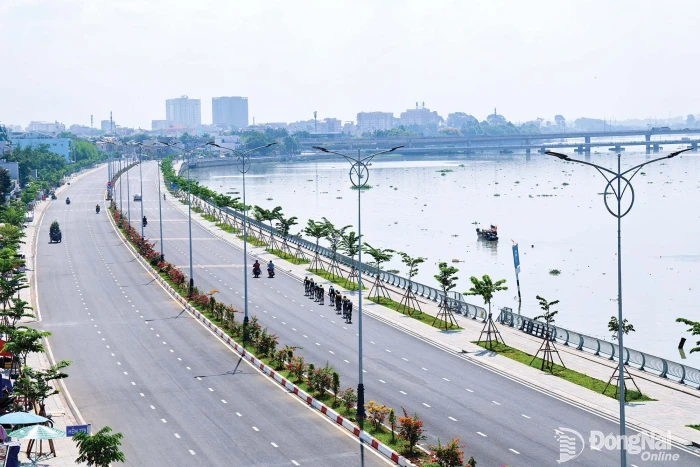
Dong Nai is increasingly affirming its position as urban infrastructure is rapidly being completed in a modern way. A major highlight is Long Thanh International Airport, along with a series of newly built and upgraded expressways connecting to the airport that are preparing to open to traffic. At the same time, the city is developing new roads along the north-south axis, connecting Dong Nai with the Central Highlands, as well as bridge and urban railway projects crossing the Dong Nai River and connecting with Ho Chi Minh City.
These infrastructure breakthroughs are a clear "indicator" of a new development cycle for Dong Nai in both economic and social fields. However, during this period, the city must not focus solely on economic infrastructure development, but also pay particular attention to social infrastructure. Many areas such as culture, education, healthcare, science and technology, housing and social welfare still have gaps that need to be addressed through investment and improvement. The issue of social infrastructure development has been frankly and seriously recognized by city leaders, who have asked departments and sectors to find solutions for sustainable development.
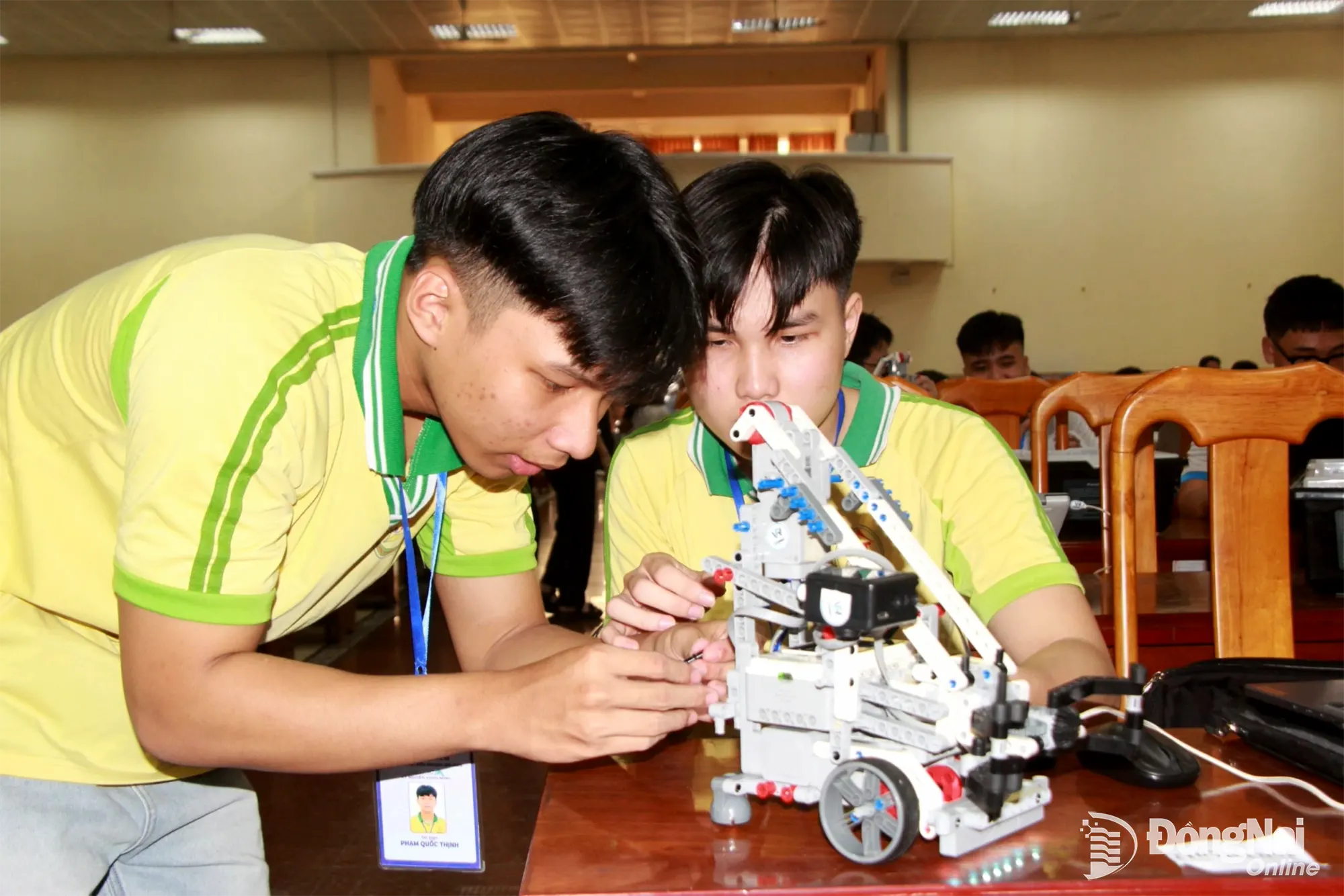
In education sector, some areas, particularly communes and wards near industrial parks, continue to face overcrowded classrooms and high student-to-class ratios, while the proportion of schools meeting national standards remains low. In remote and disadvantaged areas, school facilities and the quality of education still lag behind those in central areas.
At the tertiary and vocational education levels, despite being one of the country's major industrial cities, Dong Nai still does not have a university with a strong brand. The city currently has one public university, but its quality has not met expectations. In reality, many Dong Nai students graduating from high schools still prefer universities in Ho Chi Minh City or choose to study abroad to access better educational environments.
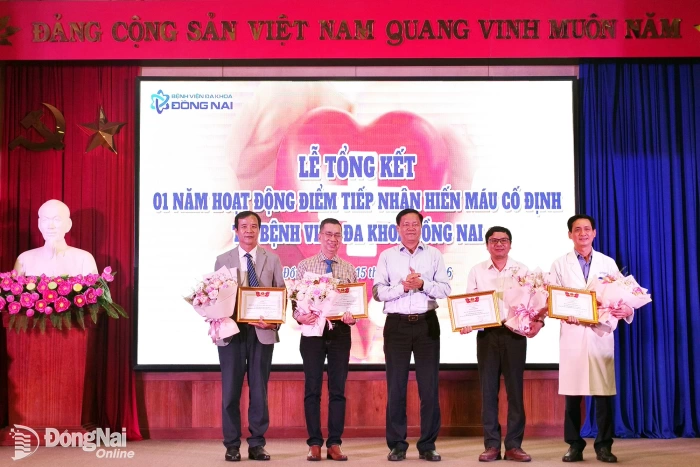
Similarly, in healthcare sector, the city has prioritized substantial resources for investing in grassroots healthcare facilities, medical centers and hospitals in recent years. However, many residents still do not feel fully confident about the quality of medical examination and treatment. Every day, a significant number of Dong Nai residents continue to travel to major hospitals in Ho Chi Minh City for medical examinations and treatment, and some even go abroad to access high-tech medical services.
This reality requires the healthcare sector, alongside investment in physical facilities, to develop a management team with strong hospital administration capabilities and a highly skilled workforce of doctors and medical professionals, gradually improving the quality of healthcare services for local residents.
A social infrastructure breakthrough is needed
On July 21, the Politburo issued Resolution No. 16-NQ/TW on building and developing Dong Nai city through 2035, with a vision to 2065. Subsequently, on August 24, the 16th National Assembly passed the Urban Development Law, which will take effect on October 1. These provide important political foundations, legal frameworks and momentum for Dong Nai to accelerate and develop comprehensively. As the economy grows strongly, the city will have additional resources to invest in and complete social infrastructure in a modern direction.
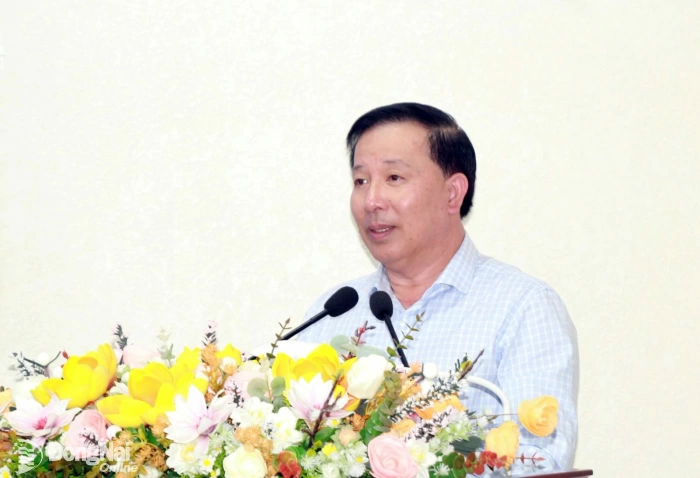
Deputy Secretary of the City Party Committee and Chairman of the city People's Committee NGUYEN VAN UT: Social infrastructure must develop proportionately
Effective implementation of the Urban Development Law will answer the question: How is today's Dong Nai city different from Dong Nai province in the past? How have the material and spiritual lives of local residents changed? This is a major responsibility for the entire administrative system, from the city to communes and wards.
Departments, sectors and localities must become even more proactive and propose specific solutions, focusing not only on economic development but also on the comprehensive development of social infrastructure. Dong Nai will not accept a situation in which the economy develops while social infrastructure such as healthcare, education, culture and sports fails to keep pace.
At a meeting with the Standing Committee of the city People's Committee on September 5, the Standing Committee of the City Party Committee emphasized the need to quickly put the Urban Development Law into practice, creating momentum for balanced economic and social development.
When Long Thanh Airport begins operations and new-generation industrial parks and modern urban areas take shape, the influx of workers and experts into Dong Nai will increase. This will place greater pressure on housing, schools, hospitals and other facilities. At the same time, as material living standards improve, people's demand for healthcare, cultural activities, recreation and entertainment will also rise. Therefore, large-scale and coordinated investment in social infrastructure is an inevitable requirement.
According to the city People's Committee, immediately after the 16th National Assembly passed the Urban Development Law, the city People's Committee directed departments and sectors to review more than 80 resolutions previously issued. Many of these covered the development of cultural and social sectors involving the Departments of Education and Training; Health; Culture, Sports and Tourism; Science and Technology; and others. Based on the review, the city People's Committee will submit new resolutions to the city People's Council for consideration and adoption, ensuring compliance with the provisions of the Urban Development Law applicable to Dong Nai.
The city People's Council is expected to adopt a number of important resolutions with significant impacts on the development of cultural and social sectors. In healthcare sector, five new resolutions are expected to be adopted, concerning support for healthcare facilities and residents in medical examination and treatment.
In education and training sector, eight resolutions are expected to set out policies encouraging the training of gifted and talented people; providing support for learning, research and guest teaching for students, teachers and education managers; and providing tuition support for students pursuing key fields and occupations in the city.
Departments and sectors also expect the Urban Development Law to provide a strong impetus for resolving current difficulties and obstacles. According to the Department of Culture, Sports and Tourism, many provisions of the Urban Development Law have broad implications for the sector and come with more open and favorable mechanisms and policies. The sector has proactively prepared action programs and specific objectives to put the law into practice as soon as it takes effect. This is expected to maximize new potential and advantages while creating a breakthrough appearance and greater appeal for culture, sports and tourism in Dong Nai city.
By Cong Nghia - Translated by Diec Quyen, Thu Ha
Thông tin bạn đọc
Đóng Lưu thông tin