
>>> Part 1: Creating favorable conditions for citizens and enterprises
Part 2: Developing contingent of friendly, people-oriented cadres
A friendly administration is reflected not only in places where administrative dossiers are received but also in the way cadres and civil servants listen to, guide and handle issues for the people.
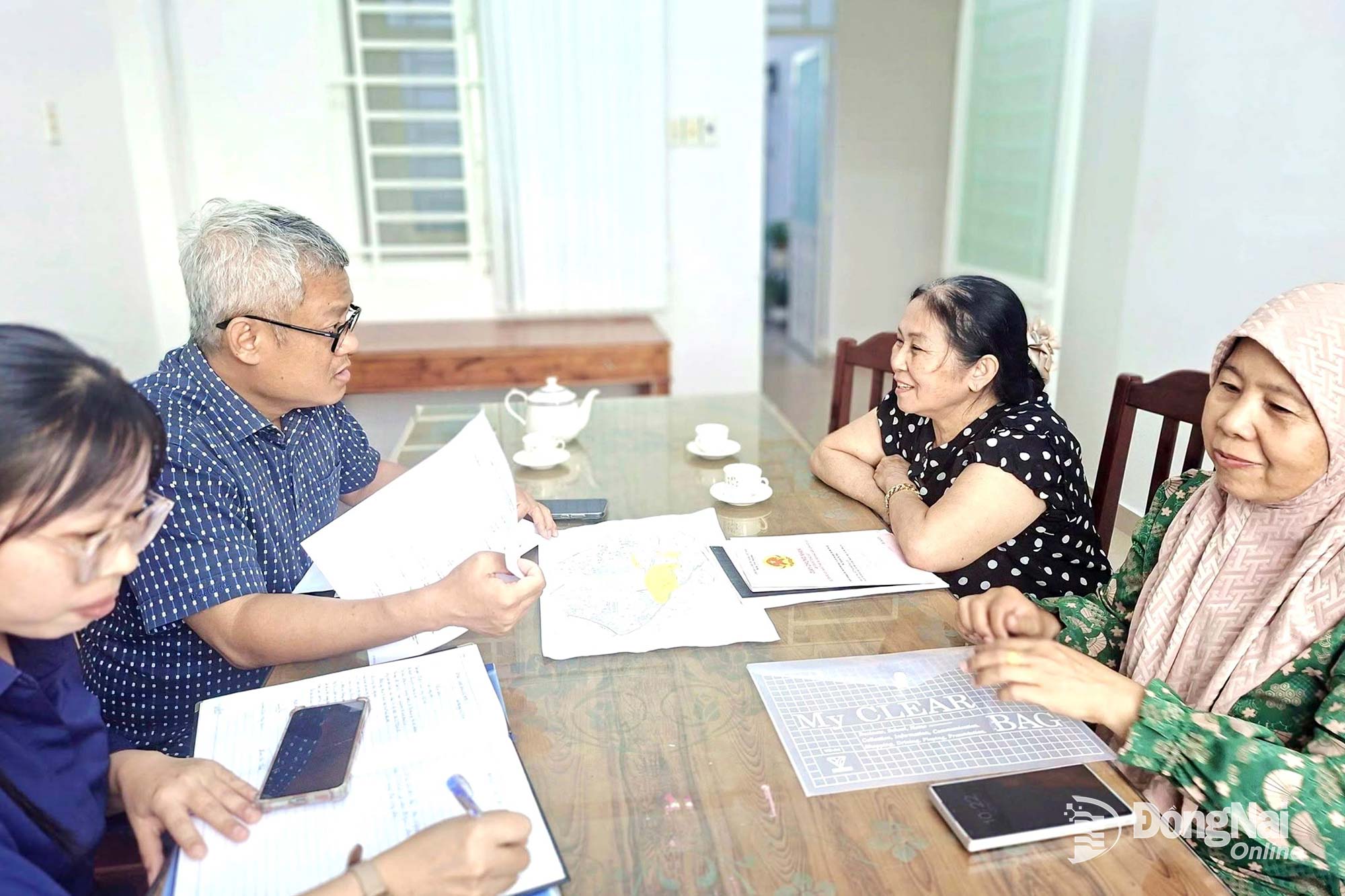 |
| Secretary of the Party Committee and Chairman of the Xuan Hoa Commune People's Council Ta Quang Truong talks with citizens during a public reception session. |
From heads of agencies directly engaging in dialogue with and receiving citizens to staff closely following each administrative dossier, a sense of responsibility is being demonstrated through concrete actions at the grassroots level.
Proactively listening, promptly resolving issues
On working days, at exactly 7:00 a.m., the round tables in the lobby of the Tam Phuoc Ward Public Administrative Service Center are ready to welcome citizens. The space, typically associated with administrative dossiers, paperwork, and administrative procedures, becomes more approachable as leaders of the Ward People's Committee sit down with residents to talk and listen to their concerns and questions.
This is how Tam Phuoc Ward implements the 'Sharing Space – Listening to the People' model during the first 60 minutes of each working day, from 7:00 to 8:00 a.m. The Chairperson and Vice Chairpersons of the Ward People's Committee take turns joining staff in receiving and classifying each issue raised by citizens, immediately resolving matters within their authority or recording and transferring cases requiring more time to specialized departments. Complex cases are tracked in the “Listening to the People” logbook.
Pham Thi Hoa, Vice Chairwoman of the Tam Phuoc Ward People's Committee, said "The "Sharing Space – Listening to the People" model is not merely a procedural reception point but also aims to narrow the gap between the government and the people, ensuring that every opinion and aspiration is heard and addressed promptly and thoroughly. The model has become a bridge helping the local government promptly grasp issues arising at the grassroots level, thereby enabling practical solutions and helping to innovate the working style of cadres and civil servants toward being people-centered, close to the people, understanding the people, learning from the people, and being responsible to the people."
Similarly, in Minh Hung Ward, the "Morning with the People" model has been maintained from 7:00 to 8:00 a.m. every working day since November 2025. According to Nguyen Van Dien, Vice Chairman of the Minh Hung Ward People's Committee, these direct meetings with citizens help ward leaders better understand obstacles at the grassroots level, enabling specialized departments to provide timely guidance and coordinate the handling of each case. Recently, many issues related to civil status, birth registration, and marriage registration have been promptly resolved.
Nguyen Thi Lieu, a resident of Minh Hung Ward, said, "There are procedures that citizens do not always fully understand. When leaders and staff explain them directly, uncertainties can be clarified immediately. The important thing is knowing what to do and what documents to prepare, without having to make multiple trips."
In Xuan Hoa Commune, closeness to the people is also demonstrated by cadres going directly to residential areas, people's homes, and mosques to grasp the situation and support citizens. For the Islamic community in Doan Ket Hamlet, the government's proactive outreach makes it easier for citizens to carry out administrative procedures while allowing issues that arise to be discussed and resolved in a timely manner.
Ab Do Ha Mit, Head of the City Islamic Community Representative Board and Head of the Noorul Ehsaan Mosque Management Board in Xuan Hoa Commune, said, "What the community clearly feels is the attentiveness and closeness of local leaders. From the Commune Party Committee Secretary and People's Committee Chairperson to the Vice Chairpersons, everyone frequently visits the grassroots, meeting and talking with us to understand our thoughts and aspirations. When issues arise in the village, the government receives them and directs a quick resolution."
In particular, Xuan Hoa Commune staff and local police forces do not hesitate to work on their days off, even taking time on Sundays to visit hamlets, homes and mosques to assist residents. From applying for ID cards, opening bank accounts, registering and activating Level 2 VNeID accounts to providing guidance on birth registration and access to public services, a range of administrative procedures have all become more accessible to residents.
"This approach creates convenience for the community, especially for those who previously had to travel far to carry out administrative procedures. This companionship in many concrete aspects of life helps the community further trust the Party and the government, allowing them to work and live with peace of mind," said Ab Do Ha Mit.
Closeness to the people is also reflected in the sense of responsibility and the way cadres and civil servants handle each specific task. In Trang Bom Ward, Phan Thi Thu Trang, a specialist in charge of land, environment, and agriculture at the Ward Public Administrative Service Center, said, "The workload has increased significantly as many policies and regulations related to land have been implemented. Despite the immense pressure, we maintain our sense of responsibility and strive to do our best with the goal of serving the people in the best possible way."
Improving the quality of administrative procedure resolution
According to Dr. Ta Van Soat, Vice Principal of the Dong Nai City School of Politics, the ability of cadres and civil servants to handle their work is a core requirement and standard, while professional conduct is a necessary and urgent condition for a friendly administration. It is necessary to promote a development-enabling mindset, shifting from "processing administrative dossiers" to "supporting citizens." At the same time, administrative procedures need to be developed and implemented in a manner that is simple, convenient, and cost-effective for citizens and enterprises, eliminating the mindset of "banning what cannot be managed." Cadres and civil servants should serve as guides and consultants on legal solutions while resolving issues for the people rather than "looking for faults" in administrative dossiers. The most substantive measure of a friendly administration is whether work is resolved legally, on time, effectively, and transparently.
From a management perspective, the Department of Home Affairs has determined that efforts to build a friendly administration must be demonstrated through the quality of work rather than stop at communication styles or isolated models. "A friendly administration cannot just stop at slogans, communication forms, or isolated models; the most important thing remains the quality of work resolution and the genuine satisfaction of citizens and businesses," emphasized Ha Thanh Tung, Deputy Director of the Department of Home Affairs.
According to Ha Thanh Tung, the city is using multiple channels for monitoring and evaluation, from public feedback, the 1022 Hotline, and official duty inspections to administrative reform checks, sociological surveys, and a set of criteria for evaluating a friendly administration. Work resolution results, public feedback, and responsibility in performing official duties are taken into account in evaluating cadres and civil servants. In this regard, the “Four Courtesies, Four Always” standard – saying hello, apologizing, saying thank you, and asking permission; always smiling, always being gentle, always listening, and always helping – is defined as a standard of conduct, while work resolution results, public feedback, and responsibility in performing official duties are the key factors in substantive evaluation.
This requirement is even clearer in fields with complex processes involving many agencies. According to Ha Thanh Tung, friendliness in communication is necessary but not sufficient; citizens need to receive clear guidance, administrative dossiers must be processed in accordance with regulations and deadlines, and when obstacles arise, the responsible agency and individual must be clearly identified.
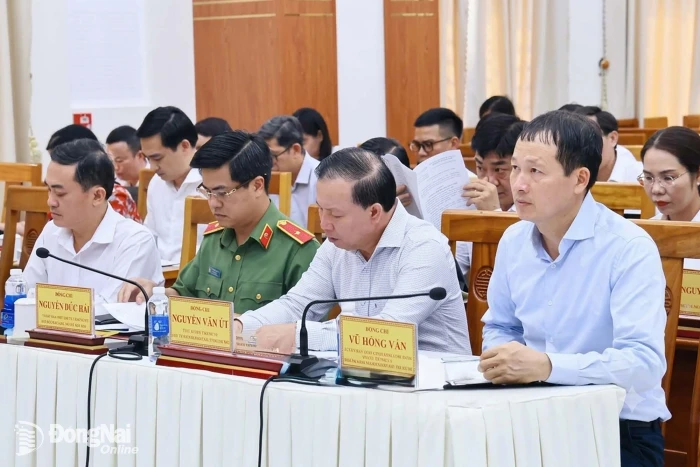
At the conference launching the implementation of Resolution No. 05-NQ/TU on May 26, 2026, Vu Hong Van, Member of the Party Central Committee, Secretary of the Dong Nai City Party Committee, and Head of the Dong Nai National Assembly Delegation, emphasized the requirement to fundamentally change the mindset, work organization, and development management, aiming for modern, professional, and effective operations; all activities of the political system must be directed toward achieving substantive results and improving the quality of service to the people.
Approaches at the grassroots level show that building a friendly administration begins not only with how cadres interact with the public but also with how they receive, process, and track each task. When responsibilities are clearly defined and issues are followed through to completion, closeness to the people will be reflected not only in attitudes but also concretely in service results. For the Friendly Administration model to move beyond being merely a model and become a standard in serving citizens and businesses, the determination of the entire political system is required, especially that of cadres and civil servants who directly process administrative dossiers for the public and businesses.
Since the beginning of 2026, the Department of Home Affairs has organized 15 inspections at 31 communes and wards and 11 branches of land fund development centers, focusing on administrative discipline and order, responsibility in performing official duties, work progress, and communication and conduct. Through the inspections, shortcomings and limitations have been promptly rectified.
By Ho Thao – Translated by Minh Hong, Thu Ha
Final Part: From “Friendly Administration” model to raising service standards

Thông tin bạn đọc
Đóng Lưu thông tin