
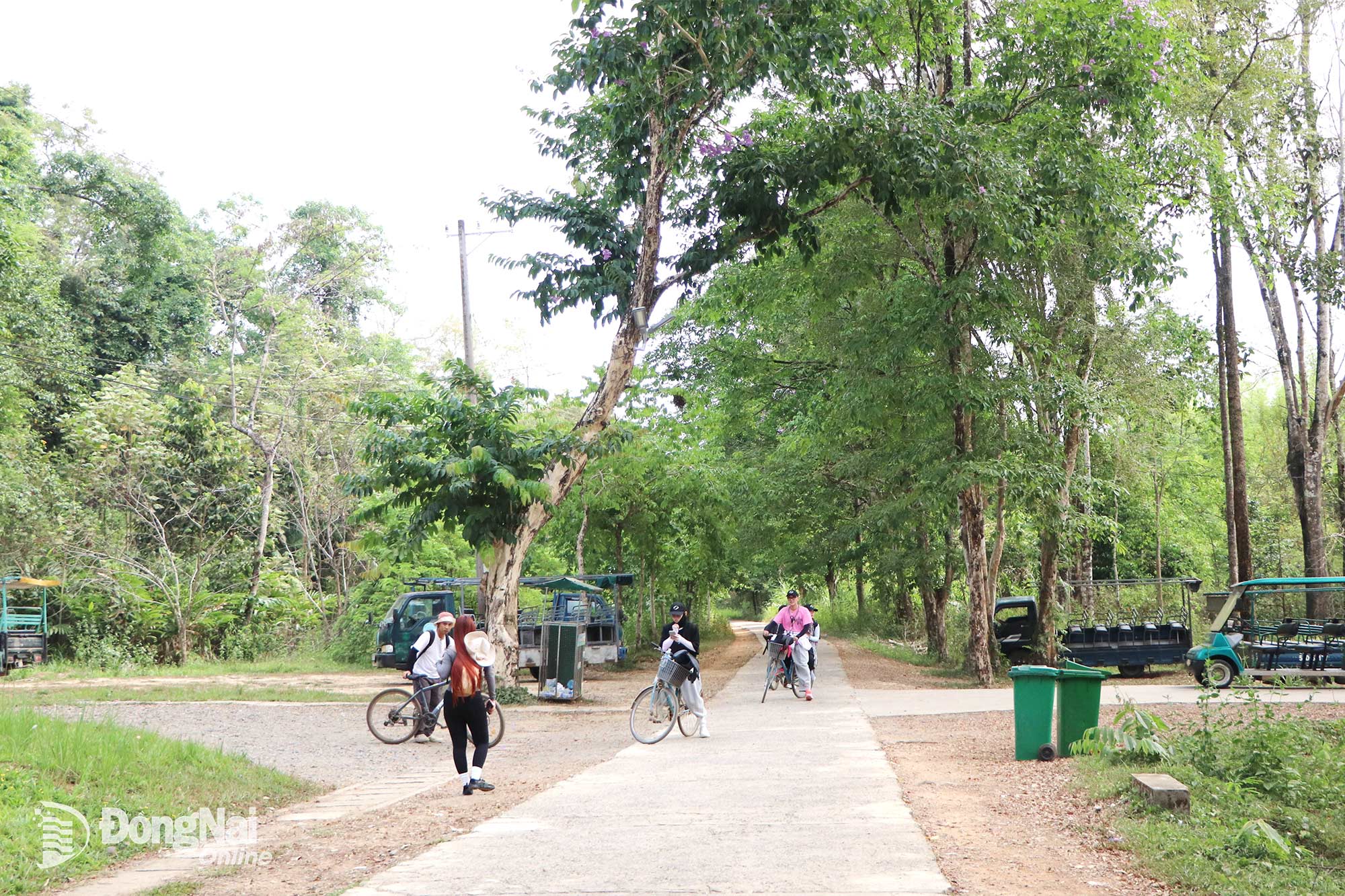
Cat Tien National Park (NP) in Nam Cat Tien commune, Dong Nai City, has long been a major nature-based tourism destination, attracting both international and domestic visitors, particularly school and university students, weekend visitors from neighboring areas, and MICE (combining tourism with meetings and conferences) groups.
 |
| Visitors explore Cat Tien National Park. |
Located at a point connecting the Southeast, Central Highlands and South-central Coast regions, as well as renowned tourist destinations such as Da Lat and Phan Thiet in Lam Dong Province, Vung Tau in Ho Chi Minh City, and Phan Rang-Thap Cham in Khanh Hoa Province, Cat Tien NP is planned as a key destination in the development of tourism products and linkages at both local and inter-regional levels.
A “paradise” for biodiversity exploration
Cat Tien NP lies in a transitional area between the Southern Central Highlands and the Southern plains, encompassing terrain characteristic of the end of the Truong Son Range and Southeastern Vietnam.
The park features diverse terrain, with mountains, rivers, ponds and wetlands interspersed with forest habitats typical of Southeastern Vietnam. It is rich in biodiversity, home to numerous rare and endangered species. The park currently has more than 1,700 animal species. Visitors to Cat Tien NP can observe wildlife in its natural habitat, including gaurs, deer, elephants, black-shanked doucs, buff-cheeked gibbons, pygmy slow lorises and wild boars, as well as peafowl and pheasants.
The park’s flora is also rich and diverse, with more than 1,600 species, including Afzelia xylocarpa, Dalbergia spp., rosewood and various species of the Dipterocarpaceae family.
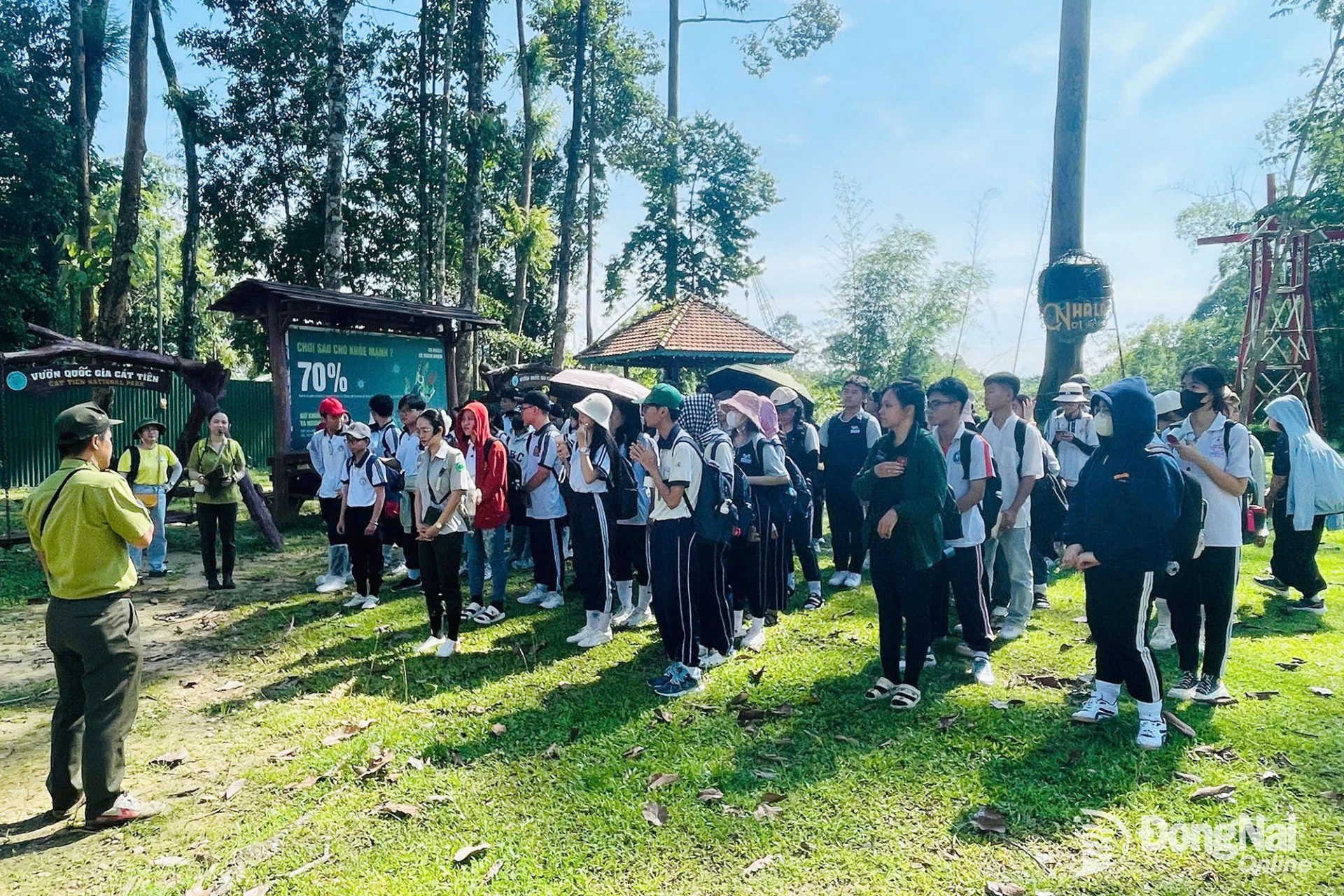
With such natural assets, Cat Tien NP has long attracted tourists and researchers seeking to explore and study its rich biodiversity. In recent years, the park has regularly welcomed groups of students from schools and universities across the country who come to visit and learn about biodiversity.
 |
| In 2024, Cat Tien NP was officially recognized by the International Union for Conservation of Nature (IUCN) as a site meeting the standards of the Green List, a rigorous international framework comprising more than 70 criteria for governance, management and conservation. The recognition reflects international acknowledgment of Vietnam’s efforts to protect nature while opening up further opportunities for Cat Tien to promote its conservation, research and ecotourism values. |
Tran Thi Minh Tuyet, a teacher at a foreign-language center in Ho Chi Minh City, said a recent educational trip to Cat Tien NP had left a strong impression on her students.
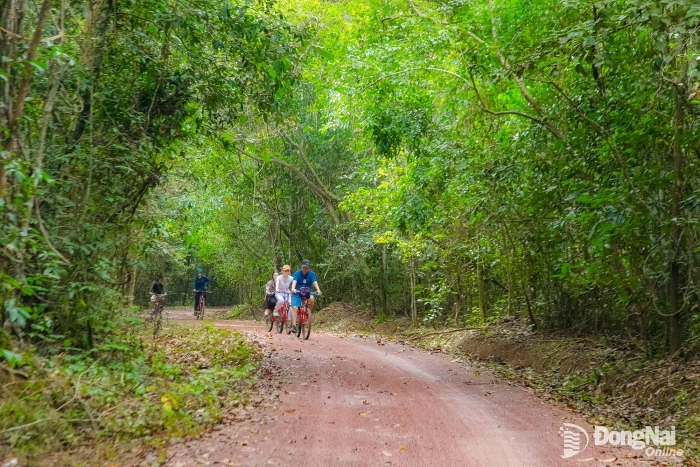
“For the first time, the students were able to cycle through the forest, which was completely different from their daily journeys to and from school, when the roads are always crowded, congested and unsafe. The highlight was the night safari, when they could see herds of deer and other animals coming out to feed along the forest edge. These memorable experiences at the park allowed the students to learn and have fun in a relaxed environment. They also gave the students a chance to recharge before starting another demanding week of classes,” she said.
Most plant species are distributed in mixed communities, while some are concentrated in particular areas, forming extensive plant communities that are attractive to visitors, including lagerstroemia, teak-like and dipterocarp communities.
Visitors can learn about the ecological characteristics of plant species along the main routes from the park headquarters northward or southward along the Dong Nai River, as well as along forest trails leading to Bau Sau, the ancient tung tree, the “Uncle Dong” redwood tree and Loc Giao banyan tree.
Toward sustainability
Beyond being a pristine forest with a rich and diverse ecosystem, Cat Tien is also a place where people can immerse themselves in nature and discover distinctive natural and cultural values.
According to statistics from Cat Tien NP, more than 12,000 households, with over 46,000 people, live in the park’s core zone. The buffer zone is home to approximately 190,000 residents.
To promote sustainable tourism development in Cat Tien NP, the Minister of Agriculture and Environment approved the Cat Tien NP Ecotourism, Resort and Recreation Development Scheme for 2025-2030 at the end of 2025.
The scheme aims to tap into the park’s potential and advantages while improving the effectiveness of management and the sustainable use of its natural, cultural and historical resources. It also seeks to create jobs, increase incomes and improve the material and spiritual well-being of ethnic minority communities, buffer-zone residents and people engaged in forestry. The scheme is expected to contribute to socio-economic development, conservation of natural resources and biodiversity, environmental protection, and the preservation and promotion of local cultural and historical values, landscapes and indigenous knowledge.
The scheme also aims to mobilize social resources for tourism service development and increase revenue for reinvestment in the effective management, conservation and sustainable development of Cat Tien NP’s forests during the 2021-2030 period.
Based on its cultural and historical values, Cat Tien NP has significant potential to develop distinctive local tourism products. However, the park also recognizes that tourism can have negative impacts on indigenous culture.
For tangible cultural heritage, uncontrolled tourism development driven primarily by visitor numbers could cause existing structures and relic sites to deteriorate or suffer damage. Large concentrations of tourists at a single site can create mechanical and chemical impacts, including those associated with human respiration and noise, while climatic and weather conditions can accelerate the deterioration of historic structures. Such conditions may also increase the risk of the loss, illegal trade and theft of antiquities at heritage sites.
Tourism development can also lead to the influx of external cultural influences, potentially eroding or diminishing local and ethnic cultural identities. Certain behaviors by tourists may affect local customs and traditions. In addition, the excessive expansion of shops selling local products could inadvertently leave local residents as “guests” beside products that originate from their own communities.
Therefore, sustainable tourism development must go hand in hand with identifying and controlling potential negative impacts.
To create momentum for tourism development, Resolution No. 10-NQ/TU of the municipal Party Executive Committee on developing tourism into a major economic sector identifies Cat Tien NP as one of five directions for developing tourism corridors in Dong Nai. The first is the Long Thanh International Airport – Cat Tien National Park – Tan Phu Protection Forest corridor, which is oriented toward nature-based tourism associated with forest, river, lake and hot spring ecosystems, caves and rocky mountains. As both areas are located within or adjacent to the core zone of the Dong Nai Nature-Culture Reserve and strictly protected forest areas, priority is given to sustainable forms of tourism, green growth and reduced greenhouse gas emissions.
The second corridor links Long Thanh International Airport, Cat Tien NP and the Dong Nai Nature-Culture Reserve via Ma Da Road to form the “Green Heritage Journey” route, connecting prominent destinations around Tri An Lake and Northern Dong Nai, including Bu Gia Map National Park, Ba Ra-Thac Mo, Bom Bo hamlet and Ta Thiet Base.
Tran Van Binh, Deputy Director of Cat Tien NP, said the park had recently announced a plan to lease forest areas for ecotourism, resort and recreational activities. Under the plan, forest areas totaling more than 2,000ha will be leased for 13 tourism projects.
By N.Lien – Translated by M.Nguyet, Thu Ha


Thông tin bạn đọc
Đóng Lưu thông tin