
Dong Nai City is implementing and will soon roll out a series of large-scale infrastructure, urban, industrial, and transport projects, requiring land clearance and the relocation of thousands of households.
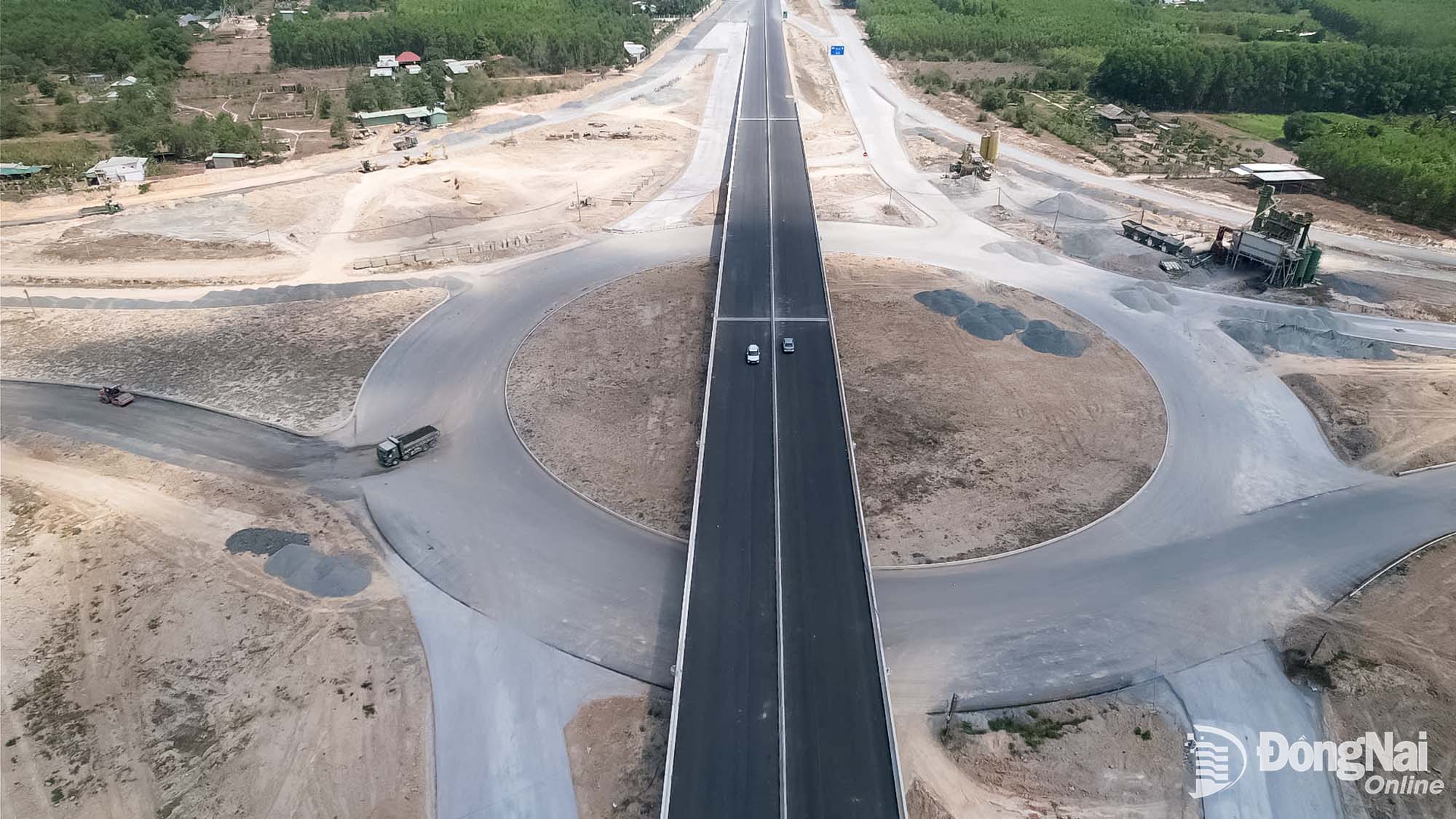 |
| Transport infrastructure project is underway in Nhon Trach Ward. Photo: Hoang Loc |
The city is gradually preparing land reserves and investing in integrated infrastructure while ensuring the full implementation of compensation, support, and resettlement policies in accordance with regulations. Particular attention is being paid to helping residents transition to new occupations and secure their livelihoods for long-term stability.
Ensuring citizens' rights
During land acquisition, compensation, and support for project implementation, residents are most concerned about how their rights will be addressed. For large-scale projects, the effective implementation of compensation, support, and resettlement policies helps safeguard residents' legitimate rights, thereby building broad consensus and accelerating site handover. It also provides a benchmark and valuable lessons for the implementation of other projects.
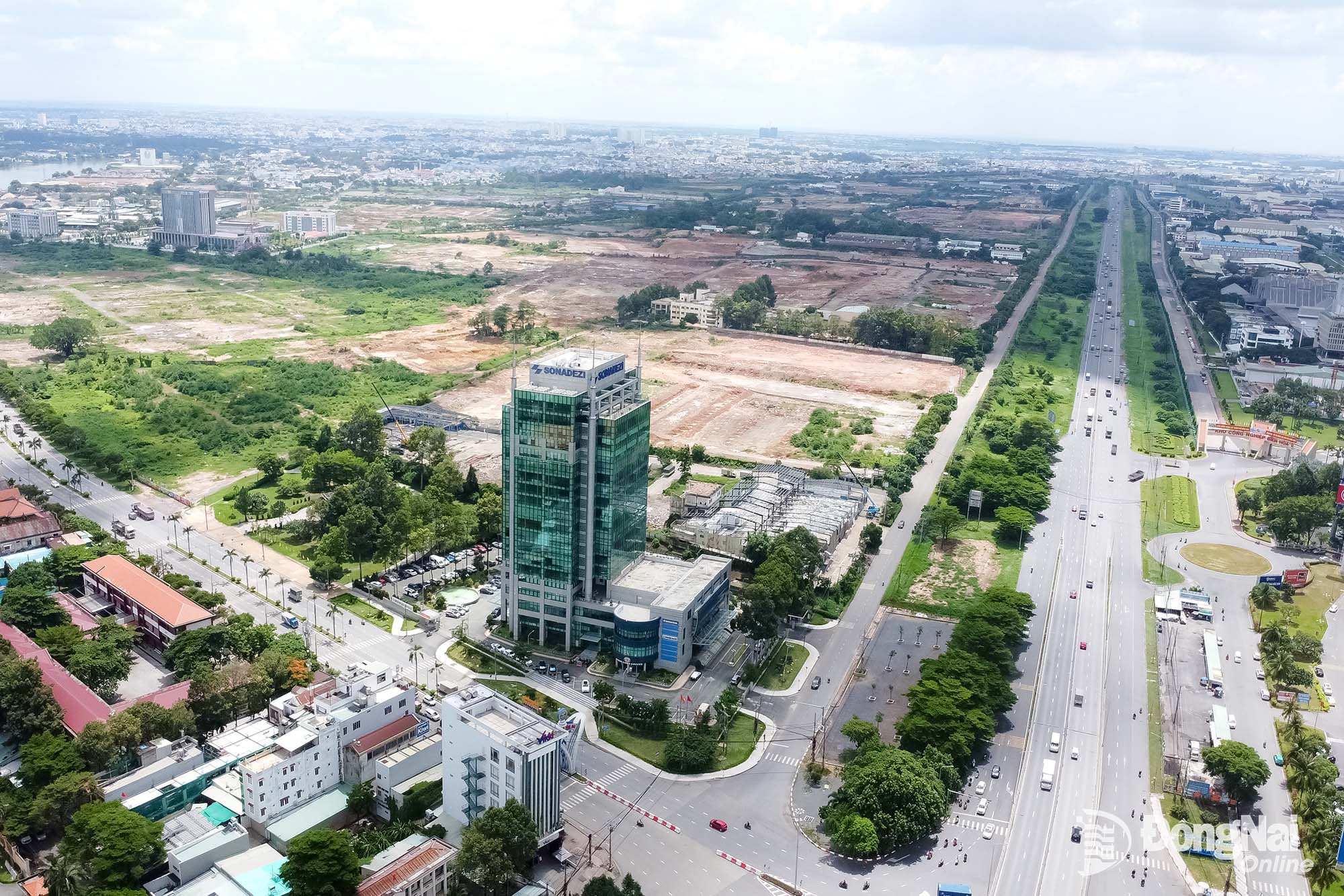 |
| Bien Hoa 1 Industrial Park has just completed site clearance for functional conversion. Photo: Hoang Loc |
The recent implementation of key national and city-level projects shows that broad public consensus can be achieved when residents are consulted about projects, their concerns and questions are thoroughly addressed, and their rights are properly prioritized.
Member of the Dong Nai City Party Committee (CPC)’s Standing Board and Vice Chairman of the City People's Committee Nguyen Tuan Anh says that it is necessary to prioritize the construction of resettlement areas with integrated technical and social infrastructure on a regional scale; local authorities should proactively review and propose the demand for and number of resettlement plots.
Nguyen Quoc Vuong, Vice Chairman of the Phuoc Tan Ward People's Committee, said that many key projects are being implemented in the area. To build public consensus, the local authority focuses on publicizing information about projects, the scope of land acquisition, and compensation, support, and resettlement policies. At the same time, it strengthens advocacy, mobilization, and dialogue to ensure that residents clearly understand State regulations. For issues beyond its authority, the local authority invites city-level departments and agencies to join in receiving feedback and resolving matters in accordance with regulations, thereby limiting situations in which residents lack information or have an incomplete understanding of policies.
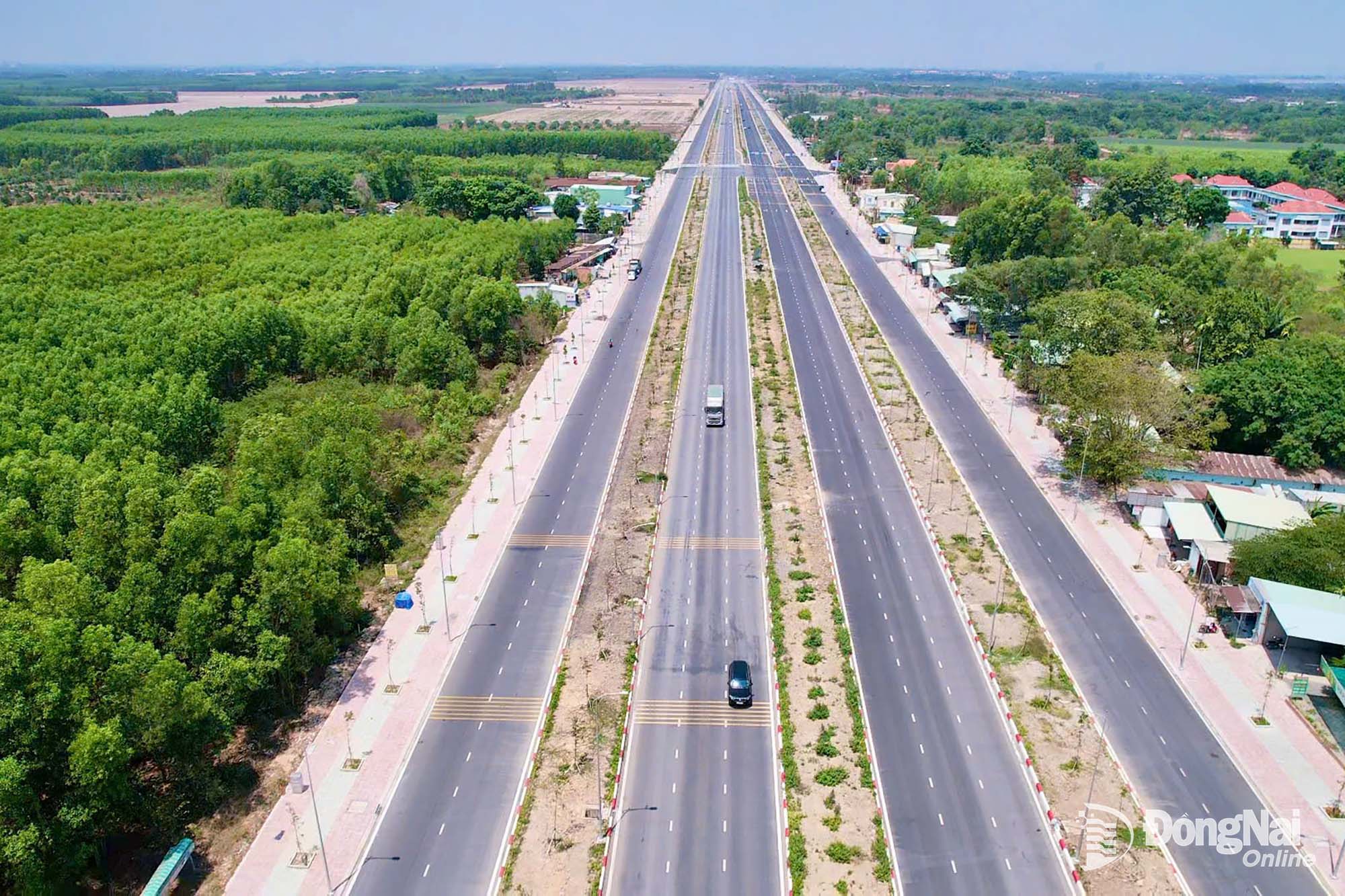 |
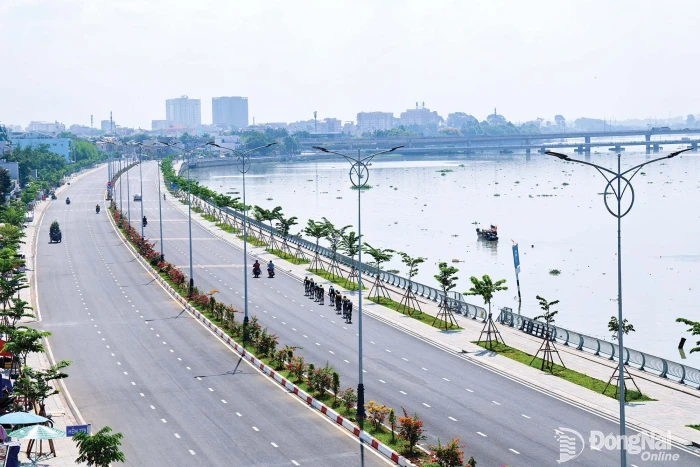
| Route 25B in Nhon Trach Ward is in the completion phase. Photo: Hoang Loc |
In addition to implementing mandated policies, Dong Nai City also pays attention to cases in which individuals have had their land acquired but do not meet the criteria for resettlement allocation.
The case of Nguyen Thi Hai in Tam Phuoc Ward is an example. About two years ago, Hai's family had their land acquired for the Bien Hoa–Vung Tau Expressway project. The house in which her family had lived for a long time was purchased through a handwritten agreement and built on agricultural land, meaning that the family did not qualify for resettlement. Thanks to the city's policy, by the end of 2025, Hai's family was able to purchase a social housing unit.
"It is a spacious apartment, close to schools and medical facilities, with convenient transport. The apartment has legal documentation, so my family feels secure," said Hai.
 |
|
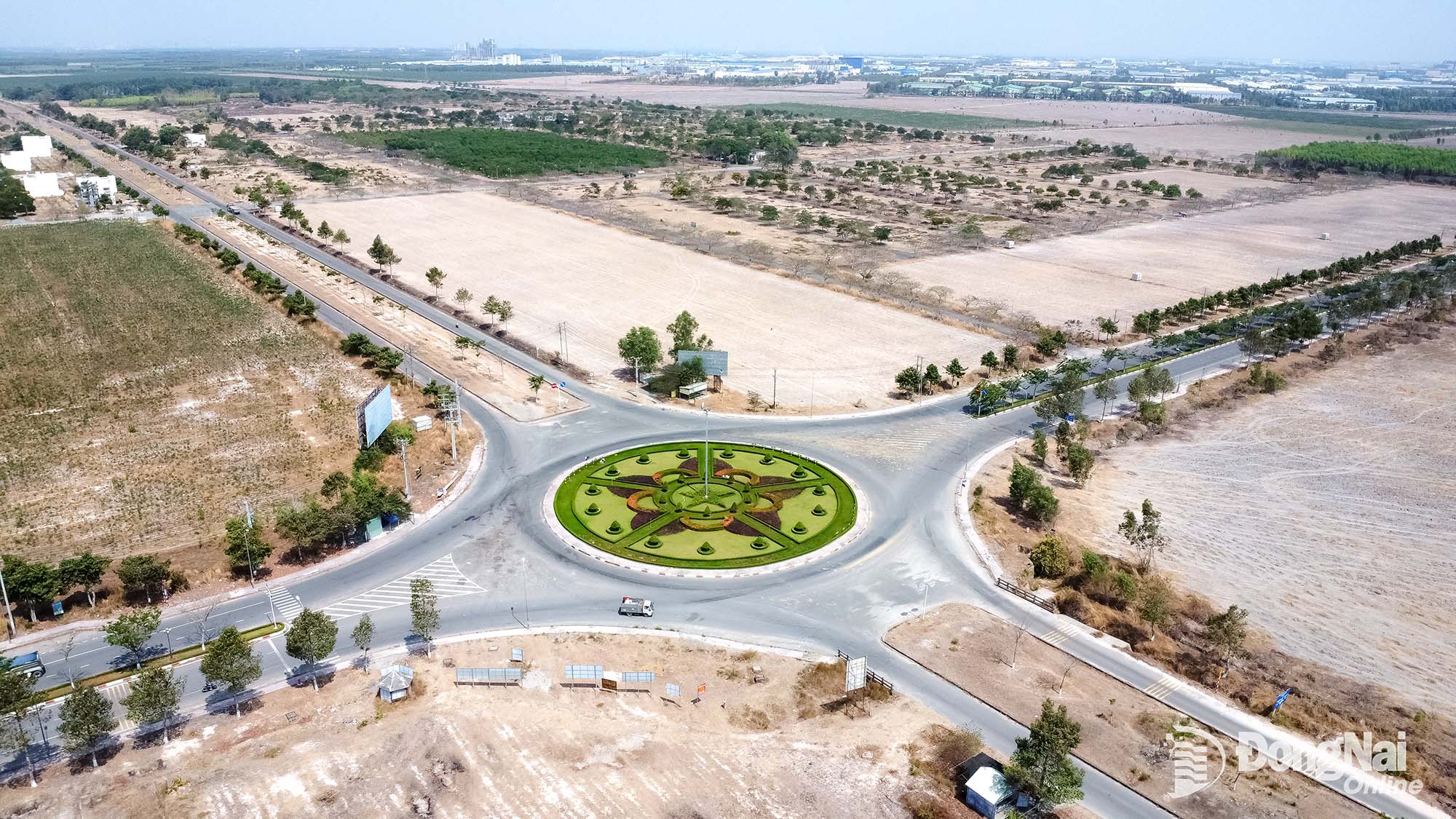
Phuoc An Commune, Dong Nai City – where many infrastructure projects are being or will soon be implemented. Photo: Hoang Loc |
Taking advantage of the ground-floor location of her apartment in the 1,000-unit project, Hai opened a beauty salon at home to serve residents. According to Hai, commuting has become more convenient since the family moved to their new home, while her children can attend school nearby. What satisfies her is not only having a stable place to live but also having a job that she can balance with housework and caring for her children.
Hai's story shows that a flexible and citizen-centered resettlement policy can address housing needs while opening opportunities for residents to have better living conditions.
Resettlement must be carried out one step ahead
At the Loc An–Binh Son resettlement area in Long Thanh Ward, resettlement is also considered in the context of livelihood stability. In addition to providing housing, the government surveys residents' needs for vocational training and job transition. Children of these households receive counseling and career guidance so that they can find jobs in industrial zones, urban areas, and especially at Long Thanh International Airport in the vicinity.
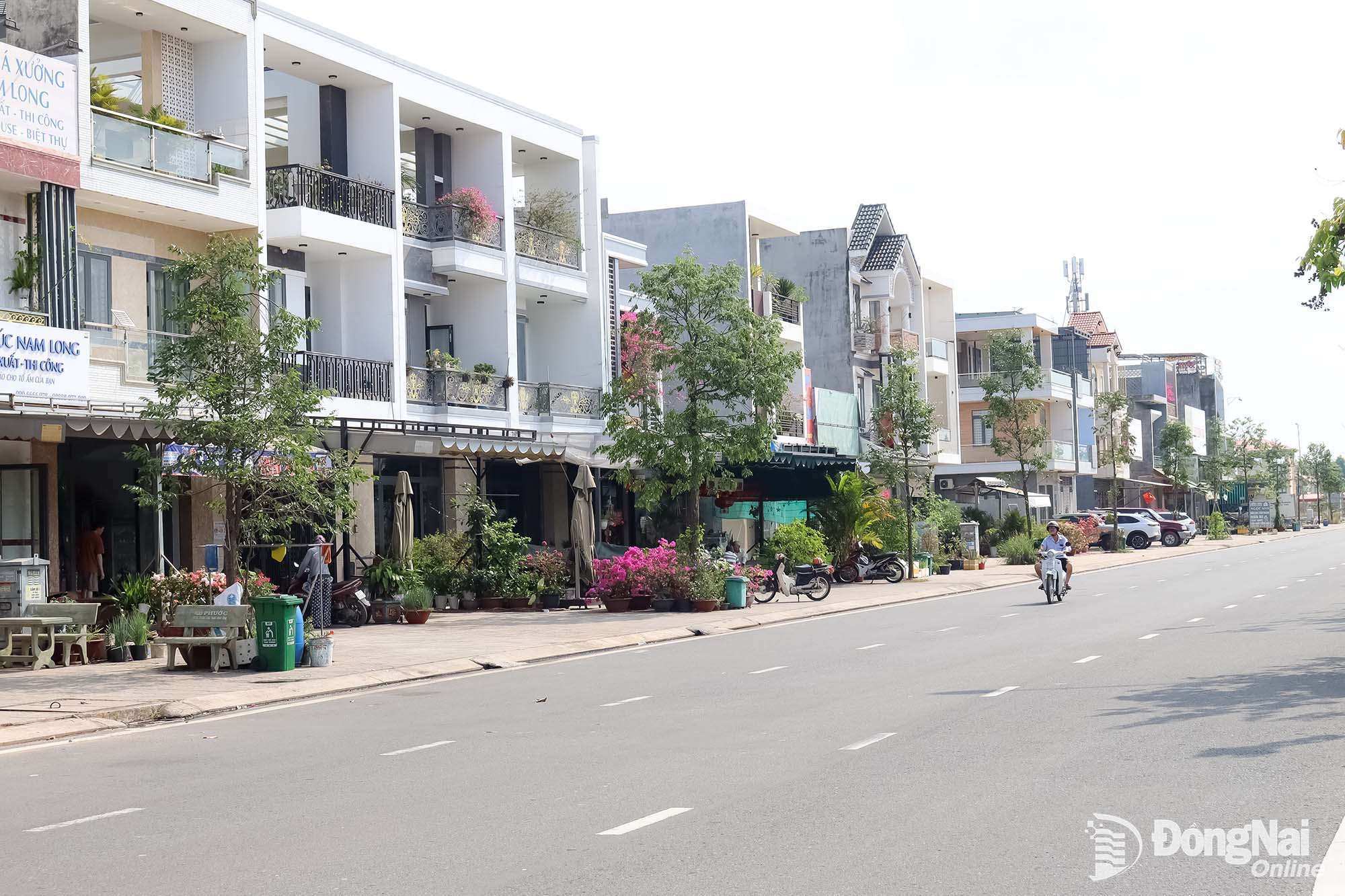 |
| Infrastructure in the Loc An–Binh Son resettlement area, Long Thanh Ward. Photo: Hoang Loc |
Nguyen Thi Khanh Bang, who lives in the Loc An–Binh Son resettlement area, said, "Previously, I was advised and guided to choose a field of study suitable for the area's future development planning. Many of my friends chose to study service, mechanical, or technical fields. I noticed there is a school in the resettlement area, so I chose to pursue a career in teaching. I hope to return to the resettlement area to teach after graduation."
Nguyen Huu Nguyen, Member of the CPC, Secretary of the Party Committee and Chairman of the People's Council of Long Thanh Ward, said that the Loc An–Binh Son resettlement area has technical and social infrastructure comparable to that of a new urban area. In recent times, the government has paid close attention to residents' lives and needs in order to make adjustments and promptly resolve issues. The area currently has more than 2,000 resettlement plots. If these are handed over to the ward, it will be highly favorable for allocating housing to residents because the infrastructure provides a better living environment than that of their former homes.
For many families, land is an asset, a means of production, a source of income, and something closely linked to their lives for generations. Therefore, in carrying out land acquisition, the challenge involves not only compensation and resettlement but also supporting residents in vocational transition and guiding children from project areas toward careers that enable them to find work near where they live.
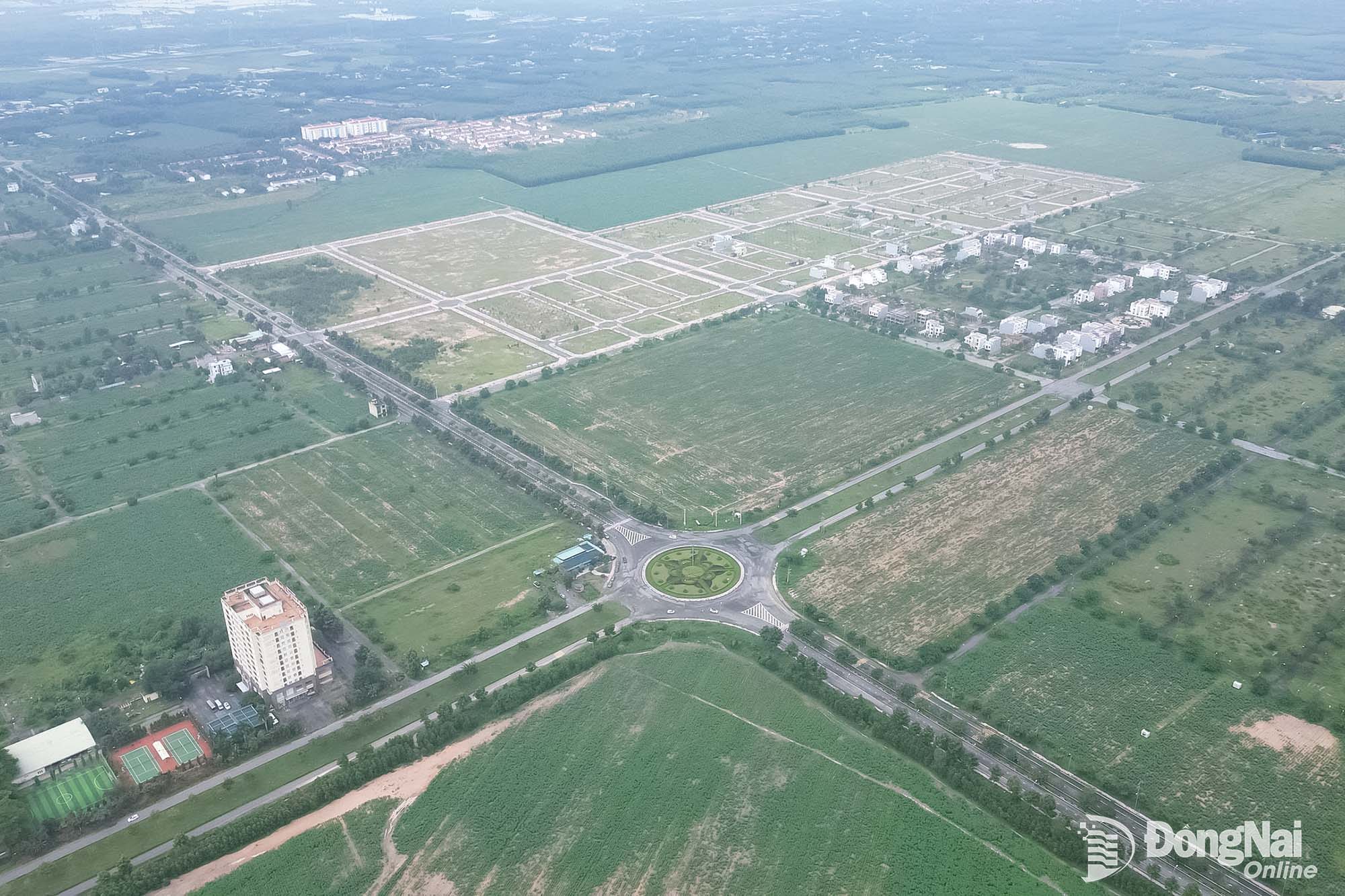 |
| Phuoc An Commune, Dong Nai City – where many infrastructure projects are underway or planned, including a 44-hectare resettlement project. Photo: Hoang Loc |
According to Deputy Secretary of the CPC and Chairman of the City People's Committee Nguyen Van Ut, Dong Nai is currently implementing or preparing a series of strategic infrastructure projects, including ring roads, railways, connecting bridges, industrial zones, urban areas, and development projects surrounding Long Thanh International Airport. The volume of work involving compensation, site clearance, and resettlement is therefore enormous. If resettlement land reserves are not adequately prepared, the locality may encounter difficulties during land acquisition, affecting the progress of key projects, public investment disbursement, and opportunities to attract investment.
Therefore, Nguyen Van Ut requires that "resettlement must be carried out one step ahead." Resettlement areas should be developed so that they can become residential zones, urban areas, and stable communities rather than scattered, small-scale projects. The city aims to create living spaces equal to or better than residents' former ones, with convenient locations and transport infrastructure, electricity, water, schools, healthcare, cultural facilities and essential services.
To ensure that "resettlement must be carried out one step ahead" and that residents moving to new homes enjoy living conditions equal to or better than before, the most important factor remains the people's consensus and partnership. Every project must be implemented on the basis of planning, development requirements, and calculations of long-term socio-economic efficiency. At the same time, the legitimate and legal rights and interests of the people must be prioritized throughout the process. When authorities at all levels fully, openly, and transparently implement regulations on compensation, support, resettlement, and vocational transition, and listen to and thoroughly resolve legitimate petitions, residents should comply with the general policy and hand over sites so that projects can be implemented on schedule. Such consensus will help pave the way for major works and projects while enabling residents to quickly stabilize their housing, jobs, and income. It is precisely then that every step forward in local development truly becomes an opportunity to improve people's quality of life.
Building a new future for the people
Dong Nai is entering a development phase with unprecedented demand for transport, urban, industrial, and logistics infrastructure. These projects will expand development space, increase regional connectivity, attract investment, create more jobs for residents, and generate growth momentum for the city.
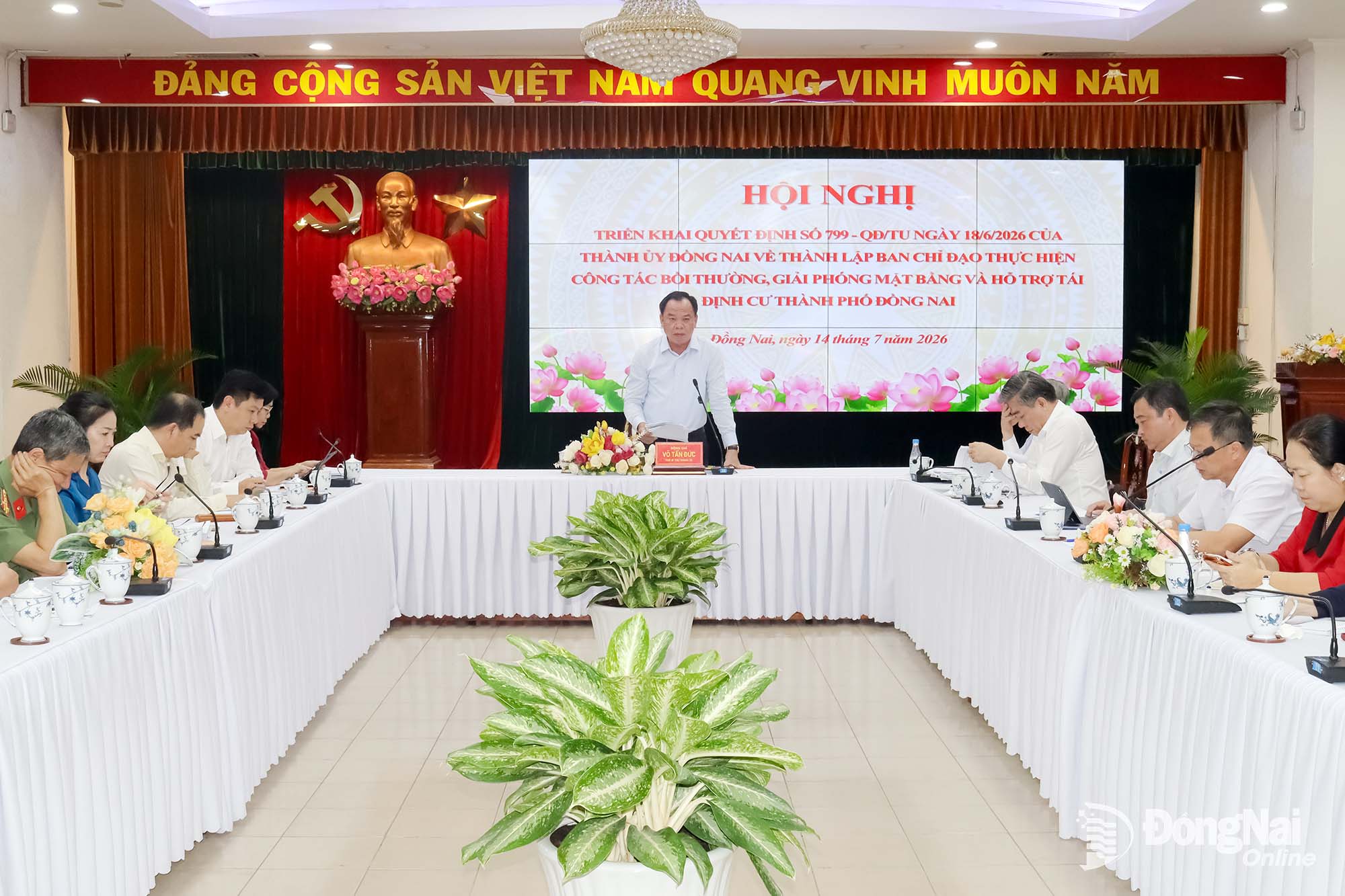 |
| Deputy Secretary of the CPC Vo Tan Duc, Head of the Dong Nai Steering Committee for Compensation, Site Clearance, and Resettlement Support, meets with the Steering Committee’s members. Photo: Hoang Loc |
Therefore, one of the requirements in the land acquisition process for projects is to ensure people's rights while harmonizing the interests of the State, the people, and businesses. When residents have better new homes, their livelihoods are cared for, and their rights are guaranteed, they will certainly agree to hand over the land, creating conditions for projects to be implemented early.
Deputy Secretary of the CPC Vo Tan Duc says that the highest goal is both to ensure the implementation progress of projects and to guarantee the legitimate and legal rights and interests of the people; procedures or steps must not be skipped in the name of speed, but proper processes must also not be used as an excuse to prolong the handling of work.
Deputy Secretary of the CPC Vo Tan Duc, Head of the Dong Nai Steering Committee for Compensation, Site Clearance, and Resettlement Support, said that Dong Nai is facing immense development requirements, with a series of transport, urban, industrial, logistics, and railway infrastructure works and regional linkage projects being implemented. These are works of strategic significance that directly expand development space, enhance connectivity, attract investment, promote economic growth, and improve people's lives.
In that process, compensation, site clearance, and resettlement are among the decisive factors. If sites are handed over in a timely manner, projects can be implemented on schedule. If site clearance is delayed, construction progress, investment capital disbursement, and the efficiency of resource utilization will all be affected. Therefore, this is not merely a professional task for the agricultural and environmental sectors or the Land Fund Development Center but a common political task for the city's entire political system.
Building over 47,000 resettlement plots between now and 2030
According to Plan No. 118/KH-UBND, issued on October 3, 2025, Dong Nai City plans to commence construction and complete 89 resettlement areas with more than 47,000 resettlement plots by 2030. The main goal is to create clean land reserves to serve site clearance and resettlement for residents, handing over land for key works and projects in the area.
Deputy Secretary of the CPC Vo Tan Duc also said that the CPC’s Standing Board recently established the Dong Nai Steering Committee for Compensation, Site Clearance, and Resettlement Support. The establishment of the Steering Committee demonstrates strong political determination to focus on leadership and direction and promptly remove difficulties and obstacles, ensuring that land acquisition, compensation, support, and resettlement are carried out in accordance with regulations openly and transparently, with the interests of the State, the people, and investors harmonized, while also ensuring the progress of site handover for projects.
According to Vo Tan Duc, the ultimate measure of resettlement work does not lie in the number of plots allocated, houses handed over, or projects that have completed site clearance. More importantly, it is whether residents, after leaving their former homes, can stabilize their lives, maintain their livelihoods, gain better access to essential services, and see development opportunities for their families in their new homes.
With that in mind, the CPC leadership requires the City People's Committee to direct a comprehensive review of resettlement needs for each project, including the number of resettlement plots and houses already available, the remaining shortfall, and the construction progress of resettlement areas and associated auxiliary works. There must be no cases in which land has been acquired but no resettlement location is provided, or in which a resettlement area exists but its infrastructure remains incomplete and residents cannot yet move in.
For upcoming projects, it is necessary to review and prepare resettlement land reserves from the project planning stage rather than waiting until land acquisition begins to identify locations for allocation. In addition to housing, attention must be paid to school infrastructure, healthcare, services, and residents' employment. When these factors are guaranteed, resettlement areas will become living spaces that offer a fresh start and create a foundation for residents to share in the benefits of the works and projects contributing to shaping the new face of Dong Nai City.
At the recent meeting, Duong Minh Dung, Member of the CPC’s Standing Board, Head of the CPC's Commission for Information, Education and Mass Mobilization and Member of the Dong Nai Steering Committee for Compensation, Site Clearance, and Resettlement Support, said that people's consensus is of great significance to project implementation, particularly in compensation and site clearance. This factor contributes to ensuring project progress, creating a favorable environment for attracting investment, promoting socio-economic development, and bringing practical benefits to the people.
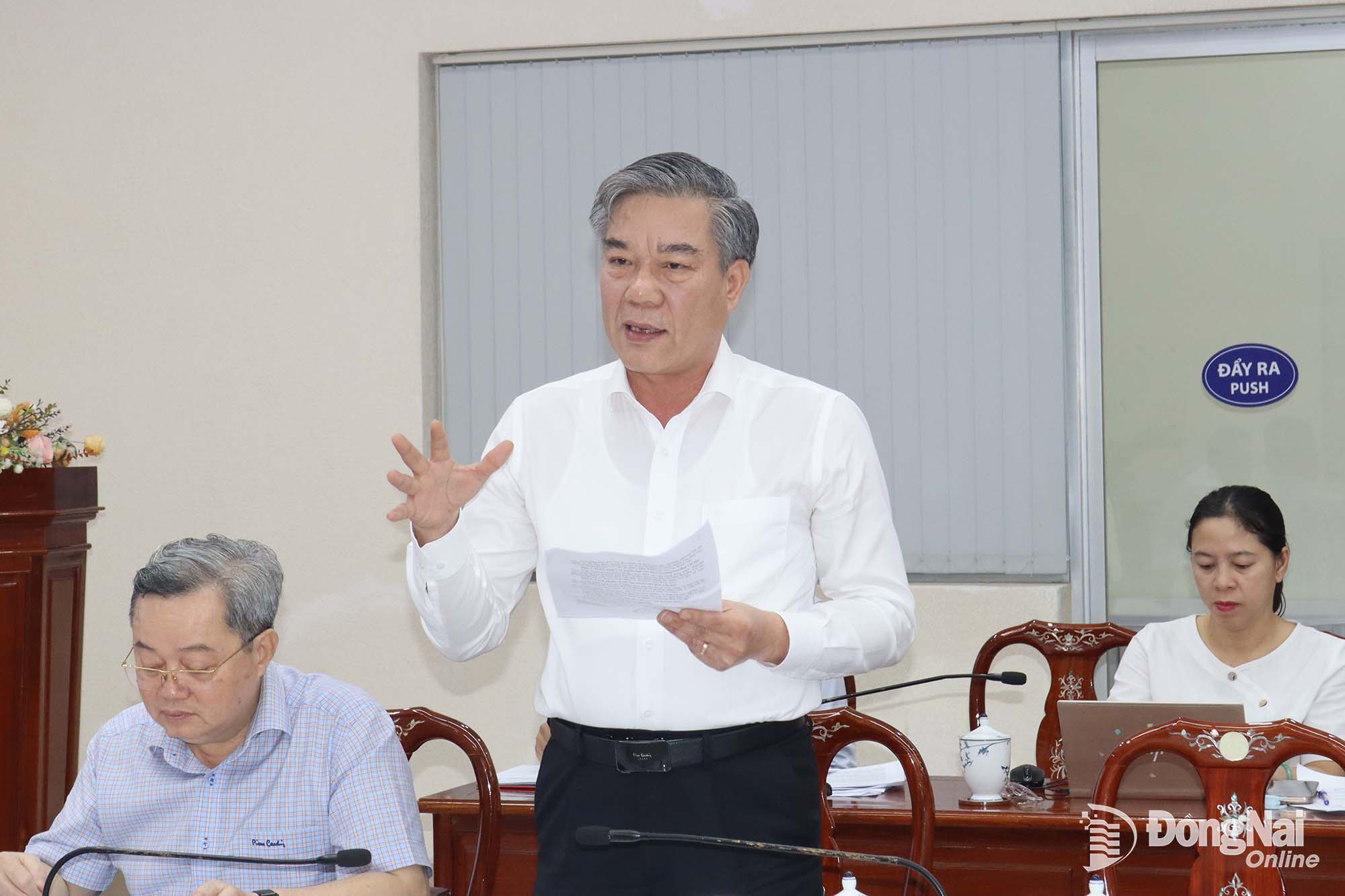 |
| Duong Minh Dung, Member of the CPC’s Standing Board, Head of the CPC's Commission for Information, Education and Mass Mobilization and Member of the Dong Nai Steering Committee for Compensation, Site Clearance, and Resettlement Support, speaks at the meeting. Photo: Hoang Loc |
However, consensus must be built on the basis of openness, transparency, and guarantees of the legitimate and legal rights and interests of the people. For issues that continue to cause concern or difficulties, the government and relevant agencies need to strengthen dialogue, explanation, and mobilization and promptly resolve legitimate petitions in accordance with regulations. At the same time, a few cases of disagreement must not be allowed to affect the progress of site clearance and project implementation, thereby causing the city to miss opportunities to attract investment and undermining the common interests of the community.
In the coming period, the CPC's Commission for Information, Education and Mass Mobilization will continue to direct efforts to strengthen communication, mobilization, and dialogue with the people, while promoting the role of the Vietnam Fatherland Front, mass organizations, and the grassroots political system in building social consensus. The goal is to ensure that residents clearly understand the policies and recognize the long-term benefits of the projects, while ensuring that their legitimate and legal rights and interests are thoroughly addressed. When there is public consensus and the State and the people work together, projects will be implemented faster and more effectively, thereby creating greater momentum for the city's development and enabling the people to enjoy the fruits of that development.
By PV – Translated by Minh Hong, Thu Ha


Thông tin bạn đọc
Đóng Lưu thông tin