
Transit-oriented development (TOD) is introducing a new approach to urban spatial organization, with public transport, particularly railways, serving as the core for creating urban areas with appropriate density, integrated connectivity and more effective use of land value.
Article 13 of the Urban Development Law (UDL) provides for greater decentralization, giving the cities more authority over policies, planning, investment and resource mobilization in TOD areas.
Cities take proactive approach to TOD development
 |
| The project to extend the Ben Thanh - Suoi Tien metro line to Dong Nai City's administrative center and Long Thanh Airport is about 43.5km long. |
Under Clause 1, Article 13, the City People's Council has the authority to decide on a number of important issues related to urban development in TOD areas.
Notably, Point a, Clause 1, Article 13 allows the municipal People's Councils to set policies for TOD development, including the use of the local budget for independent public investment projects involving compensation, support and resettlement, land acquisition and urban redevelopment. The cities may also use the budget to create land funds for auctions of land-use rights for urban, commercial and service projects, or to make payments to investors implementing railway projects under build-transfer (BT) contracts in accordance with public-private partnership (PPP) regulations.
The provision gives local authorities greater flexibility in preparing land funds, reorganizing urban space and mobilizing resources for public transport development. In particular, linking railway infrastructure with urban redevelopment, resettlement and the capture of increased land value shows that TOD is not simply a transport project, but a model of urban development closely linked to infrastructure.
 |
| Infrastructure plays an important role in public transport development. Photo: Pham Tung |
Another important provision is set out in Point b, Clause 1, Article 13. Under the provision, the municipal People's Councils may set land-use, economic and technical targets, planning land-use targets and spatial organization requirements for TOD areas where such matters are not covered by, or differ from, the national technical regulations on urban and rural planning. Such regulations must promote the integrated use of underground and low-rise spaces, avoid overloading technical and social infrastructure, and ensure infrastructure connectivity within the area. At ground level, priority must be given to public spaces, greenery and urban quality of life.
Thus, greater local autonomy in setting development targets for TOD areas comes with clear requirements on infrastructure, spatial planning and quality of life. This is an important consideration in TOD development, as the goal is not simply to increase development density around railway stations, but to ensure that urban growth matches infrastructure capacity and preserves adequate public space.
Clause 1, Article 13 also empowers the municipal People's Councils to regulate the preparation, appraisal, approval and adjustment of plans for routes and the locations of facilities along local railway lines and TOD area planning, as well as the transfer of planning land-use targets within TOD areas.
Especially, Point d, Clause 1, Article 13 gives the municipal People's Councils authority to determine the methods, rates, competent authorities and procedures for collecting various revenues and fees in TOD areas. These include charges on additional floor space resulting from higher planning land-use or economic and technical targets; revenues from increased land value; infrastructure improvement fees; revenues from the use of local railway infrastructure; public transport connection fees; and other revenues for developing local railway systems and ensuring integrated transport infrastructure in TOD areas.
Harnessing land value and developing integrated infrastructure
 |
| Integrated infrastructure development helps improve the effectiveness of public transport. Photo: Pham Tung |
Along with the powers granted to the municipal People's Councils, Article 13 also clearly defines the responsibilities of the municipal People's Committees and their chairpersons.
Under Clause 2, Article 13, the municipal People's Committees are responsible for regulating the management and use of technical and social infrastructure systems in TOD areas.
Meanwhile, Clause 3, Article 13 gives the Chairpersons of the municipal People's Committees authority over the preparation, appraisal, approval and adjustment of plans for railway routes and facility locations along local railway lines and TOD plans. The Chairpersons may also decide on investment in housing, commercial and service facilities, public-service facilities and public works, as well as specific land-use, economic and technical targets and planning land-use targets in TOD areas, in line with regulations issued by the City People's Council under Point b, Clause 1, Article 13.
The delineation of authority among the municipal People's Councils, People's Committees and Chairpersons of the municipal People's Committees creates a clearer framework for decisions on policy, infrastructure management, planning and investment. This gives local authorities greater flexibility in organizing TOD areas according to the characteristics, needs and infrastructure capacity of each area.
 |
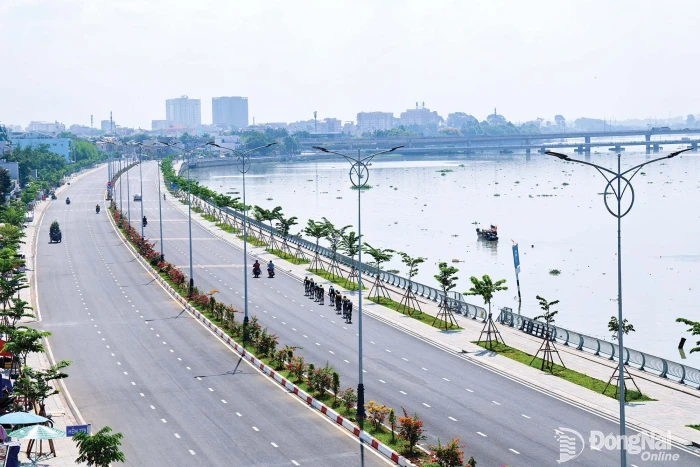
| The Bien Hoa - Vung Tau Expressway has been opened to traffic since May 18, 2026. Photo: Pham Tung |
Another notable provision is Clause 4, Article 13, which states that housing, commercial and service facilities, public-service facilities and public works in railway station areas and train maintenance and repair depots may be sold, transferred, leased, leased for purchase or subleased in accordance with the law during the project's operating period.
The provision creates a legal basis for the use of facilities at railway stations and depots during the project's operating period. Together with provisions on land-use targets, land-value capture, infrastructure improvement fees and public transport connection fees, Article 13 links TOD development with urban planning, land management, investment and the mobilization of resources.
Article 13 therefore goes beyond regulating development around railway stations. It also gives the city a legal basis to take a more proactive role in organizing urban space, mobilizing resources and integrating infrastructure. However, these powers remain subject to legal requirements, particularly the need to avoid overloading technical and social infrastructure, ensure connectivity within the area, and give priority to public spaces, greenery and urban quality of life.
By H.Thanh – Translated by M.Nguyet, Thu Ha


Thông tin bạn đọc
Đóng Lưu thông tin