
On May 26, the Dong Nai City Party Committee (CPC) issued an action plan of the CPC’s Standing Board to implement the Politburo’s Resolution No. 80-NQ/TW dated January 7, 2026, on the development of Vietnamese culture in Dong Nai City.
 |
|
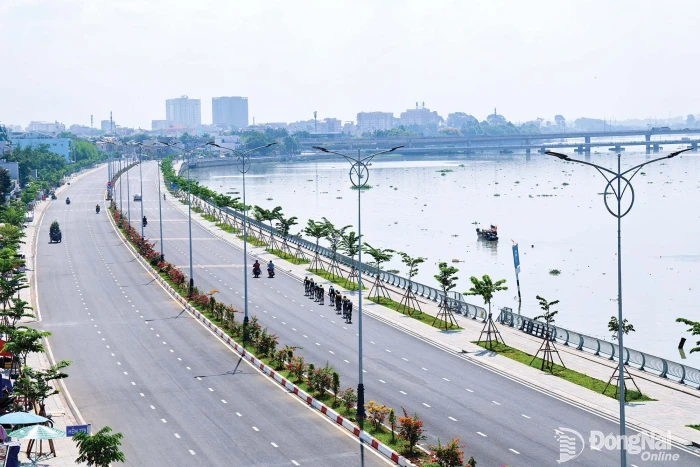
Dong Nai strives to build the city into a locality with a healthy and civilized cultural environment by 2045. Photo: Cong Nghia |
According to the plan, by 2030, Dong Nai strives to complete the system of cultural and sports institutions at all levels, ensuring that 100% of armed forces units and enterprises are equipped with cultural and sports facilities meeting the cultural enjoyment and creative needs of residents, officials and soldiers. The city also targets that 90% of grassroots cultural institutions meet standards and operate effectively, while 100% of national and special national heritage sites will be digitized in line with the Central Government’s roadmap.
The city also sets annual targets of having at least 97% of families recognized as cultural families; 95% of neighborhoods, villages, and hamlets awarded cultural status; and 80% of enterprises meeting cultural standards. In addition, 100% of agencies and units are expected to effectively implement regulations on workplace culture, discipline and administrative order. At the same time, the city plans to invest in cultural and sports infrastructure, including museums, libraries, art theaters, public squares, and convention and exhibition centers of regional and international scale. Efforts will also focus on developing culture and services oriented toward diversity, identity, integration and development.
By 2045, Dong Nai aims to build the city into a locality with a healthy and civilized cultural environment, where people develop comprehensively and cultural industries grow strongly, making significant contributions to economic growth and improving people’s quality of life.
 |
| The Dong Nai Center for Culture and Cinema, in coordination with the New Recruit Training Battalion under Division 370, organizes a painting and photo exhibition themed “The Fatherland Seen from the Sea” for officials and soldiers studying and training at the unit. |
The plan also highlights tasks and solutions aimed at strengthening communication work and raising public awareness and action to develop the culture and people of Dong Nai in the new era. It seeks to accelerate the application of science and technology to create momentum for breakthroughs in Dong Nai’s cultural development, while mobilizing and effectively utilizing resources, developing infrastructure, and improving the quality of human resources in the cultural sector. The plan also focuses on building a cultural ecosystem associated with innovation, alongside the identification, preservation, and effective promotion of cultural resources.
Party committees under the CPC, directly led by their secretaries, are responsible for leading and directing the concretization of the action program into programs and plans suitable to the characteristics and conditions of their localities and units. The City People's Committee will develop programs and projects to implement the plan and advise on reviewing, adjusting, supplementing, and perfecting mechanisms and policies related to cultural development. Priority will be given to allocating resources for the development of cultural institutions, the preservation and promotion of cultural heritage values, and the development of the cultural industries and grassroots culture, especially in remote, isolated, border, and safe-zone communes, as well as ethnic minority areas.
By My Ny – Translated by Minh Hong, Thu Ha


Thông tin bạn đọc
Đóng Lưu thông tin