
Dong Nai is home to more than 421,000 ethnic minority people, accounting for nearly 9.4% of the city’s population. In recent years, ethnic minority communities across the city have actively contributed to building new-style rural areas and civilized urban areas.
Tho Ut, Deputy Director of the Department of Ethnic Affairs and Religion, said that each ethnic minority community and household contributes to the development of new-style rural areas and civilized urban areas in different ways, depending on local demographic characteristics and living conditions.
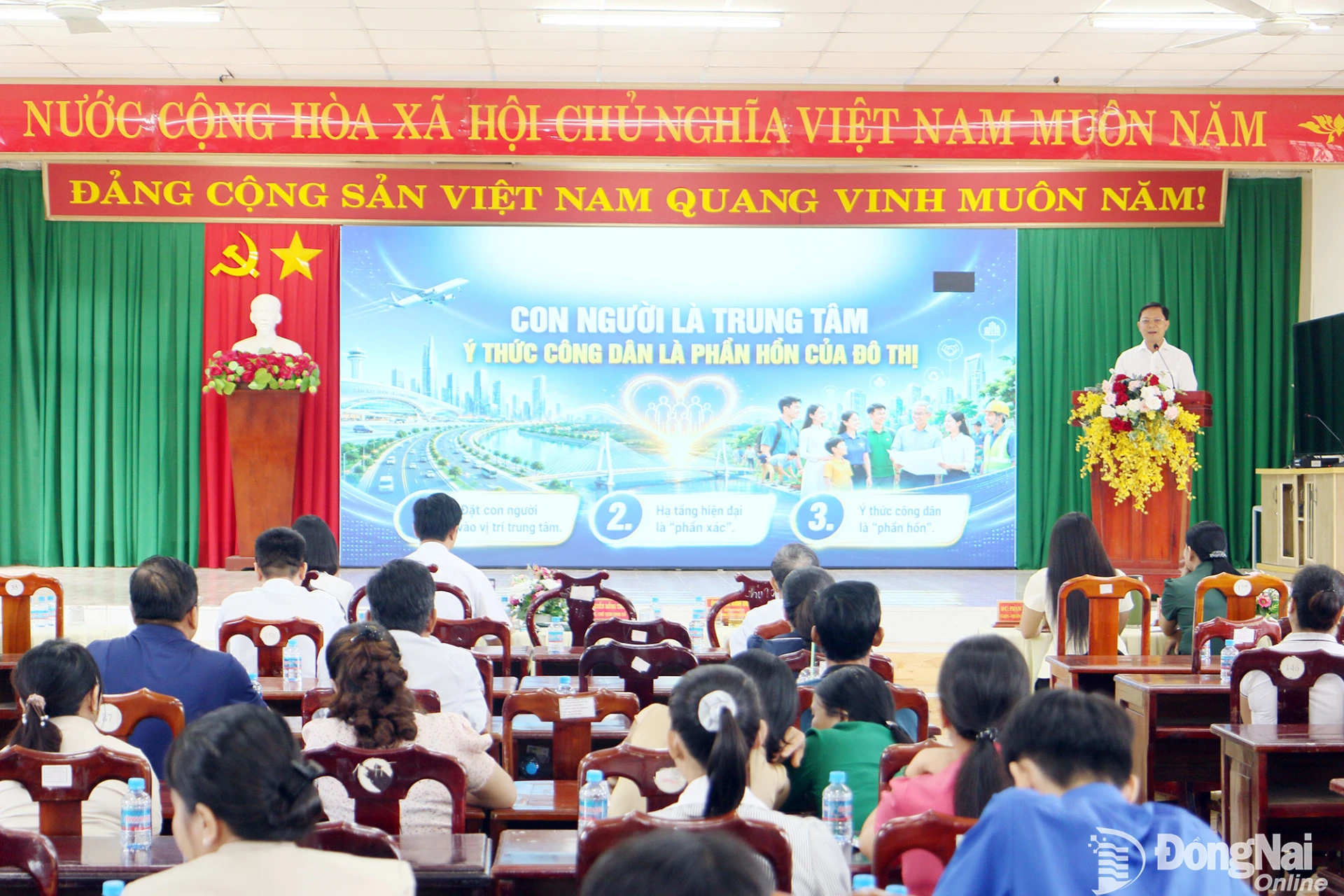 |
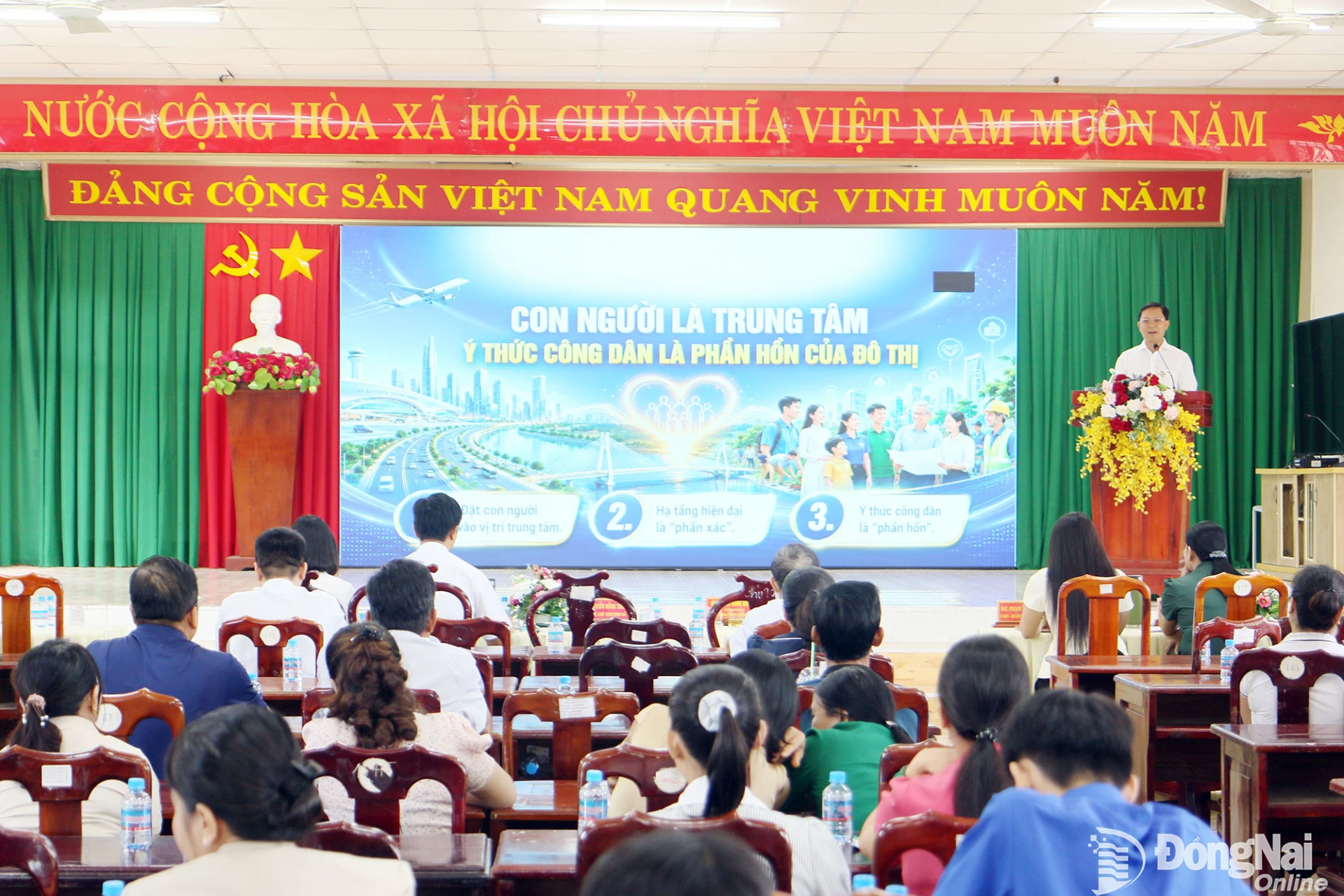
| Ha Anh Dung, Member of the Standing Committee of the City Party Committee, Standing Vice Chairman of the Vietnam Fatherland Front Committee of Dong Nai City, delivers a presentation on building a “Civilized, Modern and Happy” Dong Nai City in Minh Duc Commune. |
Working together to build cultural life
According to Dieu Khue, Chairman of the Vietnam Fatherland Front (VFF) Committee of Tho Son Commune, the commune is home to 20 ethnic minority groups, with nearly 20,000 people accounting for more than 47% of its population. In recent years, under the Tho Son – Green Living, Peaceful Destination model, local residents have contributed 1,500 square meters of land, VND232 million and 800 workdays to road widening and upgrading projects, among other activities.
Notably, Bu Lach Grassland is a major attraction drawing visitors from near and far to Tho Son Commune. In response, the commune’s VFF Committee has called on residents to join efforts to protect the forest, natural grasslands and the cultural identity of ethnic minority communities. These efforts also aim to create jobs by developing prosperous and happy residential areas linked to ecotourism.
Dieu Hoai, a member of the Xtieng ethnic group in Tho Son Commune, said residents had begun making small changes to their daily habits while implementing the Tho Son – Green Living, Peaceful Destination model, which is linked to preserving and promoting the value of Bu Lach Grassland. For example, when herding buffaloes and cattle near the forest, residents try to keep their animals away from the grassland itself and guide them along its outer edges, preventing them from inadvertently damaging its natural beauty. When visiting the area for recreation, people also maintain public cleanliness and pick up litter to ensure the grassland remains clean and beautiful.
In Xuan Thanh Commune, ethnic minority communities have in recent years focused not only on economic development, preserving traditional values and ensuring their children attend school, but also on actively building a cultural way of life. Their efforts include complying with traffic laws, registering for waste collection services, cleaning public spaces, and planting and caring for flowers and greenery along local roads.
Nguyen Thi Hong Nu, a respected figure among the city’s ethnic minority communities and a member of the Cho Ro ethnic group in Xuan Thanh Commune, said that efforts by authorities and schools to raise awareness of traffic laws had helped local young people comply with safe-driving regulations. This is a positive change in community life that contributes to fostering a culture of traffic safety.
According to Tho Ut, Deputy Director of the Department of Ethnic Affairs and Religion, as of September 2026, the city had 207 hamlets in ethnic minority and mountainous areas, including 28 hamlets facing particularly difficult conditions. A total of 46 communes are classified as ethnic minority and mountainous areas for the 2026–2030 period.
Fostering a sense of urban civic responsibility
The campaign “All People Unite to Build New-Style Rural Areas and Civilized Urban Areas” requires residents to make further efforts to improve cultural life. This has become particularly important since April 2026, when Dong Nai became the country’s seventh city. As part of the city’s population, ethnic minority communities are also encouraged to adjust their mindsets and behavior to meet the demands of changing social conditions.
Tho Ngoc Lam, a member of the Cho Ro ethnic group in Nha Bich Commune, said that as city residents, people needed to develop the habits and awareness expected of urban citizens.
To help residents, particularly ethnic minority communities, better understand and implement the campaign while fostering a sense of urban civic responsibility, the Standing Committee of the VFF Committee of Dong Nai City has worked with communes and wards to organize community outreach sessions on the theme Fostering a sense of urban civic responsibility to help build a civilized, modern and happy Dong Nai City.
During these sessions, Ha Anh Dung, Member of the Standing Committee of the City Party Committee, Standing Vice Chairman of the VFF of Dong Nai City and a Central rapporteur, has briefed officials, Party members, Youth Union members, association members and residents on Dong Nai’s urban development vision and objectives, as well as the key tasks and breakthrough measures needed to build a civilized, modern and happy city.
Taking into account the demographic characteristics and socioeconomic conditions of each commune and ward, Dung also set aside time to present practical scenarios and questions to encourage in-depth discussions on the responsibilities and duties of officials, Party members, Youth Union members, association members and residents, including ethnic minority people, in fostering a sense of urban civic responsibility across the city.
Ethnic minority communities have also taken the initiative to improve their quality of life. In recent years, religious leaders at Soc Lon Pagoda in Loc Hung Commune have worked with local authorities to encourage residents to abandon outdated customs and practices and develop a more cultured way of life. The pagoda and the Khmer community have also joined efforts to maintain the pagoda grounds and improve the surrounding residential areas. They maintain a football field and exercise facilities while encouraging residents to choose forms of physical activities suited to their health and personal circumstances. These activities have enriched the spiritual life of the local Khmer community and contributed to Dong Nai’s ongoing efforts to build new-style rural areas and civilized urban areas.
By Hieu Thanh, Van Truyen - Translated by Mai Nga, Thu Ha

Thông tin bạn đọc
Đóng Lưu thông tin