
On July 21, 2026, the Politburo issued Resolution No. 16-NQ/TW on building and developing Dong Nai City through 2035, with a vision to 2065. The resolution opens a new development vision for the city in which rapid and modern growth must go hand in hand with efforts to improve people's quality of life and happiness.
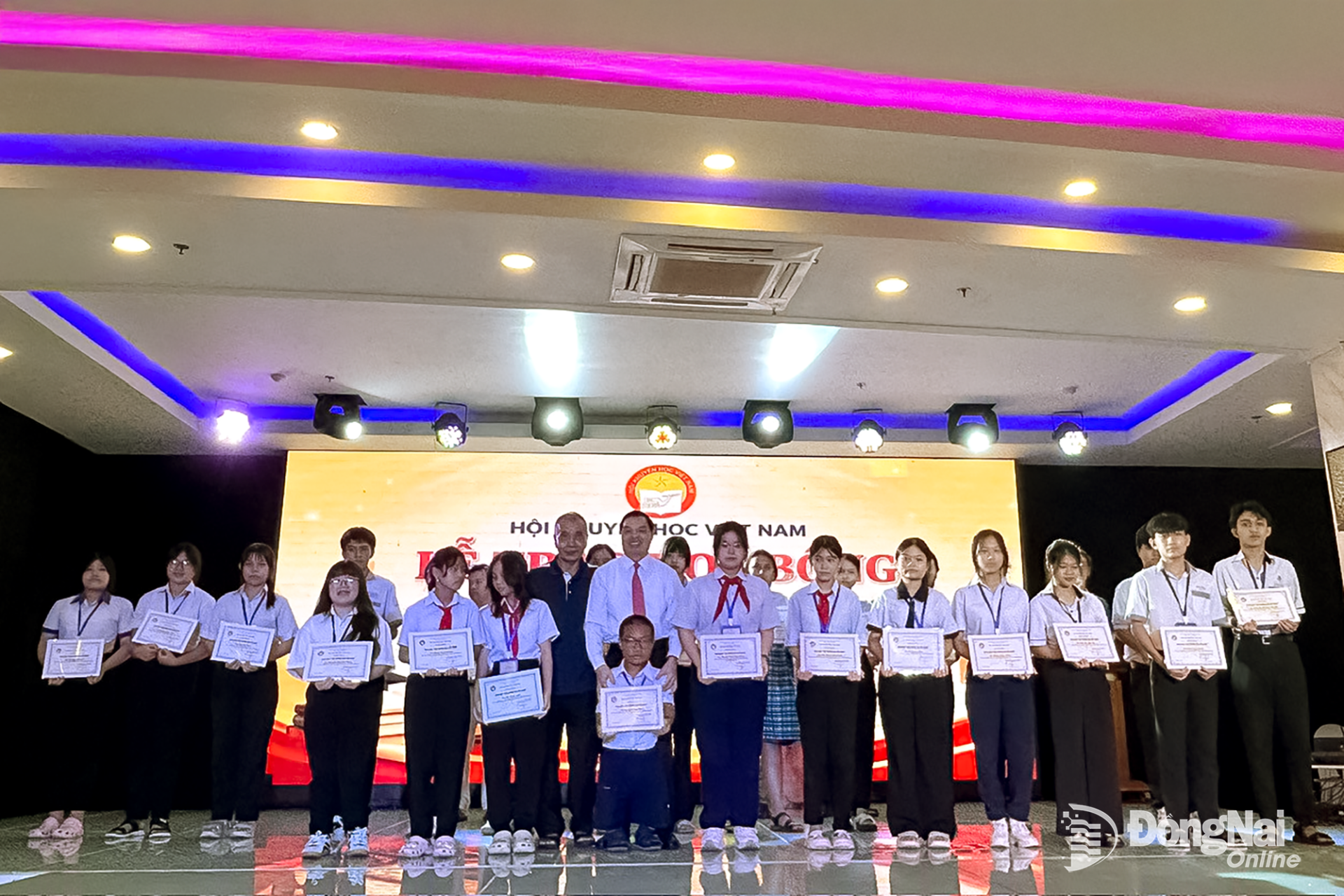 |
| Dong Nai City’s outstanding individuals receive “Learning Never Ends” scholarships for 2026 from the Vietnam Association for Promoting Education in Can Tho City. |
In this journey, the promotion of learning is not simply about mobilizing support for education. It plays a more important role in helping build society-wide learning capacity and improve the quality of human resources, thereby laying the foundation for a civilized, modern and happy Dong Nai.
From Resolution No. 16 to every individual's story
Resolution No. 16 places Dong Nai within a new development space, with the goal of becoming an important growth pole of the country and a modern, civilized and happy city. Among its major objectives, people are placed at the center. Developing Dong Nai’s culture, education, healthcare and people is identified as an important group of tasks, serving both as a spiritual foundation and a measure of sustainable development. This also sets new requirements for the promotion of learning.
In the digital era, promoting learning is no longer limited to mobilizing support for providing scholarships, donating books or giving financial assistance to help disadvantaged students attend school. Today, it encompasses more challenging and complex tasks aimed at building a society in which everyone is encouraged to learn and has opportunities to study at any stage of life.
As a key force in building a learning society, the city's Association for Promoting Education is helping strengthen this foundation from every family, and clan to community, making learning a part of everyday life and a driving force for the city's sustainable development.
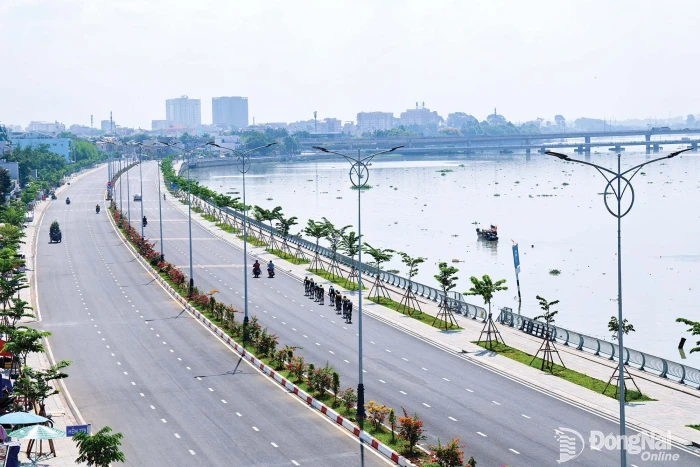
Looking at a city like Dong Nai, which is developing into a modern urban area driven by the digital economy, high technology, logistics and an aviation industry, it is not enough to focus only on major projects and large-scale infrastructure. Behind boulevards, riverside urban areas, factories, airports and logistics centers, there is always a need for people with comprehensive capabilities, particularly in science and technology, as well as the ability to adapt to change.
Therefore, building a learning society and promoting lifelong learning is no longer the responsibility of the education sector or education-promotion organizations alone. It has become an essential part of the city's development capacity.
More than one million members — from size to strength
Following the merger, the city's Association for Promoting Education has more than one million members, accounting for over 22% of the population and representing a major social force. However, in a city with a large geographical area, a substantial population and diverse demographic structure, the key question is how to ensure that this force participates effectively in promoting learning and talent, as well as building a learning society.
For the city's Association for Promoting Education, membership growth is not simply about increasing numbers. More importantly, it is about improving the quality of members so that they become active participants in the learning movement. This is linked to developing and expanding models of learning families, learning clans, learning communities, learning organizations and learning citizens. Each member is both a participant and beneficiary while also spreading the spirit of learning within their family, organization and community.
Grassroots experience shows that the strength of education promotion does not always appear in large-scale programs. Sometimes, it is simply a family overcoming difficulties so that a child does not drop out of school, a clan raising funds to support disadvantaged children, a business sponsoring a student, an older person spending time teaching young people a trade, or a local association developing an initiative to help elderly people use smartphones effectively.
These seemingly small actions, when connected, can form a broad learning network. This is also why the city's Association for Promoting Education is increasingly focusing on its advisory role. The association not only mobilizes social resources but also proactively proposes policies, develops criteria for learning models and promotes initiatives such as “Learning Citizens,” “Digital Education Promotion” and “Digital Literacy for All.”
During the 2025-2026 academic year, the first school year after the administrative merger, the association conducted surveys of disadvantaged students in border communes and former revolutionary base areas. It subsequently advised on additional support covering 50% of health insurance costs for students in border communes and allocated VND1 billion to support eight border communes and two former revolutionary base communes. These efforts demonstrate that promoting learning can only be truly meaningful when it reaches the places where people need support most.
Ensuring no one is left out of the learning society
Dong Nai is developing rapidly, but this growth also creates new requirements and highlights gaps between educational needs and actual learning opportunities. These include differences between urban and rural areas; between areas with favorable conditions and border or remote areas; and between workers who have easy access to technology and those who are still struggling to adapt to the digital environment.
In addition, differences in the operating conditions of grassroots education-promotion associations following the merger have become increasingly apparent. A shortage of full-time staff, the absence of allowances for workers in charge of education promotion, inadequate operating funds, and a lack of equipment and conditions for applying digital technologies are among the specific difficulties facing many localities. These are also among the reasons why some communes and wards have yet to complete the consolidation of their organizations.
In the spirit of Resolution No. 16, however, these difficulties and shortcomings are no longer matters for education promotion associations alone. Building a learning society requires the participation of the entire political system and society. The faster the city develops, the more urgent the task of building a learning society becomes.
Resolution No. 16 sets out a vision through 2035, extending to 2065. The foundation of a modern, civilized and happy city must be laid today, starting with investment in people and creating opportunities for everyone to continue learning.
When every family, community and resident embraces lifelong learning, education promotion will no longer simply be a mass movement. It will become part of the development process, ultimately contributing to people's happiness.
By Linh Tam - Translated by Mai Nga, Thu Ha

Thông tin bạn đọc
Đóng Lưu thông tin