
When people think of biodiversity, they often picture pristine forests or protected nature reserves. Yet in the heart of Dong Nai City, biodiversity is quietly thriving in everyday urban spaces.
 |
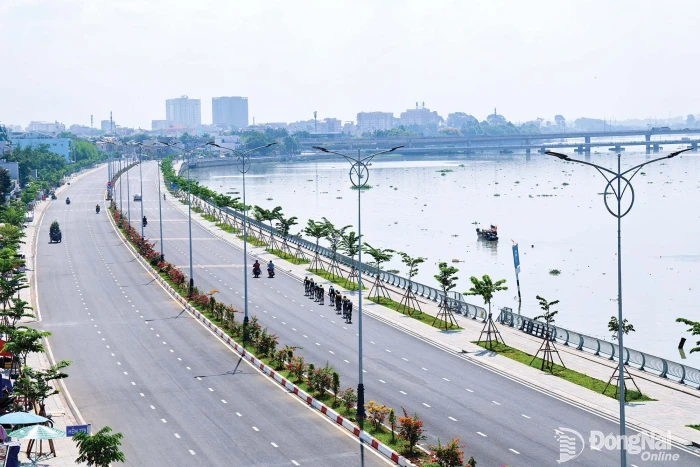
| A glimpse of urban biodiversity can be seen along Cach Mang Thang Tam Street. Photo: Cong Nghia |
From tree-lined streets and public parks to neighborhood green spaces, urban vegetation helps soften the pace of city life while creating a healthier, more livable environment.
Green streets, vibrant neighborhoods
In the early morning and late afternoon, many residents enjoy leisurely walks beneath the century-old tamarind trees lining Nguyen Van Tri Street. Along the riverside park along the Dong Nai River in Tran Bien Ward, graceful freshwater mangrove trees burst into bloom, carpeting the sidewalks with crimson blossoms. Nearby, purple queen's crape myrtles, golden copperpods (osaka), towering white meranti and resin trees, and ornamental palms create a distinctive green landscape along the riverside.
This rich variety of tree species has created a picture of biodiversity within the urban space, one that many people pass by every day without realizing it.
While city streets were once dominated by only a handful of familiar tree species, Dong Nai's urban greenery has become increasingly diverse in recent years. Alongside native species such as white meranti, resin, tamarind, queen's crape myrtle and freshwater mangrove, authorities have introduced additional tree varieties well suited to the local climate and soil, enriching both biodiversity and the city's seasonal scenery.
Tran Tri An, who has lived in Dong Nai for nearly four decades, said urban biodiversity reflects the diversity of plant and animal species living within the city's green spaces. "It beautifies the urban landscape while regulating the climate, preserving native species, improving environmental quality and bringing people closer to nature," he said.
According to An, although Dong Nai has experienced rapid industrialization and urbanization, the city has continued not only to protect its natural forests but also to foster biodiversity within its urban environment, allowing residents to interact with nature in their daily lives.
Along many streets of the former Bien Hoa City, one can easily encounter rows of trees deeply woven into the memories of multiple generations. There is a row of tamarind trees leading into the Tran Bien Temple of Literature, carrying the solemn, nostalgic aura of an ancient land. There are the towering green resin trees along Nguyen Ai Quoc Street; on early summer afternoons, their winged seeds spin through the air like tiny pinwheels dropped from above, much to the delight of commuters. Fragrant rosewood trees shade the road leading to Bien Hoa Railway Station, while pink trumpet trees transform Cach Mang Thang Tam Street into a scene reminiscent of Da Lat during the flowering season.
Nguyen Thi Be My, who regularly exercises at the riverside park, said the city's greatest attraction is the changing beauty of its trees throughout the year. "When flamboyant trees turn bright red, osaka trees bloom in golden yellow, or freshwater mangrove flowers cover the walkways with crimson blossoms, the city always feels fresh and different," she said.
“I feel as though the city I live in is always refreshing itself. The green spaces and seasonal blossoms make life more peaceful and make us feel more connected to nature,” Be My remarked.
Beyond providing shade, urban trees reduce heat, create habitats for birds and insects, and enrich the city's ecological diversity.
When trees become part of a city's identity and memory
Amid the lively atmosphere of Tran Bien Ward, tree-lined streets are everywhere. Roads such as Hung Dao Vuong, Phan Dinh Phung, Cach Mang Thang Tam and Tran Minh Tri streets, the Thanh intersection and the area surrounding Bien Hung Park each possess their own distinctive character beneath lush green canopies.
During the flowering season, these streets become favorite gathering places for young people, who stroll, admire the scenery and take photographs among the colorful blossoms. Elderly residents often spend their afternoons under the shade, enjoying coffee or playing chess.
 |
| A corner of the green space at the riverside park along the Dong Nai River in Tran Bien Ward. |
Nguyen Sinh, owner of a tree nursery in Tran Bien Ward, believes that creating a green city is about more than simply planting as many trees as possible. "The key is selecting the right species for the right location so they provide ecological benefits while ensuring safety and fitting harmoniously into the urban landscape," he said.
In practice, some tree species have had to be replaced because their aggressive root systems damaged sidewalks. Others, despite having relatively low trunks, develop broad canopies that obstruct visibility and pose traffic hazards. Certain species have brittle branches that can easily break during storms, requiring regular pruning, while others produce flowers with overpowering fragrances that affect nearby residents.
Developing greener cities, therefore, requires careful planning, thoughtful species selection and effective long-term maintenance, ensuring that urban trees enhance both ecological value and urban aesthetics.
According to forestry experts, Dong Nai's soil and climate profile is exceptionally well-suited for white meranti and resin trees, the signature flora of the Southeast region. These varieties provide excellent shade while preserving the local ecological identity. A 300-year-old resin tree in Dong Nai was officially recognized as a Vietnam Heritage Tree by the Vietnam Association for Conservation of Nature and Environment in 2023. Alongside these hallmark native trees, selective integration of new flora is necessary to enrich the urban landscape while ensuring structural harmony with the natural environment.
Tran Anh Dung, director of an environmental company in Dong Nai, believes trees are inseparable from a city's memory. "Some streets would lose much of their identity if their familiar rows of trees disappeared," he said. He cited the century-old frangipani trees inside Bien Hoa 1 Industrial Park as an example. Although most factories there have ceased operations, he still visits regularly just to admire the flowering trees that have accompanied Vietnam's first industrial park for decades. Dung expressed hope that when Bien Hoa 1 Industrial Park is redeveloped, authorities will preserve these mature trees as living reminders of the area's history.
Ultimately, the value of urban biodiversity lies not in grand concepts but in the simple pleasures of shaded streets and seasonal blossoms. These everyday features are helping make Dong Nai a greener, more livable city where people remain closely connected to nature.
By Ban Mai – Translated by Mai Nga, Minho


Thông tin bạn đọc
Đóng Lưu thông tin