
On July 4, the Dong Nai Department of Construction held a ceremony to announce the launch and official operation of bus route No. 9, which runs between Bien Hoa Bus Station in Tran Bien Ward and Doc Mo 3 in Thong Nhat Commune, and vice versa.
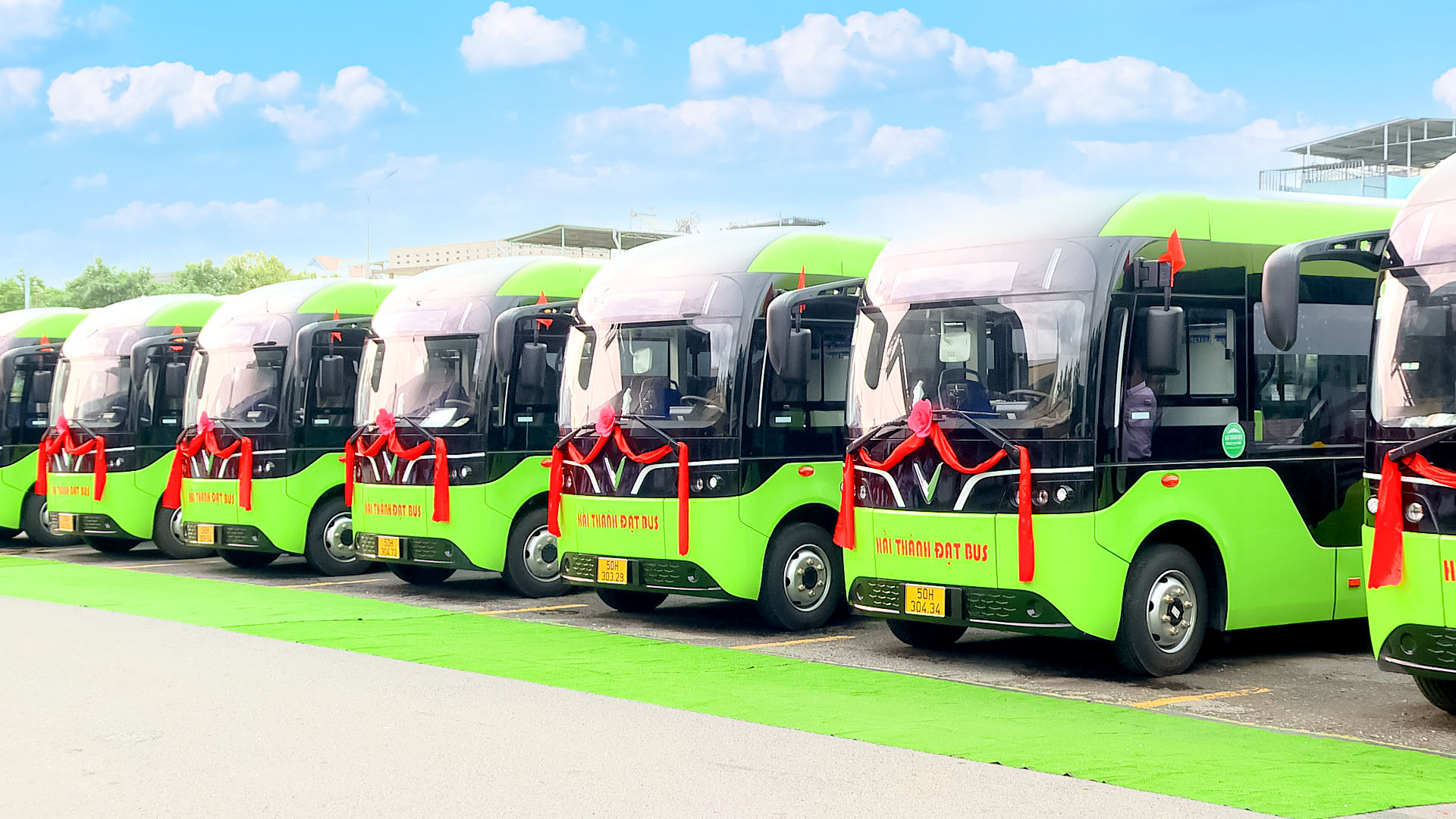 |
| E-bus route No. 9 is the first intra-city route of its kind launched in the metropolis. Photo: Khanh Loc |
This is not merely a public transport route but the first intra-city electric bus route deployed in the city, marking an important milestone toward a smart, environmentally friendly and people-centered transport system.
Enhancing transportation connectivity with green vehicles
Before the route officially entered operation, Dong Nai City authorities, particularly the Department of Construction, carried out a comprehensive and systematic preparation and inspection process.
In early March 2026, the Department of Construction completed a thorough inspection and appraisal of all vehicles assigned to this non-subsidized public bus route. Authorities assessed technical safety conditions, fire prevention and firefighting systems, vehicle quality, and professional training procedures for drivers and service personnel.
The thorough preparations were made to help ensure convenience and safety for passengers. All vehicles operating on route No. 9 are new electric buses powered by clean energy, equipped with high-capacity air conditioning, security surveillance cameras and passenger assistance devices, and meet all required safety standards.
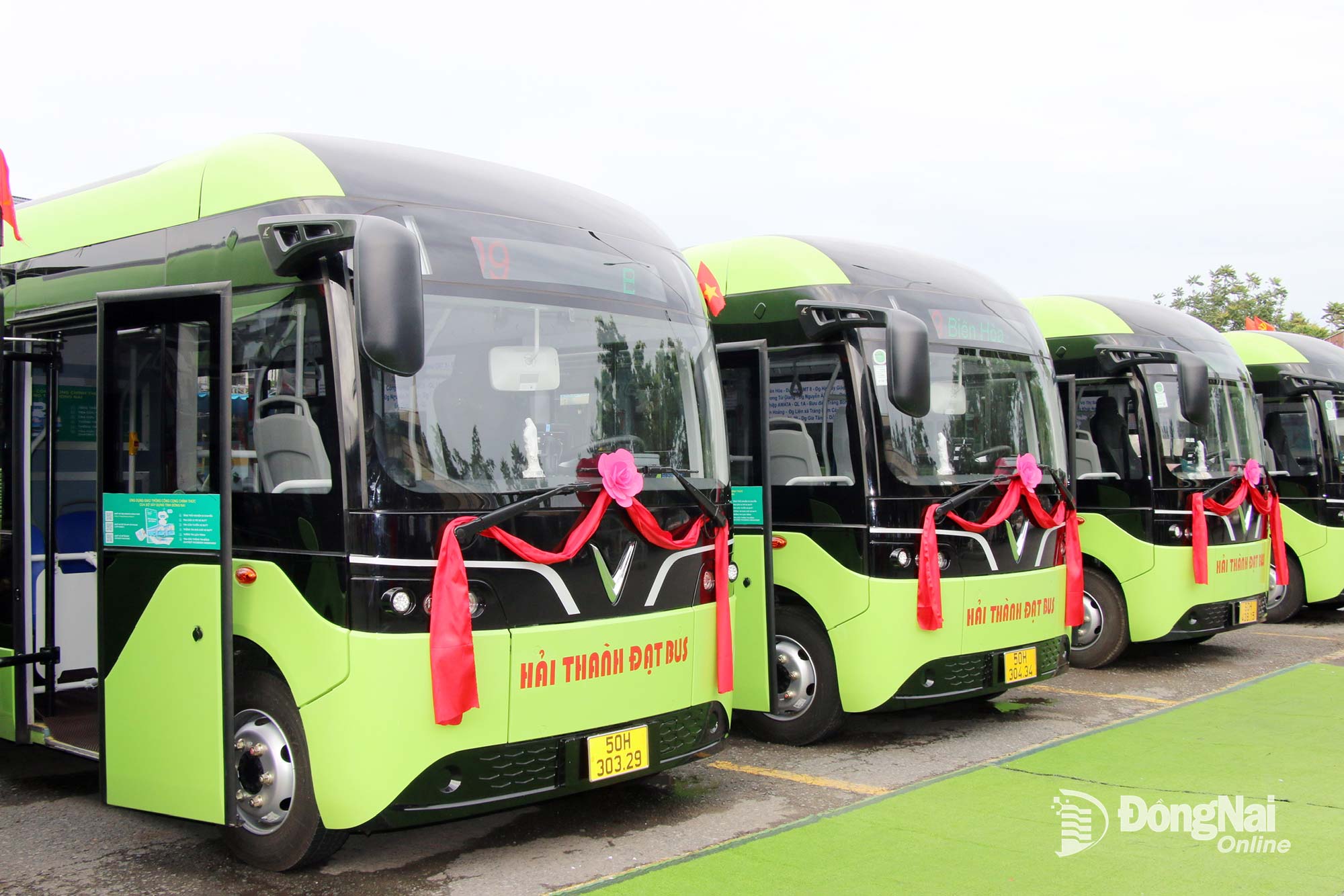 |
| Bus route No. 9 operates between Bien Hoa Bus Station in Tran Bien Ward and Doc Mo 3 in Thong Nhat Commune, and vice versa. Photo: Ha Le |
E-bus route No. 9 is 57.5 kilometers long, connecting central Dong Nai City with the Doc Mo 3 area. Starting from Bien Hoa Bus Station, the route passes through key streets including Cach Mang Thang Tam, Ha Huy Giap, Vo Thi Sau, Duong Tu Giang, Nguyen Ai Quoc, and Dong Khoi. It then continues via the Amata Industrial Park intersection, National Highway 1, Trang Bom Post Office, April 30 Street, Hung Vuong Street, and Nguyen Hoang Street. Finally, the e-bus travels along Trang Bom–Cay Gao Road, National Highway 20 and Gia Tan 1, and terminates at the Doc Mo 3 area before returning along the same route.
 |
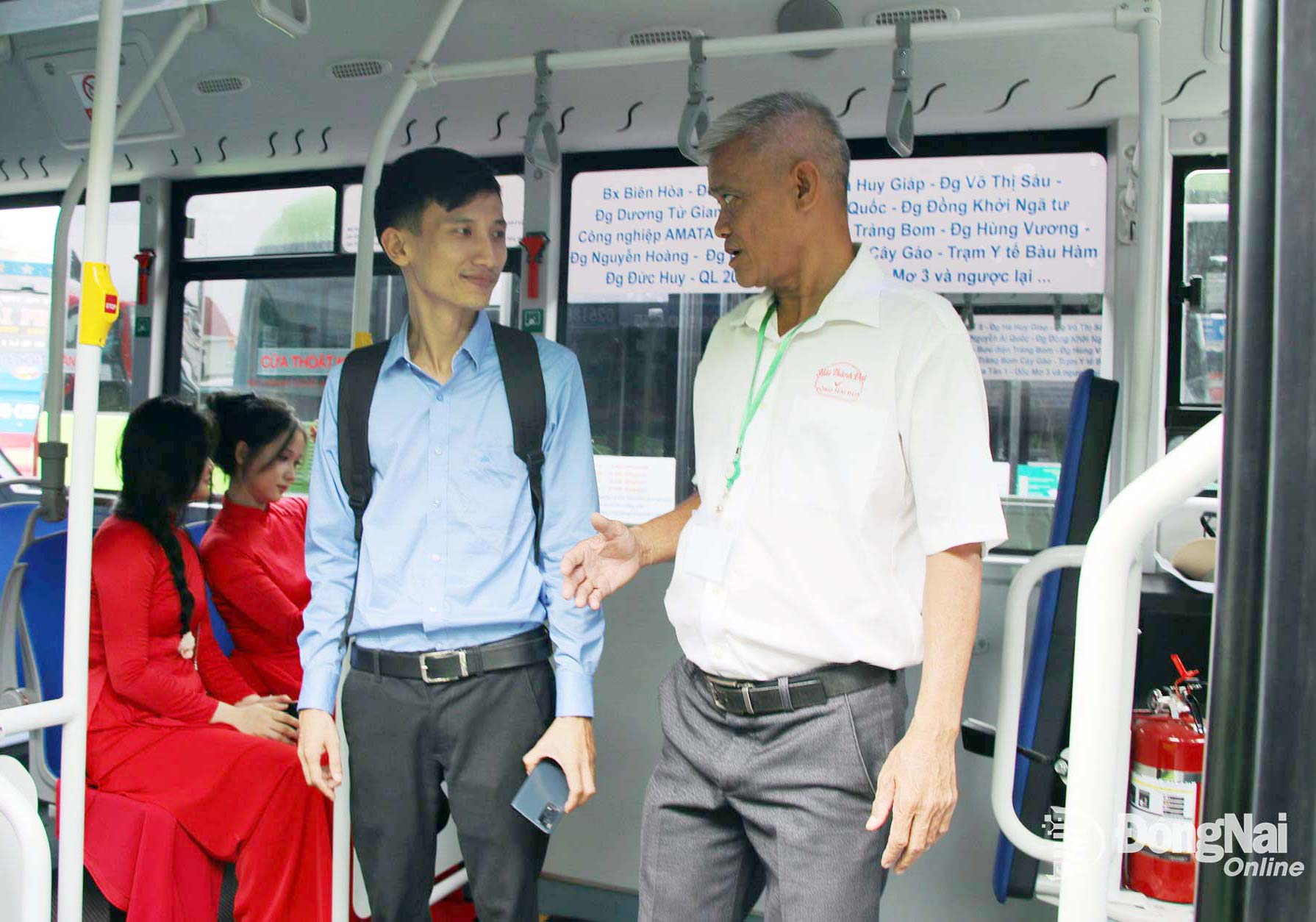 |
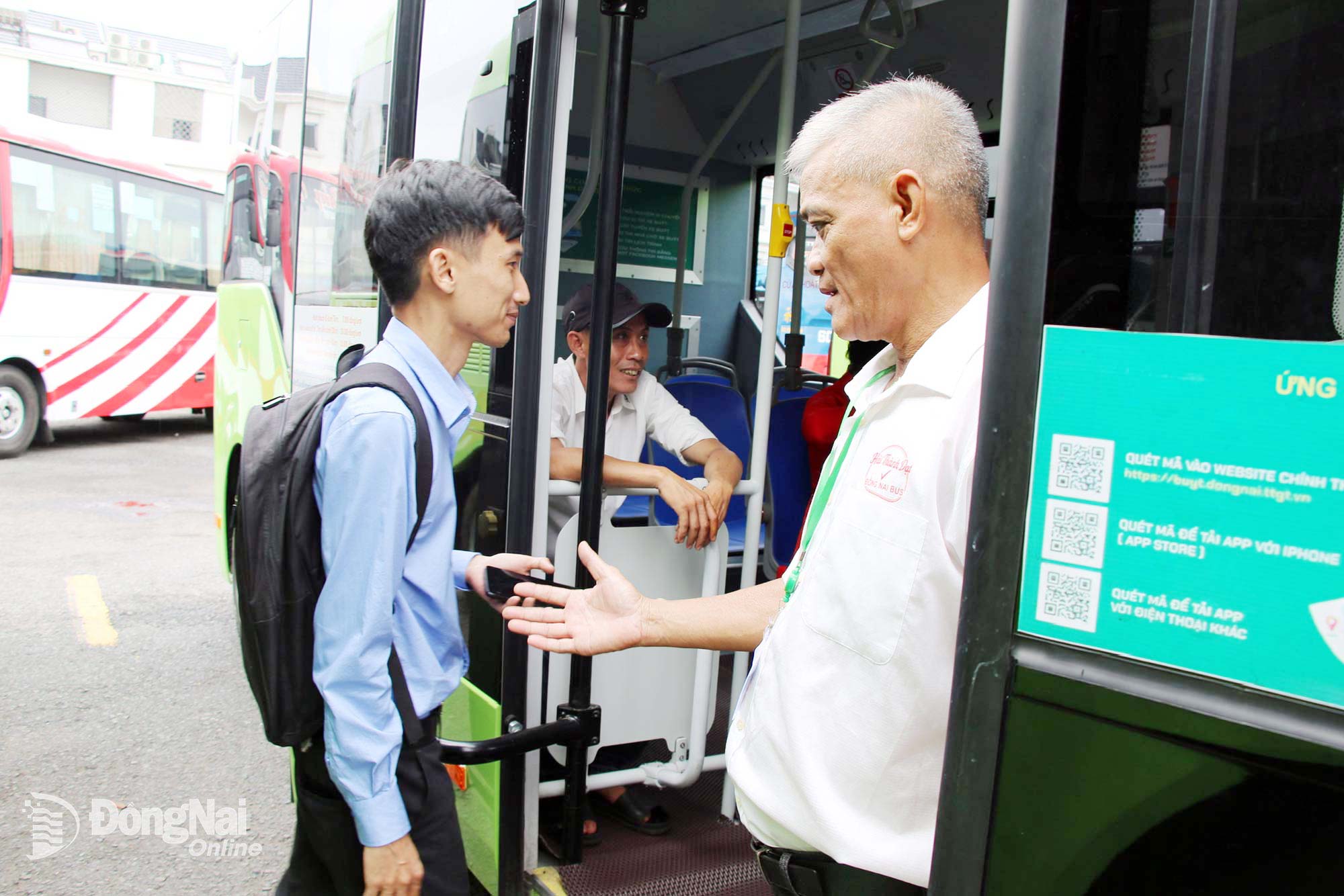
| Residents experience e-bus route No. 9. Photo: Ha Le |
Passing through densely populated areas, major industrial parks, and two key transportation corridors – National Highway 1 and National Highway 20 – the route is expected to help address the travel needs of thousands of residents. The primary beneficiaries include industrial workers, students, and residents commuting or conducting business between suburban areas and the city center.
The operation of this high-quality bus route is expected to help reduce reliance on private vehicles, thereby easing traffic congestion and reducing traffic accidents and environmental pollution along key national highways.
As a non-subsidized route, bus route No. 9 applies a flexible fare structure based on travel distance, ensuring accessibility for people from all walks of life. Specifically, passengers traveling less than 7 kilometers pay 8,000 VND per trip; 20,000 VND per trip for journeys from 7 kilometers to under 20 kilometers; 30,000 VND per trip for distances from 20 kilometers to under 40 kilometers; and 40,000 VND per trip for journeys of 40 kilometers or more.
The route also offers free fares for priority groups, including people with meritorious services to the revolution, people with disabilities, residents aged 70 and above, and children under six years old. In addition, Vietnamese students receive a 50% discount when purchasing monthly or group tickets, while other passengers purchasing monthly or group tickets receive a 25% discount from the listed fare. This policy helps reduce daily transportation expenses for residents under current economic conditions.
Nguyen Kim Long, Member of the Standing Board of the City Party Committee and Permanent Vice Chairman of the City People's Committee, emphasized that the launch of e-bus route No. 9 is a concrete demonstration of the commitment of the City Party Committee’s Standing Board and the City People's Committee to building a smart and ecological city. He described the project as a breakthrough step that reflects innovative thinking and strong determination to transition from a traditional economic growth model to a green and sustainable growth model, with the quality of the living environment serving as a key measure of development.
He added that the introduction of the city's first e-bus route not only improves the transportation infrastructure but also encourages changes in travel habits by promoting the use of environmentally friendly vehicles. It also provides an important foundation for Dong Nai to gradually develop a modern, green, and sustainable transportation network.
Gradually advancing the green transition in public transportation
Nguyen Anh Tuan, Member of the City Party Committee and Director of the Dong Nai Department of Construction, said that public passenger transportation by bus has consistently received attention and direction from the City Party Committee, the People's Council, the City People's Committee, and the cooperation and support of relevant departments, sectors, units, and local authorities. On that basis, the Department of Construction has proactively implemented measures to develop green public transportation while effectively carrying out programs to expand public passenger transport services, with the goal of gradually building a green, modern, safe, and sustainable transportation system throughout the city.
He stated that putting e-bus route No. 9 into operation helps improve the quality of passenger transport services, providing greater convenience and civility while demonstrating the city's strong political determination to implement the Government's directives on reducing greenhouse gas emissions and promoting sustainable transportation.
In recent years, Dong Nai City has introduced a series of policies encouraging enterprises to invest in upgrading vehicles and improving service quality. As a result, the city's bus system has undergone noticeable improvements, becoming increasingly standardized and more civilized.
Nguyen Kim Long affirmed that the primary objective of all infrastructure policies is to serve the people. He therefore requested the Department of Construction and relevant agencies to proactively advise the City People's Committee on developing mechanisms to attract socialized investment and establish a transparent legal framework that encourages enterprises to participate in the green transition roadmap, with the goal of expanding a clean-energy vehicle network throughout the city in the near future.
By Ha Le, Thanh Nhan – Translated by Minh Hong, Thu Ha


Thông tin bạn đọc
Đóng Lưu thông tin