
Digital transformation is bringing visible changes to the development of digital government, promoting the digital economy and digital society in Dong Nai. It is also increasingly bringing technology and data into public administration, production and people’s daily lives.
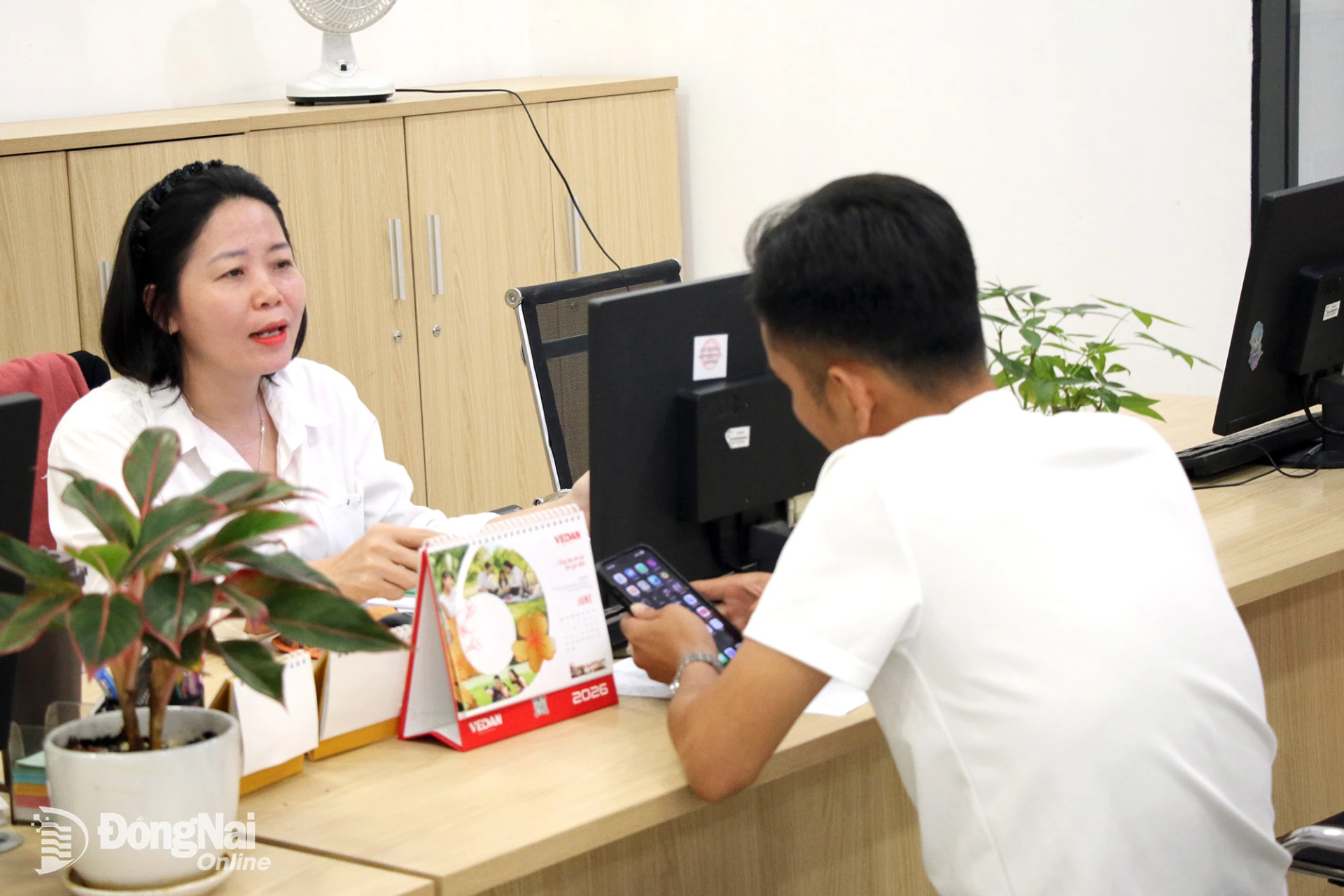 |
| A specialist at the city’s Public Administration Service Center in Tran Bien Ward assists a resident with online administrative procedures. |
This year, activities marking National Digital Transformation Day (October 10) in the city are being held under the theme “Digital Transformation in Dong Nai City: From architecture, platforms and data to tangible results and improved urban governance.” The theme reflects a key requirement in the city’s new development context.
Building digital platforms and connecting data
The city is focusing on digital government, digital infrastructure and smart urban development through initiatives including the city’s Intelligent Operations Center (IOC), a shared data platform and the Local Reporting Information System (LRIS) for socioeconomic reporting. It has also completed the connection between its administrative procedure information system, the National Public Service Portal and the VNeID platform.
Nguyen Minh Quang, Deputy Director in charge of the Department of Science and Technology, said data was playing an increasingly important role in leadership and direction in urban management and administration. In recent years, the department has proactively coordinated with other departments and agencies and directed relevant units to integrate sector-specific datasets into the city’s IOC. Public administration data is particularly important because it is directly linked to administrative procedure processing and interactions between the authorities, residents and businesses. The city’s IOC is connected to the iGate system, enabling authorities to monitor the receipt and processing of administrative dossiers.
To make digital transformation more results-oriented, the city began operating the DC4.0 platform for managing villages, hamlets and quarters, along with the Dong Nai City digital citizen application, in mid-September 2026. These tools help promote digital technology application and strengthen connections between the authorities and residents.
As of September 2026, the monitoring system had tracked more than 629,000 administrative dossiers received, monitored the proportion submitted online and provided early warnings about dossiers approaching their deadlines or already overdue in individual communes and wards.
Notably, in late August 2026, the Dong Nai City People’s Committee issued the Dong Nai City Digital Architecture Framework, Version 1.0, and the Information Technology and Communications Architecture for Smart Urban Development in Dong Nai City, Version 2.0. The city’s Digital Architecture Framework was built to establish a unified, integrated and long-term structure for the entire process of digital government, the digital economy, digital society and smart urban development across the city.
Assoc. Prof. Dr. Phung The Dong, an economic expert from the Ministry of Finance, recommended that to promote sustainable digital economic growth, the city should shift its policy focus from scattered spending to breakthrough initiatives; from input-based support to results-based payments; and from infrastructure coverage to the quality of services supporting production; from mass training to training tailored to specific needs; and from fragmented data repositories to standardized data with clearly identified owners and users. He also stressed the need to standardize and consolidate data following the administrative restructuring, prioritizing data related to businesses, land, planning, transport, logistics, industrial parks, labor and agriculture.
Focusing on concrete products and results
In recent years, the successful connection of sector-specific databases and the operation of the IOC model have marked a breakthrough in urban governance model across the city. Online public services and digital platforms for processing administrative procedures have helped optimize processing times, reduce costs and make services for residents and businesses more transparent and convenient. Relevant departments, agencies and units are placing emphasis on ensuring that data is “accurate, complete, clean and live,” while promoting effective connectivity, sharing and reuse. As a result, data has become an important resource for improving governance and smart urban operations.
At meetings with relevant departments and agencies on digital transformation, Le Truong Son, Member of the Standing Committee of the City Party Committee, Vice Chairman of the Dong Nai City People’s Committee, has repeatedly emphasized that digital transformation must address the practical requirements of local socioeconomic development and improve administrative reform and service quality for residents and businesses. He stressed that the results of digital transformation across the city must be measured through concrete outputs and the satisfaction levels of residents and businesses.
Digital transformation is becoming an inevitable trend and plays a vital role in reforming management methods, improving the performance of state agencies, promoting socioeconomic development and enhancing services for residents and businesses.
Speaking at an event marking National Digital Transformation Day on October 10 and launching the Digital Literacy for All initiative and the DC4.0 platform for managing villages, hamlets and residential quarters in Tran Bien Ward, Nguyen Duy Tan, Deputy Secretary of the ward Party Committee, Chairman of the Ward People’s Committee, said digital transformation was not merely about applying information technology to management and administration, but also about changing how public services are delivered and building a digital government that is close to the people, stays connected with them, listens to them and promptly addresses their legitimate needs. The ultimate goal, he said, is to ensure that every resident can access, use and benefit from the conveniences offered by digital technology.
By Hai Quan - Translated by Mai Nga, Thu Ha



Thông tin bạn đọc
Đóng Lưu thông tin