
The Dong Nai City Party Committee (CPC)’s Executive Committee held its fifth meeting on October 2 to review the implementation of key tasks in the first 9 months of 2026 and discuss measures for the final months to achieve this year’s targets.
The conference was chaired by Vu Hong Van, Member of the Party Central Committee and Secretary of the CPC, and attended by Ton Ngoc Hanh, Member of the Party Central Committee, Standing Deputy Secretary of the CPC and Chairwoman of the City People’s Council; Nguyen Van Ut, Deputy Secretary of the CPC and Chairman of the City People’s Committee; Vo Tan Duc, Deputy Secretary of the CPC; Huynh Thi Hang, Deputy Secretary of the CPC and Chairwoman of the Vietnam Fatherland Front Committee of Dong Nai; and Thai Bao, Deputy Secretary of the CPC and Head of the CPC’s Organization Commission.
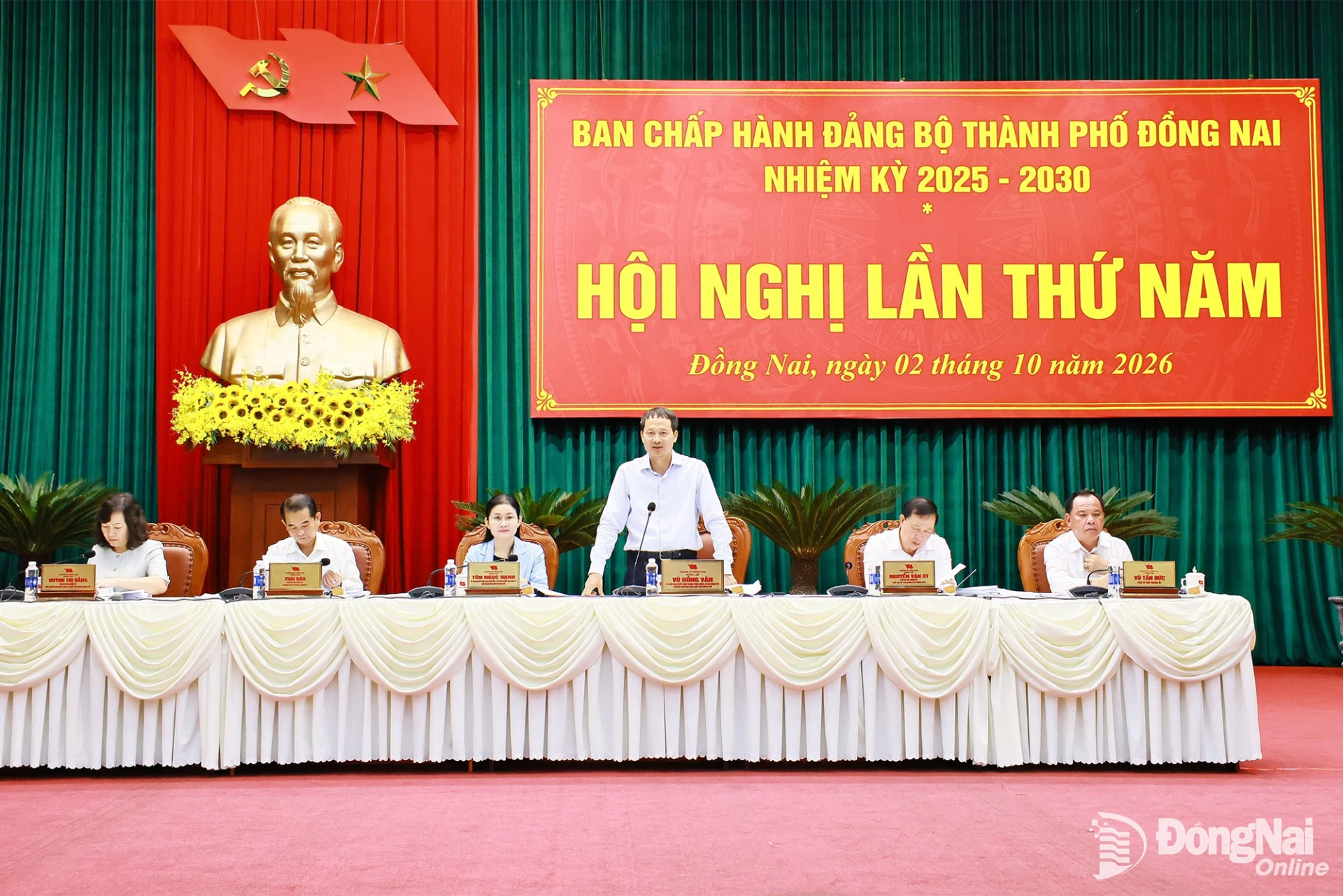 |
| Vu Hong Van, Member of the Party Central Committee and Secretary of the CPC, chairs the conference. Photo: Cong Nghia |
Striving to maintain double-digit growth
During the past nine months, political and ideological sentiment within the Party Organization and among Dong Nai residents remained stable. The city’s major policies and decisions, together with issues of public concern, have provided an important foundation for the entire political system to carry out its tasks amid a period of significant transition. Party building work has been carried out comprehensively, while the city has focused on reviewing its organizational structure, finalizing job positions and strengthening its contingent of officials to meet the requirements of the two-tier local administration model.
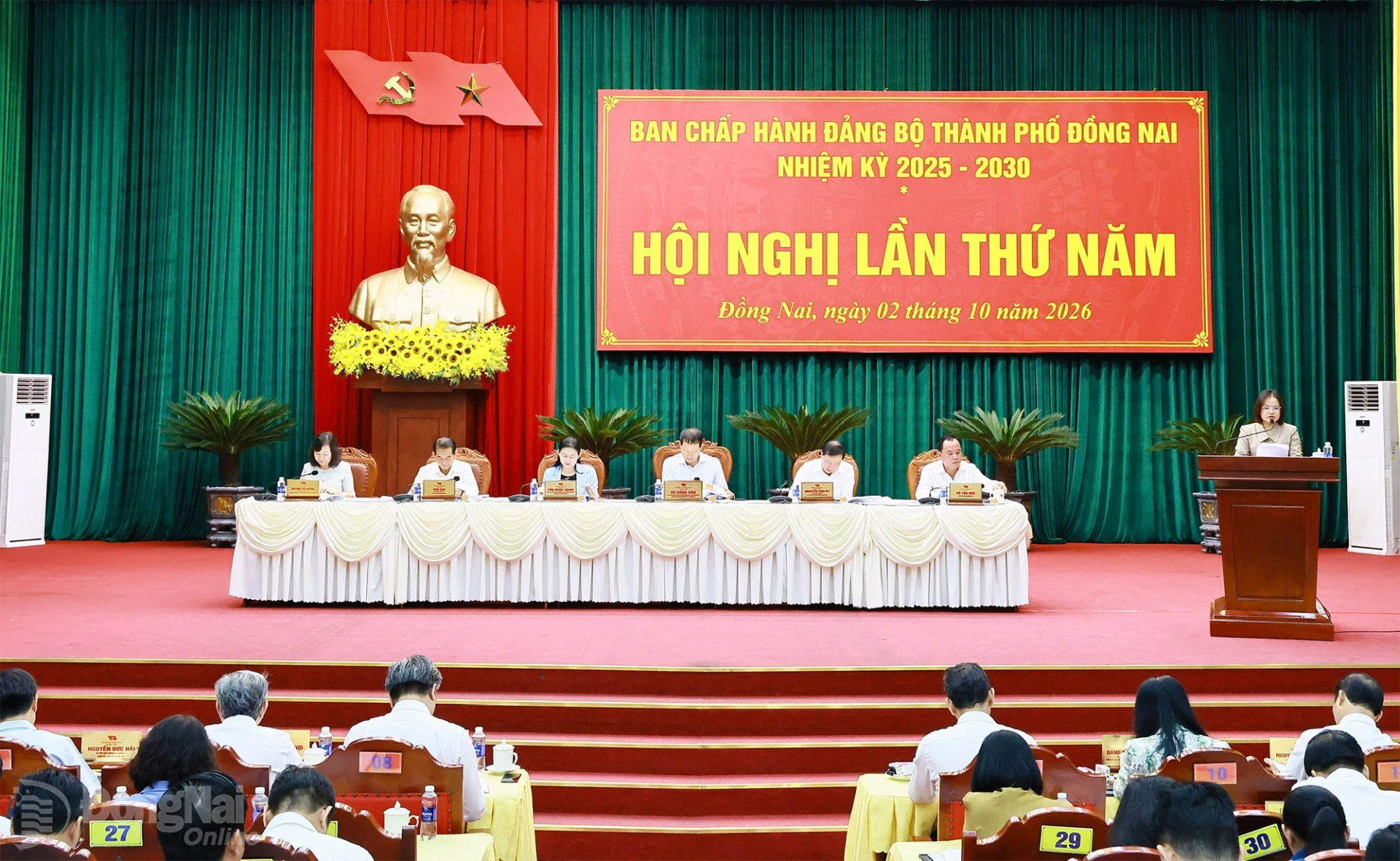 |
| Truong Thi Huong Binh, Member of the CPC’s Standing Committee and Director of the Department of Finance, reports on the city’s socio-economic development. Photo: Cong Nghia. |
On April 30, 2026, Dong Nai officially became a city, opening a new phase of development. The Politburo’s Resolution No. 16-NQ/TW, issued on July 21, 2026, on the construction and development of Dong Nai through 2035, with a vision to 2065, has set out strategic directions and provided access to additional mechanisms and resources for breakthrough development. This has created more favorable conditions for Dong Nai to mobilize resources, reorganize its urban space and realize its goal of building a civilized, modern, green and smart city with global connectivity.
Despite numerous difficulties, Dong Nai maintained positive economic growth in the first nine months of 2026. Growth accelerated from one quarter to the next, with third-quarter GRDP rising 10.21%, bringing nine-month growth to 10.01%. State budget revenue was estimated at VND79.894 trillion. Foreign direct investment (FDI) attraction continued to gain momentum, reaching approximately USD2.5 billion, while domestic investment totaled about VND865 trillion. More than 6,000 new enterprises were established across the city, with total registered capital of VND255.7 trillion, while 1,300 enterprises resumed operations, reflecting the business community’s confidence in new opportunities in the city.
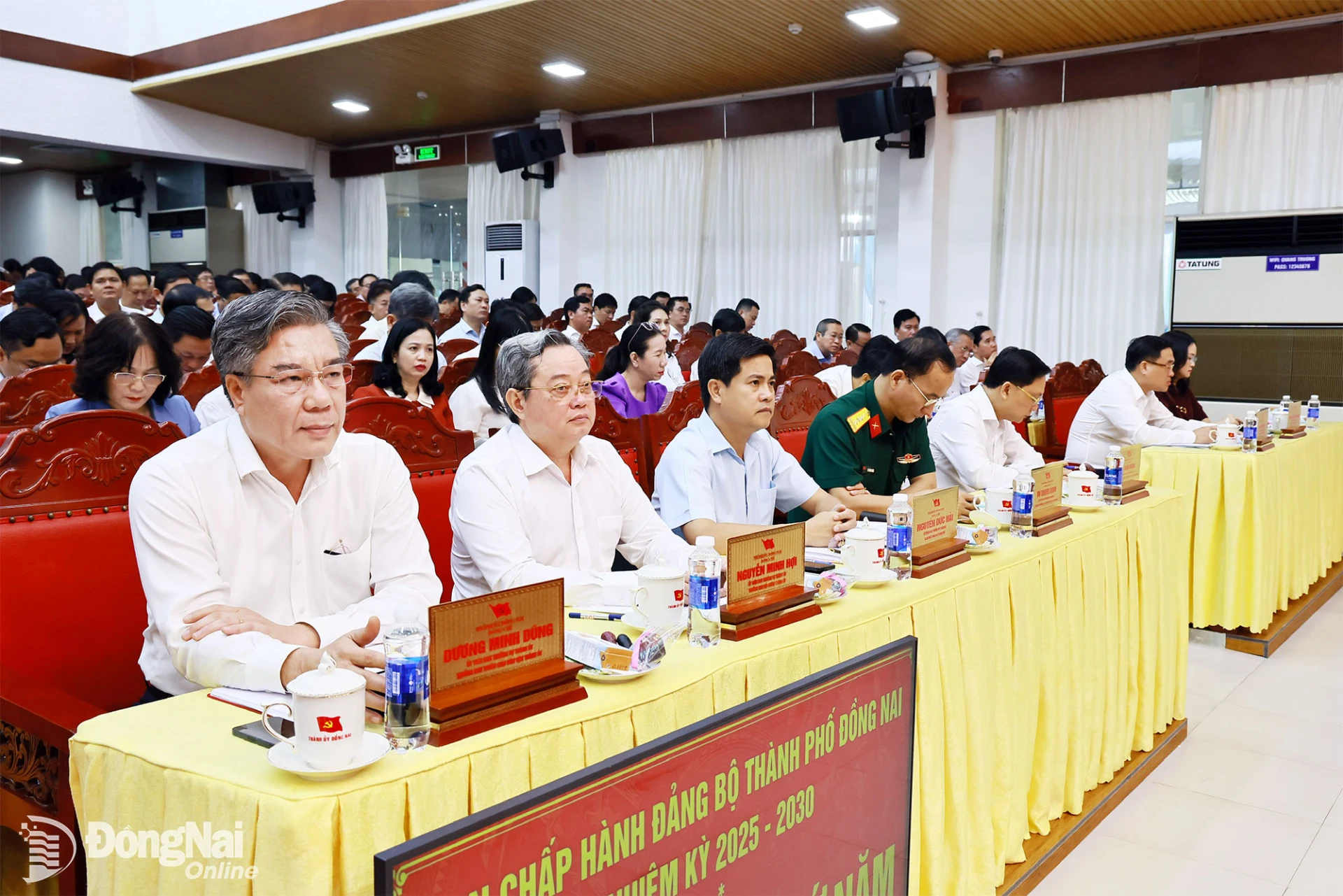 |
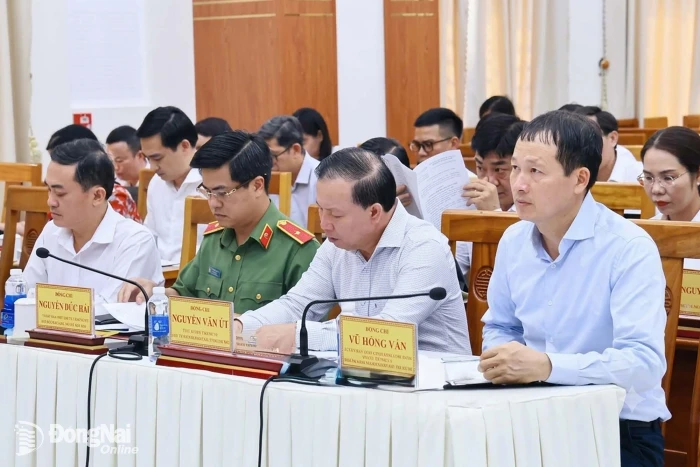
| Members of the CPC’s Standing Committee attend the meeting. Photo: Cong Nghia. |
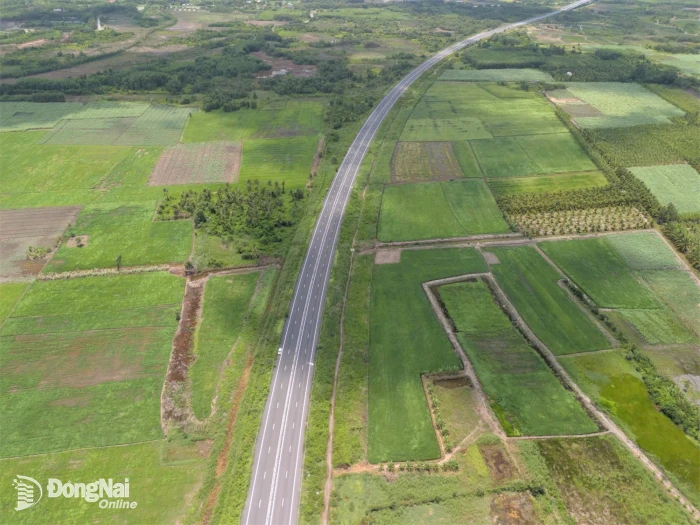
The city continues to mobilize resources to attract investment in key transport infrastructure projects to improve connectivity with Long Thanh International Airport, link Dong Nai City with Ho Chi Minh City, and strengthen inter-regional connectivity, creating more favorable conditions for development. Accelerated public investment and key infrastructure projects are providing fresh momentum for growth. As of September 29, Dong Nai had disbursed over VND17.86 trillion, equivalent to 65.78% of the public investment plan assigned by the Prime Minister. The city also broke ground on the first phase of a social housing rental project in Long Binh ward, comprising 1,000 units with total investment of VND1.26 trillion, while continuing to accelerate construction and complete more than 13,000 social housing units under the plan.
Alongside economic development, the city continues to prioritize cultural and social affairs, including healthcare, education, culture and the arts, sports and tourism, science and technology, and digital transformation. Social welfare policies and support for families with meritorious service to the revolution have also been strengthened. In response to the campaign to search for, recover and identify the remains of fallen soldiers, Dong Nai has taken coordinated and decisive action. To date, 152 sets of remains have been recovered, including 91 that have been given solemn memorial services and reburied.
To ensure stable socio-economic development, the city has continued to strengthen political security and public order and safety, ensuring the security of key sites and major events. Local defense and military affairs have been carried out seriously. Efforts to prevent and combat crime and corruption, along with inspections, citizen reception and the settlement of complaints and denunciations, have also been strengthened, helping maintain discipline and create a stable environment for development.
Resolutely addressing bottlenecks
The fifth meeting of the Dong Nai CPC’s Executive Board was thoroughly prepared, with an agenda covering particularly important issues related to the pace and quality of the city’s growth over the remaining three months of 2026 and the longer-term goals of the 2025-2030 tenure.
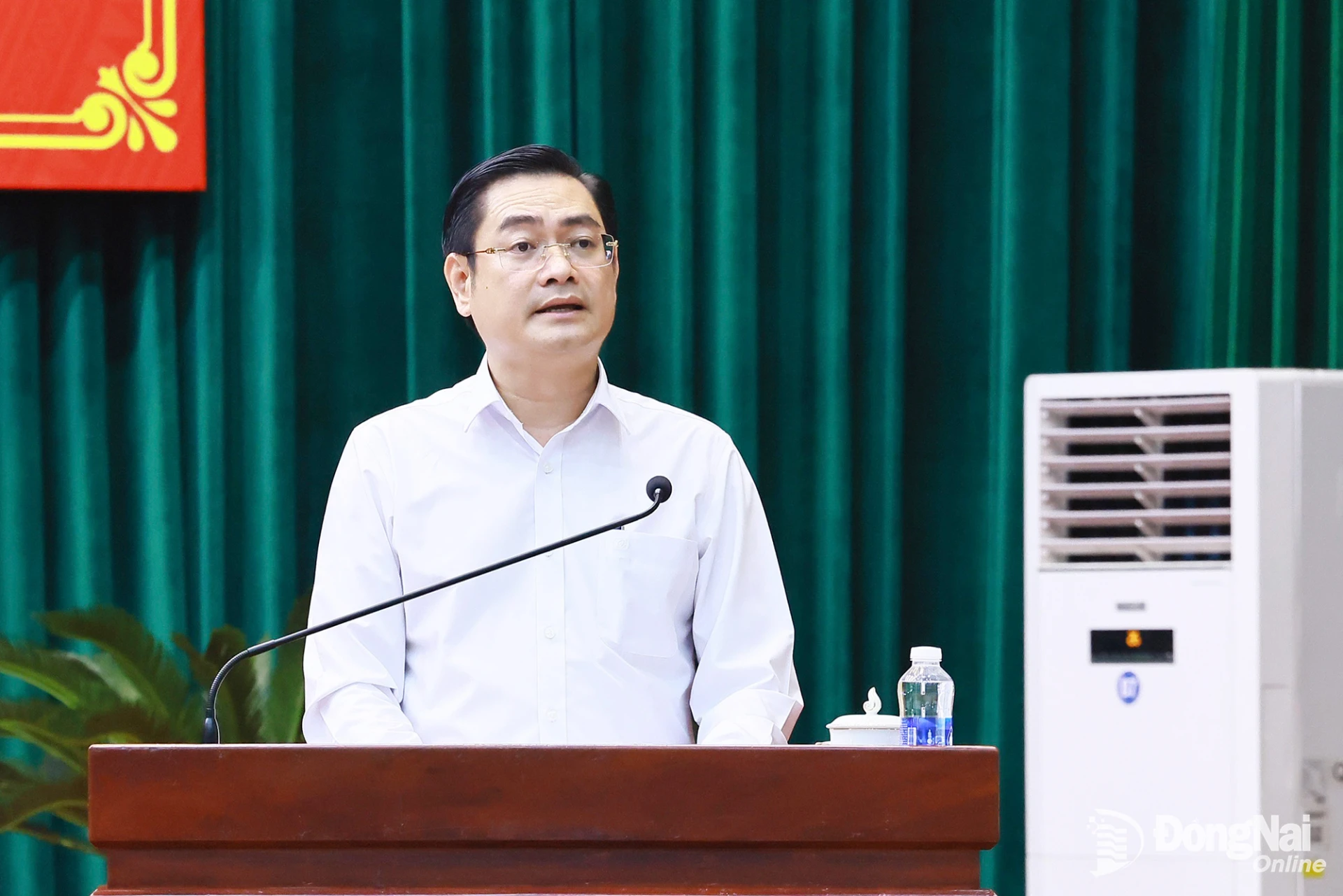 |
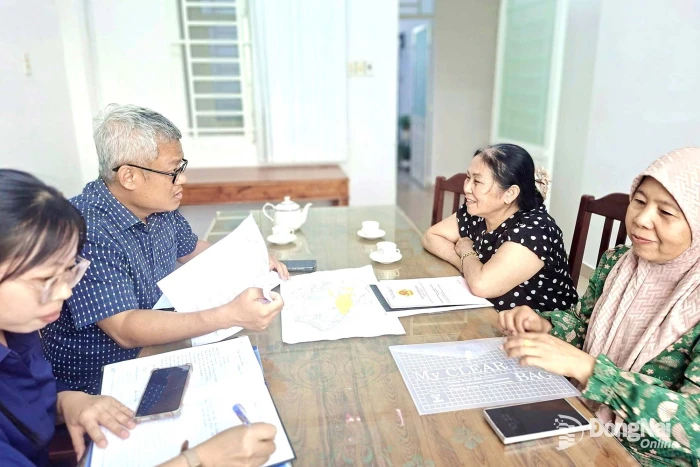
| Tran Trong Toan, Deputy Director of the Department of Agriculture and Environment, explains preparations for land auctions. Photo: Cong Nghia. |
Against the backdrop of the city’s development, the meeting conducted a comprehensive review of personnel work, focusing on building a contingent of officials from the city level to wards and communes capable of meeting Dong Nai’s development requirements in the new period. The CPC’s standing members asked the CPC’s Organization Commission to continue conducting a thorough assessment of the current contingent based on officials’ capabilities and performance in their assigned tasks, while promptly replacing those who fail to meet job requirements.
The meeting frankly reviewed and analyzed results, progress and solutions related to public investment disbursement, state budget revenue and urban planning. It also called for a thorough review and recovery of projects whose investors lack the capacity to implement them, as well as an assessment of the land-use rights auction plan. Although achieving 100% disbursement of public investment capital and striving for state budget revenue of VND150 trillion in 2026, as directed by the CPC’s standing members, remain highly challenging, the City People’s Committee, departments, sectors and localities are continuing their utmost efforts in line with the CPC’s directions and the growth scenario set by the City People’s Committee.
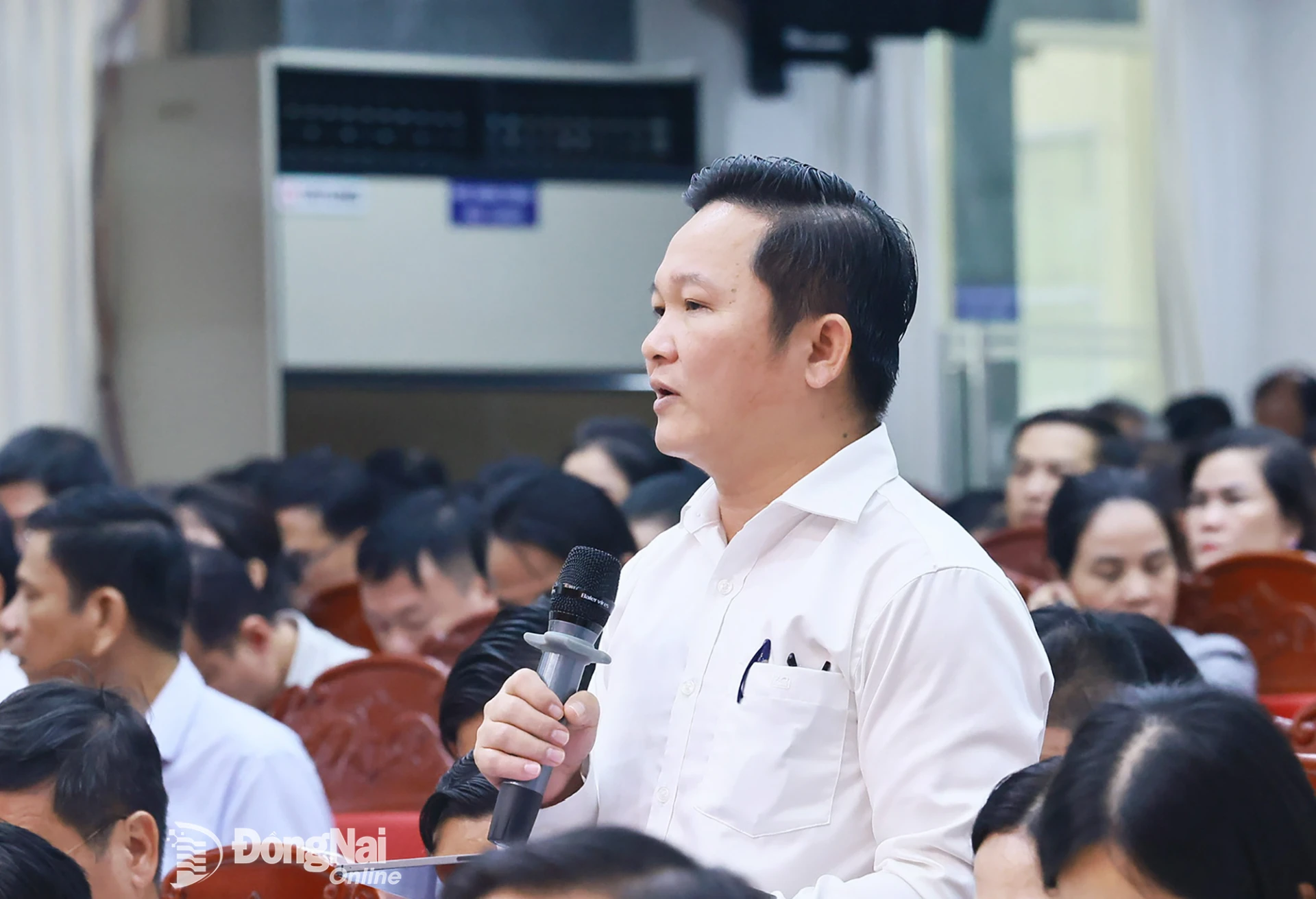 |
| Nguyen Huu Nguyen, Party Secretary and Chairman of the People’s Council of Long Thanh Ward, speaks at the meeting. Photo: Cong Nghia. |
According to Ton Ngoc Hanh, Standing Deputy Secretary of the CPC and Chairwoman of the City People’s Council, the tasks from now until the end of the year are substantial and demanding. Therefore, agencies and units, particularly their heads, must make every effort to perform their duties seriously and effectively and closely follow the directions of the CPC’s standing members. A fundamental requirement is to clearly understand and properly perform one’s functions and responsibilities, following the principle of “knowing one’s role and knowing the job thoroughly.” Heads of departments, agencies and units must fully understand their assigned functions and responsibilities. This will ensure that tasks are assigned appropriately and in line with actual conditions, providing a basis for effective inspection, urging and supervision. At the same time, leadership must adhere to the principle of democratic centralism and collective decision-making linked with the accountability of top leaders, thereby maintaining internal unity and building collective strength to successfully fulfill assigned tasks.
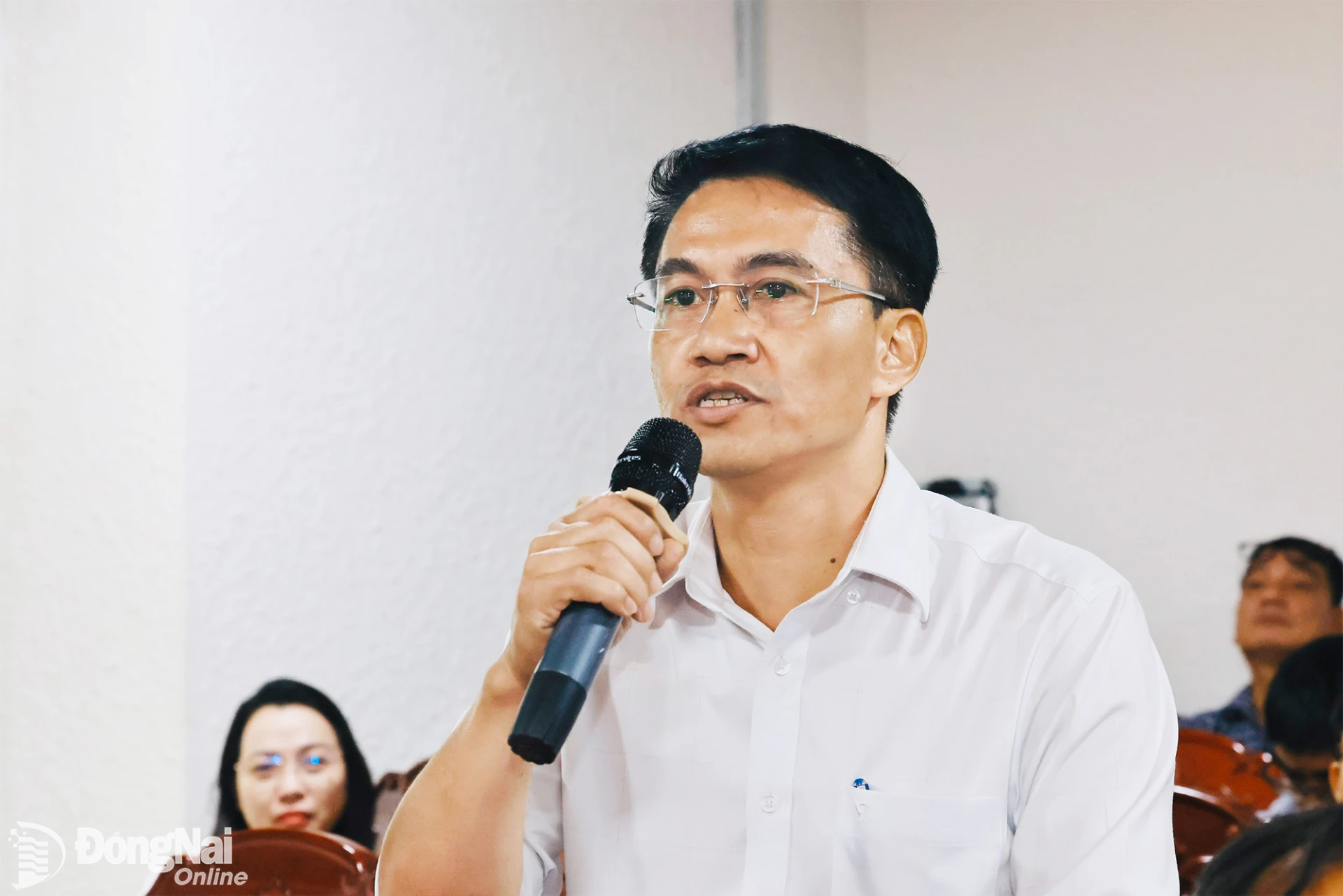 |
| Do Huy Khanh, Party Secretary and Chairman of the People’s Council of Phuoc An commune, discusses state budget revenue and public investment disbursement. Photo: Cong Nghia. |
Meanwhile, Deputy Secretary of the CPC and Chairman of the City People’s Committee Nguyen Van Ut stressed that, to meet increasingly demanding work requirements, the city would decisively reform personnel evaluation to make it more substantive. The city must resolutely eliminate the practice of chasing achievements for their own sake, while evaluating the capacity of officials, civil servants, public employees and workers based on the actual volume and quality of work completed. The contingent of Dong Nai officials must undergo a comprehensive shift in mindset and decisively move away from habitual ways of working to meet increasingly demanding tasks and growing pressures.
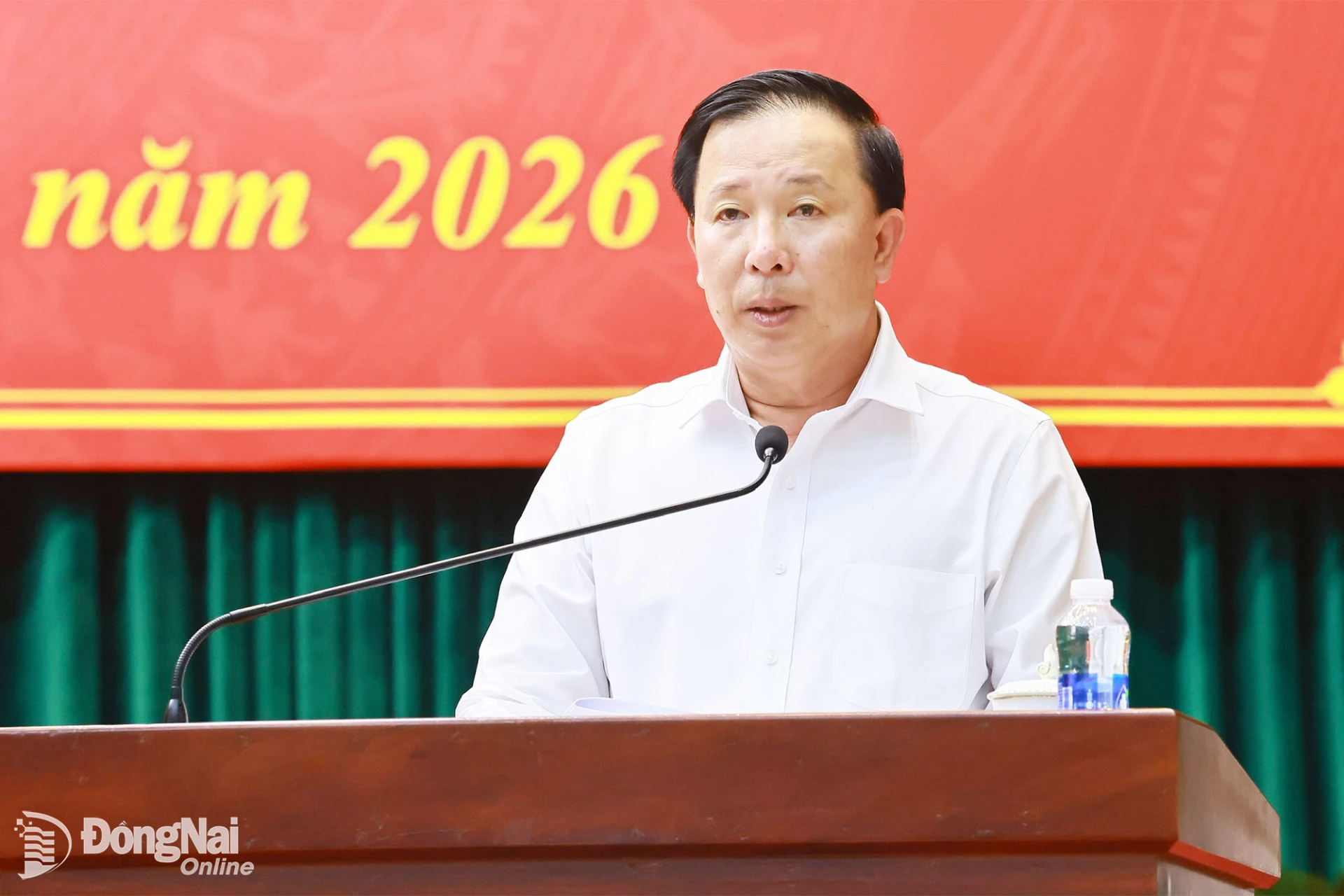 |
| Nguyen Van Ut, Deputy Secretary of the CPC and Chairman of the City People’s Committee, speaks at the meeting. Photo: Cong Nghia. |
Addressing solutions to fulfill the 2026 targets, Chairman Nguyen Van Ut said economic growth and the completion of targets require coordinated and decisive action by the entire political system. Departments, sectors and localities therefore need to work more closely together, share information and coordinate more effectively during implementation.
The Chairman of the City People’s Committee said that immediately after the meeting, following the directions of the CPC’s Standing Committee, the City People’s Committee would conduct a serious review of shortcomings in its direction and management during the first nine months of the year. It would take decisive action to overcome difficulties and mobilize all available resources during the remaining months of the year to fulfill the key targets set by resolutions of the CPC’s Executive Committee and the Dong Nai City People’s Council.
Reviewing every resource to achieve growth targets
Based on frank discussions at the meeting and a candid assessment of shortcomings and limitations during the first nine months of 2026, Secretary of the CPC Vu Hong Van called on the entire political system to make maximum efforts to fulfill the year’s tasks. He asked every member of the CPC, Party organization, agency and unit to clearly identify the tasks to be completed in the fourth quarter, the expected results and those responsible for implementation, and not defer difficult tasks to next year when they can still be addressed. A key priority for the fourth quarter is to achieve the 11% GRDP growth target and strive for state budget revenue of VND150 trillion. The Party Committee of the City People’s Committee is to direct the city People’s Committee to update its fourth-quarter growth scenario, particularly for the 11 sectors that have yet to meet the targets set out in the scenario.
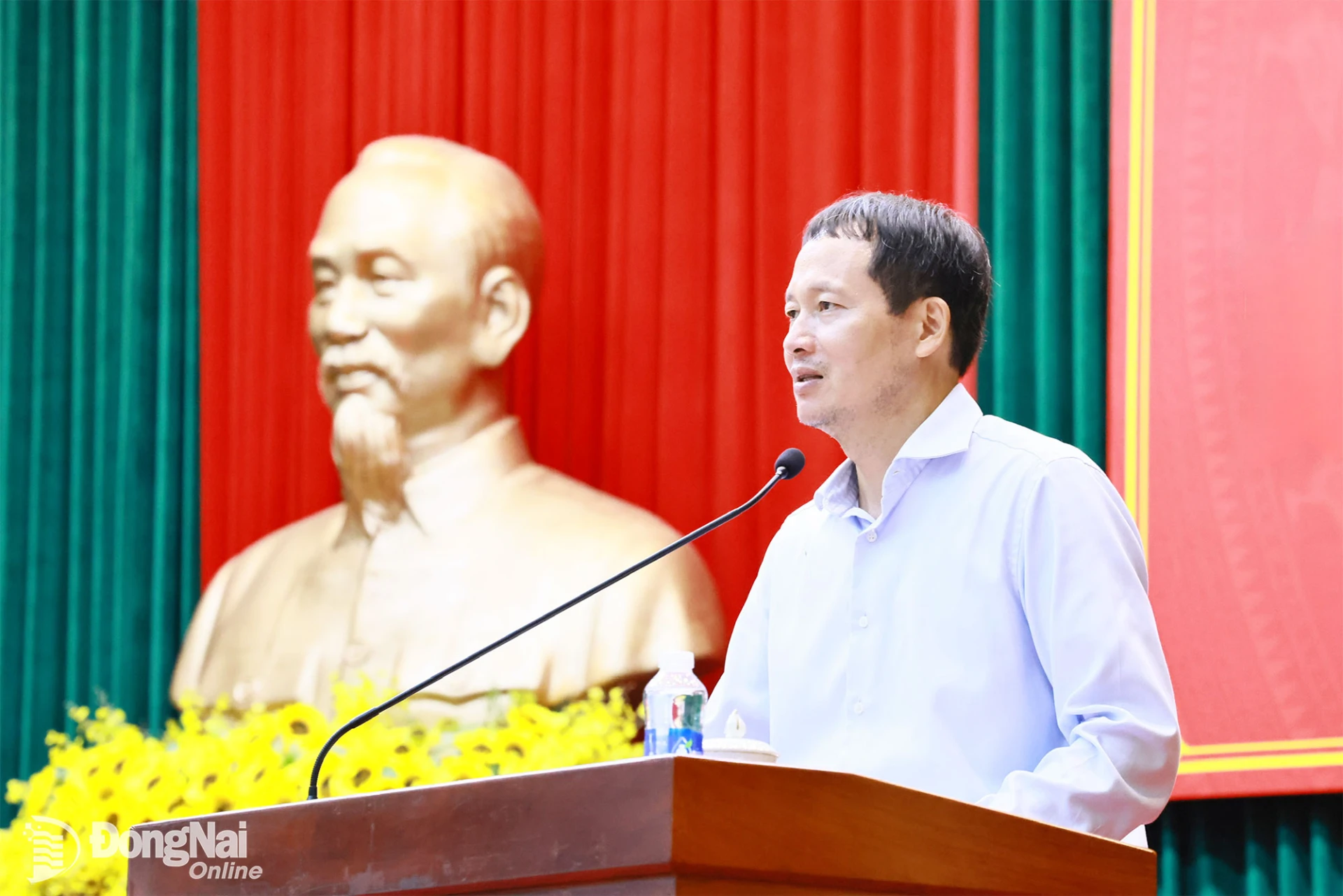 |
| Vu Hong Van, Member of the Party Central Committee and Secretary of the CPC, delivers a directive speech at the meeting. Photo: Cong Nghia. |
The Secretary of the CPC called for specific identification of enterprises and projects capable of increasing output, accelerating implementation and generating additional value during the year, as well as the obstacles that need to be addressed, the agencies responsible and deadlines for completion. Growth management must be based on actual output, production capacity and value added rather than general figures in reports.
Identifying the business community as an important driver of the city’s growth, Secretary Vu Hong Van called for a focus on resolving difficulties facing enterprises. The city should classify the 279 projects facing obstacles according to the causes and resolve matters within its authority, while clearly identifying issues that need to be reported to central agencies. Priority should be given to putting eligible projects into operation, expanding production and promoting exports, consumption and services toward the end of the year. Investment attraction should take into account technology, value added per unit of land area, budget contributions, the quality of jobs created, linkages with domestic enterprises and environmental impacts.
Regarding state budget revenue, the Secretary of the CPC asked relevant agencies to review each revenue source and revenue item and assess their feasibility for the fourth quarter. They should determine monthly collection schedules, assign responsibility to individual agencies and prepare plans to make up for shortfalls. The assigned budget estimate must be clearly distinguished from the target of VND150 trillion, and the feasibility of each target must be assessed based on well-grounded revenue sources. Revenue items that do not yet meet the necessary conditions should not be included in the balance merely to make the figures look better.
Regarding public investment disbursement, Secretary Vu Hong Van called for faster implementation of public investment projects and site clearance, as well as more effective use of land resources. He also called for greater application of science and technology, innovation and digital transformation in production and management.
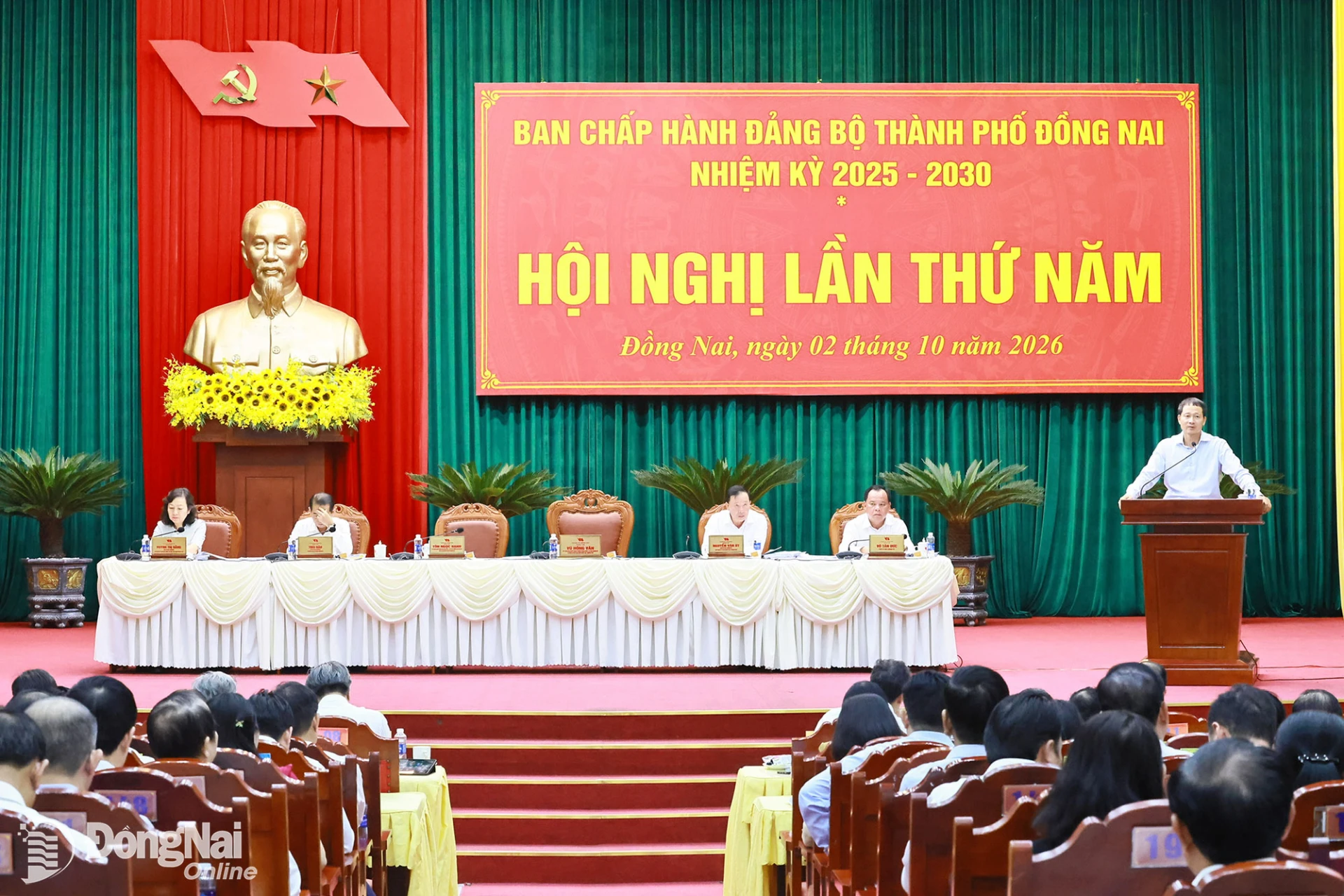 |
| Vu Hong Van, Member of the Party Central Committee and Secretary of the CPC, delivers a directive speech. Photo: Cong Nghia. |
Secretary Vu Hong Van particularly emphasized that the implementation of Politburo Resolution No. 16 on the development of Dong Nai must be concretized through specific tasks, mechanisms, schemes, projects, resources and implementation timelines. The results of the resolution’s implementation must be visible through completed works and projects, enterprises, jobs, revenue sources and residents’ quality of life.
Turning to personnel work, which he described as an urgent requirement, Secretary Vu Hong Van pointed out that the quality of the city’s contingent of officials and their capacity to perform their duties have not kept pace with Dong Nai’s development requirements. Although the organizational apparatus has been consolidated, personnel reviews in some places have yet to clearly identify officials’ capabilities, strengths and suitability for their positions. Personnel allocation and adjustment have also not been closely aligned with workload and job requirements. Some areas still have excess personnel while others face shortages, particularly of specialists in fields critical to development progress, including planning, land management, site clearance, finance, science and technology, and digital transformation.
At the city level, some officials still have shortcomings in strategic thinking, forecasting and advising on new and challenging issues. At the commune/ward level, management capacity, inter-agency coordination and the handling of matters within their authority remain uneven. There are still signs of a lack of initiative, avoidance of responsibility, shifting responsibility and waiting for instructions. Some matters within an agency’s authority are not decided, while issues requiring coordination receive delayed responses. In some places, personnel evaluations remain overly accommodating and are not closely linked to the progress, quality and results of assigned tasks.
Therefore, it is necessary to make clear what has been addressed following directives, what has yet to improve and who is responsible. Differences in results among localities provide a basis for assessing leadership and implementation capacity, but such assessments must take into account the specific resources and tasks of each locality. Difficulties should not automatically be attributed to officials, nor should objective difficulties be used to avoid individual responsibility.
To meet practical requirements for the contingent of officials in the remaining months of the year and beyond, Secretary Vu Hong Van called for substantive improvements in personnel work. Each vacant position, each case in which an official fails to meet requirements, and the appropriate solution, reassignment, training, transfer or replacement, must be clearly identified. Heads of agencies and units are responsible for the results of personnel reviews and must not simply report general staff shortages or retain personnel for institutional or local interests. Personnel must be assigned to the right positions, jobs and areas of expertise, with human resources adjusted according to capabilities and workload.
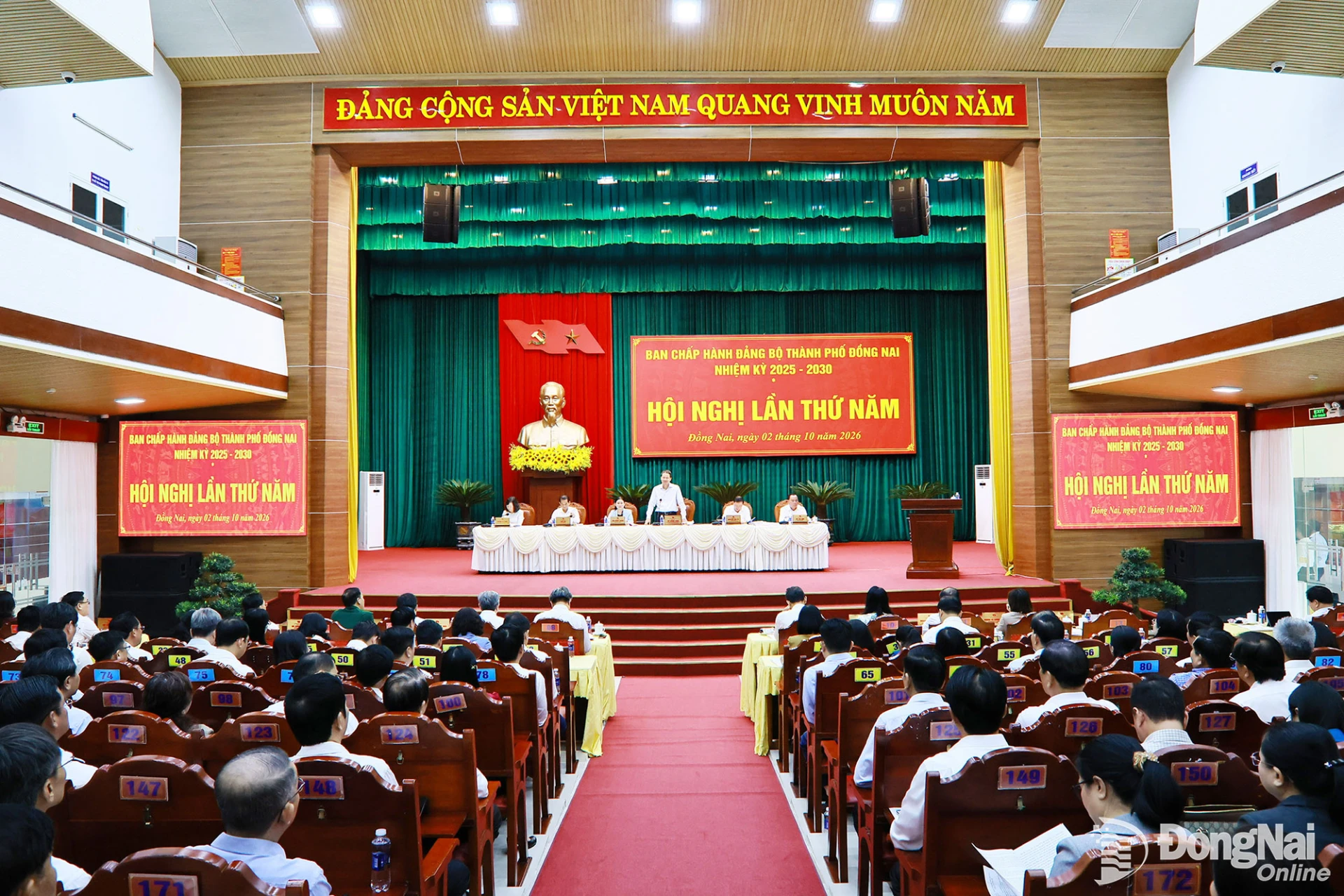 |
| An overview of the fifth meeting of the Dong Nai CPC’s Executive Board. Photo: Cong Nghia. |
The Secretary of the CPC called for personnel to be evaluated based on work outputs, progress, quality and effectiveness, with KPI criteria tailored to each position rather than relying on formal or across-the-board scoring. Officials who fail to meet requirements, perform ineffectively or avoid responsibility should be promptly reassigned or replaced in accordance with regulations. At the same time, officials who demonstrate initiative and creativity for the common good should be protected and encouraged. The city should also prepare a pool of young officials with strategic thinking, management skills and expertise in science and technology and digital transformation.
By C. Nghia – Translated by M.Nguyet, Thu Ha
Thông tin bạn đọc
Đóng Lưu thông tin