
As Dong Nai City works to realize the development aspirations set out in Politburo Resolution No. 16-NQ/TW on the construction and development of Dong Nai through 2035, with a vision to 2065, high-quality human resources and a contingent of young cadres and Party members are important factors in building a clean and strong Party organization and political system with the leadership capacity and combat strength needed to meet development requirements in the new period.
Outstanding students and university students who become Party members today will form a successor force equipped with knowledge, political mettle and a desire to contribute to the city’s future development. How, then, can young people’s ideals be nurtured and motivation created so that they voluntarily strive to join the Party amid digital transformation and deeper international integration? Nguyen Minh Kien, Vice Chairman of the Vietnam Fatherland Front (VFF) Committee of the city and Secretary of the Dong Nai Youth Union (DNYU), spoke to Dong Nai Newspaper and Radio-Television about the issue.
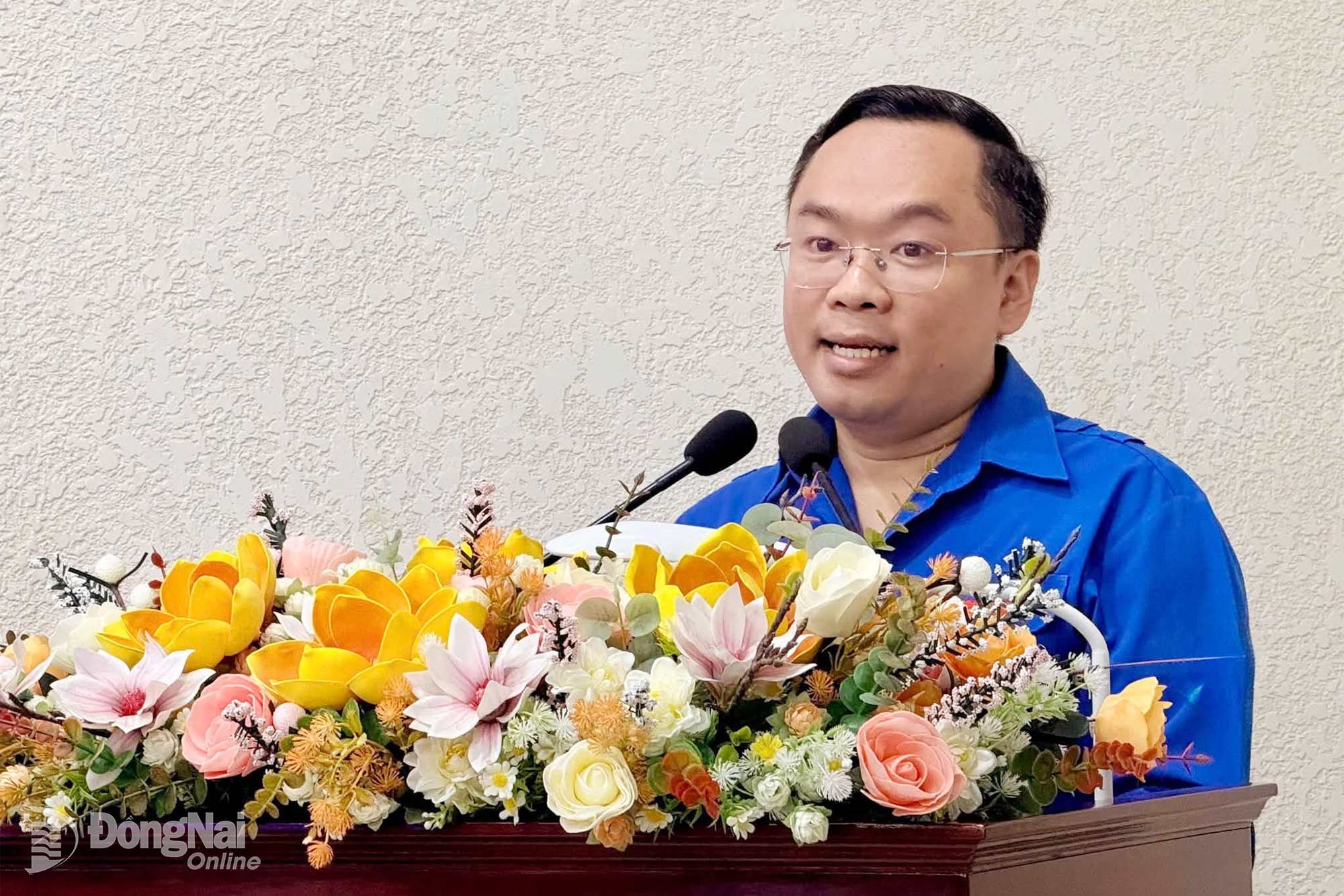 |
| Nguyen Minh Kien, Vice Chairman of the Dong Nai VFF Committee and Secretary of the DNYU. |
A turning point in young people’s journey of maturity
*Given the reality that some young people are more interested in personal development, entrepreneurship and international integration than in participating in socio-political activities, what has the DNYU done to inspire young people’s desire to contribute and motivate them to voluntarily strive to become Party members, viewing this as a process of growth and contribution rather than simply a title?
– First of all, I do not see young people’s interest in personal development, entrepreneurship or international integration as being at odds with the ideal of contributing to society. These are new expressions of patriotism. As Party General Secretary and State President To Lam has shared and emphasized on many occasions, patriotism in the new era should not be expressed through emotions alone, but through knowledge and the capacity to take action. The Youth Union’s task is to meet young people where they are, rather than stand at a distance and call on them to act.
Therefore, our consistent view is that striving to join the Party is not a ceremonial or formal title, but a period of training that marks a turning point in a young person’s journey of maturity. To achieve this, the process must provide young people with trust, ideals and genuine values. We link the training process to specific development opportunities: each outstanding Youth Union member is assigned to participate in a specific project, task, community activity or emulation campaign and demonstrate their maturity through actual products, results and achievements rather than through paperwork and procedures alone.
We consistently follow an action-oriented approach: inspiring the desire to contribute not through slogans, but by giving young people an environment and opportunities to contribute and be recognized so that they can mature. When young people are given opportunities to contribute and see that they can make a difference in their communities, ideals will take root from within.
 |
| Secretary of the DNYU Nguyen Minh Kien speaks at the “Welcome to the New School Year” program for the 2025-2026 academic year. |
*As young people’s thinking, approaches to information and values continue to change, what innovations has the DNYU introduced in identifying, nurturing and recommending outstanding Youth Union members to the Party?
– We have introduced innovations in all three stages: identification, nurturing and recommendation.
First, identification through data. The DNYU has digitized the management of outstanding Youth Union members through the “Outstanding Youth Union Member Tracking” platform, using data from Youth Union activities to monitor their training and development process. This includes the number of projects and tasks they have participated in with their Youth Union organizations, their awareness and attitudes when taking part in activities to foster revolutionary ideals, educate about traditions and morality, study and implement resolutions, as well as their results, achievements and products in study, work and production. Those who deserve recognition can thus be properly identified, without being overlooked or assessed across the board, while a genuinely convincing pool of outstanding Youth Union members is built through recognition and recommendations from Youth Union organizations at the grassroots level.
Second, nurturing through experience. Training classes on Party awareness are being redesigned to focus on learning theory through practical activities: each person being considered for Party admission is linked to a revolutionary historical site, a youth project, a product or a volunteer task, as well as activities that promote a pioneering spirit in the digital era. Young people themselves participate, gain practical experience and contribute. Theory is no longer a one-way lecture, but something they draw from their own actions.
Third, recommendations based on products and results achieved throughout the training process. We apply the principle of “using products instead of reports” – assessing an outstanding Youth Union member based on concrete results and contributions to the community, rather than simply on paperwork and procedural criteria.
These innovations are closely aligned with the City Party Committee’s Party development targets for the new period, including a target for Party members recruited from outstanding Youth Union members to account for at least 70% annually of all newly admitted Party members across the entire Party organization, as well as the goal of recommending 30,000 outstanding Youth Union members to the Party for consideration and admission by 2030. This is both a target and a commitment reflecting the Youth Union organization’s highest political determination to improve the quality of the young Party member pool for the city’s Party organization.
During 2023-2025, the city’s young people recommended 13,645 outstanding Youth Union members to the Party, of whom 3,795 were admitted. Behind each figure is a young person who has matured through practical experience and has the capacity to make positive contributions to the future development of the city and the country.
*In your view, what are the difficulties and challenges in motivating Youth Union members and young people to strive to become Party members?
-With the utmost openness and receptiveness, I would like to identify three major challenges so that we can focus on finding solutions and implementing them more effectively in the coming period.
The first is a phenomenon that some researchers refer to as “political neutralization” among a section of young people – they do not oppose, but neither do they participate. This is a silent risk that is greater than opposition itself, because it gradually erodes the ideals and political awareness of the younger generation from within.
The second is a gap in methods. A survey by the DNYU shows that most Youth Union members first receive political and social information through social media, while only a very small proportion receive such information through traditional Youth Union activities. If ideological work remains linear and one-way, our messages may fail to reach young people effectively. Therefore, adapting and innovating methods of educating the younger generation about traditions and revolutionary ideals in cyberspace has become increasingly urgent and is crucial to the effective implementation of the emulation movement to recommend outstanding Youth Union members to the Party for consideration and admission in Dong Nai in the coming period.
The third involves specific groups and areas, including non-state enterprises, worker communities, freelance workers, border areas, disadvantaged areas, ethnic minority communities, religious followers and digital content creators. Each specific group and area requires flexible and proactive approaches, methods of organizing movements, and processes for assessment, recognition, recommendation and admission to ensure maximum effectiveness. This is a challenge that requires focused efforts to overcome in the coming period.
There is also an internal challenge that should not be avoided: formalism and an excessive emphasis on achievements and numbers, while giving insufficient attention to quality, still exist in a small number of units in the training and admission process. If we pursue quantity at the expense of quality, we ourselves will diminish the sacred significance of the process of striving and training to become a Party member in the eyes of young people. Correctly identifying the challenges is an important first step toward overcoming them and achieving the targets to which we have committed ourselves.
Ideological education shifts from “lecturing” to “providing experiences”
*So how can education in revolutionary ideals and Party-awareness training for young people become more accessible, engaging and suited to current digital transformation trends?
– Our principle is very clear: young people do not believe in slogans; they believe in experience. Therefore, ideological education must shift from “lecturing” to “providing experiences”, and from “vertical transmission” to “horizontal dissemination” among young people themselves.
On digital platforms, the DNYU has communicated ideals through stories told in the language of young people themselves. Models such as “Studying and following Uncle Ho every day” and “One good piece of news every day, one beautiful story every week”, together with the production and dissemination of short videos on the thoughts, morality, style and working methods of President Ho Chi Minh, generated tens of millions of views in 2025, with most viewers aged under 24 – an important age in the process of training and striving to join the Party. The “Digital Ambassador” model selects one young person with influence in cyberspace from each Youth Union branch to spread positive values through language, behavior and a style that resonates with young people, proving more effective than one-way communication.
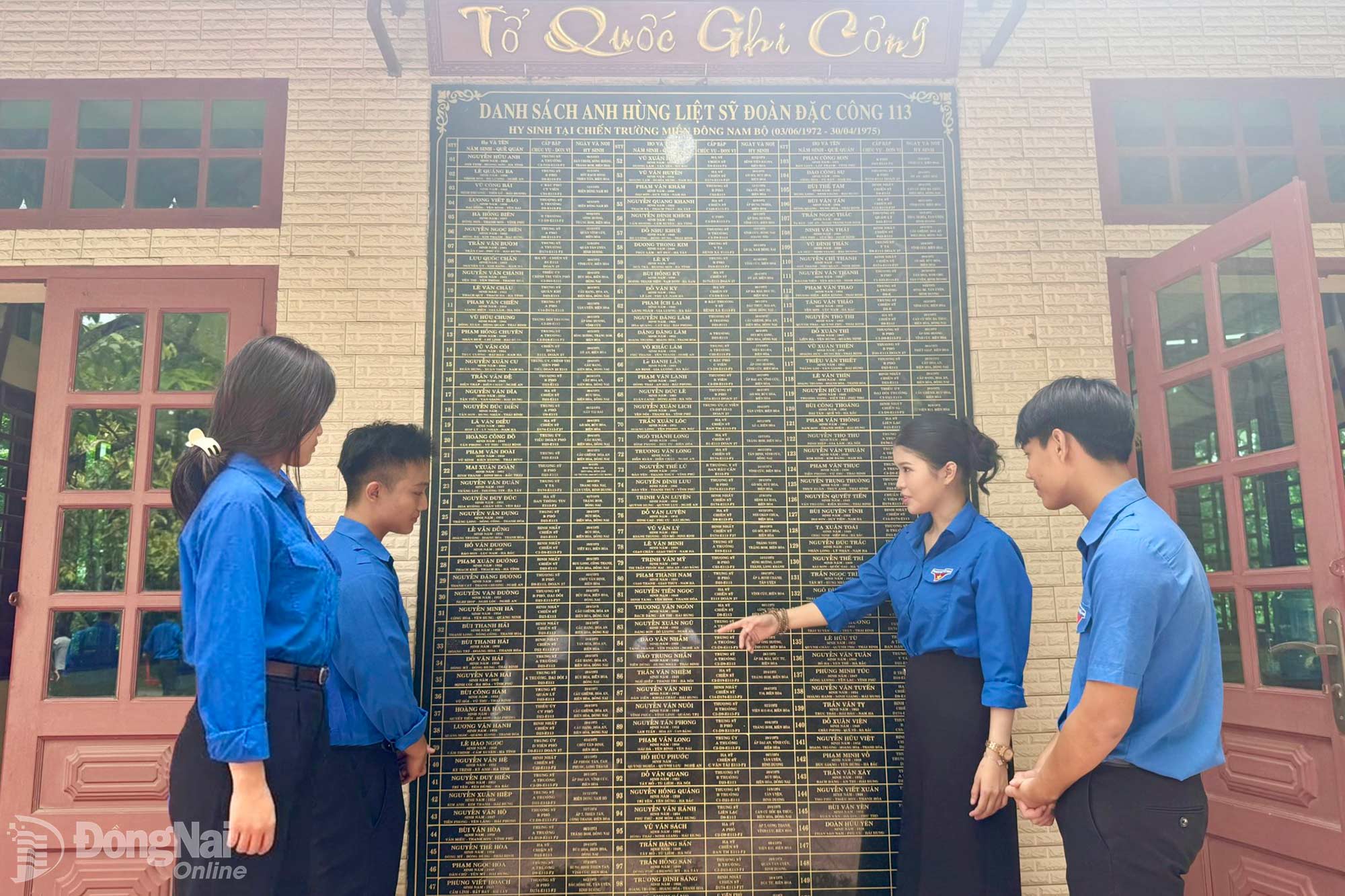 |
| Youth Union members and young people in Ho Nai ward learn about history at the Memorial House for Martyrs of Special Forces Unit 113. Photo: N. Ha |
For Party-awareness training in particular, we have designed the “Digital Journey – Real Journey” approach. Each theoretical topic is linked to a field experience at a revolutionary historical site and a digital product created by the person being considered for Party admission, both at the site and on an online platform for studying political theory. This enables real-time monitoring and recording of actual results.
But there is one point I have always firmly believed in: digital transformation is a means, while people remain at the center. Technology helps bring ideals closer to young people, but it cannot replace the example set by senior Party members or the guiding role of the organization. A real role model, an older brother or sister who is a Party member and lives an exemplary life, remains the most convincing lesson for 18-year-old Youth Union members, who are always eager to affirm themselves through communist ideals and the enthusiasm to contribute that comes with youth.
By N.Ha – Translated by M.Nguyet, Thu Ha


Thông tin bạn đọc
Đóng Lưu thông tin