
As more administrative procedures and work processes are being carried out in the digital environment, grassroots authorities need not only systems and software but also personnel capable of operating them effectively.
Therefore, alongside investment in digital infrastructure, platforms and data, Dong Nai is gradually strengthening and training information technology (IT) and digital transformation personnel at the grassroots level.
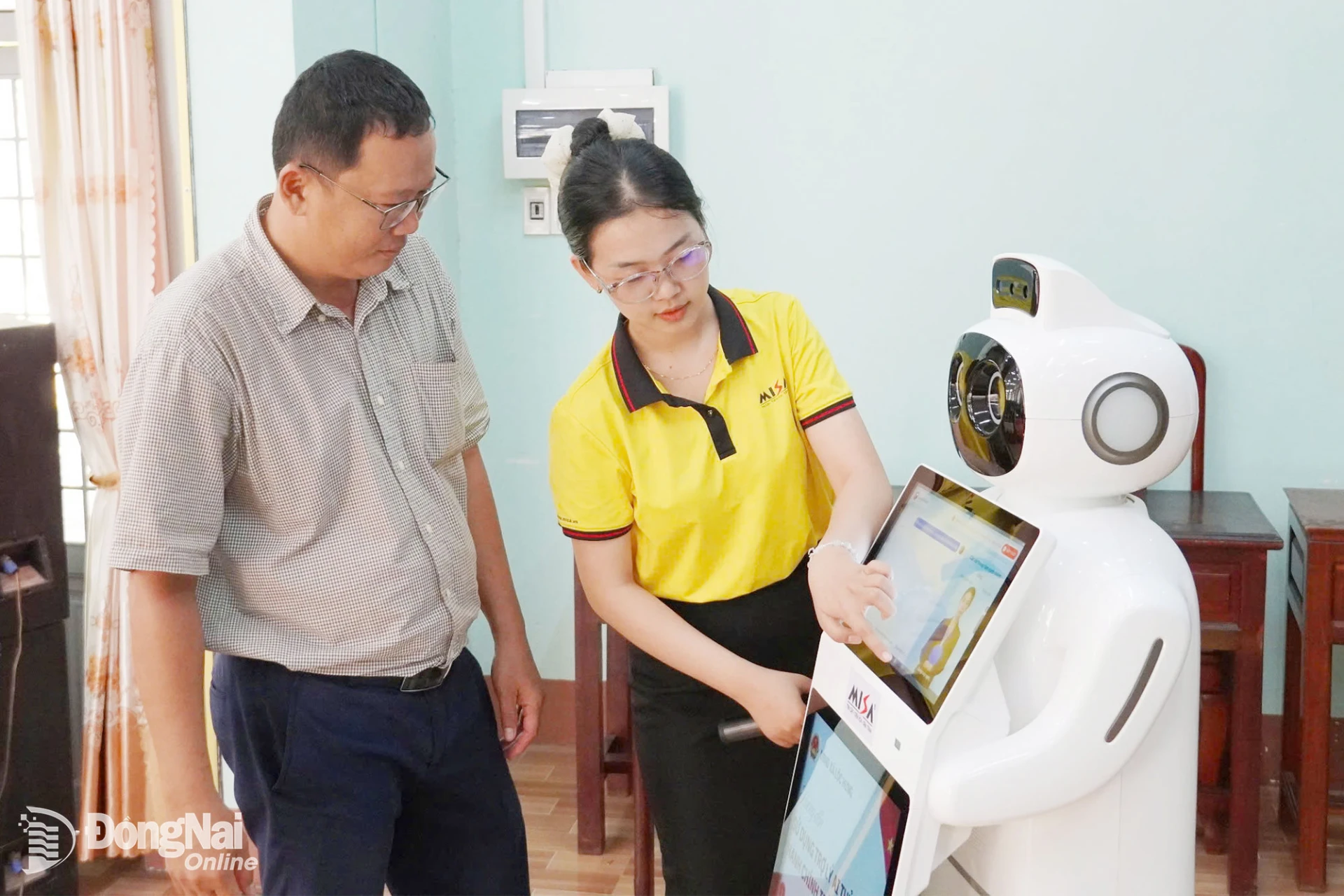 |
| Loc Hung Commune People’s Committee, in coordination with MISA Joint Stock Company, organizes a training session to improve digital transformation capabilities in work processing for cadres, civil servants, public employees and hamlet management boards |
Improving work-processing capabilities
In Loc Hung Commune, digital transformation training is closely linked to the daily work of cadres and civil servants. Training focuses on using work-related platforms and software, handling online administrative procedures, using VNeID and developing basic digital skills.
According to Do Van Duyen, Head of the Culture and Social Affairs Division of Loc Hung Commune, providing hands-on guidance on work-related tasks helps cadres and civil servants become more proactive in processing documents, using shared systems and assisting residents in accessing online public services. For issues beyond the capacity of grassroots authorities, specialized support channels are needed to ensure work is not disrupted.
In Dinh Quan Commune, digital skills have also been incorporated into many routine tasks performed by cadres and civil servants. From receiving and processing administrative procedures and digitizing incoming and outgoing documents to using VNeID, personal digital signatures, cashless payments and artificial intelligence (AI) tools, officials receive both in-person and online guidance. According to the locality, 100% of commune-level cadres and civil servants have received training in digital transformation and digital signatures, helping improve their capacity to handle work in the electronic environment.
The experience at the grassroots level shows that digital workforce training should focus on helping officials proficiently use the tools, platforms and data needed for their assigned tasks.
At a recent early-September supervision session by the Vietnam Fatherland Front Committee of Dong Nai City on digital transformation, science and technology in administrative procedure handling and public service delivery, Nguyen Minh Quang, Deputy Director of the Department of Science and Technology, said the city had identified digital workforce as one of the key factors underpinning digital transformation and the operation of the two-tier local government system.
Training, professional development, deployment and development of IT human resources are being implemented in a coordinated manner from the city to commune level. The city continues to effectively implement the Digital Literacy for All model, providing digital skills training for cadres, civil servants, public employees, workers and residents through online platforms operated by the Ministry of Public Security and local authorities. At the same time, the city is stepping up advanced training in AI applications and deploying the artificial intelligence assistant platform MISA ONE AI to support advisory work and daily administrative tasks.
Alongside training, the city has reviewed, strengthened and supplemented human resources for digital transformation at the grassroots level. To date, the city has added 310 civil servants and public employees, signed contracts with 52 personnel and recruited 308 non-specialized workers for 95 communes and wards. There are currently 349 personnel directly responsible for digital transformation tasks, while 100% of agencies, units and localities have designated IT focal points.
However, requirements for grassroots digital transformation personnel are becoming increasingly demanding. As more workloads are shifted to the digital environment, personnel need not only to know how to use software but also to process data, ensure information security, and identify and resolve common problems arising during system operation.
Training tailored to job positions
Based on field surveys in several localities, Luu Thi Ha, Vice Chairwoman of the Vietnam Fatherland Front (VFF) Committee of Dong Nai City, said personnel directly handling work at one-stop shop division need to continue strengthening their IT capabilities. The requirements go beyond basic computer operations. Personnel must be proficient in using work-related systems and capable of handling common technical problems, thereby minimizing disruptions to administrative procedures caused by staff not being fully proficient in digital tools.
Under Dong Nai City’s Digital Transformation Human Resources Training Project for 2026–2030, with a vision to 2035, approved by the city People’s Committee under Decision No. 300/QD-UBND dated May 20, 2026, by 2030, the city aims to have 100% of cadres, civil servants, public employees and employees in the public sector trained in digital skills, data analysis and cybersecurity. Each year, at least 100 core digital transformation experts are also expected to be developed.
Vice Chairwoman of the municipal VFF Committee stressed that when developing training plans, localities need to accurately identify the causes of each limitation: whether personnel lack technological skills or skills in using particular systems and procedures. This will allow training content to be tailored to individual job positions, avoiding generic training with limited practical effectiveness.
This is also an issue the city is addressing as it strengthens its digital transformation workforce. According to Nguyen Minh Quang, Deputy Director of the Department of Science and Technology, following directions from the city People’s Committee, localities have reviewed, reorganized and supplemented personnel responsible for digital transformation. In some cases, personnel with IT expertise who had previously been assigned to other positions are being considered for transfer to more appropriate roles.
The city is also preparing steps to develop a high-quality workforce. Under Decision No. 344/QD-UBND dated May 22, 2026, the city People’s Committee approved the outline of a program to develop and attract high-quality human resources in Dong Nai City for 2026–2030, with a vision to 2045.
In addition, the city People’s Committee is finalizing a draft resolution on policies to attract and make effective use of talent in science and technology, innovation and digital transformation under Decision No. 899/QD-TTg. The draft resolution is expected to be submitted to the city People’s Council for consideration and approval at its year-end 2026 session. The city is also continuing to expand cooperation with research institutes, universities and technology companies to train high-quality human resources.
Strengthening digital human resources, therefore, is not simply about increasing the number of people receiving training. It must also involve accurately identifying needs, assigning the right people to the right positions and ensuring sufficiently specialized support so that the system operates stably while providing increasingly better services to residents.
By Ho Thao - Translated by Mai Nga, Thu Ha



Thông tin bạn đọc
Đóng Lưu thông tin