
The 2026 Urban Development Law (UDL), passed by the National Assembly (NA) on August 24, 2026 and taking effect on October 1, 2026, provides a new legal framework for urban development and management.
Lawyer Phan Van Chau, Chairman of the Dong Nai City Bar Association (DNBA), said the law would help renew urban governance approaches, capitalize on the distinctive strengths of each locality, unlock resources and promote the development of modern, livable and sustainable cities.
Renewing urban governance approaches
*As one of the organizations that actively provided input on the draft 2026 UDL, how do you assess the changes in the approach to urban management and development reflected in the law?
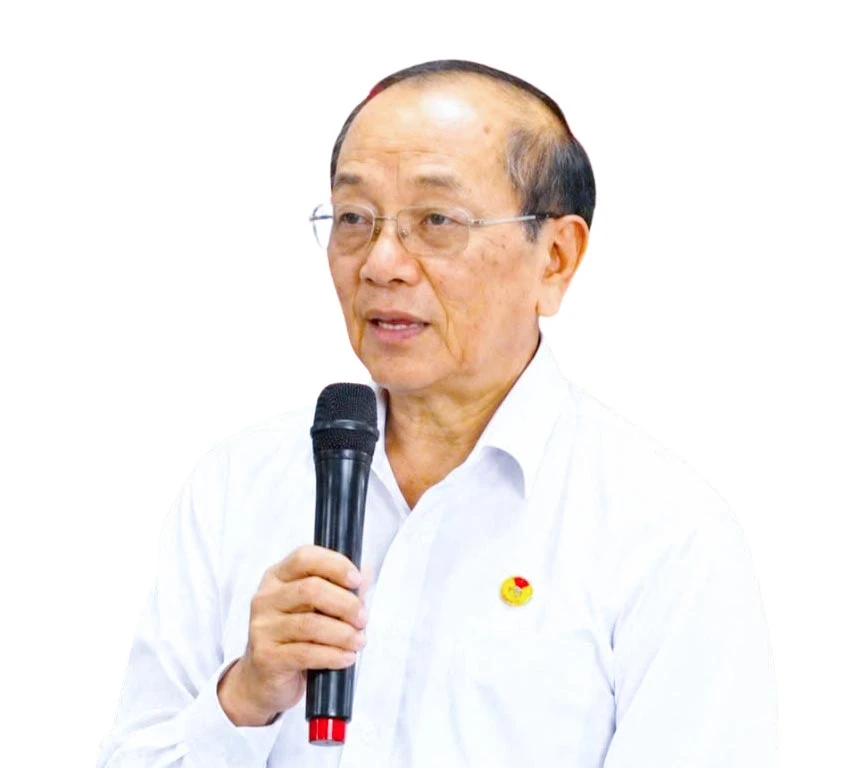 |
| Chairman of the DNBA Phan Van Chau. |
— The enactment of the 2026 UDL marks a shift in the thinking and approach to state management of urban development. The most notable change is in governance method. The State is moving decisively from closed administrative management toward a more enabling role, creating a favorable legal framework to promote dynamism and autonomy at the local level, expand development space, unlock resources and drive growth. At the same time, decentralization and delegation of authority must go hand in hand with accountability. As greater powers are granted to local authorities, mechanisms for oversight, transparency in the exercise of power and accountability of agency and organizational heads must also be strengthened.
Another important change is the use of quality of life as a measure of urban development. Urban development should be assessed based on convenience for residents, the effectiveness of business investment, and a safe, sustainable living environment, rather than solely through economic indicators.
*During the process of commenting on the draft law, which issues did you believe needed to be addressed to make the law more practically feasible?
— The City Bar Association focused its comments on the title and scope of the draft law, as well as issues related to decentralization and delegation of authority and the expansion of its scope of application. For Dong Nai, establishing an appropriate legal framework is important for unlocking resources, capitalizing on its advantages and creating new development momentum. We are particularly interested in strengthening decentralization and delegation of authority to Dong Nai, together with policies concerning organizational structures, the civil service regime, planning, construction, and the development of a free trade zone and an integrated logistics zone. Meanwhile, the city government should be given appropriate autonomy in deciding on investment and financial mechanisms, urban management and how to make better use of local potential. In addition, legal bottlenecks related to compensation, support and resettlement, financial obligations, and inter-regional projects need to be addressed. These issues are also covered by the 2026 UDL.
Capitalizing on distinctive advantages, creating new growth poles
*In your view, which new provisions are likely to have the greatest impact on rapidly developing cities?
— Our country has many cities with different socio-economic conditions. Hanoi is a special-class city and the country’s political and cultural center; Ho Chi Minh City is an international financial and commercial hub; while Da Nang has advantages in the marine economy, tourism and technology services. Dong Nai, meanwhile, has its own strengths in industry, logistics, aviation, inter-regional transport connectivity and ample space for development. Therefore, each locality needs to adopt an approach suited to its own conditions and development orientations. A sound legal framework should not force cities to develop according to the same formula, but instead provide sufficient flexibility for each locality to choose the tools best suited to its circumstances.
The 2026 UDL provides a foundation for this approach by establishing common principles and standards. Within the framework of the law and the authority granted to them, localities can proactively organize implementation in ways suited to their own geographical, natural and socio-economic conditions, rather than mechanically applying a single model.
However, autonomy must go hand in hand with responsibility. Local authorities need to prove the effectiveness, feasibility and sustainability of development plans and ensure their consistency with broader planning frameworks. They must also be accountable to residents, People’s Councils, the Government and oversight agencies.
*One issue frequently mentioned is the overlap among various laws on urban management. How can the new law help ensure consistency?
— This is an issue that deserves particular attention. Urban development involves many areas, including planning, land, construction, investment, transport, the environment, housing, real estate business and the state budget. If different laws adopt different approaches, implementation can give rise to inconsistent interpretations and applications, affecting project progress and management efficiency. Accordingly, the 2026 UDL serves as a unified legal framework governing general principles and coordination mechanisms, while also defining its relationship with sector-specific laws.
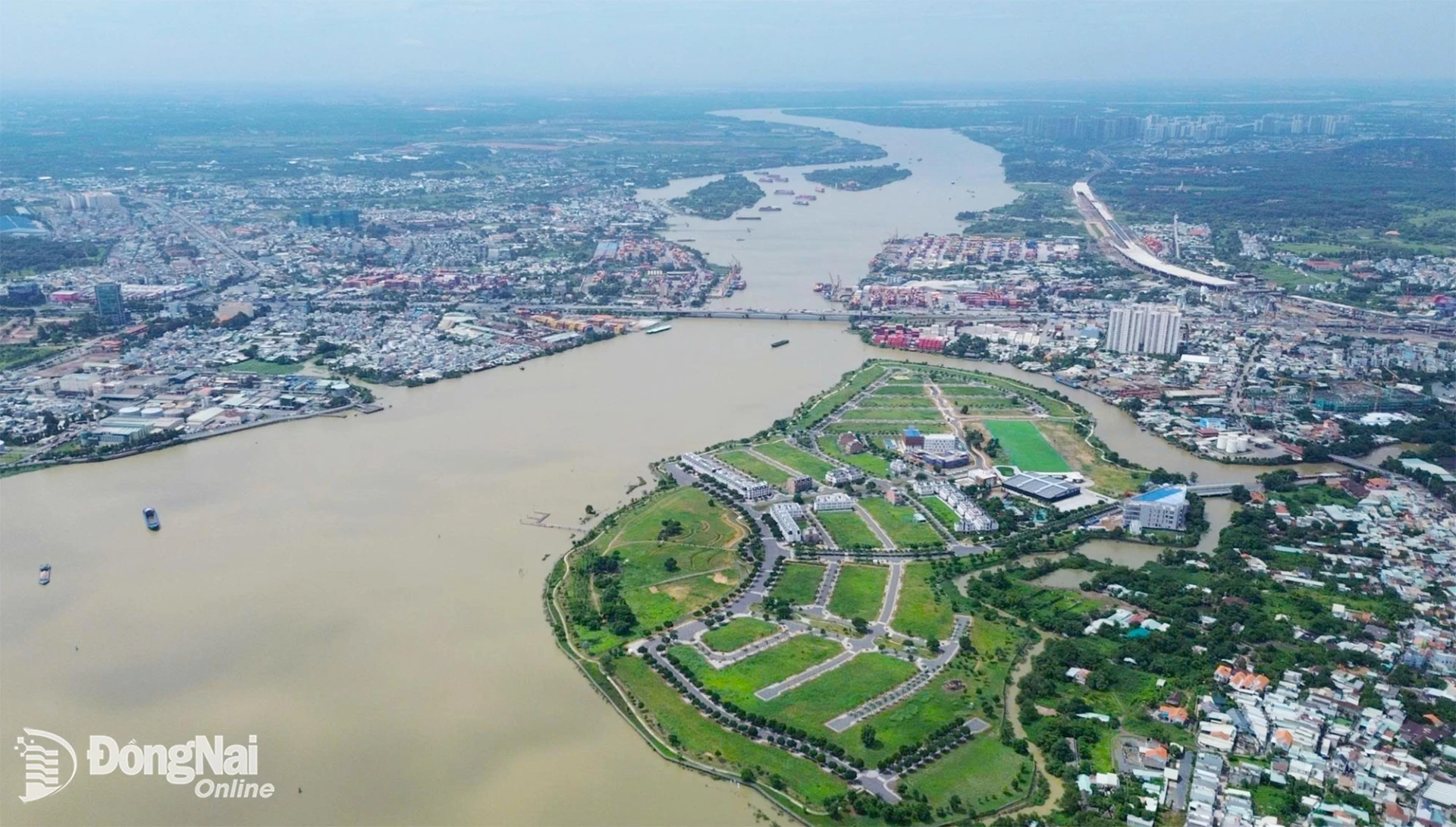 |
| The Dong Nai riverside urban area. Photo: A.L |
For cases in which different legal documents contain different provisions on the same issue, the 2026 UDL sets out the applicable principles in Article 5. Accordingly, where the law contains provisions that differ from those of another law or NA resolution on the same issue, its provisions shall, in principle, apply, except in cases specifically provided for in Clause 3, Article 5, and under legislation concerning national defense and security. The law also establishes mechanisms for handling cases in which other legal documents provide more favorable incentive policies or conditions. The application is determined according to relevant groups and authorities.
Thus, Article 5 provides a mechanism for addressing the relationship between the 2026 UDL and other legal provisions, helping ensure consistency across the legal system while leaving room for the application of more favorable policies to particular groups of cities and localities.
*In what areas will appropriate decentralization and delegation of authority give urban authorities greater autonomy?
— Appropriate decentralization and delegation of authority will give urban authorities greater autonomy in planning, organizing development space, investing in infrastructure, and mobilizing and using resources in ways suited to the characteristics of each city. First, it will help unlock resources, enabling localities to better mobilize social resources and create more room to implement new development models. Second, it will help remove bottlenecks, allowing local authorities to promptly address institutional and policy-related difficulties and improve governance effectiveness and efficiency. Third, it will facilitate the formation of new growth poles by capitalizing on the potential and strengths of each city. Finally, it will help improve quality of life.
The goal of decentralization and delegation of authority must be to better serve residents and ensure that urban infrastructure, services and the living environment develop in a coordinated and sustainable manner. It should be emphasized that greater authority must come with greater responsibility. All decisions must comply with the law, ensure investment efficiency and transparency, and be subject to appropriate oversight mechanisms.
*Given Dong Nai’s specific characteristics, in which area do you expect the new law to bring about the most significant changes?
— Dong Nai is entering a particularly important stage of development. Resolution No. 16-NQ/TW of the Politburo has identified key priorities, including the development of the Long Thanh aviation ecosystem, strategic infrastructure and logistics, as well as a free trade zone, science and technology and new growth models. To turn these orientations into reality, the city needs to quickly translate the resolution into focused programs, schemes, tasks and solutions, with clear roadmaps, defined responsibilities and measurable results.
The 2026 UDL not only provides a legal framework for development but also lays the foundation for building modern, livable and sustainable cities with people placed at the center.
Lawyer Phan Van Chau, Chairman of the DNBA.
I expect the UDL to provide a consistent, transparent and favorable legal framework for the development process, laying the foundation for Dong Nai to develop modern, smart, green, livable and sustainable urban areas, with residents placed at the center. I also expect the law to provide clear support for for spatial development planning, infrastructure connectivity, and the promotion of Long Thanh International Airport’s role, while advancing logistics, science and technology, innovation and digital transformation. These will be important drivers for creating new growth poles, enhancing competitiveness and promoting socio-economic development.
By An Nhon – Translated by M.Nguyet, Thu Ha


Thông tin bạn đọc
Đóng Lưu thông tin