
In the first eight months of 2026, Dong Nai recorded a sharp increase in both the number of health insurance-covered medical examinations and treatments and the costs proposed for payment compared with the same period last year.
This highlights the need to strengthen oversight of professional indications, the use of medicines and medical supplies, and technical services to ensure that the health insurance fund is used for its intended purposes and with maximum efficiency.
More than 75% of the annual spending estimate used
At a recent conference organized by Dong Nai Social Security to disseminate Article 215 of the Criminal Code on health insurance fraud, Nguyen Thi Thanh Binh, Deputy Head in Charge of the Health Insurance Benefits Division under Dong Nai Social Security, said that healthcare facilities across the city had provided nearly 7.2 million health insurance-covered medical examinations and treatments over the past eight months, up 5.2% year on year. The total costs proposed for payment from the health insurance fund exceeded VND3.6 trillion, up VND347 billion, ranking 10th nationwide and accounting for more than 75.5% of the total annual spending estimate.
 |
| Leaders of Dong Nai General Hospital share information about health insurance-covered medical examination and treatment at the hospital. Photo: Hanh Dung |
“Through the review of healthcare facilities in the first six months of the year, Dong Nai Social Security detected and rejected VND26 billion in proposed payments. Issues identified included some facilities assigning practitioners who did not fully meet the requirements specified in their operating licenses and registered lists; failure to standardize medical examination and treatment data in accordance with regulations; delays in transferring electronic data; rising average treatment costs at some facilities; excessive ordering of tests, diagnostic imaging and technical services; prolonged inpatient stays; and hospital admissions for cases that did not actually require inpatient treatment,” Binh said.
These issues need to be regularly reviewed by healthcare facilities, as controlling health insurance costs does not mean restricting patients’ legitimate benefits. The goal is to ensure that services are ordered in accordance with professional requirements and patients’ medical conditions, and that medicines and medical supplies are used appropriately, while avoiding unnecessary expenses that place additional pressure on the health insurance fund.
Strengthening review and oversight at healthcare facilities
To control health insurance-covered medical examination and treatment costs in the remaining months of the year, Dong Nai Social Security will make greater use of its database to identify healthcare facilities experiencing abnormal increases in costs, including spending on technical services, tests, diagnostic imaging, surgery, medicines, medical supplies and hospital beds. Costs will be analyzed using multiple indicators, including absolute increases, average costs and the number of medical visits and treatments. Meanwhile, comparisons will be made among facilities at the same professional level and in the same specialty.
Review activities will also focus on areas flagged by the monitoring system for high rates of service indications, high-cost technical procedures, self-requested hospital beds and surgeries involving medical supplies reimbursed on a percentage basis.
In addition, patient referrals will be more closely monitored. Patients whose conditions have stabilized and who meet the relevant requirements will be referred back to their initial healthcare facilities or grassroots healthcare providers. This will ensure continuity of care, ease overcrowding and contribute to more efficient use of healthcare resources.
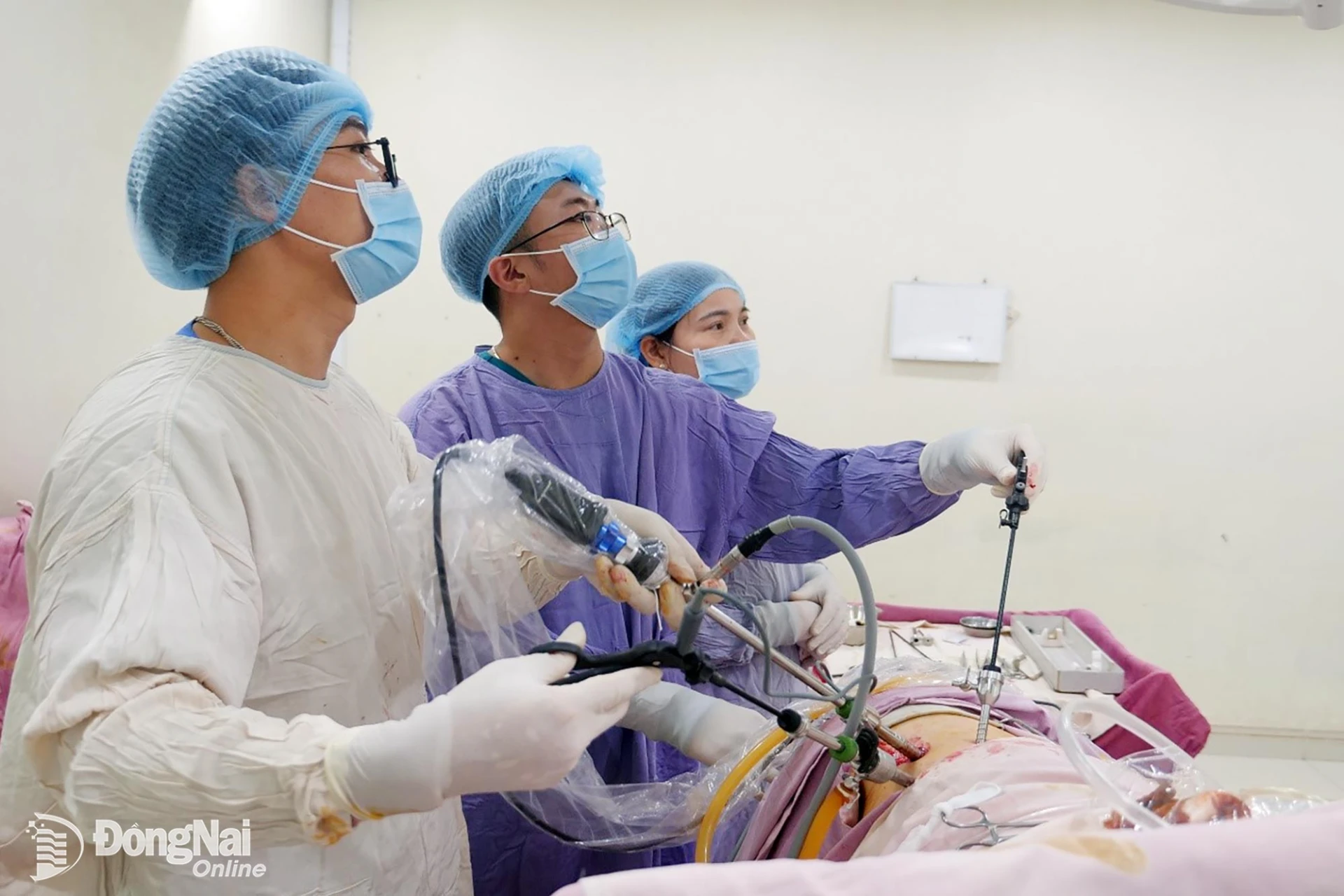 |
| A surgical procedure at a hospital in Dong Nai City. Photo: Hanh Dung |
Dong Nai Social Security will also assign additional insurance reviewers to work directly at healthcare facilities to verify the actual number of practitioners against the registered lists. This is considered one of the key safeguards for ensuring compliance with professional regulations and preventing abuse and fraudulent claims against the health insurance fund. At the same time, the social security agency will coordinate with the Department of Health and relevant agencies to conduct regular inspections and unscheduled inspections when necessary.
Director of Dong Nai Social Security Pham Minh Thanh asked healthcare facilities to strictly comply with professional regulations and technical procedures, develop appropriate treatment protocols and refrain from admitting patients for inpatient treatment when it is not genuinely necessary. Hospitals and clinics should also strengthen cost-management capacity and assign responsibility for monitoring health insurance costs to individual departments and units.
In Dong Nai’s health insurance-covered medical examination and treatment expenditure in the first eight months of 2026, medicines accounted for the largest share at more than VND1.2 trillion, followed by hospital beds at VND387.9 billion and medical supplies at VND314.1 billion. All three categories increased year on year. Notably, the average cost of outpatient medical examinations and treatments in Dong Nai exceeded VND2.1 million per visit, which is 1.8 times the national average.
In particular, the connection, updating and transmission of medical examination and treatment data must be carried out fully, accurately and promptly. Healthcare facilities need to step up the use of information technology, digital signatures and authentication, and transfer electronic data to the Health Insurance Assessment Information System in accordance with regulations.
Strict verification of patients' identities using chip-based citizen ID cards or the VNeID application is also required to curb the lending and borrowing of health insurance cards and to prevent fraud in medical examinations and treatments covered by health insurance. Healthcare facilities must also establish internal inspection and monitoring mechanisms, review the ordering of tests, diagnostic imaging and functional examinations and strengthen controls over prescriptions for high-priced medicines and the use of high-cost medical supplies.
By Hanh Dung – Translated by Mai Nga, Minho


Thông tin bạn đọc
Đóng Lưu thông tin