
More than simply putting data online, cultural digitisation is opening up a new creative space where Dong Nai's cultural identity, shaped over nearly 330 years of formation and development, is being preserved, promoted and widely disseminated, creating fresh momentum for sustainable socio-economic development.
From data standardisation and innovation in management approaches to digital human resource development and accelerated development of the digital cultural industry, Dong Nai's culture, sports and tourism sector is gradually building a comprehensive digital ecosystem in the new era.
Digital transformation in community spaces
In many communes and wards across Dong Nai, digital transformation in the cultural sector is taking shape through practical initiatives closely connected with people's daily lives. In Tau O quarter of Tan Khai ward, for example, the cultural house is no longer simply a venue for meetings and community gatherings. Free Wi-Fi coverage has turned it into a “connectivity hub”, enabling local residents to access digital services more easily in their daily lives.
 |
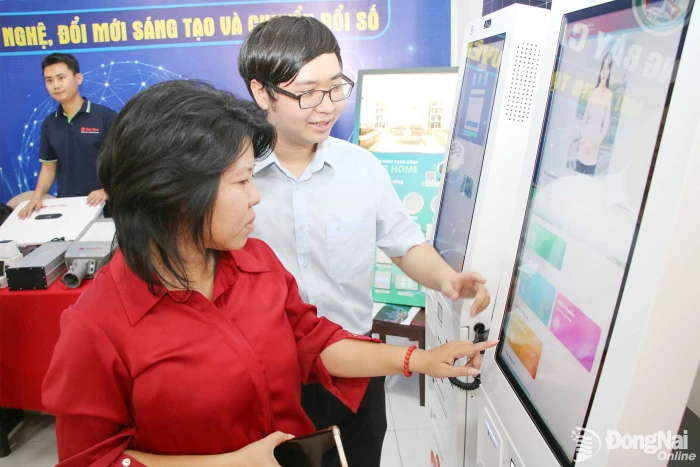
| Students from Tran Bien ward experience a virtual reality book-introduction application at the Dong Nai Library. Photo: My Ny |
Meanwhile, in Dinh Quan commune, the Ho Chi Minh Cultural Space has been developed in the form of a QR-code-based platform. With a simple scan on a smartphone, residents can access documents, images, works and information about President Ho Chi Minh's life and career in a visual and engaging format. In Dau Giay ward, three heritage sites are scheduled for digitisation in 2026-2027: Hung Loc Communal House, Dau Giay Communal House, and the Dau Giay Rubber Garden – the site of the Dau Giay rubber plantation outpost. The project includes QR codes, digital maps, video guides, interactive information points, 360-degree virtual tours and 3D models.
Do Thi Hong, Deputy Director of the Dong Nai Culture and Cinema Centre, said that in 2026, the centre had organised a number of virtual exhibitions and showcased them on its website and social media page, including “Dong Nai reaches new heights”, “Dong Nai culture and people – Historical imprints”, and “Dien Bien Phu – A historic mark of the Vietnamese nation”. The use of virtual reality technology has enabled exhibitions to move beyond traditional display spaces and get closer to the public, particularly people in remote areas, ethnic minority communities, border areas and workers in industrial parks.
“Besides exhibitions, the centre has also actively livestreamed art programmes and don ca tai tu (southern amateur music) performances for local communities and organised mobile film screenings in 95 communes and wards. This has helped bring information, works and cultural values to people more quickly and conveniently,” Hong said.
Digital technology is also being used by the Dong Nai Museum to expand access to heritage and strengthen efforts to preserve and promote its value. The museum has digitised artefacts and records of heritage sites in 2D and 3D and built an open database for research purposes. It has also developed 360-degree virtual tours of Tran Bien Temple of Literature, the Temple of Worship of Nguyen Huu Canh, the Hang Gon Megalithic Tomb, An Hoa Communal House and the Binh Phuoc Cultural Exhibition Space. Virtual exhibitions such as “National Treasures in Dong Nai” and “Biodiversity and Culture of Cat Tien National Park” have also created additional ways for the public to explore Dong Nai’s heritage.
The Dong Nai Library is likewise using technology to bring its resources closer to readers. Online catalogue searches, online reading services, QR-code book access, book introduction videos and thematic image collections have been put into operation. The library has also provided readers with QR codes linking to local history and geography materials and introduced them at the Bien Hung Park book space in Tran Bien ward, making it easier for people to access valuable documents.
Vu Ngoc Bich, Deputy Director of the Dong Nai Library in charge of its second facility in Binh Phuoc ward, said the facility currently houses more than 140,000 book titles, documents and newspapers, including more than 1,000 e-book titles. Notably, all local history and geography materials at the facility have been digitised into PDF files, allowing readers to access them remotely.
Five pillars underpin digital transformation
As part of its administrative reform efforts, the culture, sports and tourism sector processed 99.6% of applications on time or ahead of schedule during the first nine months of 2026 through the city's public administrative service information system. All 18 administrative procedures involving financial obligations have been integrated with online payment services. All applications received have undergone digital identity verification, while administrative service results have been digitised and electronically signed before being returned to individuals and organisations.
On September 23, Le Thi Ngoc Loan, Member of the Dong Nai City Party Committee and Director of the Department of Culture, Sports and Tourism, signed and issued Plan No. 4051/KH-SVHTTDL on implementing the digital transformation scheme in the fields of culture, sports, tourism and family affairs through 2030, with a vision to 2045, in Dong Nai. The plan focuses on five pillars: digital infrastructure and a local cultural data platform; institutional improvement and accelerated digital transformation in state management of culture, sports, tourism and family affairs; digital human resource development; digitisation of heritage and cultural resources; and development of the digital cultural industry.
“The theatre has been regularly using technology in performances and arts promotion for many years. Digital technology has helped us bring our programmes, productions and cai luong excerpts closer to the public, while expanding opportunities for interaction between artists and audiences.”
Nguyen Viet Bac, Deputy Director of the Dong Nai Theatre of Arts
The identification of five pillars in culture, sports, tourism and family affairs shows that digital transformation in the cultural sector goes far beyond simply moving some activities online. Every digital product requires reliable data, adequate infrastructure, skilled human resources, effective management mechanisms and the capacity to create new cultural products. These elements are gradually helping build a digital cultural market and contribute to the development of the cultural economy in the city.
Looking ahead, the culture sector aims to have digital records created for 100% of national- and provincial-level heritage sites and their management information updated in the cultural and tourism database system by 2030. At least 70% of grassroots cultural institutions are expected to use digital platforms for management and the organisation of activities, while digital products promoting Dong Nai's cultural image will be developed for the online environment. By 2045, digital culture is expected to become a driving force for the comprehensive and sustainable development of Dong Nai's people, with the cultural industry and creative economy becoming sustainable pillars of the city's development.
By My Ny – Translated by M.Nguyet, Thu Ha


Thông tin bạn đọc
Đóng Lưu thông tin